Top 20 Natural Monuments around Castellví De Rosanes
Natural monuments around Castellví De Rosanes offer diverse natural environments within the Baix Llobregat region. The area features extensive forests and notable geological formations. This municipality provides opportunities to explore unique landscapes and panoramic viewpoints. It is part of the larger Muntanyes del Baix, an agroforestry area recognized for its significant forest cover and diverse ecosystems.
Best natural monuments around Castellví De Rosanes
- The most popular natural monuments is Salt de l'Aigua Waterfall, a waterfall located in the Collserola…
Last updated: August 11, 2026
Gorg de la Mola
Highlight • Gorge
Translated by Google •
Tip by

Salt de l'Aigua Waterfall
Highlight • Waterfall
Translated by Google •
Tip by

Sign up now to discover places like this
Get recommendations on the best single tracks, peaks, & plenty of other exciting outdoor places.
Sign up for free
Vallvidrera Stream
Highlight • River
Aware of
Edit
The Vallvidrera stream, also known as the Rierada, is a tributary along the left bank of the river Llobregat and the only permanent watercourse in the Collserola Park.
Translated by Google •
Tip by
Puig Madrona Summit
Highlight • Summit
Translated by Google •
Tip by
Vallvidrera Stream
Highlight • River
Translated by Google •
Tip by
Sign up for free to discover even more natural monuments around Castellví De Rosanes.
Sign up for free
Already have an account?
Start today with a free account
Your next adventure awaits.
Login or Signup

Tips from the Community


Currently, the only living stream left in the Collserola range is the Vallvidrera stream, also known as "la Rierada", it is a tributary on the left bank of the Llobregat river and the only permanent watercourse in the Collserola Park.
1
0

Peak of 341 m. altitude, located between the municipalities of Papiol and Sant Cugat del Vallès, in the Collserola mountain range. At the highest part there is a 16 meter high fire watch tower, and at its foot there is the Hermitage of Health and the geodesic vertex 286123001. It is also known of the existence of a Iberian town on top of the hill. The place is a splendid viewpoint of the Baix Llobregat, the ridge of Collserola, the mountains of Montserrat, Sant Llorenç del Munt and Vallès beyond to Montseny. The importance of this natural space is evidenced in recent studies, such as the one that indicates the presence of interesting lichens. In particular, it is important, due to its uniqueness, the first appointment for Catalonia, in terms of cryptogamic flora, of the species "Porina byssophila". This was detected in the lichen surveys in the Escletxes de Papiol and Puigmadrona, and 38 saxicolous and terrestrial lichens have been catalogued, of which 32 are new taxa for the flora of the Collserola Park, such as the one mentioned (Bolea, et al .: 2010: 354). It is the highest point that dominates the entire municipality. This peak is included in the list of the 100 peaks of the FEEC. https://www.feec.cat/activitats/100-cims/cim/puig-madrona/
0
0
The Vallvidrera creek basin, due to its proximity to Barcelona, is a basin that lives under strong anthropogenic pressure. The different urbanizations of the Plains, the Floresta and the Rierada, the tunnels of Vallvidrera, the protection of the Park, the use of leisure... are conditions that denote an aspect specific to this stream. The current source of the stream is inside a large pipe that was built parallel to the construction of the Vallvidrera tunnels. Thus, with an unknown origin, the first tributary is found: the Les Plaines treatment plant. The low chemical quality of these first meters will irreversibly mark the ecological state of the entire stream, which will improve to an acceptable quality. This improvement, however, will not happen until you reach the Can Busquets area where a riparian forest enables self-purification with the absorption of nutrients, the contribution of primary production and the creation of fluvial habitat for the development of fauna. Once the stream reduces the initial organic pollution load, a structured food web appears with fluvial species of large predators such as the red-tailed barbel, the water snake or amphibians such as the frog, toad or salamander. Despite this new stability, new factors prevent the correct recovery of the ecosystem. On the one hand, the diffuse pollution that comes from the small urban centers that it passes through, which, despite having a low incidence, is aggravated in times of drought. The drought, however, is the last major problem of the stream since, despite being a temporary river, human extractions have a strong impact reducing its flow to 0. The passage through agricultural areas reduces the quality of the riparian forest, despite the fact that, in central areas of the park, it enjoys protection. The figure of the Collserola park is important for the development of this forest typology and its connectivity with the adjacent forest. This fact significantly improves, as already mentioned, the ecological quality of the stream. Finally, the stream reaches its final section, in its alluvial plain where an industrial estate awaits it that will dump its waste water and exterminate the entire riparian forest. The ecological improvement that the stream has achieved after an origin in a sewage treatment plant, is destroyed a few hundred meters before it is lost in the waters beyond the Llobregat
2
0
Exuberant and shady corner where we will definitely forget that we are close to Barcelona. We are in one of those spaces that alone justify a trip. The stream forms a small jump thanks to an artificial lock built in the s. XIX that brought water from the stream through a pipe, which we can still see on one side of the jump, to the Can Planes mill. We can go down to the small pond that forms the caient, where, in the summer, the little ones can still take a bath. El Salt is surrounded by lush and shady vegetation, with bananas, oaks and oaks that bring freshness in the summer. It is one of the most crowded places in Collserola due to its proximity and ease of access.
2
1

Waterfall from the Collserola stream.
0
0

The Vallvidrera stream accompanies you from its beginning in the reservoir, to its end in the Llobregat river.
3
0
Frequently Asked Questions
What are some notable natural monuments to visit around Castellví De Rosanes?
The area around Castellví De Rosanes offers several unique natural monuments. You can explore the Gorg de la Mola, known for its crystalline waters and unique rock formations. Another significant spot is the Salt de l'Aigua Waterfall, a beautiful waterfall in the Collserola area. The Vallvidrera Stream is also a must-see, being the only permanent watercourse in Collserola Park, featuring a rich riparian forest.
Are there family-friendly natural monuments in the Castellví De Rosanes area?
Yes, the Salt de l'Aigua Waterfall is considered family-friendly and offers a pleasant experience for all ages. Its natural setting provides a great opportunity for a day out in nature.
What kind of geological features can I expect to see among the natural monuments?
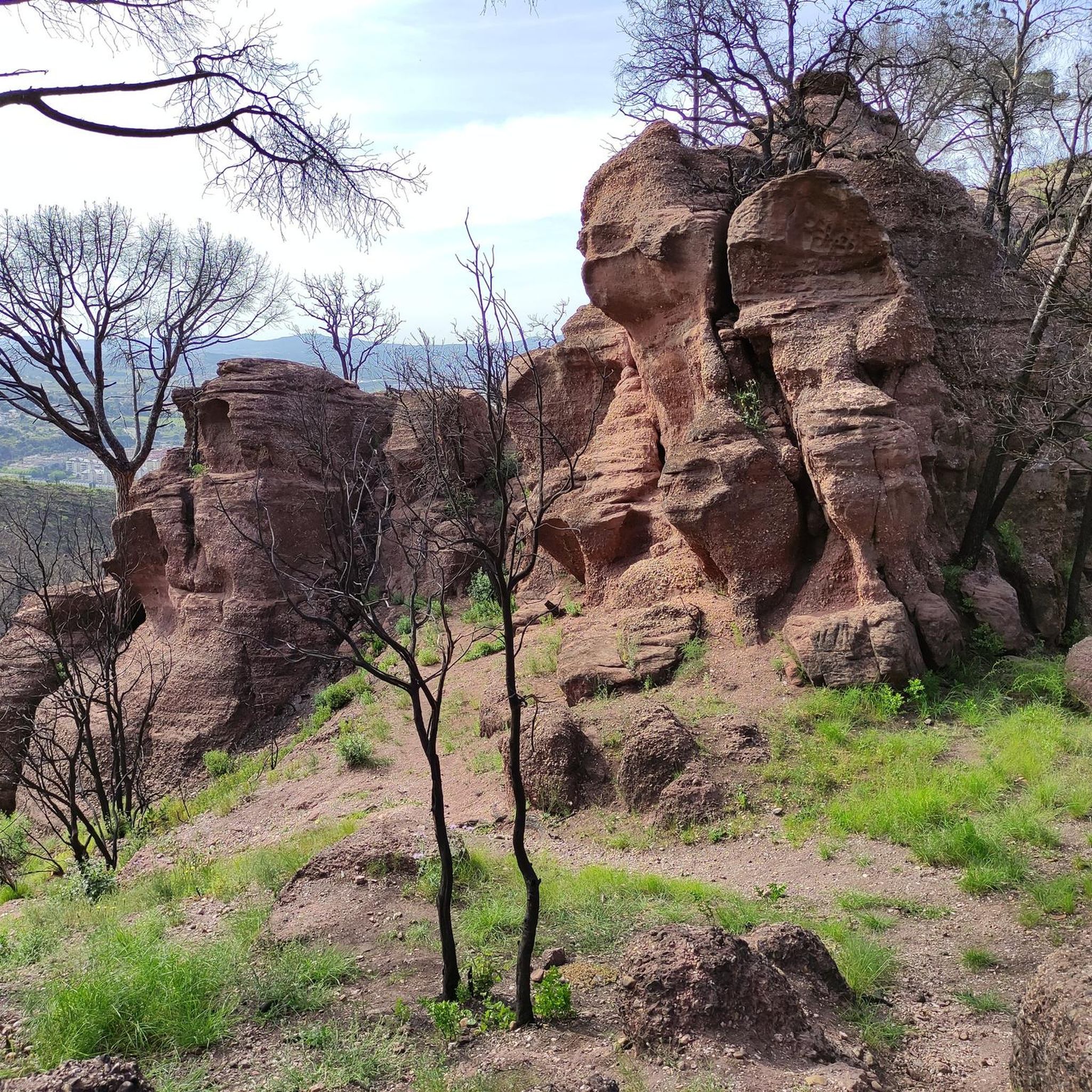
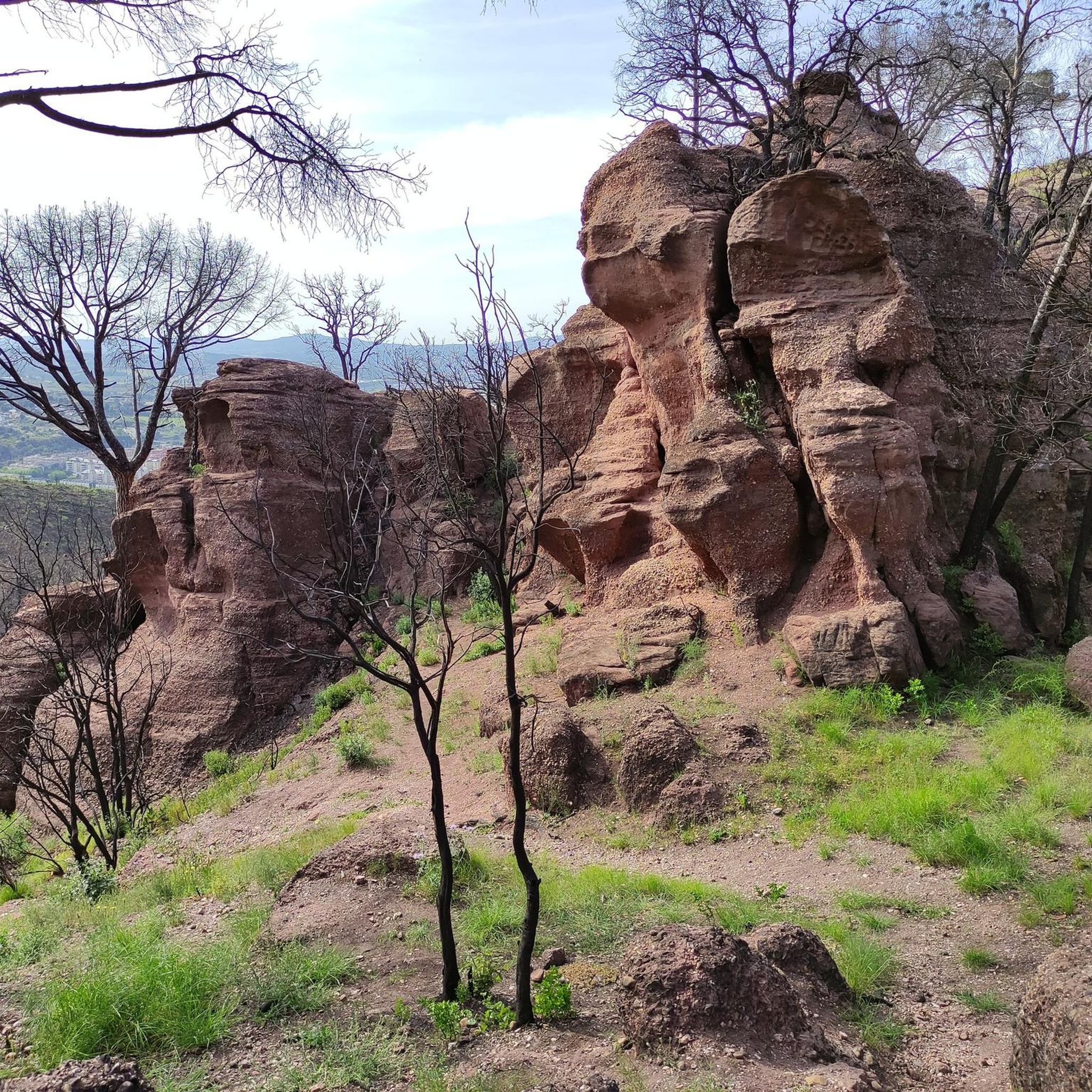
The natural monuments around Castellví De Rosanes showcase diverse geological formations. The Gorg de la Mola, for instance, features unique rock formations and reddish earth that have been shaped into a small canyon by water. The broader region, part of the Muntanyes del Baix, is characterized by its extensive forests and significant geological elements.
Where can I find panoramic views of the landscape?
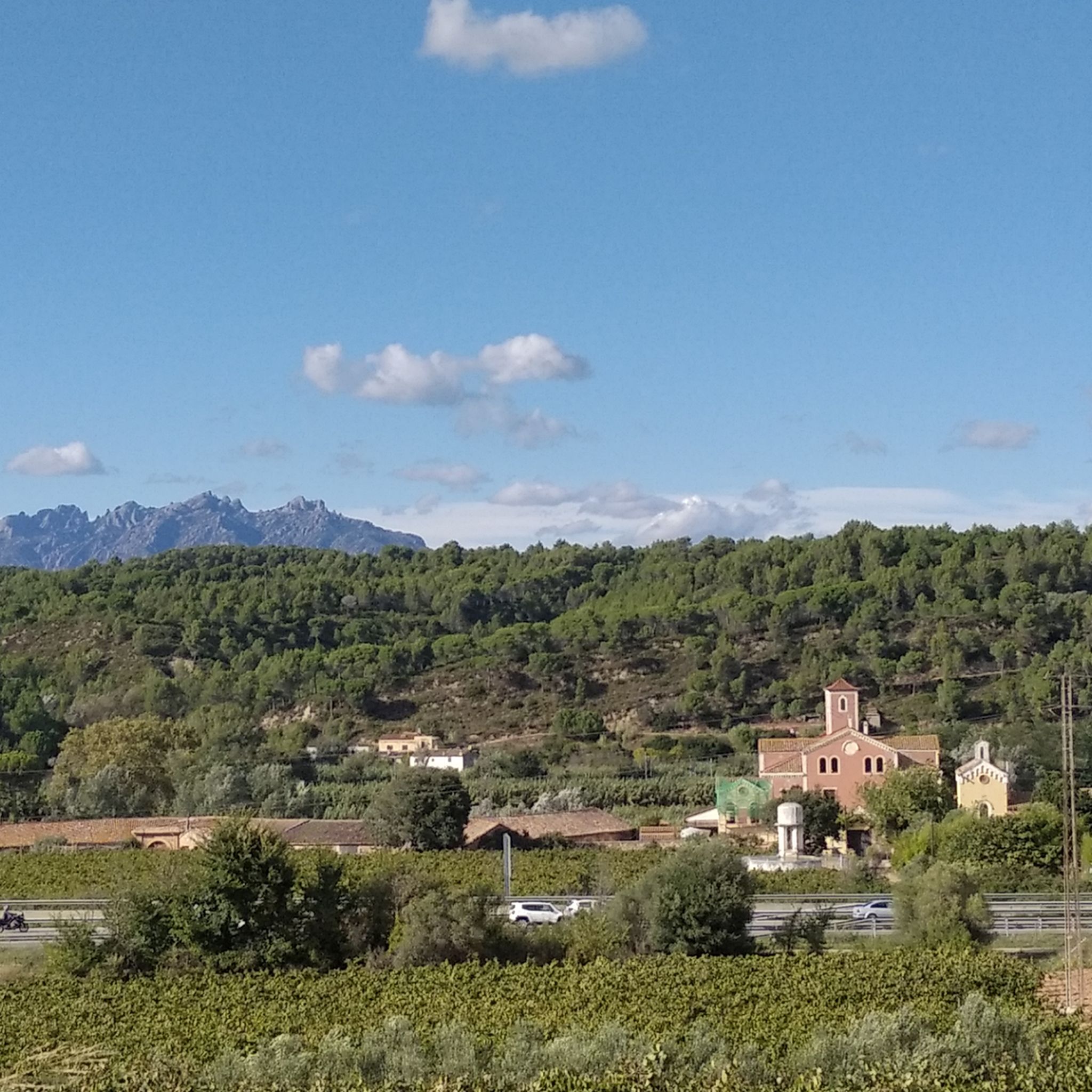
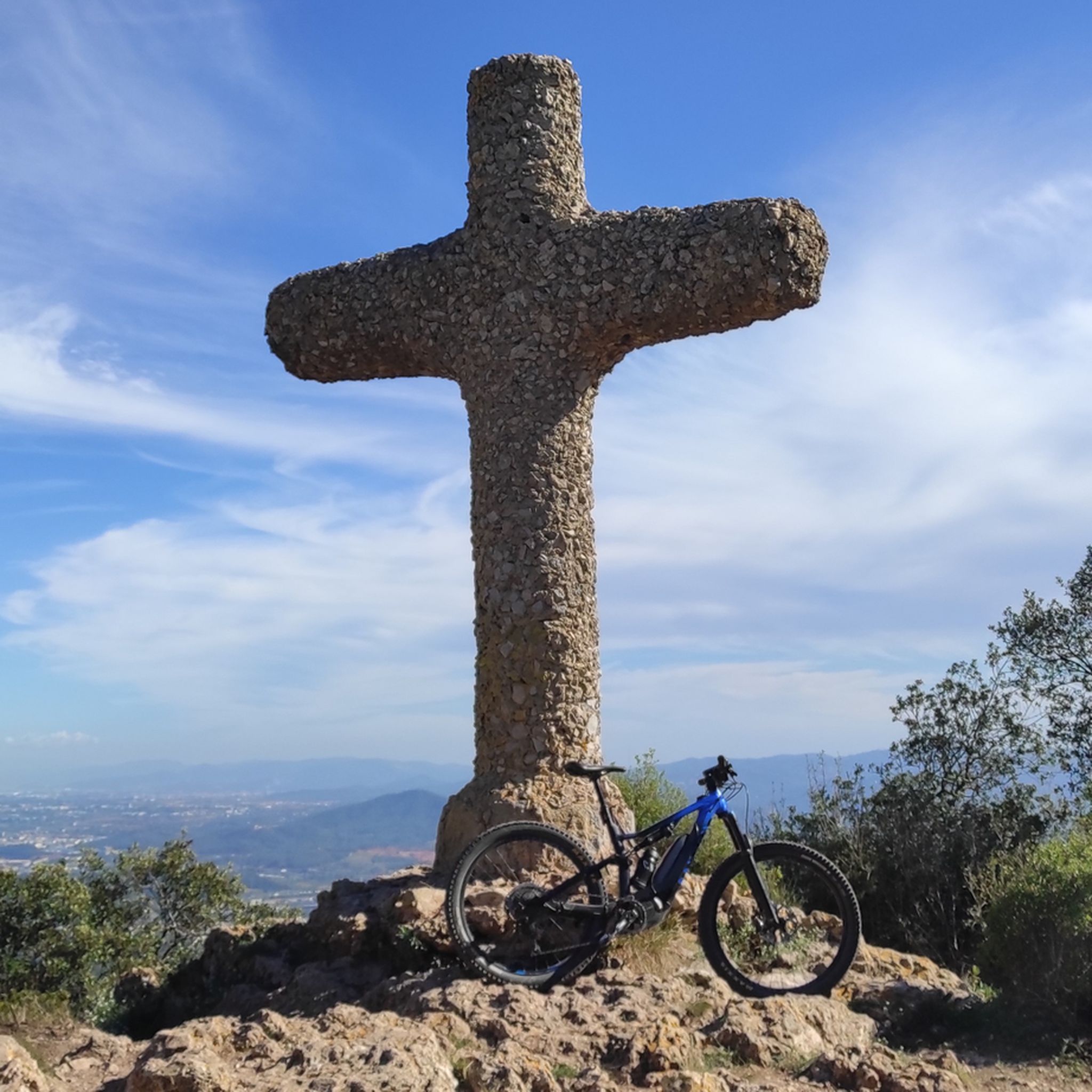
For breathtaking panoramic views, consider visiting the Puig Madrona Summit or the Cruz del Puig d'Olorda. These summits offer expansive vistas of the surrounding area, including parts of the Baix Llobregat region and the majestic Montserrat mountain range. Additionally, the region is home to 'Els Balcons de Montserrat,' strategic viewpoints that provide exceptional perspectives of the iconic Montserrat mountain range.
What outdoor activities can I do near these natural monuments?
The area around Castellví De Rosanes is excellent for various outdoor activities. You can find numerous trails for hiking, gravel biking, and mountain biking. For specific routes, you can explore guides like Gravel biking around Castellví De Rosanes, Road Cycling Routes around Castellví De Rosanes, and MTB Trails around Castellví De Rosanes.
Are there any hidden natural gems worth discovering?
The Gorg de la Mola is often described as a hidden gem. While technically in Corbera de Llobregat, its accessibility from Castellví de Rosanes makes it a popular destination for those seeking a tranquil escape with crystalline waters and unique rock formations.
What makes the Vallvidrera Stream a significant natural monument?
The Vallvidrera Stream is notable as the only permanent watercourse in the Collserola Park. It maintains a natural environment of riparian forest with lush vegetation, providing a vital habitat and a beautiful natural setting to explore.
What do visitors enjoy most about the natural monuments in this region?
Visitors frequently praise the unique natural beauty and the sense of discovery. For instance, the Gorg de la Mola is described as 'impressive' and a 'unique location.' The Salt de l'Aigua Waterfall is considered 'spectacular' and 'worth a visit.' Many also appreciate the 'very wide views' and 'fun hike' offered by spots like the Puig Madrona Summit.
Is the area around Castellví De Rosanes suitable for dog-friendly walks?
While specific dog-friendly designations for each natural monument are not always available, many natural areas and trails in the Muntanyes del Baix, which surrounds Castellví De Rosanes, are generally suitable for walks with dogs, provided they are kept on a leash and owners follow local regulations. The Cruz del Puig d'Olorda is mentioned as a 'magical place' for its views and is often enjoyed by visitors with their dogs.
What is the best season to visit the natural monuments?
The natural monuments around Castellví De Rosanes can be enjoyed throughout the year. Spring and autumn offer pleasant temperatures for hiking and exploring the forests and geological features. Summer is ideal for visiting water features like the Gorg de la Mola for a refreshing experience, though be aware of mosquitos. Winter provides a different, often quieter, perspective on the landscapes.
Are there any historical or cultural sites integrated with the natural monuments?
Yes, some natural monuments also hold historical significance. For example, the Puig Madrona Summit is not only a viewpoint but also a historical site, with knowledge of an Iberian town once located on top of the hill. It also features a fire vigilance tower and the hermitage of Health nearby.
How long does it typically take to explore these natural monuments?
The duration of your visit depends on the specific monument and your activity. A visit to the Gorg de la Mola might involve a hike of a few hours. Summit viewpoints like Puig Madrona Summit can be part of longer hiking routes. Shorter visits are possible for specific viewpoints, while exploring the full length of the Vallvidrera Stream could take several hours.
Most popular routes around Castellví De Rosanes
Most popular attractions around Castellví De Rosanes

Get inspired with the komoot mobile app


Explore more
Extend your search for the best caves by checking out these guides of the top ones around Castellví De Rosanes:
