Top 8 Natural Monuments around Bellús
Best natural monuments around Bellús are situated in the southeastern foothills of the Serra Grossa range, within Spain's Vall d'Albaida administrative region. The local terrain, characterized by undulating landscapes and notable peaks, is particularly recognized for its caves and river environments. These natural features offer a blend of scenic beauty and historical significance.
Best natural monuments around Bellús
- The most popular natural monument is Cova Negra, a cave that is a crucial Middle Paleolithic site, once inhabited by Neanderthals.…
Last updated: May 20, 2026
Cova Negra
Highlight • Cave
Translated by Google •
Tip by

Les Salines
Highlight • Natural Monument
It is a protected space …
Translated by Google •
Tip by

Sign up now to discover places like this
Get recommendations on the best single tracks, peaks, & plenty of other exciting outdoor places.
Sign up for free
Bitter Spring
Highlight • Rest Area
Translated by Google •
Tip by

Quarry of Quatre Camins (Llosar dels Francs)
Highlight • Historical Site
Translated by Google •
Tip by
Cart tracks
Highlight • Historical Site
Translated by Google •
Tip by
Sign up for free to discover even more natural monuments around Bellús.
Sign up for free
Already have an account?
Start today with a free account
Your next adventure awaits.
Login or Signup

Tips from the Community

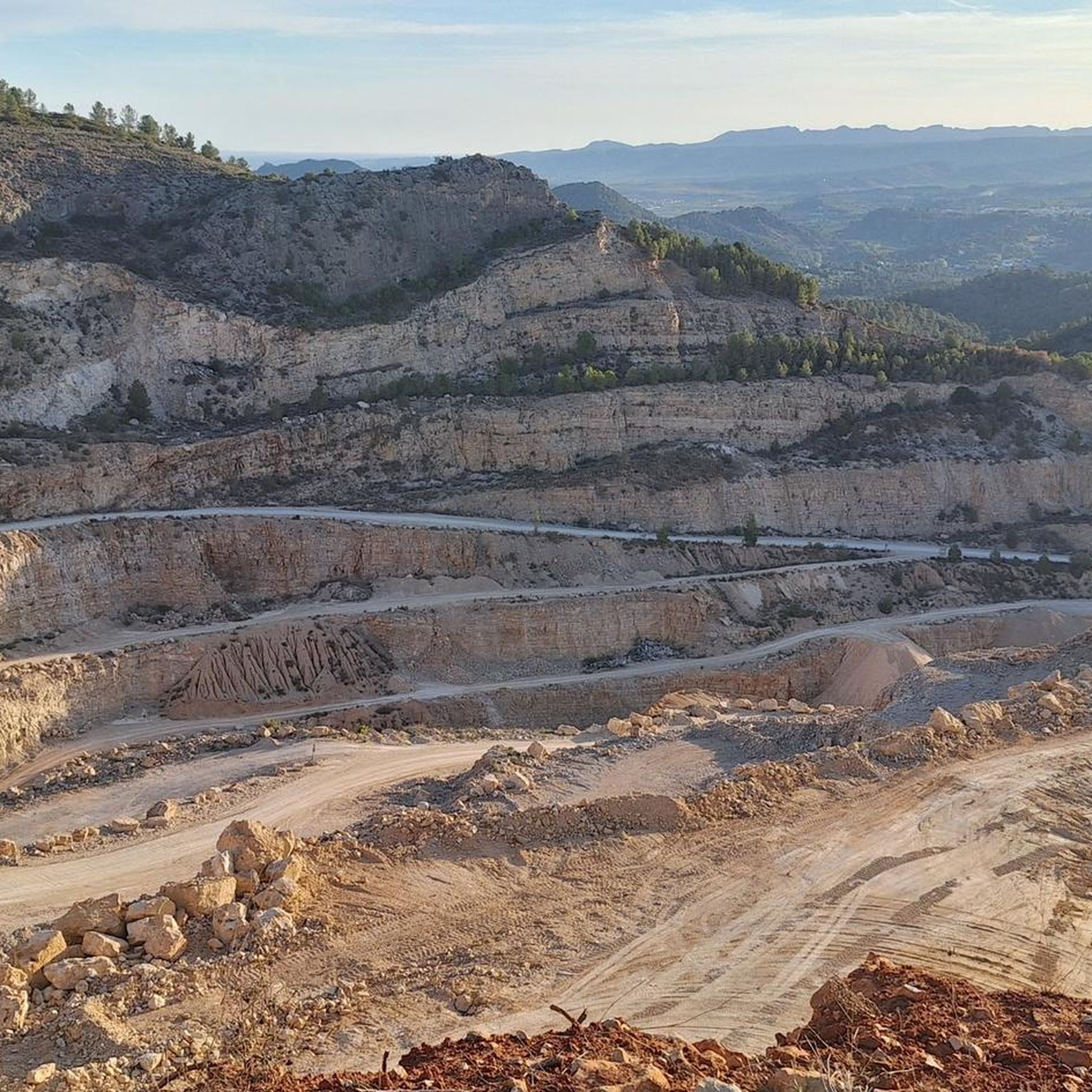
The Quatre Camins quarry, also known as the Llosar dels Francs, is an archaeological site 500m away. of the Roman villa, known as Villa Cornelius, located in Partida dels Francs, in the municipality of Énova. These are quarries that, according to some scholars, could be considered the most important of the Roman period in the Iberian Peninsula. The commercialization of the marble extracted from these quarries was the main source of wealth for the Iunii family, of the Galeria Tribe, owners of the plantation and the Cornelius town. The transport of the stone was done through the carriladas, that is to say, grooves in the rocks that channeled the wheels of the carts, which can still be seen on the road that leads from Énova to Barxeta (https:// www.komoot.com/es-es/highlight/6171388). The planter has preserved marks that show that the marble was extracted forming rectangular blocks. These large blocks were transported in bullock carts to the town, where the work of stonemasons or stonemasons continued, who would fragment them and shape them into specific pieces, according to the order that needed to be served. This marble was used to make tombstones, monuments of different sizes and even slabs to pave the Roman theater in Zaragoza or the plinths of the Romanesque door of the Cathedral of Valencia. In the same municipality of Énova there are several Roman tombstones that provide the Greek names of slaves such as Lleones, Vibi Èutic (Vibius Euthycus) and Himeto (Himetós), which are built with materials from these quarries.
1
0

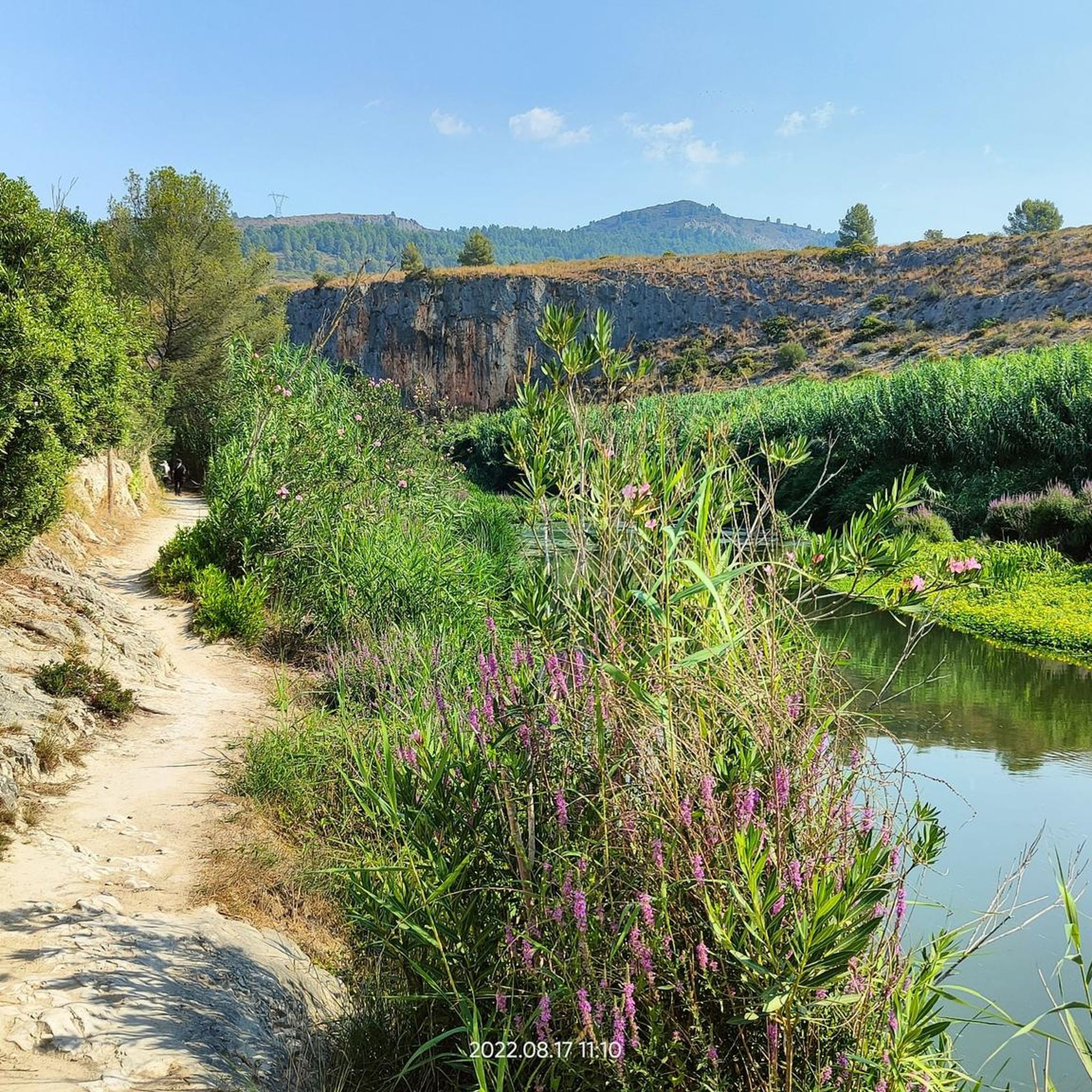
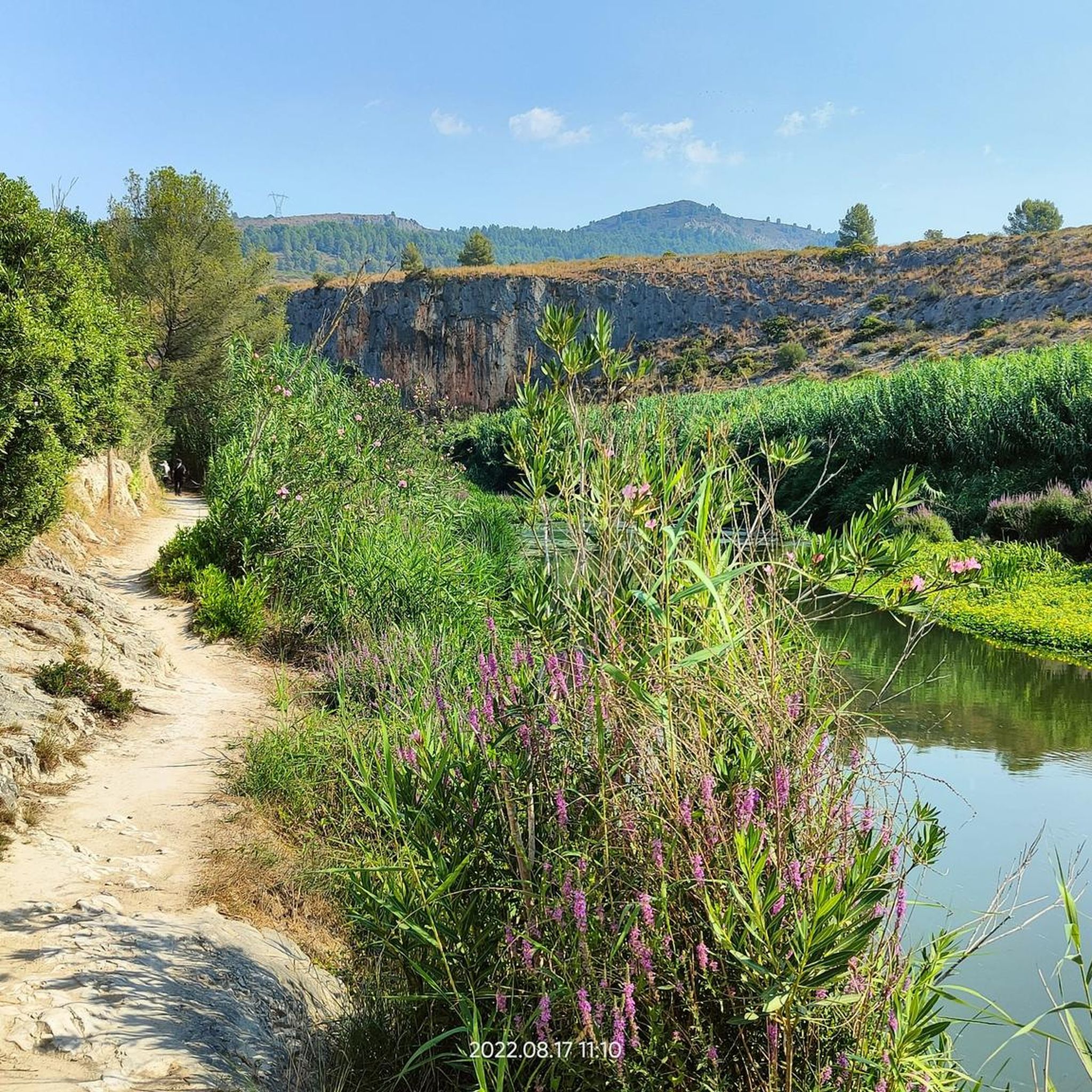
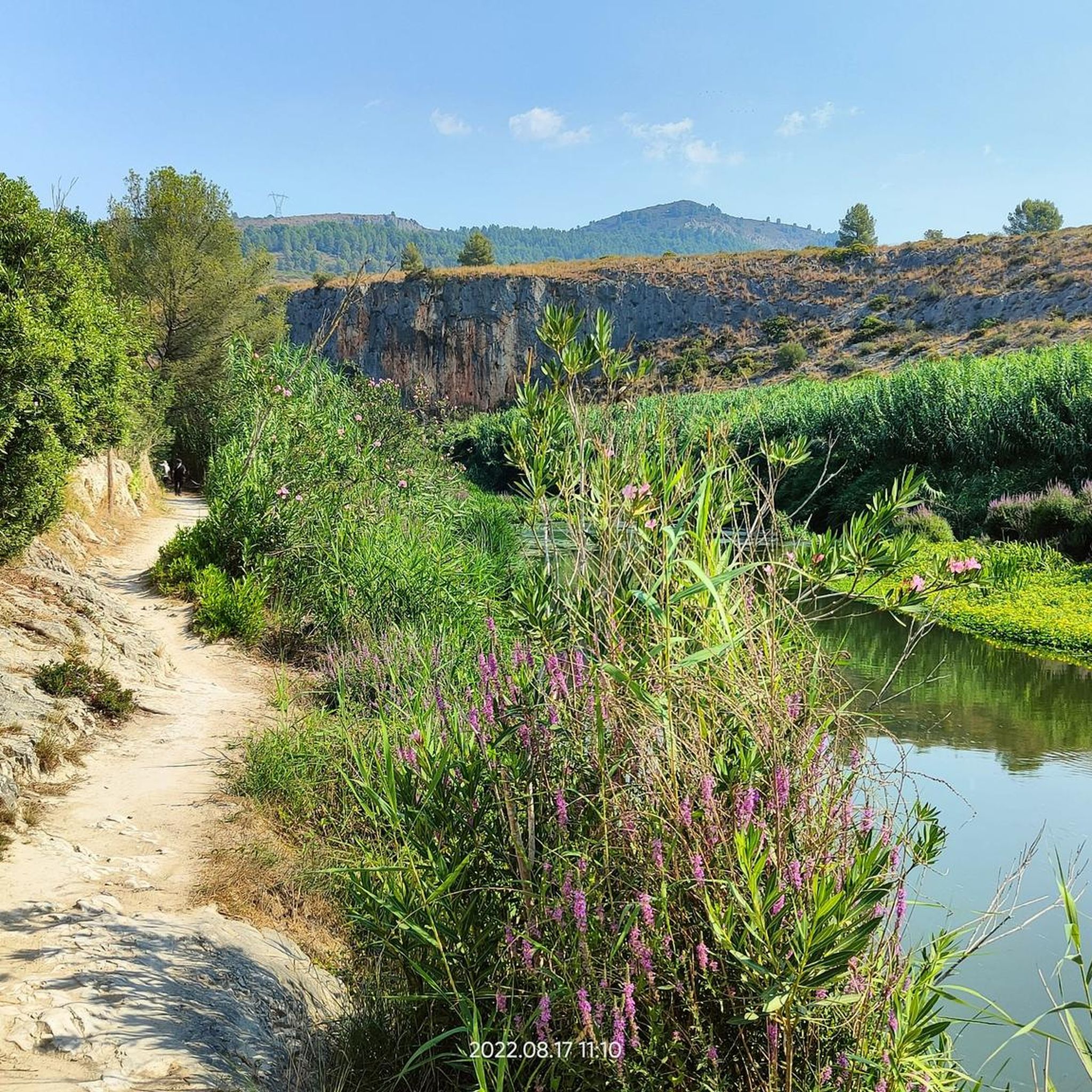
The La Cova Negra municipal natural area is located in the municipality of Játiva, province of Valencia. In the Cova Negra is the Middle Paleolithic site in which remains of Homo Neanderthal have appeared. This natural area is located in the narrow valley formed by the Albaida River, as it crosses the reliefs of the Sierra Grossa, at the exit of the so-called Estret de les Aigües. In the widest meander formed by the Albaida River, at the height of Pico del Paller, you can see the Cova Negra, named for the blackish appearance of its walls.
2
1
The so-called "lanes" are the marks of a road perpendicular to the Via Heraklea (Path of Hercules) during the Bronze Age, which the Romans later renamed Via Augusta. This road, in the Iberian era, connected the interior of the peninsula with the sea, directly connecting the ancient city of Saiti (Roman Saetabis, today Xàtiva) with the city of Dianium (now Dénia). These lanes are very marked in the rock due to the continuous traffic of the carts. The distance between the axles of the wheels confirms that they date from the Iberian era. In Énova, this road was used for centuries due to the Roman exploitation of the quarry for the production of marble (which is located a few meters away), as well as being used to connect the Roman Villa with the rest of the world
1
0
Les Salines de Manuel is a municipal natural site of 28 hectares, of great landscape value, which is located next to the town of Manuel. It is a protected space of high ecological and historical value, as it was an old salt mine of the army, now turned into a large green lung. The exploitation was possible thanks to the composition of the so-called Serra de les Salines, formed by a rich combination of mineral salts from sandy rocks, limestone, reddish clay and other materials, giving rise to what we know as "common salt" . Due to the presence of all these minerals, the vegetation has the particular characteristic of being different from that of other places, either because of the adaptation to the terrain or because of the abundant foliage. This is why the site of Les Salines de Manuel houses two very different types of vegetation. On the one hand, the white pine forest with its traditional companions (lentiscle, coscolla, margallon, rosemary, rudder, buckthorn, juniper, etc.); and for another, the saline outcrops, where a Valencian endemic known as Limonium mansanetianum grows in honor of José Mansanet, the great botanist of Simat de la Valldigna. Next to this grass, capable of filtering salt water and expelling the salt through the leaves, grow several tamarinds, trees more typical of coastal areas. The circular route of the area, known as the Ruta de la Sal, is divided into 3 paths, which make up a total of approximately 4 kilometers, all signposted. On the way, you will meet a hill called the "wall of bullets", used in the past for shooting exercises by the army, which had an Engineers and Sappers School here between 1906 and 1996. There is also the Paret del Moro , which are the remains of a Muslim fortification from the 10th century; the remains of an old machine gun nest and trenches; buildings of the old salt exploitation; or the birth of salt water that supplied the salt pans, as well as the recreational area. Les Salines de Manuel, full of vegetation and pines adapted to salt, was exploited since ancient times by the Romans, being handed over a little over a century ago to the army, who finally handed it over to the population to be recovered for the use and enjoyment of visitors as a natural site. The military use lasted until 1996, although it was not until 2006 when the Manuel City Council acquired the land to be used for sports, a rural tourism center and the adaptation of the area as a municipal natural site and the adaptation of various hiking routes.
1
0

La Cova Negra is a cavity that is located in a gorge called the Strait of Waters. Its black color is mainly due to the smoke from the bonfires made by its former inhabitants, the Neanderthals who occupied it for a few months of the year. An important amount of flint tools and other archaeological remains have been found here.
3
0
Marks left on the stones by the carts that loaded the marble from the Roman quarry.
2
0
La Cova Negra is an important archaeological site, located in the widest meander of the Albaida river. It was home to Neanderthal man in the Paleolithic. The cave gets its name from the dark color of the walls. Human remains and paintings have been found inside.
2
0
La Cova Negra is an important archaeological site, located in the widest meander of the Albaida river. It was home to Neanderthal man in the Paleolithic. The cave gets its name from the dark color of the walls. Human remains and paintings have been found inside. It is a space of fundamental importance for understanding the culture of the Mosterian and the reality of the Neanderthals. The Almodí Museum exhibits an exact reproduction of a parietal bone from the period, discovered in the cave.
2
0
Frequently Asked Questions
What are the most significant natural monuments to visit around Bellús?
Bellús and its surroundings offer several significant natural monuments. Among them, Cova Negra stands out as a crucial Middle Paleolithic site, once inhabited by Neanderthals. Another notable site is the Les Salines municipal natural site, known for its ecological and historical value as a former salt mine. The Bitter Spring and Quintana Fountain also provide pleasant natural settings for recreation.
Are there any natural monuments with historical or archaeological importance in the Bellús area?
Yes, the Bellús area is rich in historical and archaeological natural monuments. La Cova Negra, located near Xàtiva, is an exceptionally important Middle Paleolithic site, recognized as a UNESCO World Heritage site for its Neanderthal remains and ancient paintings. Similarly, La Petxina Cave, also a UNESCO site, offers abundant traces of Mousterian culture from approximately 40,000 years ago. The Les Salines site also has historical significance as an ancient salt mine, with remains of a Muslim fortification and military history. Additionally, the Quarry of Quatre Camins is an archaeological site with Roman-era marble quarries.
What kind of natural features can I expect to see in Bellús?
The natural monuments around Bellús showcase a variety of features. You can explore significant caves like Cova Negra, which are part of a UNESCO World Heritage archaeological complex. The region is also characterized by river landscapes, particularly along the Albaida River, such as the Estret de les Aigües. You'll find natural springs like the Bitter Spring and the Quintana Fountain, as well as forested areas and unique geological formations, including the Serra Grossa range.
Are there any lesser-known natural monuments worth exploring near Bellús?
Beyond the most popular sites, you might enjoy exploring Les Salines, a municipal natural site with high ecological and historical value, featuring unique salt-adapted vegetation and a circular route known as the Ruta de la Sal. Another interesting, historically significant site is the Quarry of Quatre Camins (Llosar dels Francs), an archaeological site with Roman-era marble quarries.
What outdoor activities can I do near the natural monuments in Bellús?
The natural monuments around Bellús are excellent starting points for various outdoor activities. You can enjoy hiking, road cycling, and mountain biking. For hiking, routes like the 'Arcadetes d’Alboi Aqueduct – Cova Negra loop from Bellús' or the 'Cova Negra – Albaida River Crossing loop from Cova Negra' are popular. Mountain biking options include routes like 'Casa La Quintana – Quintana Fountain loop from Benigànim'. You can find more details on these activities in the Hiking around Bellús, Road Cycling Routes around Bellús, and MTB Trails around Bellús guides.
Are there specific hiking trails recommended around Bellús's natural monuments?
Yes, there are several recommended hiking trails that allow you to explore the natural monuments. For instance, you can take the 'Arcadetes d’Alboi Aqueduct – Cova Negra loop from Bellús', which is a moderate 11.9 km hike. A shorter, easy option is the 'Cova Negra – Albaida River Crossing loop from Cova Negra', covering 3.9 km. The 'Camí de les Aigües' path runs parallel to the Albaida River in the Estret de les Aigües, offering a scenic route. More hiking options are available in the Hiking around Bellús guide.
Are there easy hiking options for families near Bellús's natural monuments?
Yes, several natural monuments and nearby trails are suitable for families. The Les Salines site features a circular route, the Ruta de la Sal, which is divided into three paths totaling approximately 4 kilometers, all signposted and family-friendly. The Bitter Spring and Quintana Fountain areas also offer recreational spaces and trails suitable for walking. For specific routes, the 'Cova Negra – Albaida River Crossing loop from Cova Negra' is an easy 3.9 km hike.
Can I go mountain biking near the natural monuments?
Absolutely. The area around Bellús offers several mountain biking trails that pass near or through natural monuments. For example, the 'Casa La Quintana – Quintana Fountain loop from Benigànim' is a moderate 38.6 km mountain bike route. Another option is the 'Bellús Reservoir – Cova Negra loop from Guadasséquies', an easy 23.5 km ride. You can find more mountain biking routes in the MTB Trails around Bellús guide.
What is the best time to visit the natural monuments in Bellús?
The Bellús region generally enjoys a Mediterranean climate. Spring (April to June) and autumn (September to November) are often considered the best times to visit. During these seasons, the weather is typically mild and pleasant, ideal for hiking, cycling, and exploring the natural and archaeological sites without the intense heat of summer or the cooler, potentially wetter days of winter. This allows for comfortable enjoyment of sites like Cova Negra and the trails around Estret de les Aigües.
What do visitors enjoy the most about Bellús's natural monuments?
Visitors particularly appreciate the blend of natural beauty and profound historical significance. The Cova Negra is highly regarded for its archaeological importance and the unique experience of exploring a Neanderthal dwelling. The scenic trails along the Albaida River, especially in the Estret de les Aigües, are loved for their ecological value and opportunities for outdoor activities. The peaceful environment around spots like the Quintana Fountain and the historical context of sites like Les Salines also contribute to a rich and varied visitor experience.
Are there any natural areas suitable for climbing near Bellús?
Yes, the Estret de les Aigües (Strait of Waters), located in the northeast of the Bellús municipality, is mentioned as an ideal area for climbing, in addition to hiking and cycling. This natural area encompasses the riparian zone along the Albaida River as it carves through the ravines of the Serra Grossa range, offering suitable terrain for climbing enthusiasts.
Can I find circular walking routes around the natural monuments?
Yes, circular walking routes are available. For example, the Les Salines municipal natural site offers a circular route known as the Ruta de la Sal, which is divided into three signposted paths. Additionally, several hiking routes listed in the Hiking around Bellús guide are circular, such as the 'Arcadetes d’Alboi Aqueduct – Cova Negra loop from Bellús' and the 'Cova Negra – Albaida River Crossing loop from Cova Negra'.
Most popular attractions around Bellús

Get inspired with the komoot mobile app


Explore more
Extend your search for the best caves by checking out these guides of the top ones around Bellús:
