Top 5 Mountain Passes around Castellbisbal
Best mountain passes around Castellbisbal offer diverse terrain for outdoor enthusiasts in the province of Barcelona. The region features a mix of challenging ascents and scenic routes, particularly around the Llobregat valley and the Ordal mountain range. Its landscape is characterized by pine forests and varied elevations, providing opportunities for both road cycling and hiking. These routes connect various municipalities and offer a blend of physical challenge and natural beauty.
Best mountain passes around Castellbisbal
- The most popular mountain pass…
Last updated: August 11, 2026
Creu d'Aragall Pass (537 m)
Highlight • Mountain Pass
Translated by Google •
Tip by

Coll de l'Obac
Highlight (Segment) • Mountain Pass
Translated by Google •
Tip by

Sign up now to discover places like this
Get recommendations on the best single tracks, peaks, & plenty of other exciting outdoor places.
Sign up for free
Pla del Fideuer
Highlight • Mountain Pass
Translated by Google •
Tip by

Cairat to Can Estruc Trail (Montserrat)
Highlight (Segment) • Trail
Translated by Google •
Tip by

Start today with a free account
Your next adventure awaits.
Login or Signup
Other adventures around Castellbisbal

Tips from the Community

I confirm again that the path is narrow and overgrown in some places.
0
0

A very pleasant climb. Few cars, a cool, shady area. There are some rest areas that make the 8km climb manageable.
0
0

One of the two climbs that leave Terrassa and cross the Parc Natural de Sant Llorenç de Munt i l'Obac, thus connecting the Vallés Occidental region with the Bages region. Like the climb to Coll d'Estanalles, Coll de l'Obac is a very gentle climb, on a narrow, rough road, without a hard shoulder, very busy with cars on Sundays and public holidays, so you have to be careful, especially on the descent. The final stretch of the climb, the last 2 km, is by far the hardest, especially a very long straight that exceeds 7%. It is very pleasant to ride there first thing in the morning, with shade and the freshness of the forest. The views of Montserrat, the Bages plain and the Pyrenees line are well worth it... and a good photo.
0
0

High point. A challenge.
0
0

Good port from Terrassa. Smooth and continuous climb, between woods and with little traffic.
0
0

Challenging climb due to high gradient at times, with little traffic.
0
0
It is a very pleasant and quiet climb that connects Gelida with the area of Corbera de Llobregat and Palma de Cervelló. The two slopes are very fun and shady, the Gelida slope being more constant and the Corbera slope with steps. At the top of the port there is a very legendary bar where you usually stop to have a coffee... or eat something else.
0
0
The Coll de l'Obac is a beautiful climb that connects the city of Terrassa with Castellbell and Vilar, very close to Monistrol de Montserrat, at the foot of the mountain. It is one of the 3 alternatives to reach the foot of Montserrat from Vallès Occidental, in addition to Vacarisses and the main road that takes us from Martorell and Olesa de Montserrat. It is a port that has 4 aspects: - South slope, which starts from Terrassa. It is a long and difficult climb, especially in its initial part, getting tougher in the last 4 - 5 km, without ever exceeding 6 - 7%. Very twisted road, without shoulder, with rough asphalt and with a lot of motorcycle and car traffic (as well as cyclists) during the weekend and holidays. We must be careful. It is a mostly shady road. - Southwestern slope (BV-1211 road), which crosses the town of Vacarisses and deviates to the left through the "Els Caus" urbanization. The initial part is very laid out; However, the section that crosses the "Els Caus" urbanization has very hard ramps, with the road narrow and concreted in some sections. - North Slope, which starts from Castellbell and Vilar. It is a climb very similar to the South slope due to its length and type of port. It differs from the previous one in that it has a considerable ramp when crossing the town of Rellinars and the road has hardly any shadows. - Northwest Slope (BV-1212 road), which starts from the C-58 road, goes up to the town of Vacarisses and takes the section to the right of the "Els Caus" urbanization, previously described. The first stretch to Vacarisses is straight and very beautiful, with a very quiet and winding road, paved to perfection.
0
0
Frequently Asked Questions
What kind of terrain and natural features can I expect on the mountain passes around Castellbisbal?
The mountain passes around Castellbisbal offer diverse terrain, characterized by pine forests with undergrowth, varied elevations, and scenic views. You'll find routes with constant gradients and well-maintained asphalt, particularly on popular cycling climbs. The region is part of the Catalan pre-coastal mountains, connecting to the Llobregat valley.
Are there any family-friendly mountain passes or trails in the area?
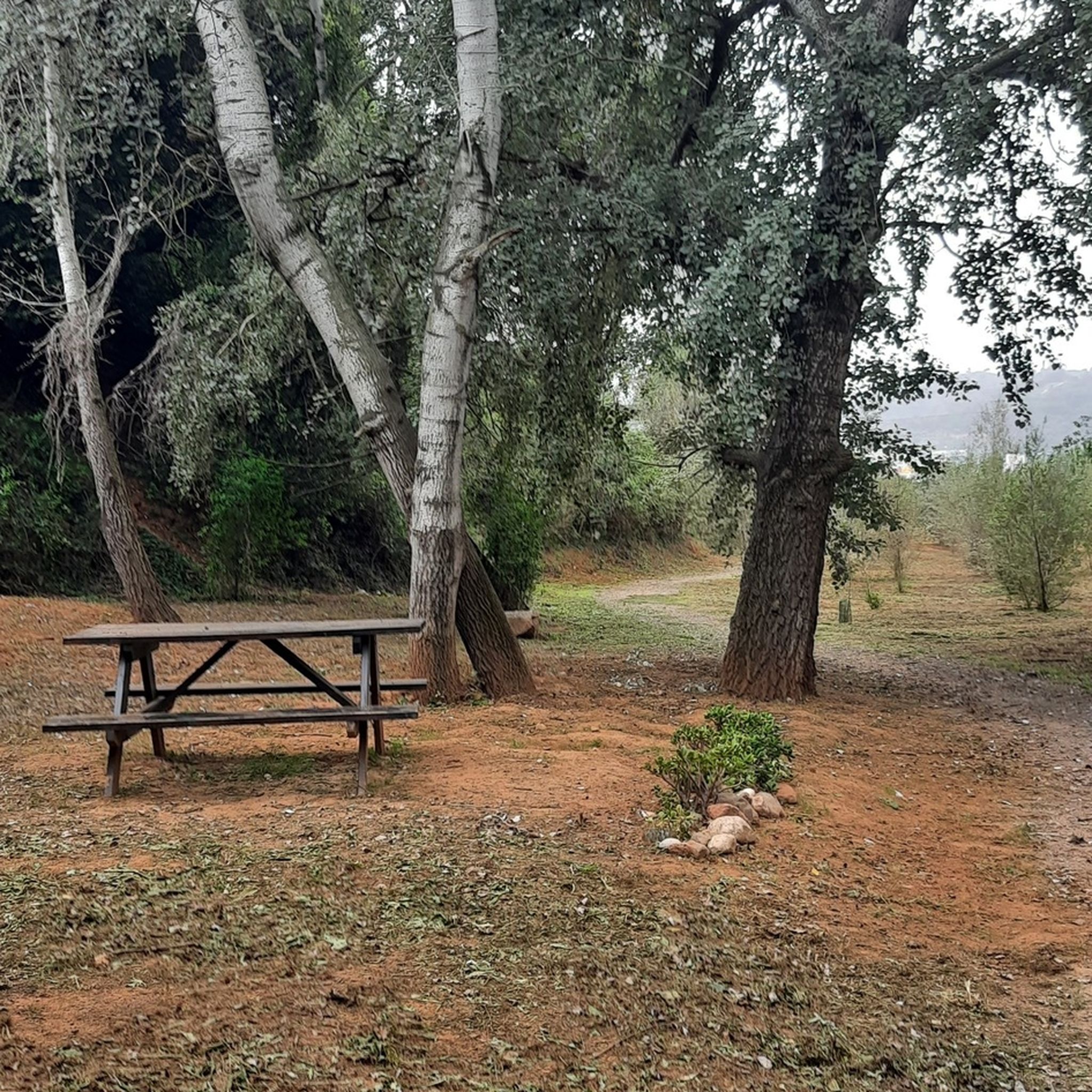
Yes, Pla del Fideuer is specifically noted as a family-friendly mountain pass. It's a border pass between Olesa de Montserrat and Vacarisses, offering a pleasant outing with facilities like picnic tables, making it ideal for families who don't want to walk extensively.
What are the best mountain passes for cycling training near Castellbisbal?
For cycling training, the Creu d'Aragall Pass (537 m) is highly recommended. It's known for its constant gradient, well-maintained asphalt, and low traffic volume, providing an ideal environment for focused training. The ascent from Gelida spans 6.7 kilometers with an average slope of 6.2%.
What is the best time of year to visit the mountain passes around Castellbisbal?
The mountainous area around Castellbisbal, particularly the pine forests, can be very hot in summer. For a more comfortable experience, spring and autumn generally offer milder temperatures, making them ideal for exploring the passes and trails. Winter can also be pleasant, though some sections might be cooler.
What outdoor activities can I do near these mountain passes?
The region around Castellbisbal is excellent for various outdoor activities. You can enjoy road cycling, mountain biking, and general cycling tours. There are numerous routes available, such as the 'Martorell and Castellbisbal Loop via El Suro Ascent' for road cycling, or the 'Ruta Llobregat entre Paseo de San Vicente y puente peatonal de Castelbisbal - circular' for MTB. You can find more details on these activities in the Cycling around Castellbisbal, Road Cycling Routes around Castellbisbal, and MTB Trails around Castellbisbal guides.
Are there any viewpoints or scenic spots on the mountain passes?
Yes, many of the passes offer scenic views. The Creu d'Aragall Pass (537 m) provides characteristic views of the Catalan pre-coastal mountains. Additionally, the Alt de la Creu d'Aragall (537 m) – Gelida Side is also noted as a viewpoint, offering tranquility and natural beauty.
What is the difficulty level of the mountain passes around Castellbisbal?
The passes offer a range of difficulties. Climbs like the Creu d'Aragall Pass (537 m) are considered challenging, with constant gradients and maximum slopes up to 13%. However, there are also moderate local climbs like 'The Castellbisbal Climb' (8.3 km, 2.8% avg gradient) and family-friendly options like Pla del Fideuer, catering to different fitness levels.
Can I find shaded sections on the mountain passes for hot days?
Yes, the Alt de la Creu d'Aragall (537 m) – Gelida Side is known for having many shaded sections, making it a more comfortable option during warmer periods. The general vegetation of pine forests also contributes to shaded areas on various routes.
Are there any specific local climbs within Castellbisbal itself?
While major passes are often nearby, Castellbisbal features local climbs popular with cyclists. 'The Castellbisbal Climb' is an 8.3 km ascent with an average gradient of 2.8%. Another is the 'Av. Castellbisbal Cycling Climb,' a shorter 0.82 km route with an average gradient of 3.1% and a maximum of 8.5%, offering a quick challenge.
What do visitors appreciate most about the mountain passes near Castellbisbal?
Visitors frequently appreciate the tranquility, well-maintained roads, and the opportunity for consistent training on climbs like the Creu d'Aragall. The diverse landscapes, from pine forests to varied elevations, and the blend of physical challenge with natural beauty are also highly valued. The komoot community has contributed 72 upvotes and 13 photos, highlighting the area's appeal.
Are there any circular routes or loop trails involving these mountain passes?
Yes, the region offers several circular routes. For road cycling, the 'Martorell and Castellbisbal Loop via El Suro Ascent' is a moderate 35 km loop that incorporates diverse landscapes and significant elevation gain. Many other cycling and MTB loops are available, often connecting different towns and natural features around the Llobregat river valley.
Most popular routes around Castellbisbal
Most popular attractions around Castellbisbal

Get inspired with the komoot mobile app


Explore more
See even more epic mountain passes by checking out these guides around Castellbisbal:
