Top 14 Natural Monuments around Harlington
Best natural monuments around Harlington are found in this hilltop village in Central Bedfordshire, England. The area is characterized by its rural setting and proximity to the Chilterns Area of Outstanding Natural Beauty (AONB). This region features rolling chalk hills, ancient beech woodlands, and pristine chalk streams. The landscape offers diverse natural beauty and opportunities for outdoor exploration.
Best natural monuments around Harlington
- The most popular natural monuments is Five Knolls Barrow Cemetery, a historical site that features prehistoric…
Last updated: July 27, 2026
Five Knolls Barrow Cemetery
Highlight • Historical Site
Tip by

Sharpenhoe Clappers
Highlight (Segment) • Viewpoint
On the way, you will encounter a memorial by W A Robertson, who gave …
Tip by

Sign up now to discover places like this
Get recommendations on the best single tracks, peaks, & plenty of other exciting outdoor places.
Sign up for free
Sundon Hills
Highlight • Natural Monument
Tip by

Deacon Hill summit
Highlight • Natural Monument
Tip by
Medieval Rabbit Warrens, Chilterns National Landscape
Highlight • Historical Site
Tip by
Sign up for free to discover even more natural monuments around Harlington.
Sign up for free
Already have an account?
Start today with a free account
Your next adventure awaits.
Login or Signup
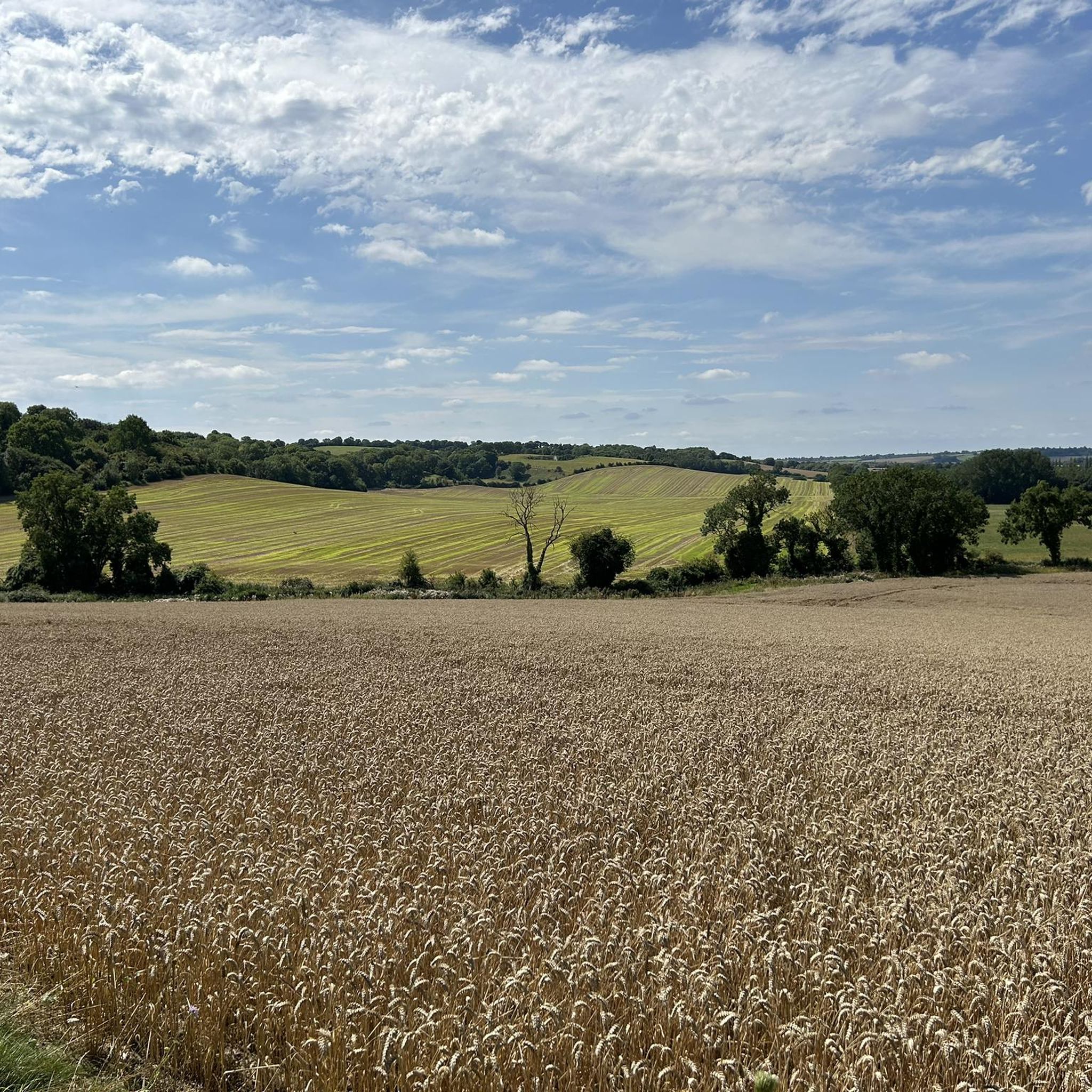
Other adventures around Harlington

Tips from the Community

The Clappers is a fascinating clump of trees on top of what was an Iron Age fort (!) The ascent is easy, but hikers should note that the descent (down a perilously steep set of makeshift wooden stairs) is challenging in the wet.
0
0

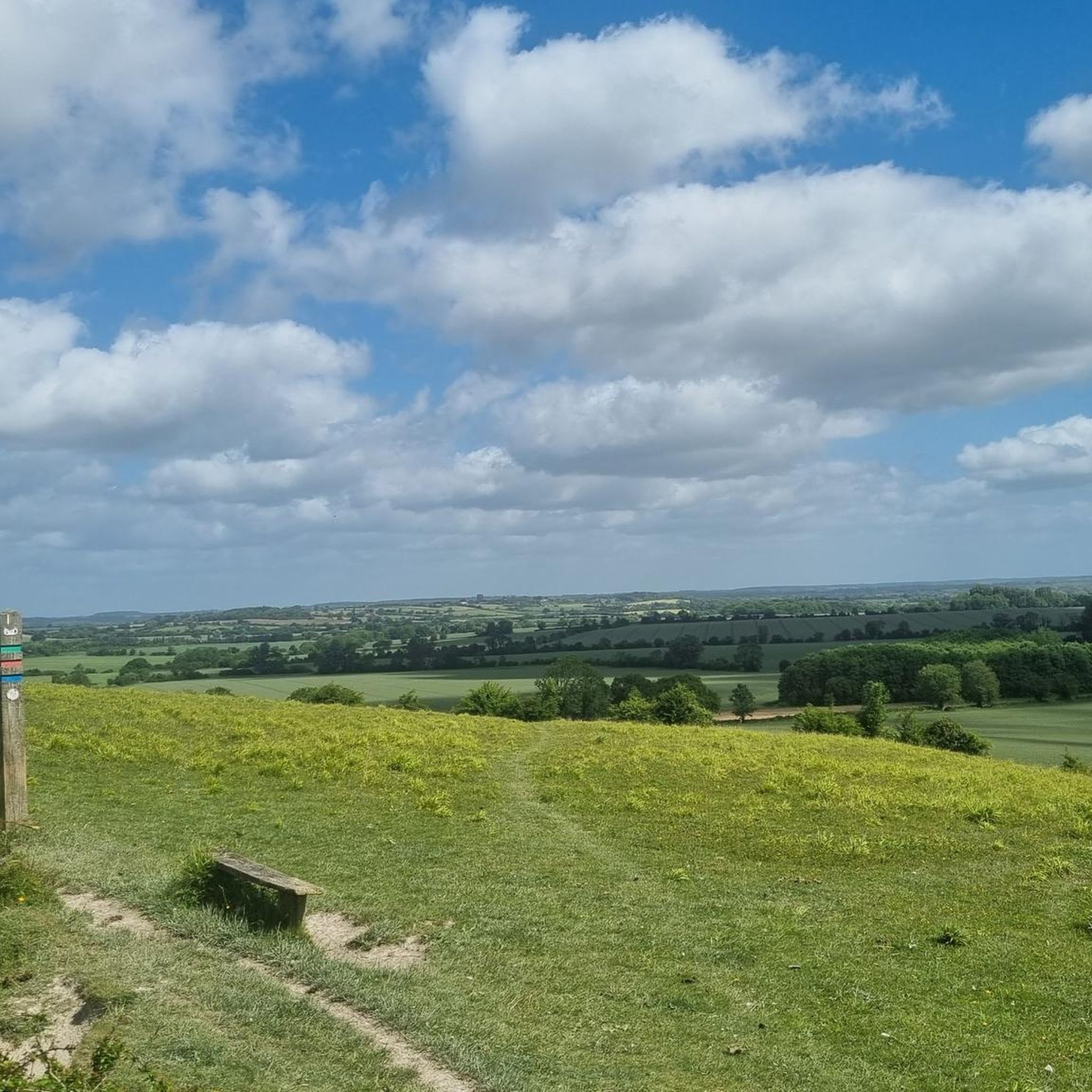
Deacon Hill (172m), from which there are stunning views in essentially any direction (as long as you don't stare at your boots) is a Site of Special Scientific Interest (the summit area is rich in plant species, and there are birds here such as buzzards and numerous species of butterflies, too). There is a bench to sit on as well. The hill is a gorgeous place to be and marvel at the beauty of the world.
2
0
A fantastic forest walk with amazing views from above over the Chilterns, particularly towards the north. On the way, you will encounter a memorial by W A Robertson, who gave this area to the National Trust in memory of his brothers who died in the Great War. A great and enjoyable steep set of wooden stairs by the end of this stretch, too, as you rejoin the Chiltern Way.
1
0


At Dunstable Downs there is a group of seven round barrows, consisting of two bowl barrows, three bell barrows, and two pond barrows. It is thought that they were initially used as burial grounds for Kings or Chiefs, although excavations of two of the bell barrows in August 1850 revealed no treasure to support this. Excavation history When the northern-most barrow was excavated in 1928 by Sir Mortimer Wheeler, a crouched female skeleton with a late Neolithic knife at her shoulder was found. This was later put on display at Luton Museum and Art Gallery. Other excavations throughout the 1920s revealed over 90 skeletons from various periods. For instance, in Saxon times about 30 bodies were buried there with their hands apparently still tied behind their backs. Gallows were set up on the northernmost barrow in medieval times and some of the people hanged there were also buried there. Witch lore has also been connected with the barrows, as in the trial of Elizabeth Pratt of Dunstable in 1667. She was arrested whilst meeting with three other women, plotting to bewitch the children of Thomas Heyward.
2
0

The Smithcombe, Sharpenhoe and Sundon Hills cover 86 hectares in Bedfordshire. With thick forests, gentle slopes and wildflowers, the area is a lovely place to cycle, hike and enjoy a picnic. The hills make up part of the Chilterns Area of Outstanding Natural Beauty and are considered a Site of Special Scientific Interest. Here, you will find plenty of interesting plants and wildlife. As the hills are made mostly of unimproved chalk grassland, there are lots of rare species. Look out for rabbits too!
1
0

The Five Knolls are prehistoric burial mounds or barrows. There are two pond barrows, which are circular flat areas surrounded by raised banks. The mounds are believed to be from the later Neolithic and early Bronze Age period, around 4,000 years ago. Excavations have found the remains of a middle-aged woman buried with a polished flint knife, as well as Bronze Age cremated remains in an urn. It is also believed that during the 5th and 6th centuries gallows were placed at this spot for Saxon invaders as a warning to others. https://www.nationaltrust.org.uk/dunstable-downs-and-whipsnade-estate/trails/walk-in-the-steps-of-history-giants.
2
0
Frequently Asked Questions
What are some of the most notable natural monuments to visit around Harlington?
The area around Harlington offers several significant natural monuments. You can explore the ancient burial mounds at Five Knolls Barrow Cemetery, enjoy panoramic views from Deacon Hill summit, or discover the historical and natural beauty of Sharpenhoe Clappers with its forest walks and stunning vistas over the Chilterns.
Are there any natural monuments with historical significance near Harlington?
Yes, several natural monuments in the area also hold historical importance. The Five Knolls Barrow Cemetery features prehistoric burial mounds from the Neolithic and early Bronze Age. Additionally, the Medieval Rabbit Warrens, Chilterns National Landscape, offer a glimpse into medieval land use, where mounds were created for rabbit farming.
What kind of natural features can I expect to see in the Chilterns Area of Outstanding Natural Beauty near Harlington?
The Chilterns AONB, easily accessible from Harlington, is characterized by rolling chalk hills, ancient beech woodlands, and pristine chalk streams. You'll find velvety chalk downland rich in wildflowers, butterflies, and diverse wildlife, including red kites and buzzards. The landscape also features archaeological artifacts like tumuli and hillforts.
Where can I find family-friendly natural areas for walks near Harlington?
For a family-friendly outing, Sundon Hills offers gentle slopes, thick forests, and wildflowers, making it a lovely place for a walk or picnic. The Barton Hills National Nature Reserve is also popular with families due to its open access and rich biodiversity, perfect for nature observation.
What are the best places for viewpoints and scenic vistas around Harlington?
For breathtaking views, head to Deacon Hill summit, which offers stunning panoramic views in almost every direction. Sharpenhoe Clappers also provides amazing views over the Chilterns, particularly towards the north, after a rewarding forest walk. Dunstable Downs, the highest point in Bedfordshire, offers expansive chalk grasslands and vast open spaces with great views.
Are there opportunities for outdoor activities like cycling near Harlington's natural monuments?
Yes, the area around Harlington is excellent for cycling. You can find various routes for gravel biking, general cycling, and road cycling. For example, explore routes like 'The Old Sun – View of the Sundon Hills loop from Harlington' or 'View of Sharpenhoe Clappers – Hex Hill loop from Harlington'. You can find more details and routes in the Gravel biking around Harlington, Cycling around Harlington, and Road Cycling Routes around Harlington guides.
What makes Barton Hills National Nature Reserve a unique natural monument?
Barton Hills National Nature Reserve is a fine example of downland and woodland in the North Chilterns. It's renowned for its colorful wildflowers, including rare species like Pasque flower, greater pignut, and field fleawort. It's also a haven for butterflies such as chalkhill blue and marbled white, and features an important population of large-leaved lime trees, making it a rich spot for biodiversity.
What is the Bunyan Oak and why is it significant?
The Bunyan Oak is an ancient oak tree, estimated to be around 600 years old, located just outside Harlington village. It holds historical and literary significance as it's believed to be where John Bunyan, author of *The Pilgrim's Progress*, preached. Its natural growth has formed a unique 'pulpit-like' structure, offering a serene spot for reflection and a tangible link to the past.
What do visitors particularly enjoy about the natural monuments around Harlington?
Visitors frequently appreciate the stunning views, especially from spots like Deacon Hill summit and Sharpenhoe Clappers. The diverse terrain, from thick forests to open chalk grasslands, offers enjoyable hiking experiences. Many also value the historical context, such as the ancient burial mounds at Five Knolls Barrow Cemetery, and the rich biodiversity found in areas like Barton Hills National Nature Reserve.
Are there any specific geological features to observe in the Harlington area?
The Harlington area, being part of the Chilterns AONB, is characterized by its unique chalk geology. This gives rise to rolling chalk hills, chalk grasslands, and chalk streams. These features support specific ecosystems, including rare wildflowers and butterflies, making the landscape distinct and ecologically significant.
What are the best times to visit the natural monuments around Harlington?
Spring and summer are ideal for experiencing the vibrant wildflowers and butterfly populations, especially at places like Barton Hills National Nature Reserve. Autumn offers beautiful foliage in the ancient beech woodlands of the Chilterns. While accessible year-round, always check local conditions, especially during winter, as some trails might be challenging in wet or icy weather.
Are there any country parks or nature reserves easily accessible from Harlington?
Yes, Harlington's location provides excellent access to several natural areas. The extensive Chilterns Area of Outstanding Natural Beauty itself is a major draw. Specific sites include Sundon Hills Country Park, known for its varied terrain, and Barton Hills National Nature Reserve, a haven for wildflowers and butterflies. Dunstable Downs, managed by the National Trust, is also a popular country park with expansive chalk grasslands.
Most popular routes around Harlington
Most popular attractions around Harlington

Get inspired with the komoot mobile app


Explore more
Extend your search for the best caves by checking out these guides of the top ones around Harlington:
