Top 20 Natural Monuments around Terranoa/Olbia
Natural monuments around Terranoa/Olbia offer diverse landscapes in northeastern Sardinia, Italy. This coastal region features a variety of natural sites, from ancient historical monuments to natural pools and waterfalls. The area is characterized by its rich natural beauty and geological formations. Visitors can explore a range of natural attractions, including coastal areas and inland historical sites.
Best natural monuments around Terranoa/Olbia
- The most popular natural monument is Rio Pitrisconi Natural Pools and Waterfalls, a waterfall that features natural pools and a spectacular waterfall formed by erosion. This site offers a natural spectacle generated by one of Sardinia's rare year-round flowing streams.
- Another must-see spot is Giant’s Tomb of Coddu Vecchiu, a historical site. This monument is a significant example of Nuragic funerary architecture, dating back to the Bronze Age.
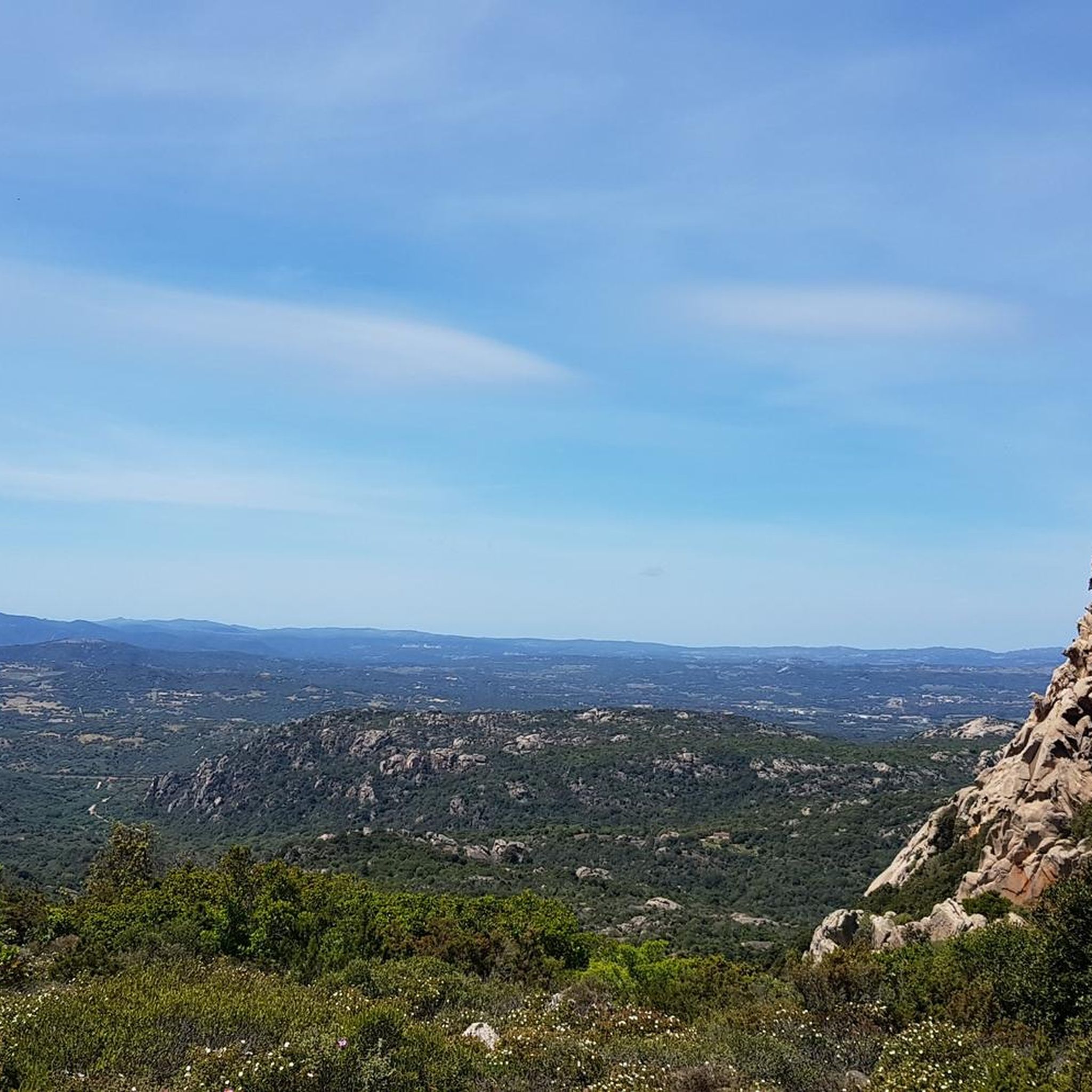
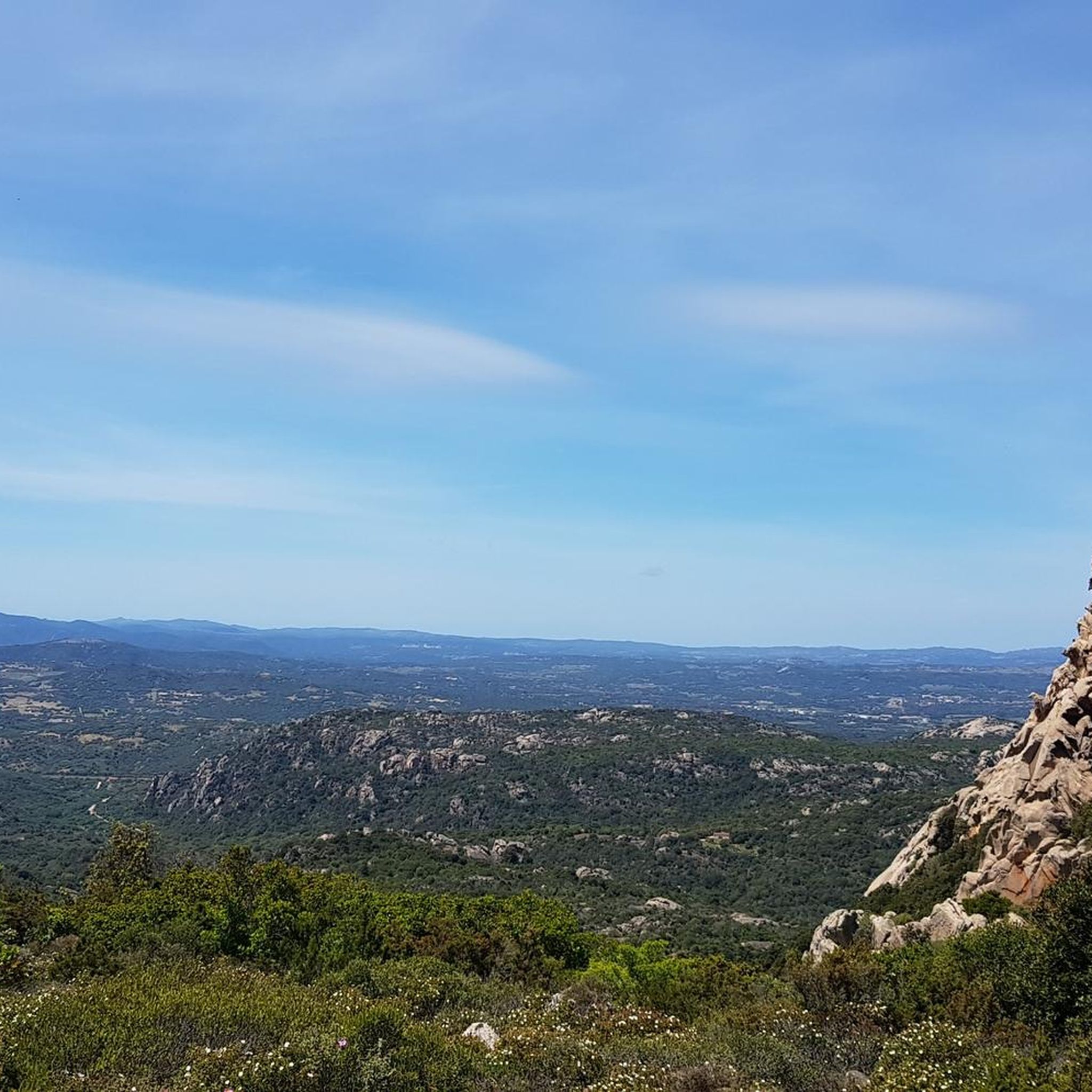
- Visitors also love Malchittu Nuragic Temple, an interesting and original Nuragic cult building in excellent condition. This temple is situated between two granite hills and offers a viewpoint over the surrounding landscape.
- Terranoa/Olbia is known for its historical sites, natural pools, waterfalls, and beaches. The region provides a variety of natural monuments and Olbia natural attractions walking routes for exploration.
- The natural monuments around Terranoa/Olbia are appreciated by the komoot community, with over 150 upvotes and more than 130 photos shared.
Last updated: July 25, 2026
Rio Pitrisconi Natural Pools and Waterfalls
Highlight • Waterfall
Translated by Google •
Tip by

Giant’s Tomb of Coddu Vecchiu
Highlight • Historical Site
Translated by Google •
Tip by

Sign up now to discover places like this
Get recommendations on the best single tracks, peaks, & plenty of other exciting outdoor places.
Sign up for free
Il Pirata Beach (Capriccioli)
Highlight • Beach
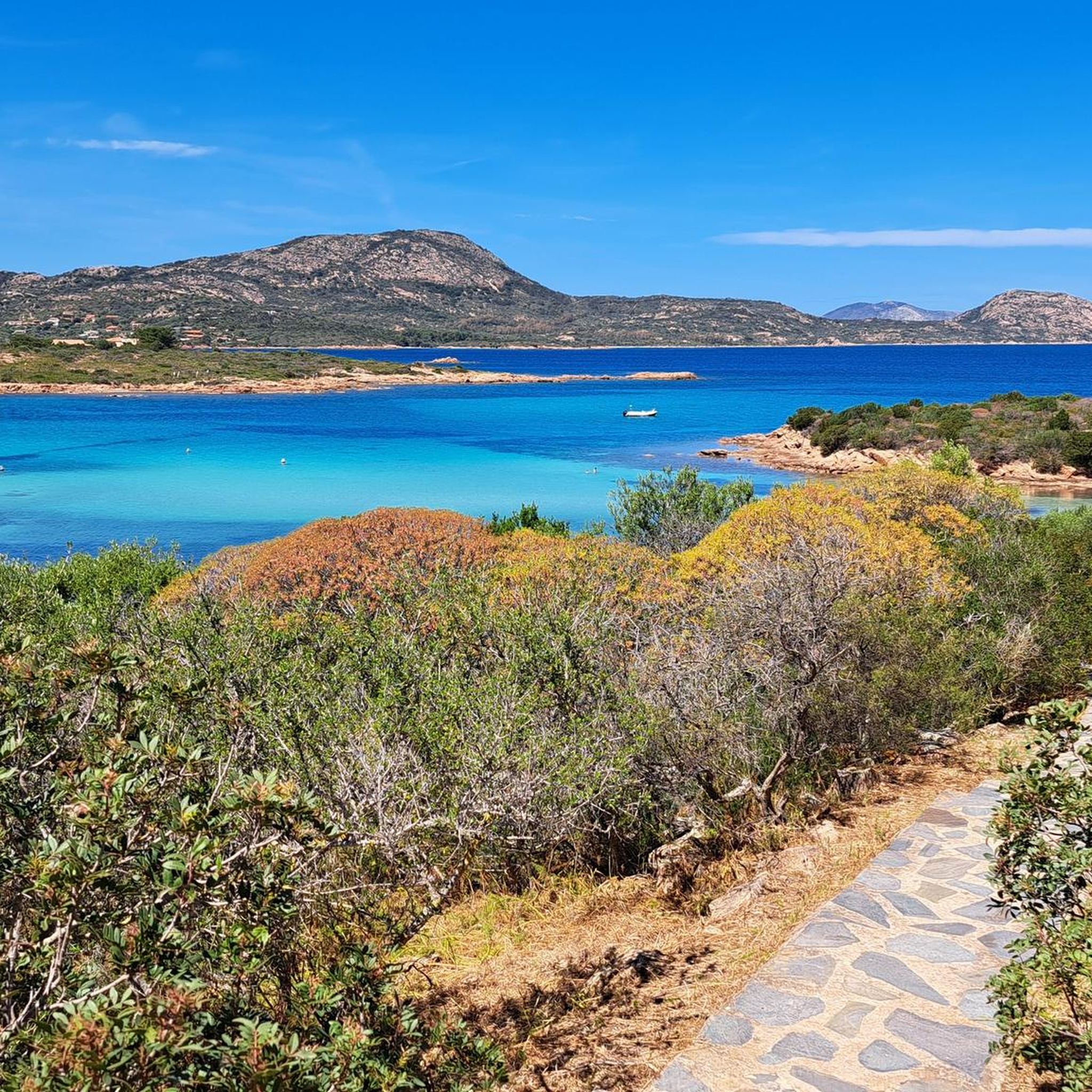
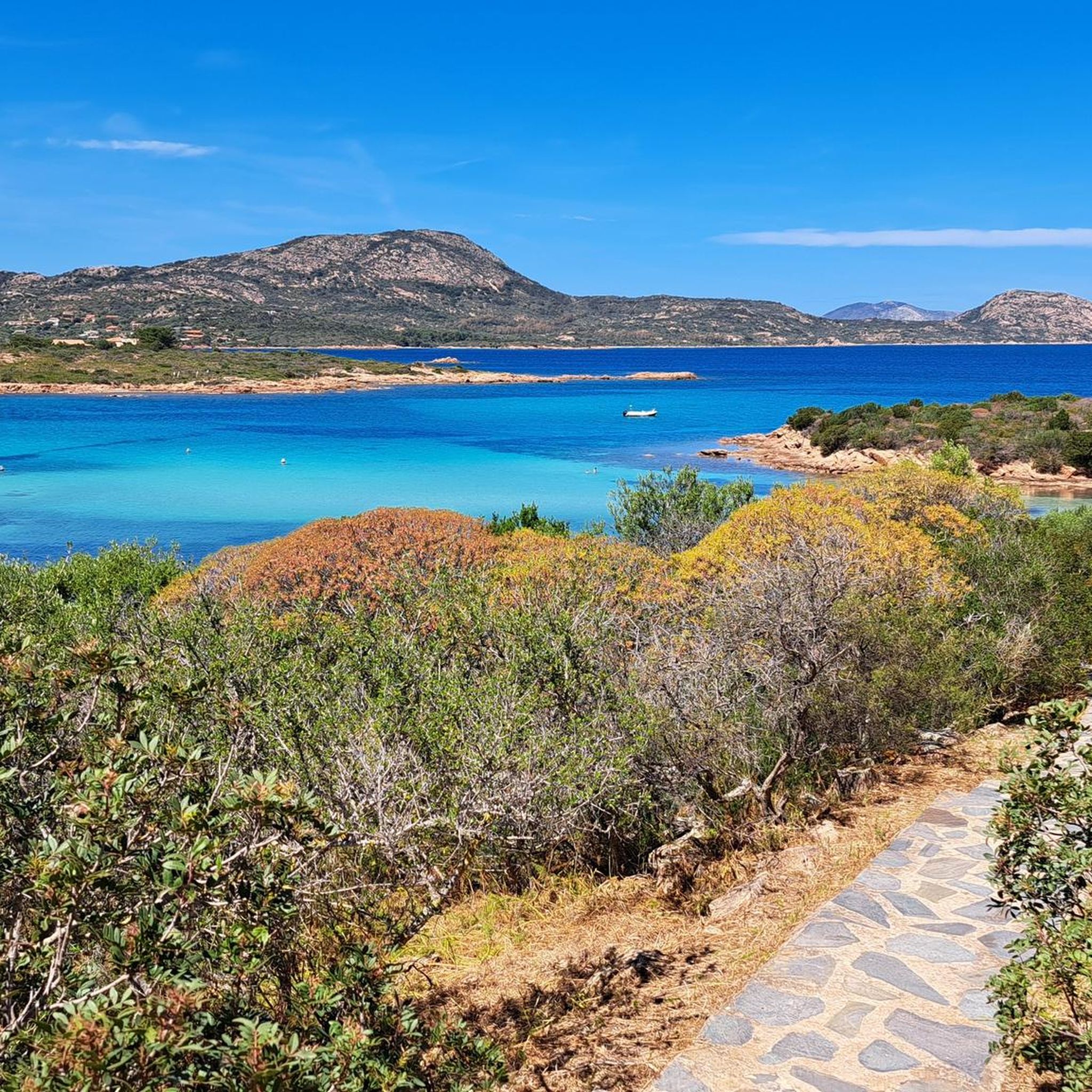
In the north-east of Sardinia, a small peninsula divides a piece of paradise. Here lies a beach with particularly fine sand, which, lined with granite rocks, reflects light colors and offers a breathtaking view of the small islands of the Costa Smeralda
A strip of granite covered with Mediterranean vegetation protrudes into the sea in the southern part of the Costa Smeralda. The name Capriccioli means "little goats" in Gallura. They are a pair of powerful, rounded rocks smoothed by the sea, which form several coves located south of Porto Cervo, in the Arzachena area, about 15 km from the city.
The small beaches of Capriccioli are all made of fine, light sand with greyish shades that sink into the deep blue sea, protected by yellow, pink and reddish granite rocks in the midst of dense Mediterranean scrub: junipers, mastic trees, olive trees and maritime pines that add to the wild charm of the place. The east coast is characterized by a flat, sandy seabed, protected from the Mistral, making it an ideal place for families with children. Separated by pink granite blocks, to the west lies the other side of the Capriccioli coastal strip, which offers two more beaches.
Text / Source: Sardegna Turismo.it
sardegnaturismo.it/de/entdecken/cala-capriccioli
sardegnaturismo.it/de
Translated by Google •
Tip by

Malchittu Nuragic Temple
Highlight • Historical Site
It lies on a hollow between two granite hills 120 meters above sea level and was protected by a nuraghe on the hill in front of it, of which only the collapse remains today, and by a defensive wall.
There is also a large round hut on a lower level.
Along the path that leads to the small temple there are numerous tafoni, natural gorges in the granite formed by the erosion of water and wind, which in ancient times served as shelter and burial for people.
The small temple has a space with a semi-rectangular floor plan and a rounded shape, preceded by a quadrangular atrium created by extending the side walls on the facade and ending with a small pediment.
The structure of the building is almost completely preserved and allows us to understand well the original appearance.
All that is missing is the roof, which was probably gabled and made of wooden beams resting on a ridge beam.
Inside the room one can see the furnishings that may be related to the rituals that took place here, such as alcoves, seating, counters and a circular hearth in the center of the room.
Unfortunately, due to the small number of finds, we do not know which rituals were in use and to which deity they were addressed.
From the hearth come the remains of the embers that provided carbon-14 dating of the last phase of the monument's presence in the 10th century. B.C.
The found fragments of ceramic artefacts, which have a characteristic decoration with vertical triangular ribs, suggest that the life of the small temple dates back to the Middle Bronze Age, around 1600 BC. BC, began.
Source: gesecoarzachena.it/?page_id=1581
Translated by Google •
Tip by

Li Muri Necropolis
Highlight • Historical Site
The burial circles are among the oldest evidence of Western European megalithism and bear close comparisons with southern Corsica. Burials of this type are also found in the French and Spanish Pyrenees, while in Sardinia it seems to be widespread only in the Gallura region, particularly in the Arzachena region.
The necropolis consists of four burial circles touching each other with variable widths between about 5 and 8.5 meters in diameter.
They are delimited by small slabs fastened with a knife and arranged in concentric circles, which served to house a mound of stones and earth that encircled the tombs, giving them the appearance of four artificial mounds.
Within each circle was a small rectangular stone chest containing one or at most two deceased in a crouched posture.
Each burial was accompanied by a set of valuable objects: flint blades, necklaces of unspecified stone, spheroid buttons (perhaps set in sticks for use as weapons or scepters), axes of polished hardstone, and in one case a sophisticated soapstone chalice indicate this that the deceased were prominent figures in the community.
Traces of red ocher, a substance symbolizing regeneration and used to clean or symbolically cover human remains, have been found in the tombs.
Two large granite menhirs, stone monuments set vertically into the ground with the function of tombstones or symbolic representations of deities or the soul of the deceased, were placed between one circle and another.
Outside the circles there are also small square stone boxes, presumably intended to collect grave goods.
A fifth circle differs from the others both in its secluded location and in the features of the tomb at its center.
The finds found prove a first use in the Neolithic, which is evidenced by fragments of flint blades and beads of a necklace made of steatite; In the Bronze Age (around 1600 BC), this circular grave would then have been converted into an allée couverte, i.e. a communal grave.
gesecoarzachena.it/?page_id=1558
Translated by Google •
Tip by
Sign up for free to discover even more natural monuments around Terranoa/Olbia.
Sign up for free
Already have an account?
Start today with a free account
Your next adventure awaits.
Login or Signup
Popular around Terranoa/Olbia
Budoni to Castelsardo on Italy's Via Gallura – Cammino 100 Torri
Glorious gravel in Sardinia — three day routes from Olbia
Bikepacking the TranSardinia – the quiet Italian island life
Road Cycling Routes around Terranoa/Olbia
Hiking around Terranoa/Olbia
Cycling around Terranoa/Olbia
Running Trails around Terranoa/Olbia
MTB Trails around Terranoa/Olbia
Gravel biking around Terranoa/Olbia
Other adventures around Terranoa/Olbia


Tips from the Community

Capriccioli beach / Cala Capriccioli In the north-east of Sardinia, a small peninsula divides a piece of paradise. Here lies a beach with particularly fine sand, which, lined with granite rocks, reflects light colors and offers a breathtaking view of the small islands of the Costa Smeralda A strip of granite covered with Mediterranean vegetation protrudes into the sea in the southern part of the Costa Smeralda. The name Capriccioli means "little goats" in Gallura. They are a pair of powerful, rounded rocks smoothed by the sea, which form several coves located south of Porto Cervo, in the Arzachena area, about 15 km from the city. The small beaches of Capriccioli are all made of fine, light sand with greyish shades that sink into the deep blue sea, protected by yellow, pink and reddish granite rocks in the midst of dense Mediterranean scrub: junipers, mastic trees, olive trees and maritime pines that add to the wild charm of the place. The east coast is characterized by a flat, sandy seabed, protected from the Mistral, making it an ideal place for families with children. Separated by pink granite blocks, to the west lies the other side of the Capriccioli coastal strip, which offers two more beaches. Text / Source: Sardegna Turismo.it https://www.sardegnaturismo.it/de/entdecken/cala-capriccioli https://www.sardegnaturismo.it/de/
14
0

Great view and great place for a break
0
0

A beautiful Nuragic giant's tomb, not far from Arzachena, nestled in a lovely landscape with orchards. It lies close to the road from Arzachena to Luogosanto.
0
0
Hike through beautiful nature. Unfortunately, the GPS often breaks down. The path is still easy to see. But the round trip is much longer than it is recorded. Depending on your pace, it takes 3.5 to 4 hours. The path is very rocky in places and can only be mastered with a few climbing sections. Good shoes and poles are recommended. Avoid it when it's wet! Great view of the coastal landscape, the pools of water also have their charm. The descent to the waterfall is tough. A worthwhile hike! The journey by car to the parking lot is doable, but it is a challenge. Lots of potholes and stones, only a few parts are concrete. There is a shuttle from the base station, but only early in the morning and in the afternoon.
7
2

The cost of visiting each excavation site is €4 (as of April 2024) and it is open from 10 a.m.
0
0

deserted in December
0
0

Rio Pitrisconi is a river that crosses the forests of Monte Nieddu di San Teodoro. Along the way you can admire the spectacular granite canyons dug by the slow flow of the river, large natural pools and waterfalls.
4
2
Huge natural pool with waterfall formed by the waters of Rio Pitrisconi.
3
3
Frequently Asked Questions
What are some unique natural monuments to explore around Terranoa/Olbia?
Beyond the well-known spots, you can discover the adventurous Rio Pitrisconi Natural Pools and Waterfalls, which offer a spectacular natural display from one of Sardinia's rare year-round flowing streams. Another hidden gem is the Malchittu Nuragic Temple, an ancient cult building nestled between granite hills, offering a unique historical and natural experience.
Are there any family-friendly natural monuments in the Terranoa/Olbia area?
Yes, several natural monuments are suitable for families. Il Pirata Beach (Capriccioli) is known for its fine sand and calm waters, making it ideal for children. Additionally, the Giant’s Tomb of Coddu Vecchiu, a significant historical site, is generally accessible and offers an educational outing for all ages.
What historical natural monuments can I visit near Terranoa/Olbia?
The region is rich in historical natural monuments. You can explore the Giant’s Tomb of Coddu Vecchiu, an impressive example of Nuragic funerary architecture from the Bronze Age. Another significant site is the Malchittu Nuragic Temple, a well-preserved cult building. For an even older perspective, the Li Muri Necropolis dates back to the Neolithic period, showcasing ancient burial circles.
Where can I find natural pools and waterfalls around Terranoa/Olbia?
The primary location for natural pools and waterfalls is the Rio Pitrisconi Natural Pools and Waterfalls. This site features a spectacular waterfall and natural pools carved by erosion, fed by a stream that flows year-round. While the experience is rewarding, the descent to the waterfalls can be challenging.
What kind of beaches are considered natural monuments in this region?
Terranoa/Olbia offers stunning natural beaches. Il Pirata Beach (Capriccioli) is a beautiful example with fine sand and granite rocks. Another enchanting option is Cala Moresca Beach, located within the protected Capo Figari promontory, featuring golden sand and emerald waters with views of Figarolo island.
Are there opportunities for hiking or cycling near the natural monuments?
Yes, the area around Terranoa/Olbia provides numerous routes for outdoor activities. You can find various road cycling routes, mountain biking trails, and general cycling paths. For detailed options, explore the guides for Road Cycling Routes, MTB Trails, and Cycling around Terranoa/Olbia.
What is Tavolara Island and what does it offer?
Tavolara Island is a prominent limestone massif rising dramatically from the sea near Olbia. It's a significant natural landmark with a protected marine area, making it an excellent destination for snorkeling and diving enthusiasts due to its rich underwater life. Its unique silhouette is a striking feature on the horizon.
Can I find green spaces or parks within the urban area of Olbia?
Yes, Olbia offers serene green spaces. Fausto Noce Park is the largest park in Sardinia, providing extensive vegetation and walking paths within the urban area for a tranquil escape. The Padrongianus River Park also offers opportunities for observing local bird species and enjoying a picnic by the water.
What kind of wildlife can be observed near Terranoa/Olbia's natural monuments?
The diverse landscapes around Terranoa/Olbia support various wildlife. Coastal areas like Cala Moresca and Tavolara Island's marine protected area are rich in underwater life, making them ideal for snorkeling and diving. Inland, areas like the Padrongianus River Park offer opportunities to observe local bird species.
What do visitors particularly enjoy about the natural monuments in Terranoa/Olbia?
Visitors frequently praise the stunning natural beauty and the unique blend of natural and historical sites. The adventurous experience at Rio Pitrisconi Natural Pools and Waterfalls is highly valued, despite its challenging descent. The historical significance of sites like the Giant’s Tomb of Coddu Vecchiu and the Malchittu Nuragic Temple also receives high appreciation for their well-preserved architecture and historical context.
Are there any natural monuments that offer great viewpoints?
Yes, the Malchittu Nuragic Temple is situated between two granite hills and provides an excellent viewpoint over the surrounding landscape. Additionally, the coastal areas and islands like Tavolara offer breathtaking panoramic views of the sea and coastline.
Most popular routes around Terranoa/Olbia
Most popular attractions around Terranoa/Olbia

Get inspired with the komoot mobile app


Explore more
Extend your search for the best caves by checking out these guides of the top ones around Terranoa/Olbia:
