Top 12 Natural Monuments around Bolimowski Park Krajobrazowy
Best natural monuments around Bolimowski Park Krajobrazowy are located within a significant green oasis between major Polish cities. This area is characterized by its diverse ecosystems, including dense forests, the Rawka River, wetlands, and post-glacial dunes. The park contains 71 natural monuments, primarily ancient trees and an erratic boulder, offering opportunities for hiking and nature walks. These sites hold scientific, aesthetic, historical, and cultural significance.
Best natural monuments around Bolimowski Park Krajobrazowy
- The most popular natural monument is Rokita Nature Reserve, a gorge that features a deep ravine and a steel footbridge. It is known for its leafy forest and can be filled with water after a snowy winter.
- Another must-see spot is Romantic Garden in Arkadia, a historical site. Founded in 1778, this garden features architectural and garden settings with structures like the Temple of Diana and the Aqueduct.
- Visitors also love Tree Shrines in Bolimowski Landscape Park, a religious site with several chapels on old oaks at a crossroads. This charming place is located within a deciduous and mixed forest.
- Bolimowski Park Krajobrazowy is known for its ancient trees, such as Small-leaved Lindens and Pedunculate Oaks, and geological features like erratic boulders. These include 517 Small-leaved Lindens, 156 Pedunculate Oaks, 21 Scots Pines, and 1 erratic boulder.
- The natural monuments around Bolimowski Park Krajobrazowy are appreciated by the komoot community, with 76 upvotes and 20 photos shared.
Last updated: October 13, 2026
Rokita Nature Reserve
Highlight • Gorge
Translated by Google •
Tip by

Romantic Garden in Arkadia
Highlight • Historical Site
The architectural and garden setting was developed by Szymon Bogumił Zug with great personal involvement and participation of the duchess. Architectural ideas were sketched by Jan Piotr Norblin and Aleksander Orłowski, which were implemented until 1797 by Zug, and later by Henryk Ittar. The duchess began to establish the garden in the spring of 1778, but she continued to develop and compose it for over twenty years, until her death in 1821. The first buildings to be built on the shore of the great Arcadian pond, which was dammed in 1781, were the Cascade and the Cottage by the Waterfall (1781), and a little later the Temple of the High Priest (1783) and the Temple of Diana (1783-1785) with a ceiling by Norblin depicting the Morning Star, and the Aqueduct (1784). In the years 1785-1789, a symbolic Tombstone of the Duchess was built on Poplar Island with an ambiguous Latin sentence Et in Arcadia ego, modeled on the Tomb of Jean Jacques Rousseau in Ermenoville, as well as the Grotto of the Sibyl built of field stones, the rustic Cottages of Philemon and Baucida, the Stone Arch, the Corner of Melancholy, the Gate of Time, the altar circle on the Island of Offerings. In the 1990s, the expansion of Arcadia continued under Zug's direction. At that time, the House of the Murgrave adjacent to the Stone Arch and the Gothic House above the Grotto of the Sibyl were built. In the last years of the passing century, the interior of the Etruscan Cabinet was decorated in the Temple with a neoclassical interior and paintings by Michał Płoński and Aleksander Orłowski.
Around 1800, the Duchess turned towards the aesthetics of a romantic garden. At that time, the garden in Arkadia expanded from the small and previously closed area of the sentimental park to the surrounding vast fields located behind the Skierniewka River, freely incorporating viewing axes and new buildings into the vast space of the surrounding natural landscape. The Duchess's bold intentions from that time were implemented in Arkadia by a young romantic visionary, an extremely talented architect of the new generation, Henryk Ittar. At that time, the Tomb of Illusions (1800) was built on the Champs Elysees located behind the river, the Roman Circus (1803) and the Amphitheatre (1804). A little later, the folk Swiss House was built, concealing fairy-tale "crystal interiors" (1810), which the Duchess located among the buildings of the Arcadian village.
Translated by Google •
Tip by

Sign up now to discover places like this
Get recommendations on the best single tracks, peaks, & plenty of other exciting outdoor places.
Rawka River Nature Reserve
Highlight • River
Translated by Google •
Tip by
Siwica Glade Nature Reserve
Highlight • Natural Monument
Translated by Google •
Tip by
Polana Siwica Nature Reserve
Highlight • Natural Monument
Polana Siwica is the largest and most diverse of the glades of the Bolimów Forest, it is marshy with lakes created in old peat excavations. The reserve includes meadow, reed, shrub and water communities, and forest communities on the outskirts.
The reserve has rich flora - over 220 species of vascular plants have been found here, including 9 protected species and 4 species placed on the list of endangered plants in Poland. Among others, the following plants grow here: Siberian iris, common gentian, pink dianthus, purple moor-grass, marsh helleborine, broad-leaved marsh marsh, and meadow starwort.
Translated by Google •
Tip by
Sign up for free to discover even more natural monuments around Bolimowski Park Krajobrazowy.
Already have an account?
Start today with a free account
Your next adventure awaits.
Popular around Bolimowski Park Krajobrazowy

Tips from the Community

The Rawka River Nature Reserve, located in the Łódź province, covers 97 km of the naturally meandering Rawka River and adjacent areas with a total area of approximately 487 ha. It is one of the few reserves in Poland protecting the entire length of the river from its source to its mouth, along with the lower sections of tributaries and oxbow lakes. For road cyclists, the asphalt routes in the vicinity of Bolimów and Skierniewice are attractive, offering picturesque views of the river valley. It is worth remembering, however, that some sections may lead through roads with a poorer surface, so it is recommended to plan the route in advance. The reserve also offers the opportunity to observe a variety of fauna and flora, which makes it an interesting place for cycling trips combined with admiring nature.
1
0

The "Rokita" reserve is a reserve whose main subject of protection is a fragment of the natural, deeply incised valley of the Rokita River with valuable forest communities. The "Rokita" nature reserve is located in the Skierniewice commune, in the Skierniewice district, on the area managed by the Skierniewice Forest District, the Ruda Forest District, as well as the lands of the State Treasury - the mouth section of the Rokita River. Its area is 14.47 ha, the buffer zone area: 58.18 ha. The Rokita River is a right-hand tributary of the Rawka and currently only periodically carries water, usually only in early spring, after thaws or after heavy, long-lasting rainfall. Most of the time, the valley, which in places reaches even 7 m in depth, remains dry. Water appears in its source section, where increased activity of the European beaver Castor fiber is observed.
0
0
The Polana Siwica nature reserve is a peat bog nature reserve established in 1998 with an area of 68.38 ha, located in the Nieborów commune, in Łowicz district, in the Łódź province (Skierniewice forest district and district, Nieborów forest district). The reserve is located within the Bolimów Landscape Park. Polana Siwica is the largest and most diverse of the glades of the Bolimów Forest, it is marshy with lakes created in old peat excavations. The reserve includes meadow, reed, shrub and water communities, and forest communities on the outskirts. The reserve has rich flora - over 220 species of vascular plants have been found here, including 9 protected species and 4 species placed on the list of endangered plants in Poland. Among others, the following plants grow here: Siberian iris, common gentian, pink dianthus, purple moor-grass, marsh helleborine, broad-leaved marsh marsh, and meadow starwort.
0
0
Founded in 1778 by Helena Radziwiłłowa. The architectural and garden setting was developed by Szymon Bogumił Zug with great personal involvement and participation of the duchess. Architectural ideas were sketched by Jan Piotr Norblin and Aleksander Orłowski, which were implemented until 1797 by Zug, and later by Henryk Ittar. The duchess began to establish the garden in the spring of 1778, but she continued to develop and compose it for over twenty years, until her death in 1821. The first buildings to be built on the shore of the great Arcadian pond, which was dammed in 1781, were the Cascade and the Cottage by the Waterfall (1781), and a little later the Temple of the High Priest (1783) and the Temple of Diana (1783-1785) with a ceiling by Norblin depicting the Morning Star, and the Aqueduct (1784). In the years 1785-1789, a symbolic Tombstone of the Duchess was built on Poplar Island with an ambiguous Latin sentence Et in Arcadia ego, modeled on the Tomb of Jean Jacques Rousseau in Ermenoville, as well as the Grotto of the Sibyl built of field stones, the rustic Cottages of Philemon and Baucida, the Stone Arch, the Corner of Melancholy, the Gate of Time, the altar circle on the Island of Offerings. In the 1990s, the expansion of Arcadia continued under Zug's direction. At that time, the House of the Murgrave adjacent to the Stone Arch and the Gothic House above the Grotto of the Sibyl were built. In the last years of the passing century, the interior of the Etruscan Cabinet was decorated in the Temple with a neoclassical interior and paintings by Michał Płoński and Aleksander Orłowski. Around 1800, the Duchess turned towards the aesthetics of a romantic garden. At that time, the garden in Arkadia expanded from the small and previously closed area of the sentimental park to the surrounding vast fields located behind the Skierniewka River, freely incorporating viewing axes and new buildings into the vast space of the surrounding natural landscape. The Duchess's bold intentions from that time were implemented in Arkadia by a young romantic visionary, an extremely talented architect of the new generation, Henryk Ittar. At that time, the Tomb of Illusions (1800) was built on the Champs Elysees located behind the river, the Roman Circus (1803) and the Amphitheatre (1804). A little later, the folk Swiss House was built, concealing fairy-tale "crystal interiors" (1810), which the Duchess located among the buildings of the Arcadian village.
0
0
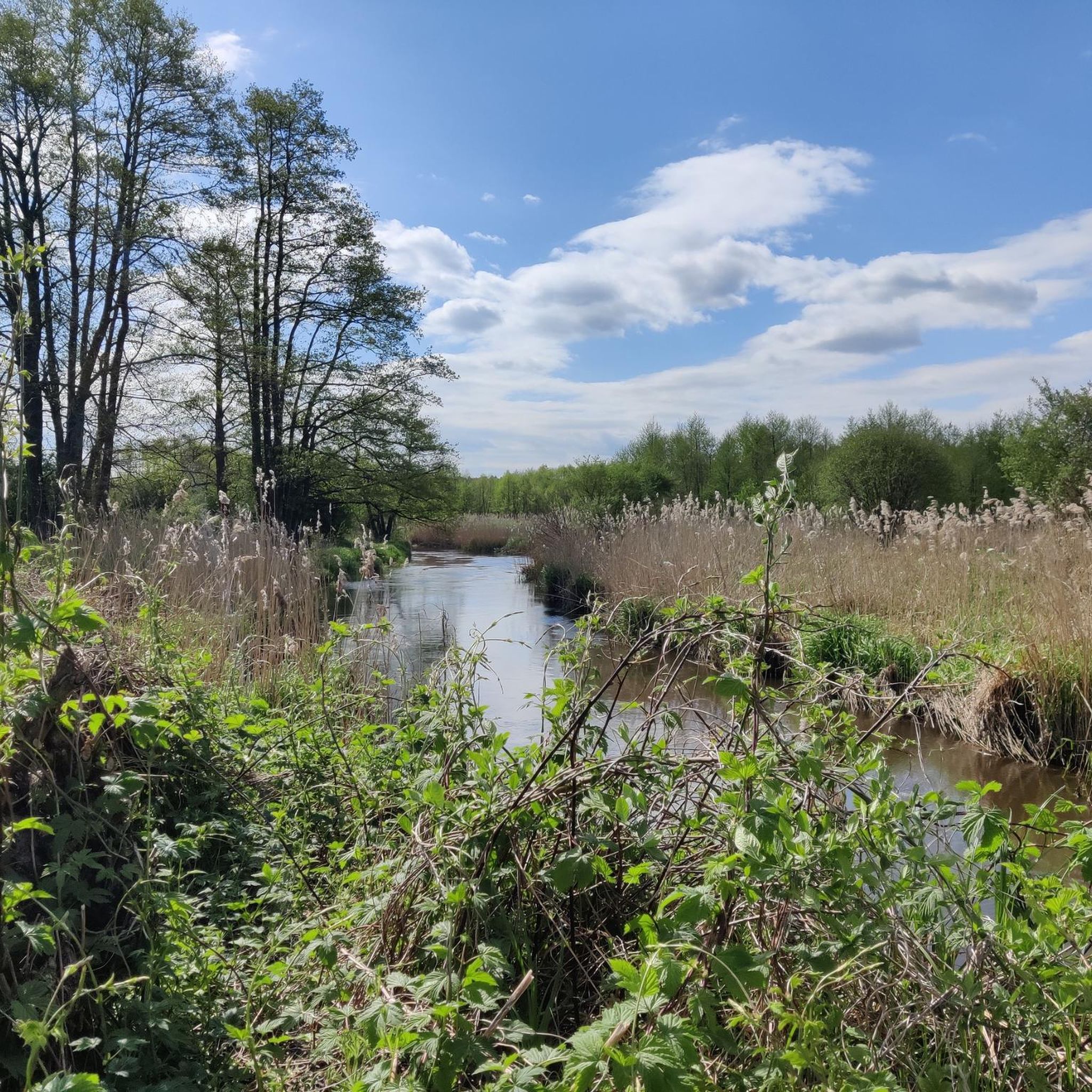
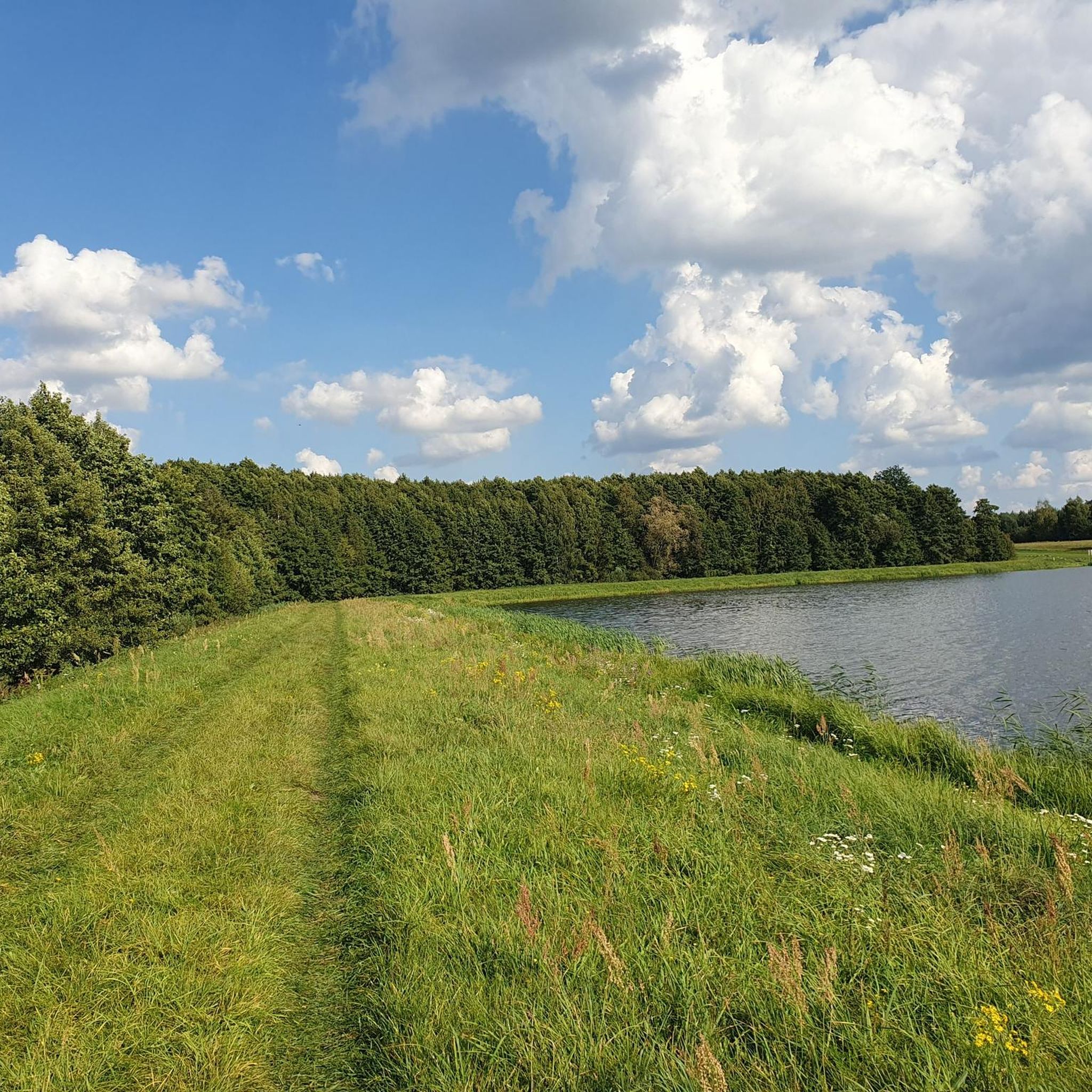
The reserve covers the Rawka riverbed from its sources to its mouth on the Bzura (approx. 97 km), as well as the lower sections of the right-bank tributaries (Krzemionka, Korabiewka, Rokita and Grabianka), oxbow lakes and strips of land adjacent to the banks with a width of 10 m. The Rawka is a river with clean water and a fast current, strongly meandering. The aim of the reserve protection is to preserve a typical medium-sized lowland river in its natural state, together with the landscape of its valley and the habitat of many rare and protected plants and animals.
1
0

The bike path is rather steep but greate small adventure
0
0

A ravine as in the serious mountains xD
1
0

A lookout tower would be nice ... Because so little of this nature can be seen.
4
0
Frequently Asked Questions
What are some of the most popular natural monuments to visit in Bolimowski Park Krajobrazowy?
Visitors frequently enjoy the unique Rokita Nature Reserve, known for its deep ravine and steel footbridge through a leafy forest. Another highly appreciated site is the Tree Shrines in Bolimowski Landscape Park, a charming religious site featuring chapels on ancient oaks within a beautiful deciduous forest.
Are there any historical natural monuments in the park?
Yes, the Romantic Garden in Arkadia is a significant historical site. Founded in 1778, it features elaborate architectural and garden settings, including structures like the Temple of Diana and the Aqueduct, offering a glimpse into 18th-century landscape design.
What kind of trees are protected as natural monuments in Bolimowski Park Krajobrazowy?
The park is particularly rich in ancient trees designated as natural monuments. The most common are Small-leaved Lindens, with 517 individual trees protected, and Pedunculate Oaks, with 156 protected specimens. There are also 21 Scots Pines recognized for their natural significance.
What unique geological features can I find in the park?
Beyond its ancient trees, Bolimowski Park Krajobrazowy also protects a notable erratic boulder, a geological remnant from glacial periods. This offers a fascinating insight into the region's ancient past and geological processes.
What outdoor activities can I do near the natural monuments?
The park offers various outdoor activities. You can explore numerous hiking trails, including easy options like the Radziwill Palace in Nieborow loop. For cyclists, there are road cycling routes, such as the Bolimowski Park Loop from Skierniewice, and gravel biking options, like the Rokita Nature Reserve loop.
Is the Rawka River a natural monument, and what can I do there?
While not an individual natural monument in the same way as trees or boulders, the entire Rawka River is protected as a nature reserve, making it a significant natural feature. It's known for its natural character, fast current, and oxbow lakes. It's an excellent spot for kayaking, angling, and birdwatching, offering a tranquil environment to observe diverse aquatic and forest creatures.
Are there any family-friendly natural monuments or areas in Bolimowski Park Krajobrazowy?
Yes, the Romantic Garden in Arkadia is considered family-friendly, offering historical exploration in a beautiful setting. Additionally, the Tree Shrines in Bolimowski Landscape Park provide an interesting and charming walk through a forest that can be enjoyed by families.
What is the best time of year to visit the natural monuments in Bolimowski Park Krajobrazowy?
The park's natural monuments, particularly the ancient trees and reserves, are beautiful throughout the year. Spring and autumn offer vibrant colors and pleasant temperatures for hiking and exploring. Spring brings fresh greenery and blooming flora, while autumn showcases stunning foliage. Even winter can be picturesque, especially after a snowfall, though some areas like the Rokita gorge might be filled with water.
Can I visit the Polana Siwica Nature Reserve, and what makes it special?
The Polana Siwica Nature Reserve is a significant peat bog reserve known for its rich flora, including over 220 species of vascular plants, some of which are protected or endangered. It's also a sanctuary for game and birds. However, access to the Siwica reserve is restricted and requires accompaniment by a park or forest district employee to protect its delicate ecosystem.
What kind of wildlife can I expect to see around the natural monuments?
Bolimowski Park Krajobrazowy is a haven for wildlife. The varied ecosystems, from dense forests to wetlands and the Rawka River, support diverse species. You might spot deer, elk, and wild boars. Birdwatchers can look for black cranes, gray herons, shovels, grebes, snipe, corncrakes, swans, and storks, especially around wetland areas like the Siwica clearing.
Are there any viewpoints or scenic spots to appreciate the natural beauty of the park?
While specific viewpoints are not always designated, the park itself offers numerous scenic spots. The deep ravine at Rokita Nature Reserve provides a dramatic natural vista. Walking along the Rawka River offers picturesque views of its natural meanders. Additionally, the diverse forests and wetlands throughout the park provide many opportunities for appreciating the natural landscape.
What makes the ancient trees in the park so significant?
The ancient trees, such as the Small-leaved Lindens and Pedunculate Oaks, are significant for their longevity, ecological value, and often for their historical and cultural ties to the region. They stand as living monuments, representing centuries of natural heritage and providing vital habitats within the park's ecosystem.
Most popular routes around Bolimowski Park Krajobrazowy
Most popular attractions around Bolimowski Park Krajobrazowy

Get inspired with the komoot mobile app


Explore more
Extend your search for the best caves by checking out these guides of the top ones around Bolimowski Park Krajobrazowy:
