The best gravel rides around Coudreceau
4.3
(15)
79
riders
8
rides
Gravel biking around Coudreceau offers access to diverse landscapes within the Eure-et-Loir department, characterized by a mix of plains, rolling hills, and extensive forests. The region features farm tracks, forest trails, and greenways, providing varied terrain for gravel cyclists. The nearby Forêt d'Orléans contributes relatively flat bridle paths through oak and pine trees, while river valleys like the Huisne offer tranquil riverside routes. This area provides a range of cycling experiences with generally gentle elevation changes.
Best gravel bike trails…
Last updated: November 9, 2026
4.8
(5)
36
riders
Moderate gravel ride. Good fitness required. Mostly paved surfaces.
4.5
(6)
25
riders
66.6km
03:20
300m
300m
Moderate gravel ride. Good fitness required. Mostly paved surfaces.

5.0
(1)
6
riders
49.9km
02:55
470m
470m
Hard gravel ride. Very good fitness required. Mostly paved surfaces.
2
riders
8.81km
00:31
50m
50m
Easy gravel ride. Mostly paved surfaces.
3.0
(1)
1
riders
30.5km
02:01
400m
400m
Moderate gravel ride. Good fitness required. Mostly paved surfaces.
Get access to more routes and recommendations from other explorers.
Already have an account?
Our route recommendations are based on thousands of hikes, rides, and runs completed by other people on komoot.
Start today with a free account
Your next adventure awaits.

Tips from the Community

The inhabitants of Margon can admire the church of Notre-Dame du Mont-Carmel, proudly dominating the old town on its rocky spur, at the corner of two green valleys. It was later given an aisle during the 16th century, but its Romanesque portal has been preserved. It reigns benevolently over the old cemetery which surrounds it and which has recently been enlarged due to the increase in the population of the commune.
0
0

Nestled on hillsides painted with ochre, yellow, or pink sand, limestone, and lights, Mortagne-au-Perche is a must-see for anyone wanting to explore Le Perche. A favorite holiday resort of the Counts of Perche and their wives, Mortagne-au-Perche has managed to preserve its monuments and historical heritage. This medieval town brimming with character is recommended for exploring by bike or on foot.
0
0
Occupying mainly a hill dominated by a curious dome-shaped bell tower, the territory of Brunelles has a rich historical past, sometimes even bordering on the marvelous. If the very ancient occupation of the place is attested to in Bois-Jahan, the disappearance of the village of La Ferrière and its church of La Madeleine during the Hundred Years' War (14th-15th century), give the hamlet of Vieux Murs a legendary air... A fortified castle and a chapel below probably stood here. Furthermore, because the lords of Brunelles who were the vassals of the Rotrou, were required to guard the Saint-Jean castle, one of the towers of the Nogent castle still bears the name of the village today. Situated on a rocky peak, the Saint-Martin church is visible from afar. Built in the 15th century, most of it, including the spire, was unfortunately destroyed by fire, and only the stone choir with a semi-circular vault is original. The nave is lit on each side by three flamboyant-style windows, and in the choir you can admire the beautiful stone altarpiece that has recently been restored. You will also notice an oculus on the south face, found during the 1998 restoration campaign, and enriched with a recent stained glass window illustrating the Creation. Finally, visitors should not fail to stop by the relics of the young Alexander, tortured for refusing to renounce his faith in Christ, as were other saints called martyrs for this, from the Greek "witnesses". There are thus many relics in our churches: they can be found at the first origin of basilicas, often built on ancient funerary areas on the outskirts of ancient cities. The relics of the saints are to be considered as the very humble signs of what their bodies were, the evocation of their human condition: it is with their bodies that the saints acted, thought, prayed, worked, suffered and experienced death. The monastery of the Val d’Arcisses was the first foundation of the monk Bernard d’Abbeville, later called Bernard de Thiron, because the monks of St.-Denis de Nogent-le-Rotrou would not let him do it! Bernard had to settle nearby, in the parish of Gardais, under the protection of the bishop of Chartres, Saint Yves and de Rotrou, Count of Perche. He had been established in a manor located between Brunelles and Ozée. The Notre-Dame-du-Val-d’Arcisses abbey welcomed Benedictine nuns during the 17th and 18th centuries. Destroyed during the Revolution, all that remains is the gatehouse, a beautiful arch embedded in a façade. One of the monks' major works was to dig the Arcisses canal, a diversion from the Cloche: it irrigated the abbey's lands and supplied the fountain which flowed near the Notre-Dame church in Nogent-le-Rotrou.
0
0
Church built in the 12th and 16th centuries. Listed apse from the 12th century. 4-storey bell tower. Corner buttress bell with staircase turret. Renaissance portal. Large Gothic window above the portal. 16th century roof and nave. Stone statue of a bishop, 16th century paintings.
0
0
Always straight ahead. Slightly downhill, through the shady forest.
1
0
The Huisne is a river in central France, flowing in the regions of Normandy, Centre-Val de Loire and Pays de la Loire. It rises in the municipality of La Perrière, in the Perche Regional Nature Park, initially drains to the northeast, later to the southeast, finally turns to the southwest near Condé-sur-Huisne and, after around 165[2] kilometres, flows into the Sarthe in Le Mans as a left tributary.
3
0

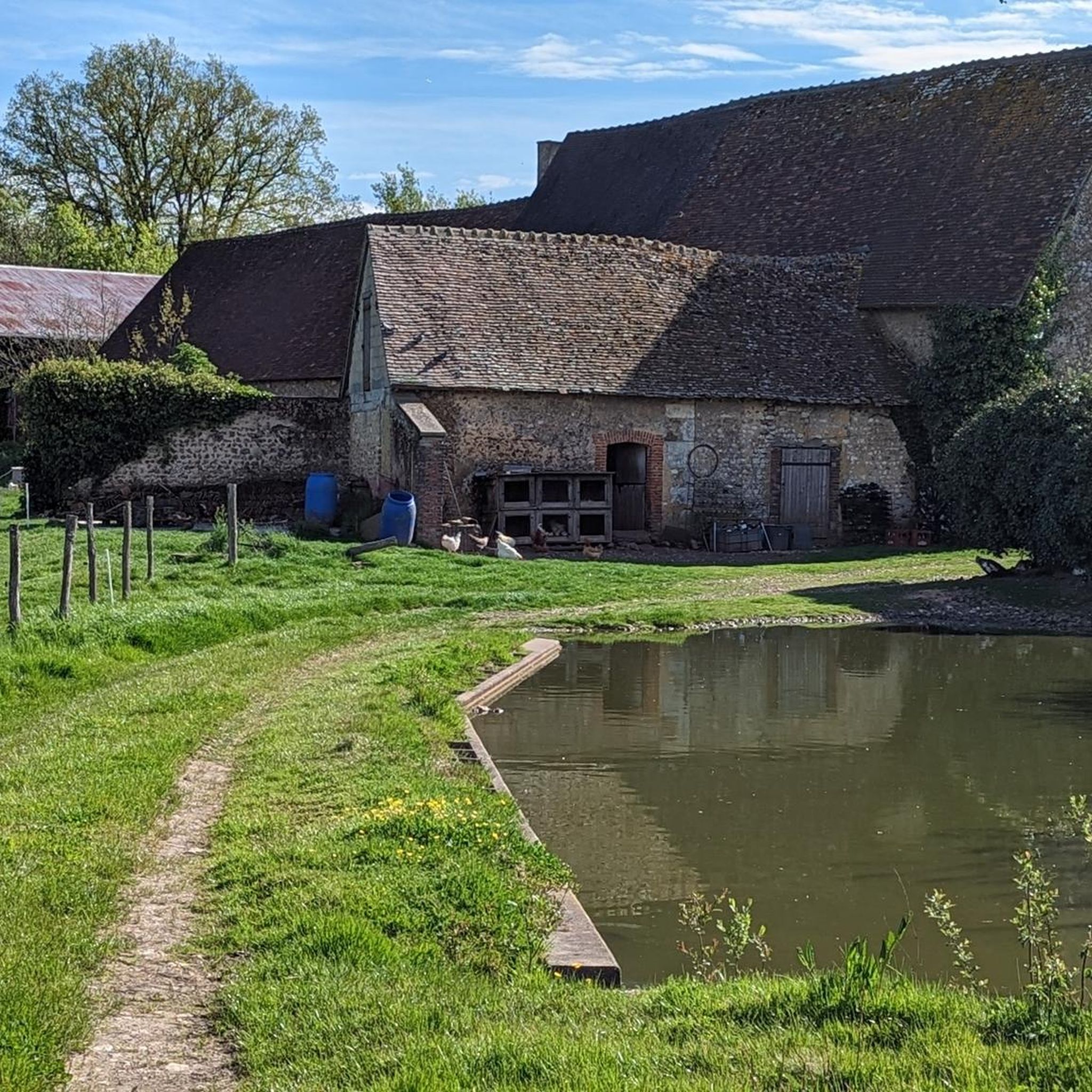
Very beautiful start to the route with an arrival at this magnificent mill
2
0

Magnificent section of greenway. The vegetation forms an arc above the road, providing maximum shade on hot days. In places, the trees open a window onto the fields and the track approaches the river. A superb moment out of time.
0
0
Frequently Asked Questions
How many gravel bike trails are available around Coudreceau?
There are 9 gravel bike trails around Coudreceau, offering a variety of experiences. These routes explore the diverse landscapes of the Loire Valley and the Forêt d'Orléans, from tranquil forest paths to scenic riverside trails.
What is the general difficulty level of gravel biking routes in the Coudreceau area?
The gravel biking routes around Coudreceau cater to various skill levels. You'll find 2 easy routes, 5 moderate routes, and 2 difficult routes. The terrain often includes relatively flat sections through the Forêt d'Orléans and rolling paths along the Loire Valley, with some routes offering more challenging ascents.
Are there any gravel routes suitable for beginners or families?
Yes, Coudreceau offers several routes suitable for beginners and families. These often follow greenways and flatter sections, such as those found along the Canal d'Orléans or within the Forêt d'Orléans. For an accessible option, consider the Above the Huisne – Beautiful bucolic greenway loop from Condé-sur-Huisne, which is a moderate 25.4 km route.
What kind of landscapes can I expect to see while gravel biking around Coudreceau?
Gravel biking around Coudreceau offers a rich tapestry of landscapes. You'll traverse the expansive Forêt d'Orléans with its oak and pine trees, clearings, and numerous ponds. The routes also lead through the picturesque Loire Valley, featuring riverside paths along the Loire and its canals, charming villages, and sometimes even vineyards. Expect a mix of farm tracks, forest trails, and secondary roads.
Are there any notable landmarks or attractions along the gravel bike trails?
Yes, the region is rich in historical and natural attractions. While gravel biking, you might encounter sites like the Nogent-le-Rotrou Castle or the serene Thiron-Gardais Abbey Gardens. Many routes also utilize the scenic Voie verte in Dorceau, offering pleasant views. The broader Loire Valley is also known for its châteaux and charming villages, which can be incorporated into longer rides.
What is the best time of year for gravel biking in Coudreceau?
The best time for gravel biking in Coudreceau is generally from spring through autumn. During these seasons, the weather is typically mild and pleasant, making for comfortable riding conditions. Spring brings blooming landscapes, while autumn offers beautiful foliage, especially within the Forêt d'Orléans. Summer is also suitable, though it can be warmer, making the shaded forest trails particularly appealing.
Are there any circular gravel bike routes available?
Yes, many of the gravel routes around Coudreceau are designed as loops, allowing you to start and end at the same point. For example, the popular Above the Huisne – Voie verte in Dorceau loop from Condé-sur-Huisne is a moderate 66.6 km circular path that explores the greenway and surrounding countryside.
Where can I find parking for gravel biking in Coudreceau?
Parking is generally available in the towns and villages that serve as starting points for many routes, such as Condé-sur-Huisne, Saint-Pierre-la-Bruyère, or Nogent-le-Rotrou. When planning your ride, check the specific starting point of your chosen route for local parking options.
What do other gravel bikers enjoy most about gravel biking in Coudreceau?
The gravel biking experience in Coudreceau is highly rated by the komoot community, with an average score of 3.9 stars. Reviewers often praise the region's diverse terrain, from the extensive forest trails of the Forêt d'Orléans to the tranquil riverside paths of the Loire Valley. The blend of natural beauty and historical sites also contributes to a memorable riding experience.
Are there opportunities to see wildlife in the Forêt d'Orléans while gravel biking?
Yes, the Forêt d'Orléans is a Natura 2000 protected natural area, making it an excellent spot for wildlife viewing. While gravel biking through the forest, you have a good chance of spotting deer, roe deer, and wild boar. It's also home to many bird species, including the rare Osprey, especially around its numerous ponds and lakes.
Can I find cafes or amenities near the gravel bike trails?
While the routes themselves often traverse natural and rural areas, you can typically find cafes, restaurants, and other amenities in the towns and villages located along or near the trails. Planning your route to pass through these settlements, such as Nogent-le-Rotrou or Condé-sur-Huisne, will allow for convenient stops for refreshments and supplies.
What is the longest gravel bike route available in the Coudreceau area?
One of the longer routes available is the Moutiers-au-Perche – On the greenway loop from Bretoncelles. This challenging route spans 69.6 km, offering an extensive exploration of the region's greenways and varied landscapes.
Most popular routes around Coudreceau
Most popular attractions around Coudreceau

Get inspired with the komoot mobile app


Explore more
Browse the best Gravel rides in other regions.
