The best gravel rides around Naussac
5.0
(2)
35
riders
8
rides
Gravel biking around Naussac offers varied terrain within a mid-mountain landscape, situated at an altitude of 1000 meters. The region is characterized by extensive forests, numerous lakes, rivers, and waterways, providing diverse natural features for gravel bike trails. Lozère's low population density ensures routes with minimal traffic, allowing for an immersive biking experience across both paved and unpaved sections. This environment provides fresh air and varied scenery, including plateaus and passes.
Best gravel bike trails around Naussac
- The most popular gravel bike trail is Marinesque Castle – Church in Capdenac-Gare loop from Capdenac, a 29.0 miles (46.7 km) trail that takes 3 hours 52 minutes to complete. This difficult route features significant elevation gain through varied landscapes.
- Another top favourite among local gravel bikers is View of Faycelles – Lavoir de Balaguier-d'Olt loop from Capdenac, a moderate 23.4 miles (37.6 km) path. This route offers diverse scenery with views of the surrounding mid-mountain terrain.
- Local gravel bikers also love the Figeac – Downtown Figeac loop from Figeac, a 21.4 miles (34.4 km) trail leading through varied landscapes, often completed in about 2 hours 23 minutes.
- Gravel biking around Naussac is defined by undulating mid-mountain terrain, extensive forests, and routes alongside lakes and rivers. The network offers options for different ability levels, from moderate to difficult.
- The routes in Naussac are highly rated by the komoot community with an average score of 4.3 stars from over 5 reviews. More than 20 gravel bikers have used komoot to explore Naussac's varied terrain.
Last updated: November 22, 2026
5.0
(1)
4
riders
33.9km
02:17
460m
460m
Hard gravel ride. Very good fitness required. You may need to push your bike for some segments of this route.
3
riders
70.6km
04:51
1,100m
1,100m
Hard gravel ride. Very good fitness required. Mostly paved surfaces.

7
riders
41.4km
02:27
230m
230m
Moderate gravel ride. Good fitness required. Mostly paved surfaces.
5.0
(1)
6
riders
96.9km
06:25
1,370m
1,370m
Hard gravel ride. Very good fitness required. Mostly paved surfaces.
5
riders
46.8km
03:15
750m
750m
Hard gravel ride. Very good fitness required. Mostly paved surfaces.
Get access to more routes and recommendations from other explorers.
Already have an account?
Our route recommendations are based on thousands of hikes, rides, and runs completed by other people on komoot.
Start today with a free account
Your next adventure awaits.


Tips from the Community

From the 11th century, the estate belonged to the abbey of Conques before passing under the control of the Cistercian abbey of Loc-Dieu. Saved in the 18th century. After the abbots of Loc-Dieu renounced this residence and its chapel, the bishop ordered its demolition, but this decision was never executed.
0
0
Located at the foot of an old watermolen (water mill), on the edge of a river (ideal for fishing and swimming) and close to the V86 cycle route.
0
0
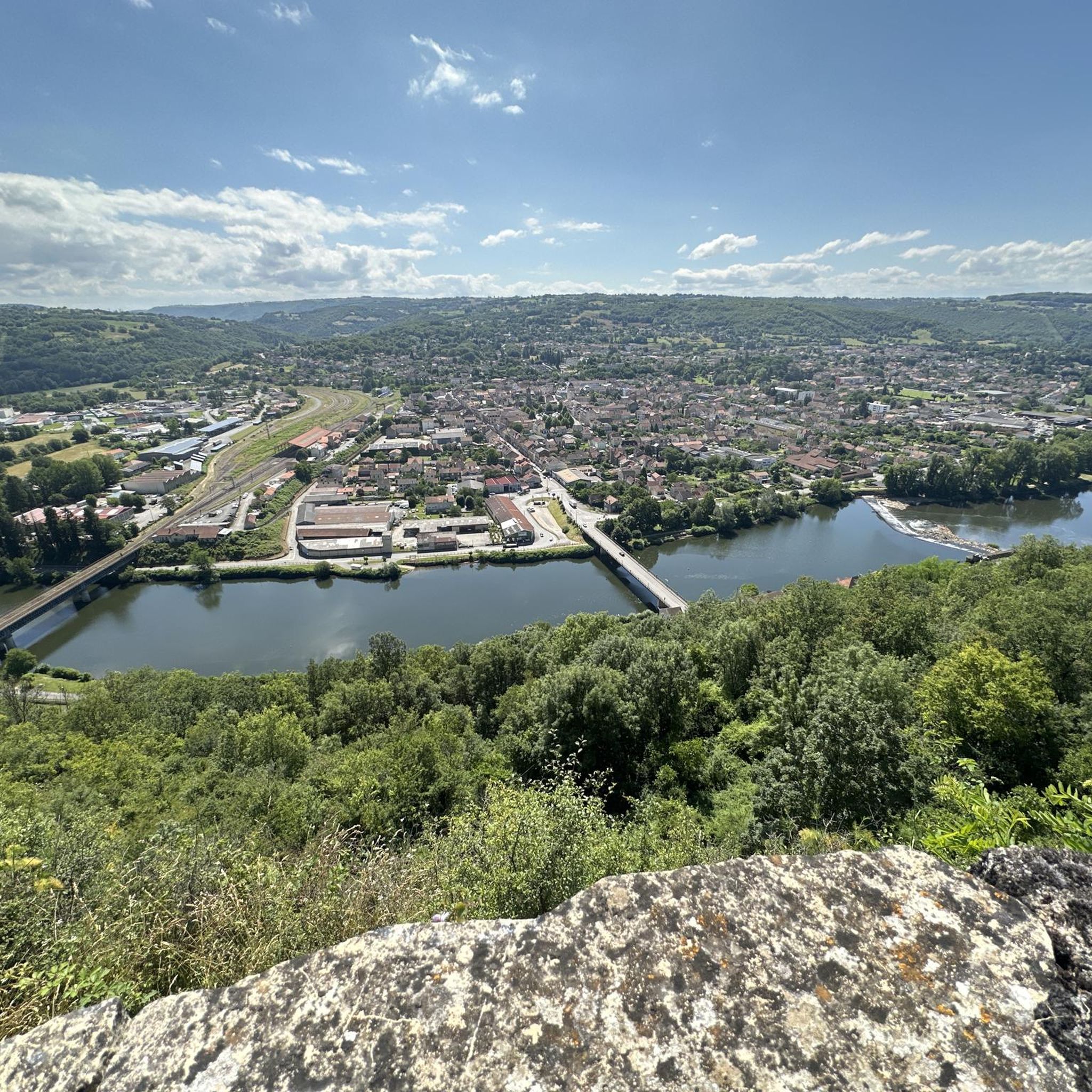
The Diège is a tributary of the Lot that passes directly through the commune of Naussac, near Capdenac-Gare and Villeneuve.
0
0
The church is particularly known for its remarkable stained glass windows created by the stained glass artist Marc Hénard. As Capdenac-Gare developed in the 19th century around its railway station (put into service in 1857), this building embodies the religious and human history linked to the travelers and railway workers of the town.
0
0
In Saint-Pierre-Toirac, the old railway line from Cahors to Capdenac passed below the village, at the level of the old Toirac station (kilometer point 57.8). This section now marks the junction between the new greenway coming from Cajarc and the continuation of the route towards Capdenac-Gare.
0
0
The spectacular silhouette of the Château de Larroque-Toirac is the soul of the village. A bastion of the Hundred Years' War: Built between the 12th and 15th centuries, this listed historic monument has retained its entire original defensive system despite repeated assaults by the English. A living dwelling: Unlike many medieval ruins, the castle has the distinction of always having been inhabited. Its guided tour allows you to discover an intact period kitchen, magnificent 15th-century fireplaces, and superb 16th-century polychrome frescoes. Prehistoric origins: Just behind the building, the cliff face houses troglodytic caves that already served as shelters for humans from the Neolithic period.
0
0
The old Montbrun railway tunnel, officially called "sourd de Montbrun", is a remarkable work of art. Built between 1881 and 1883 for the Cahors–Capdenac line of the Compagnie du Paris-Orléans, it measures 534 meters in length. This curved tunnel was designed in a basket-handle shape in the limestone rock in order to cut an important loop of the Lot (the cingle de Caillac) and to directly reach the village of Montbrun.
0
0
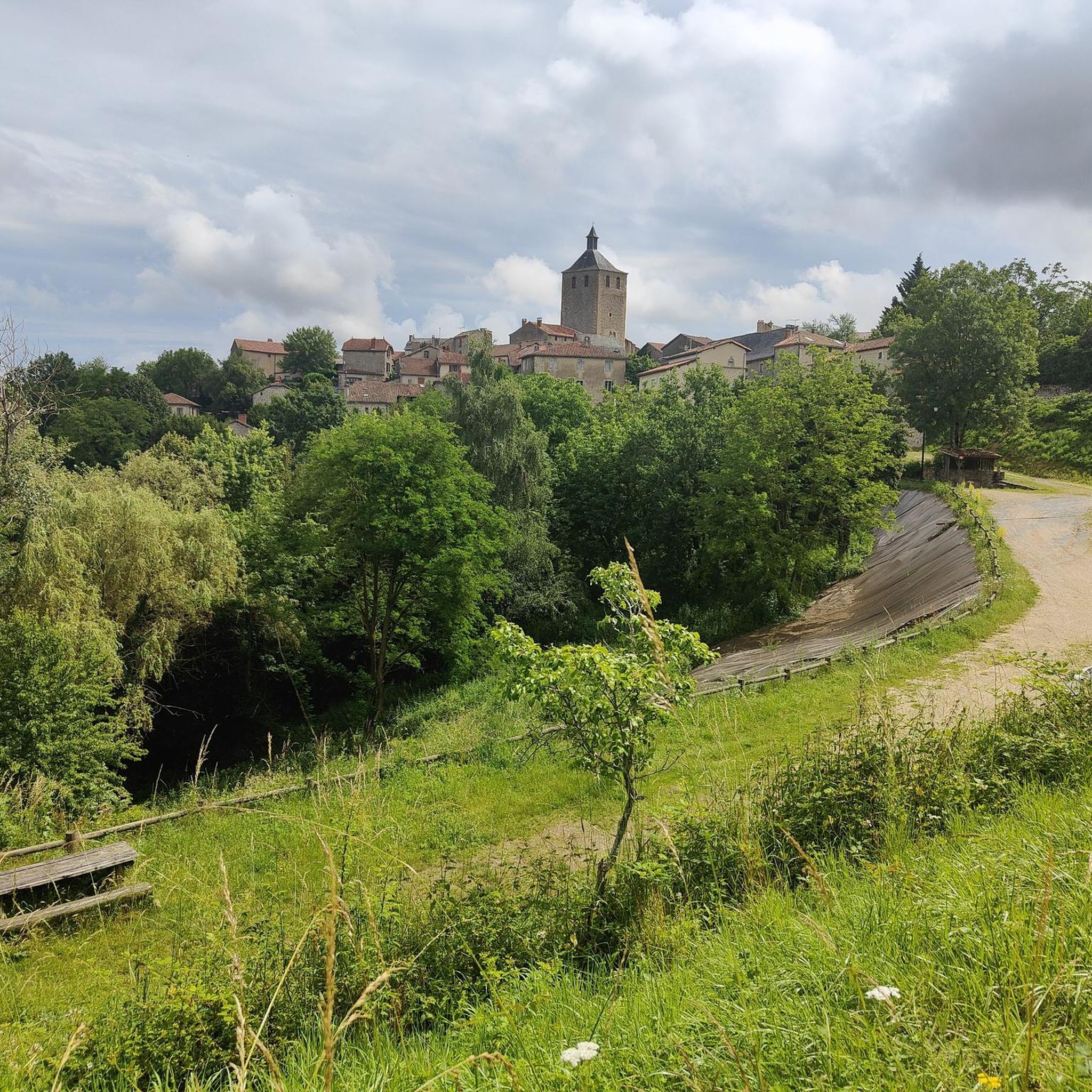
Medieval village perched on a rocky outcrop overlooking the Lot valley, facing the cliffs of Saut de la Mounine, known for the ruins of its 13th-century castle.
0
0
Frequently Asked Questions
What kind of terrain can I expect on gravel bike trails around Naussac?
The Naussac region offers varied mid-mountain terrain at an altitude of 1000 meters. You'll encounter undulating landscapes, extensive forests, and routes that follow lakes and rivers. Many trails blend paved and unpaved sections, providing a diverse gravel biking experience.
How many gravel bike trails are available in the Naussac area?
The Naussac region is well-equipped for gravel biking, featuring 14 dedicated gravel courses directly accessible from the area. Additionally, there are 24 general cycling routes that often include gravel sections, offering a wide array of profiles across medium mountains, passes, and plateaus.
What are the difficulty levels of gravel bike trails around Naussac?
Gravel bike trails in Naussac cater to various skill levels, ranging from moderate to difficult. For example, the View of Faycelles – Lavoir de Balaguier-d'Olt loop from Capdenac is a moderate option, while routes like Faycelles Village – Saint Espagnac loop from Frontenac present more challenging climbs and descents.
Are there any family-friendly gravel biking options in Naussac?
While many routes in Naussac feature significant elevation gain and are rated moderate to difficult, the region's extensive network allows for varied experiences. For a potentially shorter and less strenuous option, consider the Gelles Battle Memorial – Foissac loop from Causse-et-Diège, which is rated moderate and covers a distance of about 18 km.
What natural features and landmarks can I see along the gravel bike trails?
The Naussac area is rich in natural beauty, characterized by its 'land of springs' with numerous lakes, rivers, and waterfalls. You'll also find extensive forests, including the prominent Mercoire Forest. For historical and cultural points of interest, consider exploring nearby settlements like Faycelles or the historic town of Figeac, which offers a rich architectural heritage.
What is the best time of year for gravel biking in Naussac?
Naussac, situated at 1000 meters altitude, offers fresh air and often blooming landscapes. The region is ideal for outdoor activities, suggesting spring, summer, and early autumn as excellent times to visit. The mid-mountain climate provides pleasant conditions for biking, though it's always wise to check local weather forecasts.
Are there circular gravel bike routes available?
Yes, many of the gravel bike routes around Naussac are designed as loops, allowing you to start and end your ride in the same location. Examples include the Marinesque Castle – Church in Capdenac-Gare loop from Capdenac and the View of Faycelles – Lavoir de Balaguier-d'Olt loop from Capdenac.
What do other gravel bikers enjoy most about Naussac?
The Naussac area is highly rated by the komoot community, with an average score of 4.3 stars. Reviewers often praise the varied terrain, the extensive forests, and the tranquil environment with minimal traffic, which allows for an immersive biking experience.
Is there public transport access to the gravel biking areas around Naussac?
While specific public transport details for accessing trailheads directly are not provided, the nearby town of Langogne is a hub for several long-distance GR routes (GR70, GR470, GR700, and GTMC), suggesting some regional connectivity. For detailed planning, it's recommended to check local transport options to Langogne or other key starting points.
Are there places to eat or stay near the gravel bike trails?
The region around Lac de Naussac features supervised beaches and snack bars, especially around the lake itself. For more comprehensive dining and accommodation options, the nearby town of Langogne would be a good starting point, offering various services for visitors.
Can I expect quiet roads and trails while gravel biking in Naussac?
Absolutely. Lozère, where Naussac is located, is France's least populated department. This means you can expect deserted roads with virtually no traffic, fostering a tranquil and immersive biking environment, especially on the numerous unpaved sections.
Most popular attractions around Naussac

Get inspired with the komoot mobile app


Explore more
Browse the best Gravel rides in other regions.
