The best gravel rides around Colincamps
4.0
(2)
13
riders
6
rides
Gravel biking around Colincamps France offers varied terrain within the Somme department, characterized by river valleys, agricultural fields, and quiet country roads. The region provides extensive networks of cycle paths and greenways, often following towpaths and smaller roads suitable for gravel bikes. Riders can expect a mix of surfaces, from compacted earth to gravel tracks, with routes that navigate through natural landscapes and historical sites. The terrain includes flatter plains and rolling hills, catering to different skill levels.
Best gravel…
Last updated: May 13, 2026
4.0
(1)
3
riders
28.2km
02:10
260m
260m
Moderate gravel ride. Good fitness required. Mostly paved surfaces. Suitable for all skill levels.
3
riders
40.7km
02:58
380m
380m
Moderate gravel ride. Good fitness required. Mostly paved surfaces. Suitable for all skill levels.

Sign up for free
2
riders
40.9km
02:56
330m
330m
Moderate gravel ride. Good fitness required. Mostly paved surfaces. Suitable for all skill levels.
2
riders
34.0km
02:18
260m
260m
Moderate gravel ride. Good fitness required. Mostly paved surfaces. Suitable for all skill levels.
2
riders
32.0km
02:19
320m
320m
Moderate gravel ride. Good fitness required. Mostly paved surfaces. Suitable for all skill levels.
Our route recommendations are based on thousands of hikes, rides, and runs completed by other people on komoot.
Start today with a free account
Your next adventure awaits.
Login or Signup



Tips from the Community

The Tour d'Ulster, also known as the Helen Tower or Tour de Belfast, is a British war memorial. It was built in 1921 to commemorate the soldiers of the 36th Ulster Division who died during the Battle of the Somme in World War I. The tower is a replica of a neo-Gothic tower in Clandeboye Park, near Belfast, where the 36th Division trained. An interesting anecdote is that the 36th Ulster Division was the first to attack during the Battle of the Somme on 1 July 1916, but suffered heavy losses from both German and British artillery fire. The division lost over 5,500 men in just a few hours. The Tour d'Ulster has a cafeteria where you can enjoy a cup of tea, scones or Tayto chips, a specialty from Northern Ireland. It is a nice place to relax.
6
0
An interesting anecdote is that the Royal Naval Division was originally formed from reservists of the British Navy who had no place on ships during the war. This unit was trained as infantry and played a crucial role in several battles, including the Battle of the Ancre.
6
0
The British Royal Naval Division Memorial in Beaucourt-sur-l'Ancre commemorates the officers and men of the Royal Naval Division who died during the Battle of the Ancre, part of the great Somme offensive. The memorial is located on Rue d'Hamel (Route D50) and Chemin de Serres les Pusieux.
6
0
Miraumont is a small village in the Somme department, in the Hauts-de-France region, which occupies a historically and geographically special place. It is situated in a narrow valley at the source of the Ancre River, a tributary of the Somme, and is surrounded by gently rolling hills that were once the scene of fierce fighting during the First World War. During the Battle of the Somme in 1916, Miraumont was close to the front line and was badly hit. Today it is a quiet rural commune of around 630 inhabitants, where the past is still palpable in the surroundings and in nearby military cemeteries. Its proximity to other historic sites such as Thiepval and Beaumont-Hamel makes it a worthwhile stop for those wishing to explore the region's wartime past.
7
0
The Nymphe d'Aveluy is a historical monument in Aveluy, France, commemorating the artwork created by French soldiers during World War I. During periods of rest between battles, soldiers created sculptures and engravings, including the famous "Nymphe d'Aveluy". These works were often photographed and sent to their families on postcards.
1
0
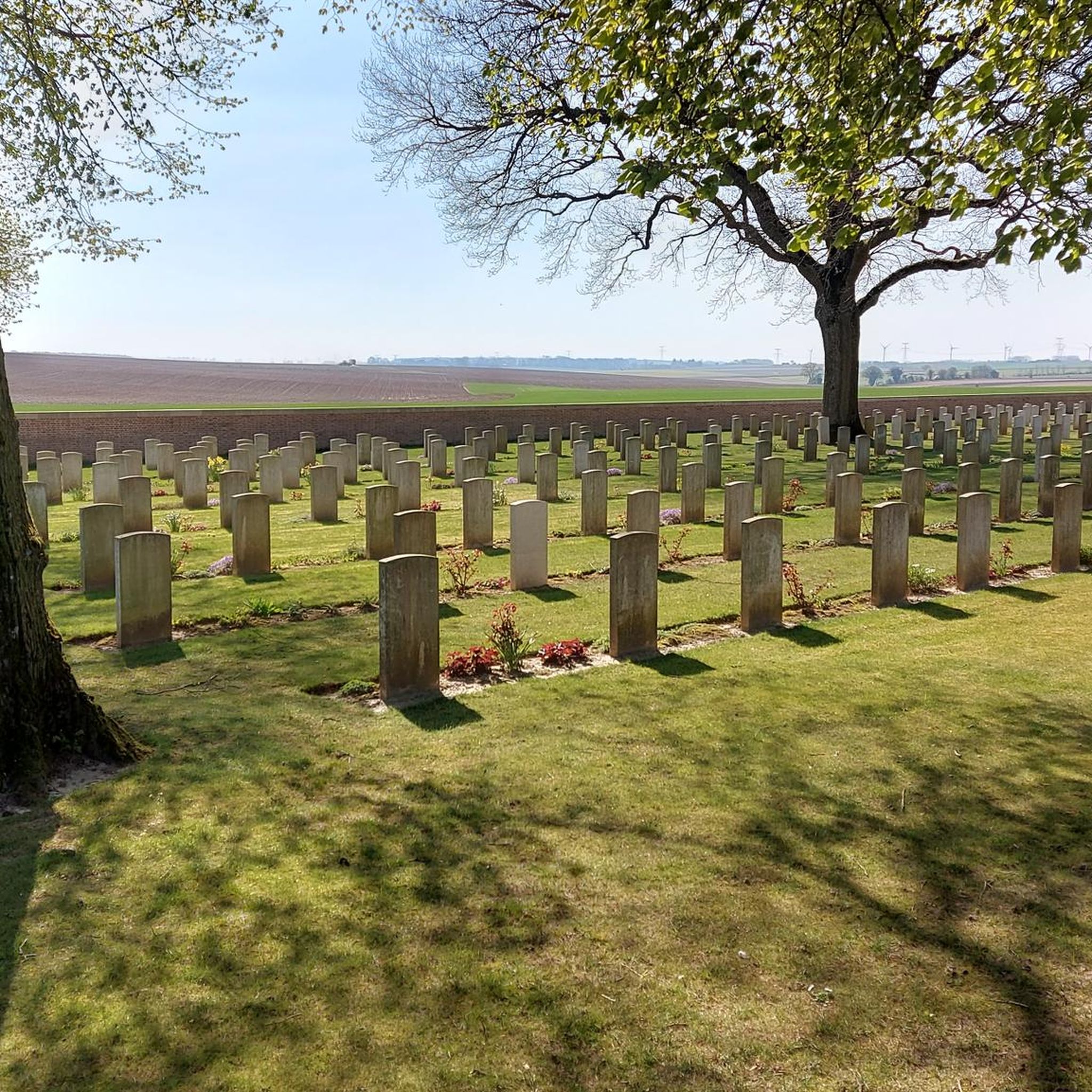
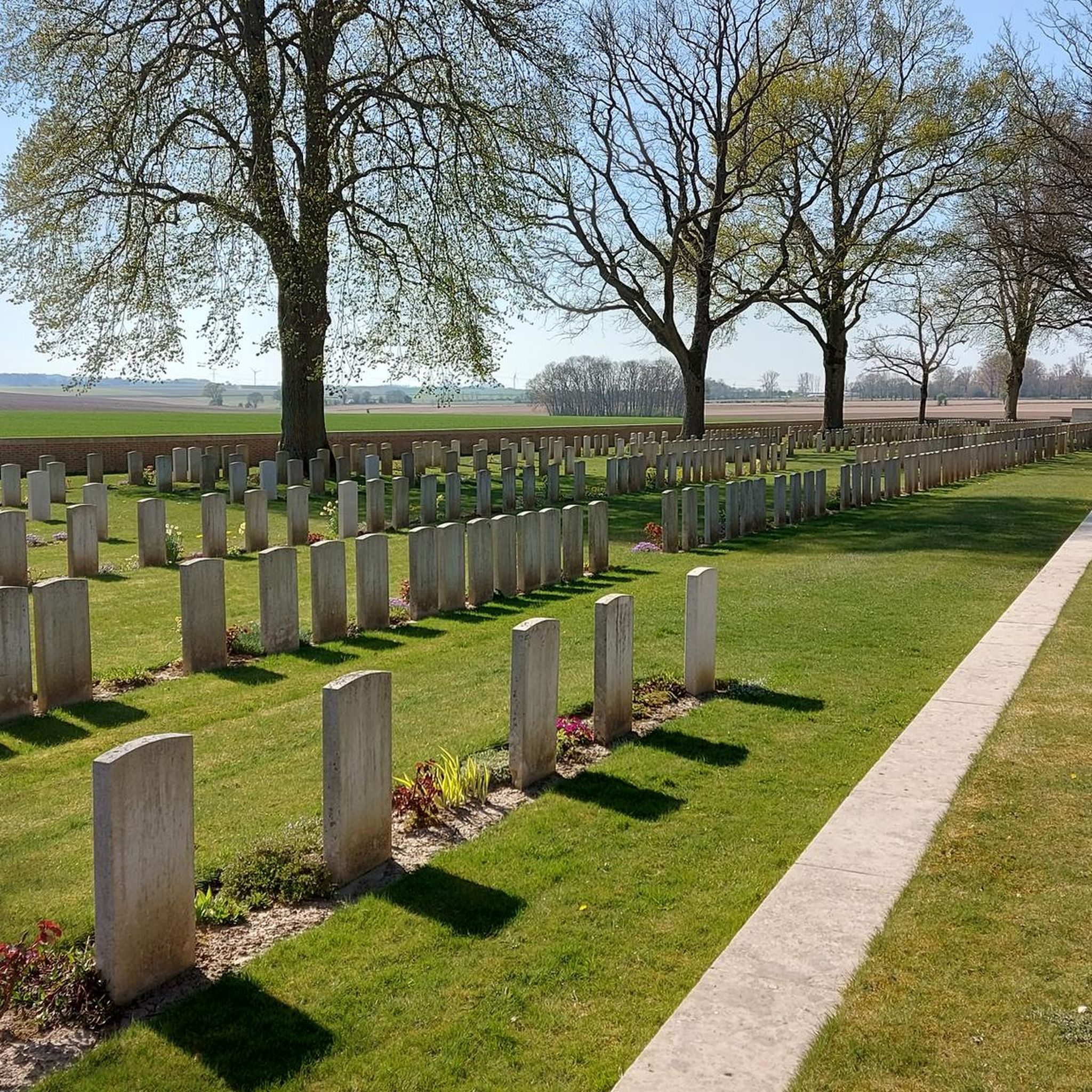
Connaught Cemetery commemorates British and Commonwealth soldiers who fought in the Battle of the Somme during the First World War. Connaught Cemetery mainly contains the graves of soldiers who died near the village of Thiepval from the autumn of 1916 until the end of the war in November 1918. An interesting anecdote is that the cemetery originally contained 517 graves, but after the German withdrawal to the Hindenburg Line in the spring of 1917, the bodies of soldiers from various temporary cemeteries were transferred to Connaught Cemetery.
7
0
Tour d'Ulster has a cafeteria where you can enjoy a cup of tea, scones or Tayto chips, a specialty from Northern Ireland. It is a nice place to relax for a while.
1
0
The Tour d'Ulster, also known as the Helen Tower or Tour de Belfast, is a British war memorial. It was built in 1921 to commemorate the soldiers of the 36th Ulster Division who died during the Battle of the Somme in World War I. The tower is a replica of a neo-Gothic tower in Clandeboye Park, near Belfast, where the 36th Division trained. An interesting anecdote is that the 36th Ulster Division was the first to attack during the Battle of the Somme on 1 July 1916, but suffered heavy casualties from both German and British artillery fire. The division lost over 5,500 men in just a few hours.
1
0
Frequently Asked Questions
How many gravel bike trails are available around Colincamps?
There are 6 gravel bike trails around Colincamps featured in this guide, all offering a moderate challenge. These routes provide a great way to explore the diverse landscapes of the Somme region.
What kind of terrain can I expect on gravel bike trails near Colincamps?
The gravel bike trails near Colincamps traverse varied terrain typical of the Somme region. You'll encounter quiet country roads, forgotten farm lanes, and forest paths, often following river valleys and agricultural fields. While some areas are flatter, routes can also include rolling hills, providing a mix of surfaces ideal for gravel cycling.
Are there any challenging gravel routes for experienced riders?
While all routes in this guide are rated as moderate, the broader Somme area, where Colincamps is situated, offers varied gradients. Some routes, particularly those venturing into areas with rolling hills and woodlands, can present more significant elevation changes, requiring good fitness and advanced riding skills. For example, the Newfoundland Memorial – Beaumont-Hamel trails loop from Bucquoy covers over 40 km with nearly 380 meters of elevation gain.
What historical landmarks can I explore while gravel biking near Colincamps?
The area around Colincamps is rich in World War I history. Many gravel routes will take you past significant memorials and cemeteries. Notable sites include the Newfoundland Memorial, the Thiepval Memorial, and the Ulster Tower. For instance, the Newfoundland Memorial – Englebelmer War Memorial loop from Beaumont-Hamel directly connects to these poignant historical sites.
Are there any circular gravel bike routes available?
Yes, all the gravel bike routes featured in this guide are circular, allowing you to start and end your ride at the same point. Examples include the Aveluy nymph – Mémorial Crucifix Corner loop from Mesnil-Martinsart and the Miraumont – Lavoir de St Pierre Divio loop from Miraumont.
What is the best time of year for gravel biking in the Colincamps area?
The Somme department generally offers good cycling conditions from spring through autumn. Spring brings blooming landscapes, while autumn provides cooler temperatures and beautiful foliage. Summer can be pleasant, but it's always wise to check local weather forecasts, as conditions can vary. The varied terrain means trails can be muddy after heavy rain, so consider this when planning your visit.
Are the gravel trails around Colincamps suitable for families?
The region offers a mix of terrain, and while the routes in this guide are rated moderate, the extensive network of cycle paths and greenways along the Somme River often follow towpaths and smaller roads, which can be suitable for families looking for less challenging rides. These routes provide a blend of natural exploration and historical immersion, often away from heavy traffic.
What do other gravel bikers enjoy most about gravel biking in Colincamps?
The area is highly rated by the komoot community, with an average score of 4.0 stars. Reviewers often praise the quiet country roads, the blend of natural scenery with poignant historical sites, and the diverse gravel-friendly terrain that allows for both active exploration and cultural discovery.
Are there any specific routes that pass by the Ulster Tower or Newfoundland Memorial?
Yes, several routes in the area incorporate these significant landmarks. For example, the Ulster Tower – Newfoundland Memorial loop from Miraumont is specifically designed to visit both of these important World War I sites, offering a reflective ride through history.
Are there any specific permits required for gravel biking in France?
Generally, no specific permits are required for gravel biking on public paths and roads in France. However, it's always respectful to stay on marked trails, especially when passing through private land or protected natural areas, and to be mindful of local regulations.
Where can I find parking facilities for cyclists in Colincamps?
While specific dedicated cycling parking facilities in Colincamps village are not detailed, as a rural area, you can typically find parking in or near the village center, or at the start points of many routes. It's advisable to check local signage for any restrictions and to park responsibly.
Can I access the Somme Valley Cycle Route or Memory Cycle Route from Colincamps?
Colincamps is situated within the broader Somme region, which is home to extensive cycle networks like the Somme Valley Cycle Route and the Memory Cycle Route. While not directly on these major routes, Colincamps' proximity means you can connect to sections of these historical and scenic trails via local roads and paths, allowing for broader exploration of the region's natural beauty and WWI heritage.
Most popular routes around Colincamps
Most popular attractions around Colincamps

Get inspired with the komoot mobile app


Explore more
Browse the best Gravel rides in other regions.
