Top 5 Caves around Eimeldingen
Caves around Eimeldingen are primarily located in the surrounding Markgräflerland region and nearby Rheinfelden (Baden). This area, characterized by the karstic landscape of the Dinkelberg at the southern edge of the Black Forest, features notable subterranean attractions. These include ancient dripstone formations and active river caves, offering insights into millions of years of geological history. The region provides diverse natural attractions for exploration.
Best caves around Eimeldingen
- The most popular caves is Brudersloch (Hermit's Cave), a cave and historical…
Last updated: June 1, 2026
Brudersloch (Hermit's Cave)
Highlight • Cave
Translated by Google •
Tip by

Teufelhof Basel: Archaeological Cellar and Inner City Wall
Highlight • Historical Site
Translated by Google •
Tip by

Sign up now to discover places like this
Get recommendations on the best single tracks, peaks, & plenty of other exciting outdoor places.
Sign up for free
Prehistoric cave wall with water level marks
Highlight • Cave
Translated by Google •
Tip by

Erdloch Cave
Highlight • Cave
Translated by Google •
Tip by

Ground fissure
Highlight • Cave
Translated by Google •
Tip by
Start today with a free account
Your next adventure awaits.
Login or Signup
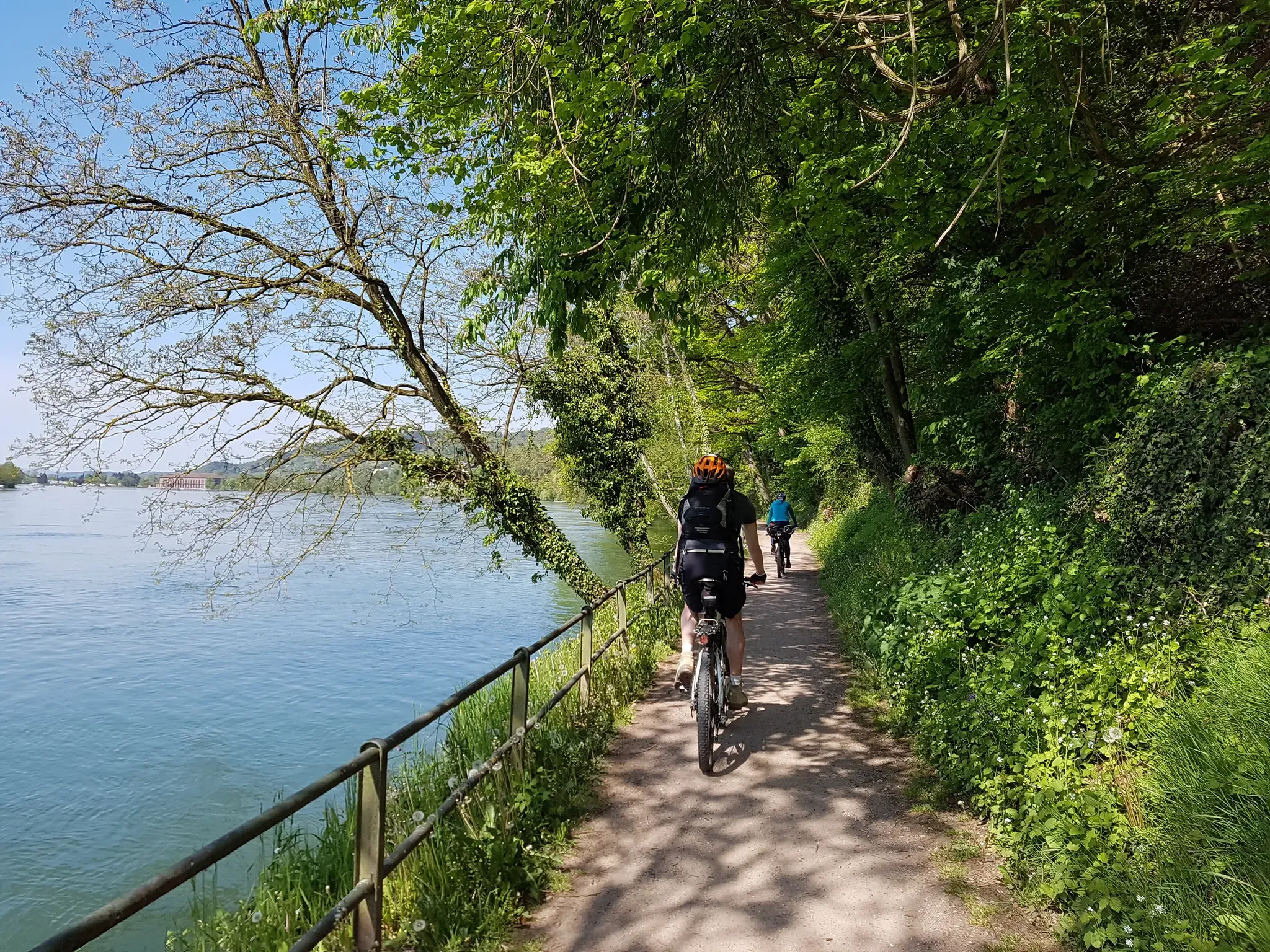

Other adventures around Eimeldingen

Tips from the Community

Easily accessible on the plateau, about 15m deep, can be explored by slightly crouching. That is, if you're not afraid of spiders.
0
0

The Teufelhof Basel is a hotel in Basel's old town in two historic buildings at Leonhardsgraben 47-49. Parts of the building complex (Leonhardgraben 47) and the cellar (archaeological monument) are listed in the canton of Basel-Stadt's inventory of monuments. The idea behind the operation is to operate independent art and culture as part of a "self-subsidization" of the cultural operation through a parallel hotel and restaurant operation. Due to objections, the permit had to be obtained before the Swiss Federal Court before the opening. After this six-and-a-half-year waiting period, the hotel opened on April 28, 1989. The Teufelhof Basel now employs 70 people. The hotel consists of two buildings, the art hotel and the gallery hotel. The art hotel has eight rooms and one suite, all of which are designed as habitable works of art. The gallery hotel has 20 rooms and four junior suites and is also used as an exhibition space. Nine art rooms were designed by various artists as experiential spatial art. The artists are free to paint directly on the walls or work with materials in the room. The Teufelhof also regularly supports artists with exhibitions or projects of various kinds. The cultural operations include a theater with cabaret performances and satirical programs. The promotion of regional individual artists and groups - from accompanying rehearsals in the in-house theater to premieres in the Teufelhof - also plays an important role in the program planning. The theater is financed by the Teufelhof Basel, but since 2002 has also received a contribution from the two cantons of Basel-Stadt and Basel-Landschaft. In addition to the cultural operations in the sense of the theater and the art hotel, the house also houses two restaurants, the gourmet restaurant "Bel Etage" and the restaurant "Atelier". The house also houses a coffee bar, a gallery hotel with changing exhibitions that is offered as a free platform for the artists, a wine shop "falstaff" and a small archaeological museum, embedded in the historic Basel city walls from the 11th and 13th centuries. Source: https://de.wikipedia.org/wiki/Teufelhof_Basel
0
0

Here you have to make a small detour from the Westweg. But definitely worth it. Sure-footedness and good shoes are recommended for the short ascent. The cave is bigger than you think at first glance. You can't really see the opening from below.
3
0

interesting spot; unfortunate not so quiet anymore since a lot of noise from the road rises up. Watch you head when you climb up the steps to the cave
4
0

It is difficult to imagine that a monk should once have laid here 😯
3
0
Actually just a small cave but still fascinating to imagine that a monk is said to have lived in it 😮
3
0

Has something mysterious about it. you should definitely have a look.
3
0
Frequently Asked Questions
What are the most unique cave experiences near Eimeldingen?
The region offers diverse subterranean experiences. You can explore the Brudersloch (Hermit's Cave), a historical site once used by a hermit, or witness geological history at the Prehistoric cave wall with water level marks. For a more challenging adventure, the Erdloch Cave offers an approximately 15-meter deep exploration.
Are there any show caves with guided tours or modern amenities in the area?
Yes, the Erdmannshöhle in Hasel, about 25 km east of Basel, is a renowned dripstone cave with an LED lighting system. It transitioned to a self-guided operation in 2022, allowing visitors to explore at their own pace. It features Germany's largest and oldest stalagmite.
Where can I see an active river cave near Eimeldingen?
The Tschamberhöhle in Rheinfelden (Baden), approximately 25 km from Eimeldingen, is an active river cave. It's one of only three public Muschelkalk caves in Germany where you can witness ongoing geological formation due to water erosion, including an underground waterfall up to 5 meters high.
What geological features can I observe in the caves around Eimeldingen?
The region's caves, particularly the Erdmannshöhle, showcase impressive dripstone formations like stalactites and stalagmites. The Tschamberhöhle offers insight into active karst processes with its unique wall and ceiling formations shaped by a flowing cave stream. The Prehistoric cave wall with water level marks displays horizontal grooves formed by ancient water levels.
Are there family-friendly options for visiting caves in the Eimeldingen area?
The Erdmannshöhle in Hasel is generally family-friendly, offering an accessible 360-meter section of its extensive network. Beyond the cave, there's a barbecue area and playground. The Tschamberhöhle provides helmets and flashlights for visitors, making it an engaging experience for older children who enjoy exploration.
What is the best time to visit the caves near Eimeldingen?
The constant cool temperature of around 10 °C inside caves like the Tschamberhöhle makes them a refreshing destination on hot summer days. However, they are generally accessible throughout the open season, which typically runs from spring to autumn. Check specific cave opening times before your visit.
Are there any historical or mythological connections to the caves in this region?
Yes, the Erdmannshöhle owes its name to legends of 'Erdmännchen' and 'Erdweibchen' (earth gnomes) said to have once lived there, a folklore element incorporated into the works of Johann Peter Hebel. The Brudersloch (Hermit's Cave) is a historical site, and the Tschamberhöhle served as a refuge for nomadic hunters in the Neolithic Age and as a hiding place during wartime.
Can I combine a cave visit with other outdoor activities?
Absolutely. Many caves are located near hiking trails. For example, the Erdmannshöhle has hiking trails nearby. You can find various outdoor routes in the region, including hiking, gravel biking, and running trails around Eimeldingen.
What should I know about accessibility and equipment for visiting caves?
For show caves like Erdmannshöhle, a 360-meter section is accessible to visitors, but specific accessibility for wheelchairs or strollers should be confirmed directly with the site. For active caves like Tschamberhöhle, visitors are typically equipped with helmets and flashlights. For natural caves like Brudersloch or Erdloch Cave, good shoes and a flashlight are recommended, as some involve steep climbs or crouching.
Are there any nearby museums or educational centers related to the caves?
Yes, a Geo-Museum Dinkelberg is located at the access path to the Tschamberhöhle. It complements the cave visit with exhibits of rocks, crystals, and fossils from the region, providing further educational context to the geological formations you'll see.
What do visitors appreciate most about the caves around Eimeldingen?
Visitors appreciate the journey into millions of years of geological history, the impressive natural formations, and the unique experiences offered by both ancient dripstone caves and active river caves. The combination of natural beauty, historical significance, and local folklore makes these destinations compelling.
Are there any challenging cave explorations available?
Yes, the Erdloch Cave is described as a challenging cave, approximately 15 meters deep, which can be explored by slightly crouching. The Ground fissure is another deep natural feature for those seeking a more rugged experience.
Most popular routes around Eimeldingen
Most popular attractions around Eimeldingen

Get inspired with the komoot mobile app


Explore more
Extend your search for the best caves by checking out these guides of the top ones around Eimeldingen:
