Top 6 Castles around Wolfsegg am Hausruck
Best castles around Wolfsegg am Hausruck include historic structures that offer insights into the region's past. The area is characterized by its natural landscape, with castles often situated on elevated positions providing expansive views. These landmarks contribute to the cultural significance of Wolfsegg am Hausruck, blending historical architecture with the surrounding environment. The region features a variety of castles, from those with public access to privately owned estates.
Best castles around Wolfsegg am Hausruck
- The most popular castles is Wolfsegg…
Last updated: May 16, 2026
Wolfsegg Castle
Highlight • Castle
Translated by Google •
Tip by

Aistersheim Water Castle
Highlight • Castle
Translated by Google •
Tip by
Sign up now to discover places like this
Get recommendations on the best single tracks, peaks, & plenty of other exciting outdoor places.
Sign up for free
Würting Castle
Highlight • Castle
Translated by Google •
Tip by
Schloss Neuwartenburg
Highlight • Castle
Translated by Google •
Tip by
Schloss Aigen
Highlight • Castle
Translated by Google •
Tip by

Sign up for free to discover even more castles around Wolfsegg am Hausruck.
Sign up for free
Already have an account?
Start today with a free account
Your next adventure awaits.
Login or Signup
Tips from the Community


The castle stands within an area enclosed by a stone wall. On the access side, a double-leaf wrought-iron gate replaces a former gatehouse. The castle is two-story, hook-shaped. It has a broken mansard roof with four corner turrets resting on consoles, each with a broken roof and a bulbous dome crowned by a finial. The ground-floor windows have wrought-iron sashes. In the castle courtyard is a triangular coat of arms of the Querrer family bearing the year 1593. The castle has been rebuilt frequently; its current appearance dates from the end of the 20th century. The former castle chapel no longer stands. The Schausberger family has been fundamentally renovating the castle since the 1970s. Today, the castle is enlivened by cultural events.
0
0

The Pollheimersche lordship of Wartenburg is documented as early as 1319. Their original seat of power was Wartenburg Castle on the southern foothills of the Hausruck above the Vöckla, and from 1639 the Alt-Wartenburg Castle to the north, both derelict today. Neu-Wartenburg Castle is located on the right Vöcklauf, below the castle. The palace was built by the Viennese architect Anton Erhard Martinelli between 1730 and 1732 on behalf of Johann Albert Graf Saint-Julien-Wallsee (1673–1766). Count Wallsee bought the manor in 1729 from Nütz von Goisernburg, who had been there since 1640. He had Emperor Charles VI. invited to a falcon hunt for 3 days and wanted to offer him accommodation befitting his status. Already in 1754 he had to sell the property again because of debts. Through the Ghelen family, it passed to the nobles von Grechtler in 1766, to Thaddäus von Reischach in 1785 and to Ludwig Ratzesberg in 1847, until Albert Graf von Saint-Julien was able to bring it back into family ownership in 1869. The last heiress of the Saint-Julien family was adopted by Elisabeth Countess von Strachwitz; the castle has belonged to the von Strachwitz family since 1973.
1
0
The Aistersheim moated castle is one of the most beautiful in Upper Austria. The entire castle stands on a myriad of wooden pilots and is completely surrounded by water. Two massive wooden bridges lead to the two large entrance gates. Although it was actually a defensive structure that has been besieged several times throughout history, the builders managed to create one of the finest examples of late Renaissance architecture. A visit or an inspection of this beautiful building is worthwhile!
1
0
The outer form of today's castle building goes back to Truchsess Jakob (1546-1589) and his wife Johanna (1548-1613). In the years that followed, they had it rebuilt from scratch in place of the one that had been destroyed by a chimney fire in 1578 and, as Zimmer's chronicle says, "a bewildered building made of wood and frame work". In the powerful, regular four-wing complex with the protruding corner towers, contemporary demands for living comfort and representation could finally be realized. The functional rooms were on the ground floor, the guest apartments were on the first floor and above them the living quarters of the count's couple. The highlight of a series of representative rooms is the main hall on the second floor of the west wing, the knight's hall, at the end of the main staircase rising from the portal hall. In front of this are the banquet hall and the picture room in the north wing. The building did not last long. On December 28, 1646, the troops of the Swedish Field Marshal Wrangel set it on fire during one of their campaigns through the Uplands. Although parts of the castle were preserved, the top floor in particular - and thus the main floor - went up in flames. The beginning of the reconstruction work was delayed until 1651 due to the hardship of the post-war period. The decisive phase in the furnishing of the representative rooms fell between 1691 and 1700. The leadership in the redesign of the representative rooms, both in terms of the stucco and the equipment As for sculptures, it was in the hands of the sculptor and plasterer Balthasar Krimmer (1653-1702) from Wangen. Drastic structural changes took place in the first half of the 18th century, when the guest apartments on the first floor were redesigned in Rococo style. In the late 19th century, a series of dining rooms were designed in keeping with the taste of the time. At that time, the palace chapel also received its neo-Gothic appearance. With the completion of the Gothic room, the adjoining rooms and the corridor at the end of the 19th century, the conversion work at Wolfegg Castle was complete.
3
0
The castle is only open to guests twice a year for major international concert series. Guided tours are also offered here. The royal family lives in the palace.
3
0
The moated castle of Würting was first mentioned in documents as early as 814 as a Romanesque farm, and is therefore the first documented reference to the community of Offenhausen. The owners of the moated castle have always been the determining force for the market town of Offenhausen. After an eventful history, the area went to Jörg Perkheimer in 1455, who had today's moated castle built from 1462. It is also thanks to the people of Perkheim that Offenhausen received market rights in 1534. After a few changes of ownership in the 17th and 19th centuries, the castle was in a pitiable condition when it was sold again in 1921. The new owner Heinrich Gutman therefore had the castle completely renovated and refurbished. During the Nazi era, Würting was an SA school, and the valuable facility disappeared at that time. After the end of World War II, refugees were billeted until 1952, when the Gutman family returned the property. However, the decay was already far advanced, and so the castle changed hands several times until 1975, when it was finally bought by the paleontologist Dr. Schaffer was bought. It now houses his collection. Unfortunately, Dr. Schaffer did not manage to stop the decay, and so the castle, which is not open to the public, is still left to decay today.
3
0

The palace and park are privately owned by the Strachwitz family and are not open to the public.
0
0
Frequently Asked Questions
What are the most historically significant castles around Wolfsegg am Hausruck?
The region boasts several castles with deep historical roots. Wolfsegg Castle, for instance, has been documented since 1656 and its current form dates back to a 16th-century rebuilding after a fire. Würting Castle is even older, first mentioned in documents as early as 814 as a Romanesque farm, and is known for its late Renaissance architecture.
Are there any family-friendly castles to visit near Wolfsegg am Hausruck?
Yes, Wolfsegg Castle is noted as suitable for all ages, including children. While interior access is generally by arrangement, the castle offers amenities like a diaper room, an indoor children's corner, and an outdoor playground during its events, making it a welcoming spot for families.
Which castles can I view from the outside, even if they are privately owned?
Several castles in the area are privately owned but can be admired from the exterior. This includes Schloss Neuwartenburg and Würting Castle. The exterior of Wolfsegg Castle is also viewable, offering a glimpse of its historical grandeur.
What kind of outdoor activities can I do near the castles in Wolfsegg am Hausruck?
The region around Wolfsegg am Hausruck offers various outdoor activities. You can find numerous MTB trails, running trails, and gravel biking routes. For example, there are running loops directly from Wolfsegg am Hausruck, including routes like 'Wolfsegg 19% Climb – Schloss Wolfsegg loop'.
Are there any castles with unique architectural features?
Yes, Aistersheim Water Castle is a prime example. It's one of the most beautiful moated castles in Upper Austria, entirely surrounded by water and built on wooden pilots. Its late Renaissance architecture is particularly striking.
Can I visit the interior of any castles, or are they all privately owned?
While many castles are privately owned, Wolfsegg Castle does open its doors to guests twice a year for major international concert series, and guided tours are offered during these times. Interior viewing at Wolfsegg generally requires prior arrangement and registration.
What makes Wolfsegg Castle a significant landmark in the region?
Wolfsegg Castle is significant not only for its history but also for its scenic location, perched on a hill with 360-degree views. It also has a literary connection, having inspired Austrian writer Thomas Bernhard, who referred to it as 'the most beautiful building far and wide and in the whole country'.
Are there any castles that host cultural events?
Yes, Schloss Aigen is known to be enlivened by cultural events. Additionally, Wolfsegg Castle hosts major international concert series twice a year.
What is the best time of year to visit the castles around Wolfsegg am Hausruck?
The exterior of castles like Wolfsegg Castle is accessible in all weather conditions, meaning you can enjoy their grandeur year-round. For interior visits or events, it's best to check specific schedules, especially for Wolfsegg Castle's concert series.
Are there any castles that offer panoramic views of the surroundings?
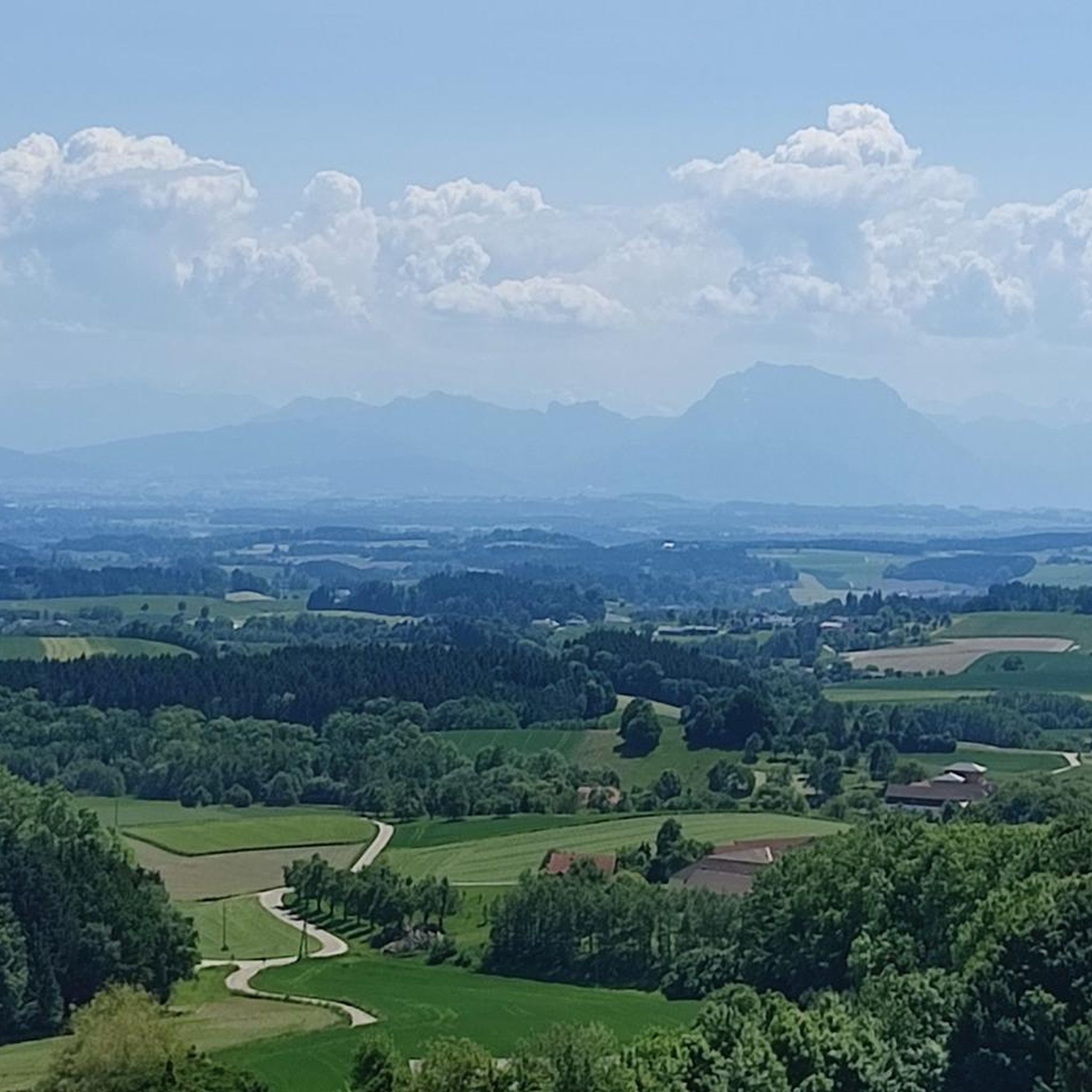
Yes, Wolfsegg Castle is ideally situated on a hill above Wolfsegg, providing a 360-degree view of its surroundings. This offers a beautiful blend of natural spectacle and historical fascination.
Can I find any castles that are less crowded or considered 'hidden gems'?
While some castles like Würting Castle and Schloss Neuwartenburg are privately owned and not open to the public, their exterior views offer a chance to appreciate their historical presence without large crowds. Aistersheim Water Castle, while beautiful, might also offer a more tranquil experience compared to more widely publicized sites.
Are the castles around Wolfsegg am Hausruck accessible for visitors with pushchairs?
The exterior of Wolfsegg Castle is noted as suitable for visitors with pushchairs, allowing families with young children to enjoy the castle's surroundings.
Most popular routes around Wolfsegg am Hausruck
Most popular attractions around Wolfsegg am Hausruck

Get inspired with the komoot mobile app


Explore more
Looking for the best castles somewhere else? Discover other guides around Wolfsegg am Hausruck:
