Top 5 Castles around Gottesheim
Best castles around Gottesheim are found in the surrounding Bas-Rhin department of France, as Gottesheim itself is a small commune without notable castles. This region is part of Alsace, known for its historical fortifications and scenic landscapes. The area offers a variety of historical sites, including well-preserved palaces and ancient castle ruins. Exploring these sites provides insight into the region's rich past and architectural heritage.
Best castles around Gottesheim
- The most popular castles is Warthenberg Castle, a castle that…
Last updated: September 27, 2026
Rohan Castle
Highlight • Castle
Translated by Google •
Tip by

Château des Rohan de Saverne
Highlight • Castle
Translated by Google •
Tip by

Sign up now to discover places like this
Get recommendations on the best single tracks, peaks, & plenty of other exciting outdoor places.
Warthenberg Castle
Highlight • Castle
Translated by Google •
Tip by

Neuwiller-lès-Saverne Village Center
Highlight • Settlement
The former abbey church of St. Peter and Paul, founded around 720, belonged to one of the oldest monasteries on the Upper Rhine. In its early years, this was …
Translated by Google •
Tip by

Start today with a free account
Your next adventure awaits.


Tips from the Community

The Château des Rohan, formerly called "The Little Alsatian Versailles," is located in the city center of Saverne on the Rhine-Marne Canal. This former bishop's castle, built in the 13th century and restored in the 19th century on the initiative of Napoleon III, now houses a museum, a cultural center, a youth hostel, and a school. The neoclassical façade (park side), made of pink sandstone, is 140 meters long, which is the same horizontal height as Strasbourg Cathedral. The Château des Rohan Museum presents extensive Gallo-Roman and medieval archaeological collections. It consists of three departments: Art and History, Louise Weiss, and Archaeology. The Art and History department encompasses many areas: paintings, prints, and 15th- and 16th-century polychrome wood carvings from the churches of Saverne and the region, as well as a room dedicated to the history of the castle. Louise Weiss Department To honor her Alsatian ties (her family originally came from Petite-Pierre near Saverne), journalist Louise Weiss (1893-1983) donated her collections (ethnographic objects, paintings, drawings, 19th- and 20th-century decorative arts, and personal archives) to the Saverne Museum in 1981 and 1983. Archaeological Department In the vaulted cellars of the castle, the museum houses a rich archaeological collection, including numerous Gallo-Roman funerary and votive steles. Tours of the museum and access to the castle roof are available (upon request). Admission (museum + roof access): €5 (adults) and €4 (students)
0
0

A large neoclassical palace from the late 18th century, especially in relation to the relatively small town. Located at the lower end of the old town, it has a large park at the rear, facing the Rhine-Marne Canal. The palace now belongs to the city and houses two museums, a primary school, a youth hostel, and several theaters and event venues. The varied history of its use is interesting; details can be found online: https://de.m.wikipedia.org/wiki/Rohan-Schloss
5
0

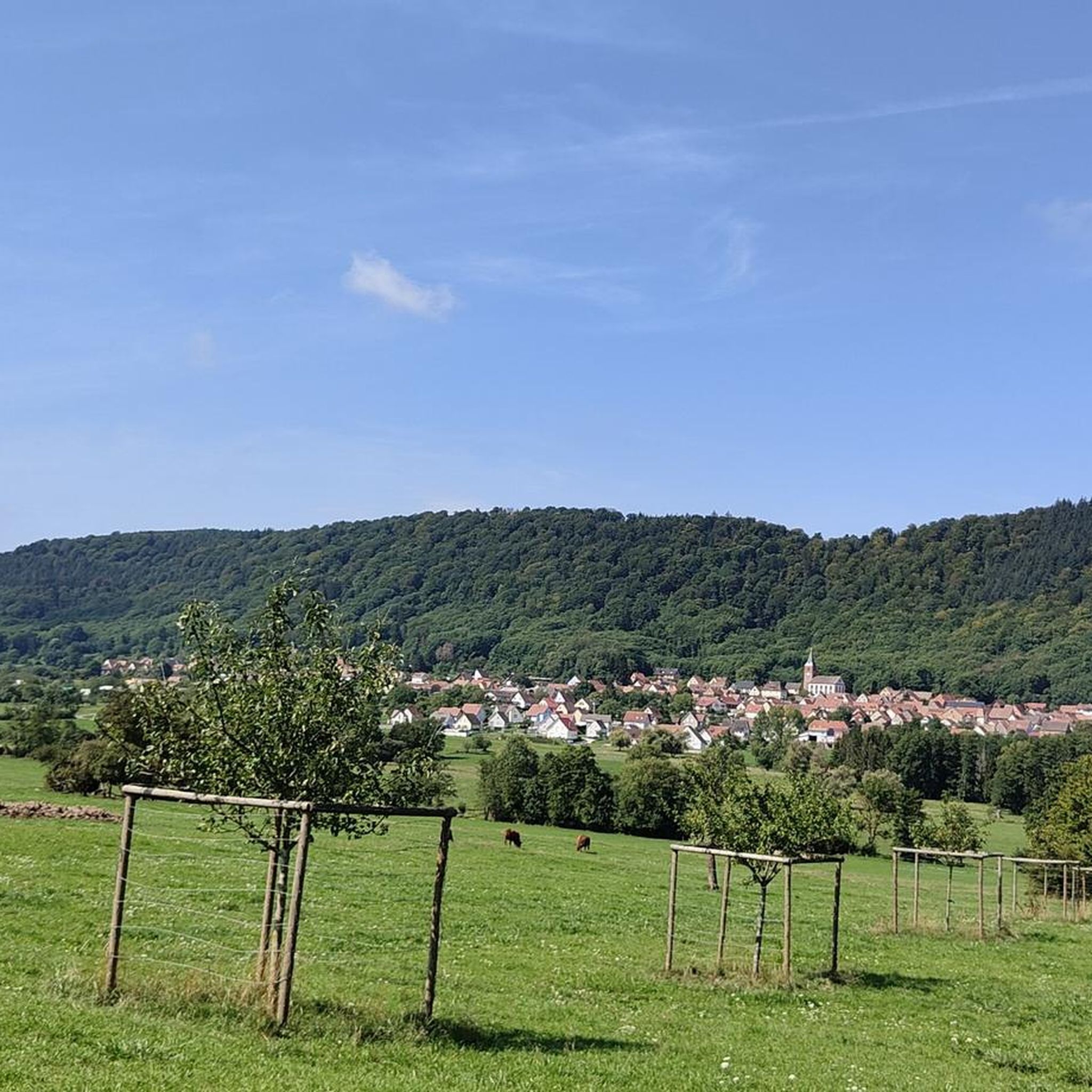
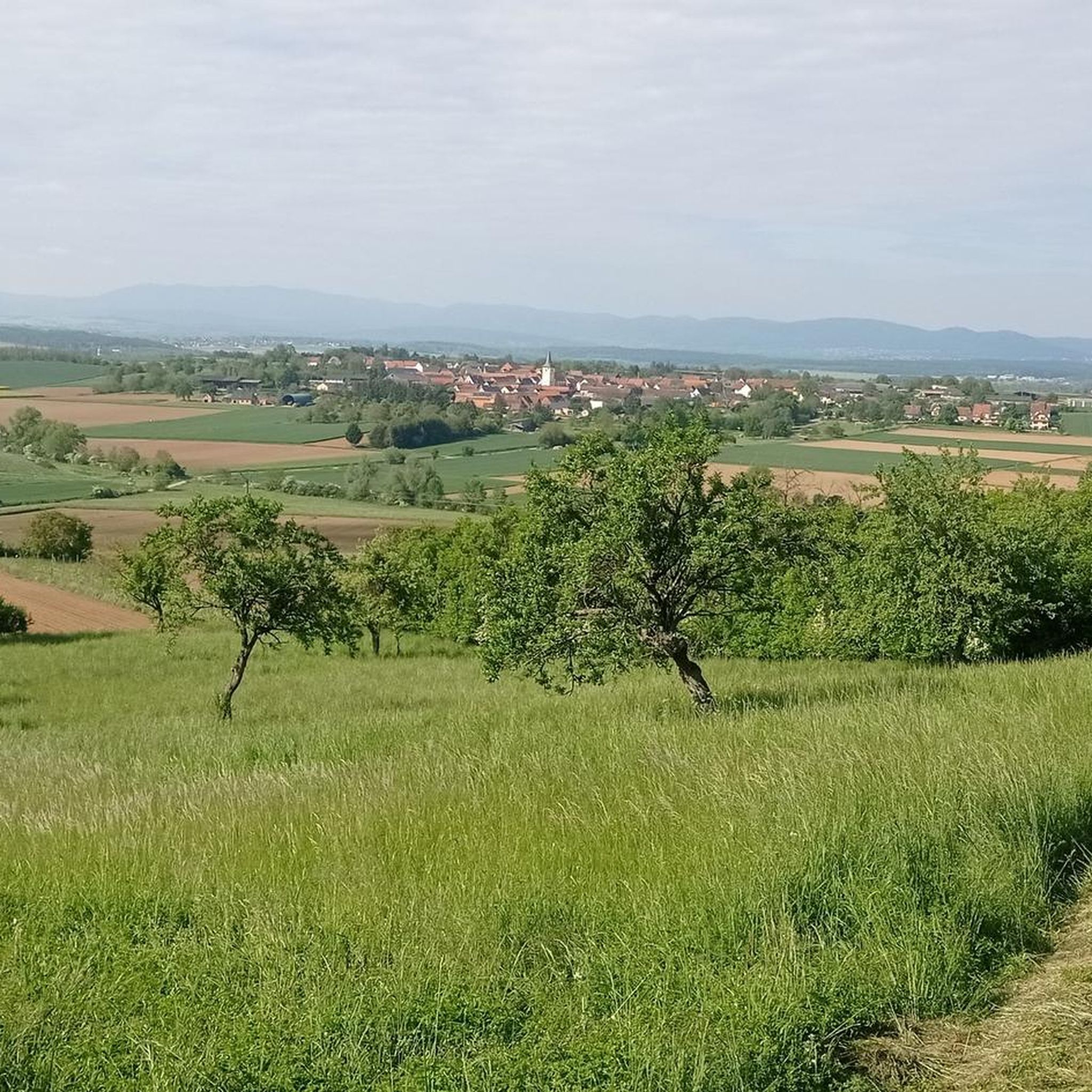
Sights: The former abbey church of St. Peter and Paul, founded around 720, belonged to one of the oldest monasteries on the Upper Rhine. In its early years, this was led by Saint Pirminius, among others. The church is one of the most artistically valuable and stylistically diverse in Alsace. It has a Carolingian crypt (8th century), Romanesque chapels (11th century), a choir and a transept in the transitional style to Gothic (late 12th century), a purely Gothic nave (13th century) and a classicist façade with a tower (1768). The remains of the monastery building (chapter house, one wing of the cloister) are of Gothic style (13th century). The furnishings are very rich (medieval gravestones and the Adelphus carpets from around 1470 with depictions of the life and miraculous work of St. Adelphus of Metz in the chapels; baptismal font, pulpit, Adelphus shrine, organ, Holy Sepulchre in the nave). The portals and rose windows are also remarkably designed and decorated. Archaeological remains of other buildings of the monastery complex can be seen to the north of the church. The now Protestant church of St. Adelphus was built between 1200 and 1225 in the transitional style from Romanesque to Gothic. It impresses with its powerful west facade and its simple interior. The choir of the church, which until then contained the reliquary and the Adelphus carpets depicting the life of St. Adelphus of Metz, was demolished in the 19th century and replaced by a flat wall. The Herrenstein Castle (ruin) was built at the beginning of the 13th century by the Counts of Dagsburg. In the 16th century it was converted into a fortress by the Alsatian military architect Daniel Specklin. Former synagogue, built in 1875, and Jewish cemetery, established in 1877
2
0

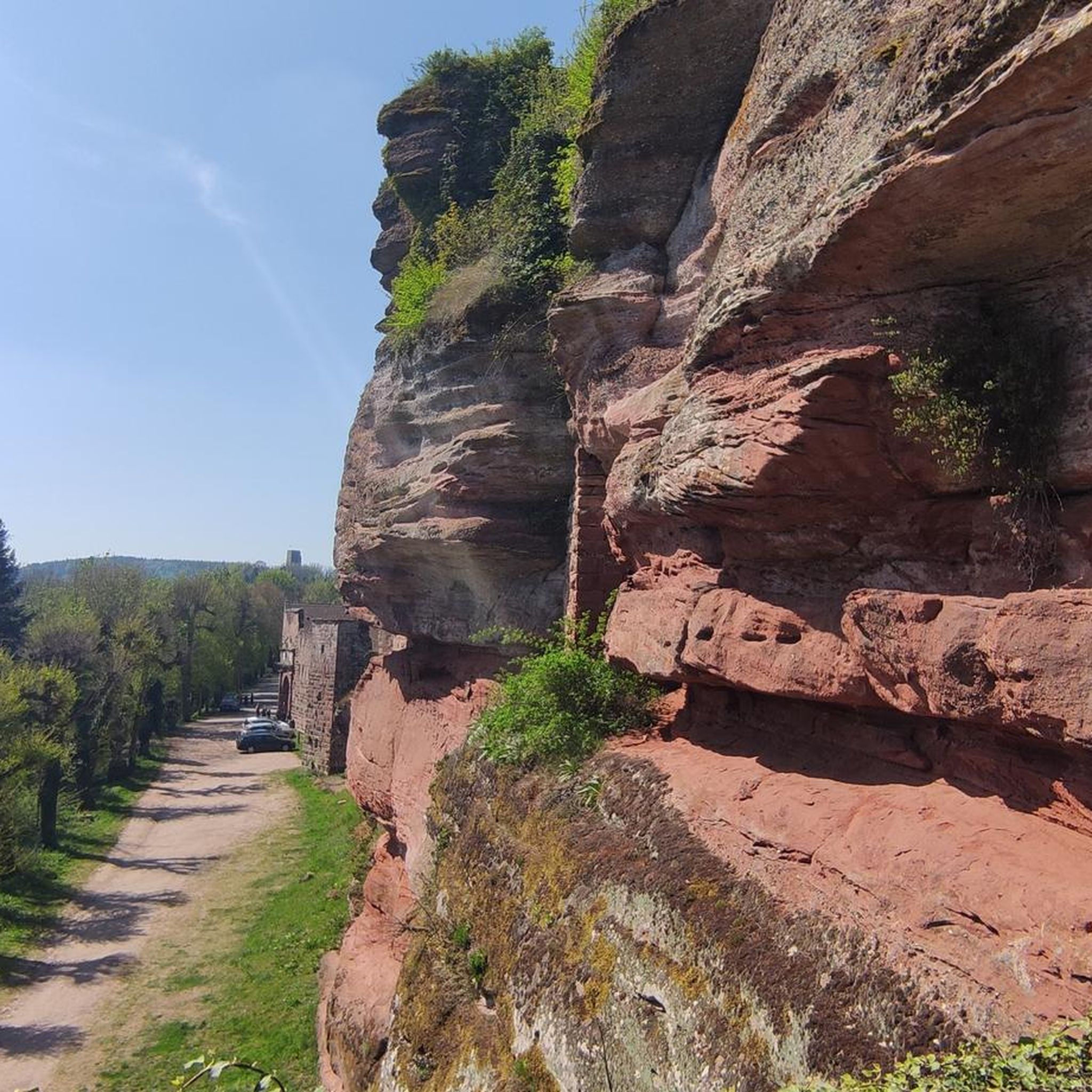
The castle complex is located on a spur on the Daubenschlag rock (French: Rocher du Daubenschlag). All that is visible here are the foundations of a large castle. Behind the clearly visible moat there is a strong shield wall, against which a large square keep (base area 11 × 11 meters) leans in the middle. In the middle of the castle complex there are still remains of a palace.
2
0

Impressive building in Saverne - not far from the cycle path.
2
0

Saverne is a beautiful town - the Château des Rohan is impressive. I love the red sandstone.
0
0

Pretty big for the area. But you can cycle well along the canal
1
1

today a school or boarding school or something similar.
3
1
Frequently Asked Questions
What are the most popular castles to visit around Gottesheim?
While Gottesheim itself is a small commune without notable castles, the surrounding Bas-Rhin department offers several historical sites. Among the most popular are Warthenberg Castle, known for its recently discovered ruins including a strong shield wall and palace remains, and Rohan Castle, a grand neoclassical palace in Saverne often called the "Little Alsatian Versailles."
Are there any family-friendly castles near Gottesheim?
Yes, the region offers options suitable for families. The Neuwiller-lès-Saverne Village Center, which includes the ruins of Herrenstein Castle, is listed as family-friendly. Exploring the village and its historical sites can be an engaging activity for all ages.
What kind of historical sites can I expect to see around Gottesheim?
The area around Gottesheim, part of Alsace, is rich in history, featuring a mix of well-preserved palaces and ancient castle ruins. You can explore sites like the neoclassical Rohan Castle, the archaeological remains of Warthenberg Castle, and the Castle Ruins in Parc naturel régional des Vosges du Nord, which often have information boards detailing their past.
What do visitors enjoy most about the castles in this region?
Visitors appreciate the historical depth and scenic beauty. For instance, Warthenberg Castle offers a sense of discovery with its recently unearthed ruins and rock formations. Rohan Castle is admired for its magnificent architecture and large park. The community has shared over 149 photos and given over 210 upvotes across these highlights, indicating a strong appreciation for the region's heritage.
Are there hiking opportunities near the castles around Gottesheim?
Yes, the region provides excellent opportunities for hiking. For example, the area around Warthenberg Castle is known for its round tours with many rock formations. You can find various hiking routes and trails in the region, including those listed in the MTB Trails around Gottesheim guide, which also features routes passing by castles like Haut-Barr.
Can I find cycling routes that include castles near Gottesheim?
Absolutely. The region offers several road cycling routes that allow you to explore the historical landscape. For instance, the Road Cycling Routes around Gottesheim guide includes routes like the 'Marmoutier Abbey Church – Osthoffen Castle loop from Dettwiller,' which can incorporate castle views into your ride.
What is the best time of year to visit the castles around Gottesheim?
While specific seasonal considerations for each castle vary, generally, spring and autumn offer pleasant weather for exploring the outdoor ruins and castle grounds. These seasons typically provide comfortable temperatures for walking and cycling, and the natural scenery is often at its most vibrant.
Are there any castles with good viewpoints near Gottesheim?
Yes, several castle sites offer excellent viewpoints. Warthenberg Castle is situated on the Daubenschlag rock, providing elevated perspectives. Similarly, the Castle Ruins in Parc naturel régional des Vosges du Nord are also noted as a viewpoint, allowing visitors to take in the surrounding natural landscape.
How long should I plan for a visit to a castle in the Gottesheim area?
The duration of your visit depends on the specific castle and your interest. For extensive sites like Rohan Castle, which houses museums and a large park, you might spend a few hours. For ruins like Warthenberg Castle, a visit could range from an hour to a half-day, especially if combined with nearby hiking.
Are there options for food or accommodation near the castles?
The larger towns near the castles, such as Saverne (home to Rohan Castle), will offer various cafes, pubs, and accommodation options. For more remote castle ruins, it's advisable to check for facilities in nearby villages or plan to bring your own refreshments.
Can I visit the castles around Gottesheim in winter?
Visiting castles in winter is possible, but conditions may vary. Some outdoor ruins might be less accessible due to snow or ice, and certain facilities or museums might have reduced hours. It's recommended to check specific opening times and weather conditions for individual sites before planning a winter visit.
What kind of terrain can I expect when visiting castle ruins in the region?
Many castle ruins, like Warthenberg Castle, are located on elevated spurs or rocky outcrops. This often means uneven terrain, potentially steep paths, and natural rock formations. Comfortable walking shoes are highly recommended for exploring these sites.
Most popular routes around Gottesheim
Most popular attractions around Gottesheim

Get inspired with the komoot mobile app


Explore more
Looking for the best castles somewhere else? Discover other guides around Gottesheim:
