Top 6 Caves around Hauteville-Lès-Dijon
Best caves around Hauteville-Lès-Dijon are found in a region characterized by its rural landscape and elevated position overlooking Dijon. While traditional large show caves are not directly within the commune, the surrounding area offers various natural and historical underground features. These include natural monuments with cave-like formations, actual cave systems, and historical rural shelters. The area provides opportunities to explore geological interests and local heritage through its diverse underground sites.
Best caves around Hauteville-Lès-Dijon
- The most popular caves is La…
Last updated: May 8, 2026
La Roche Virante
Highlight • Natural Monument
At the bottom …
Translated by Google •
Tip by

Gouffre du creux Percé
Highlight • Viewpoint
Translated by Google •
Tip by

Sign up now to discover places like this
Get recommendations on the best single tracks, peaks, & plenty of other exciting outdoor places.
Sign up for free
Célerons Caves
Highlight • Cave
Translated by Google •
Tip by

Caves of Parc de Jouvence
Highlight • Cave
Translated by Google •
Tip by

Gouffre de la Combe aux Prêtres
Highlight • Cave
several entrances and a total length of more than 28 km.
Was discovered in a small quarry in 1969. …
Translated by Google •
Tip by

Start today with a free account
Your next adventure awaits.
Login or Signup
Tips from the Community

Be careful when going down the 10 meters of the small path to see the chasm. Even in dry weather it is slippery and there is nothing to prevent you from falling into the chasm. So be careful.
1
0

The Creux Percé is an inverted cone-shaped collapsed chasm approximately 60 m deep and with a circumference ranging from 35 to 25 m at the surface. This chasm is primarily known to speleologists. Exploration of this chasm and its lateral networks began in the 19th century. This site has long been a natural icehouse with a bottom that reaches sub-zero temperatures, even in summer. https://www.bourgogne-tourisme.com/ In May 2025, a special outing, supervised by the Dijon Speleo Club, will allow visitors to descend into this crater.
1
0
Of the three caves, two are relatively easy to access. One can even be walked through—a beautiful place.
3
0

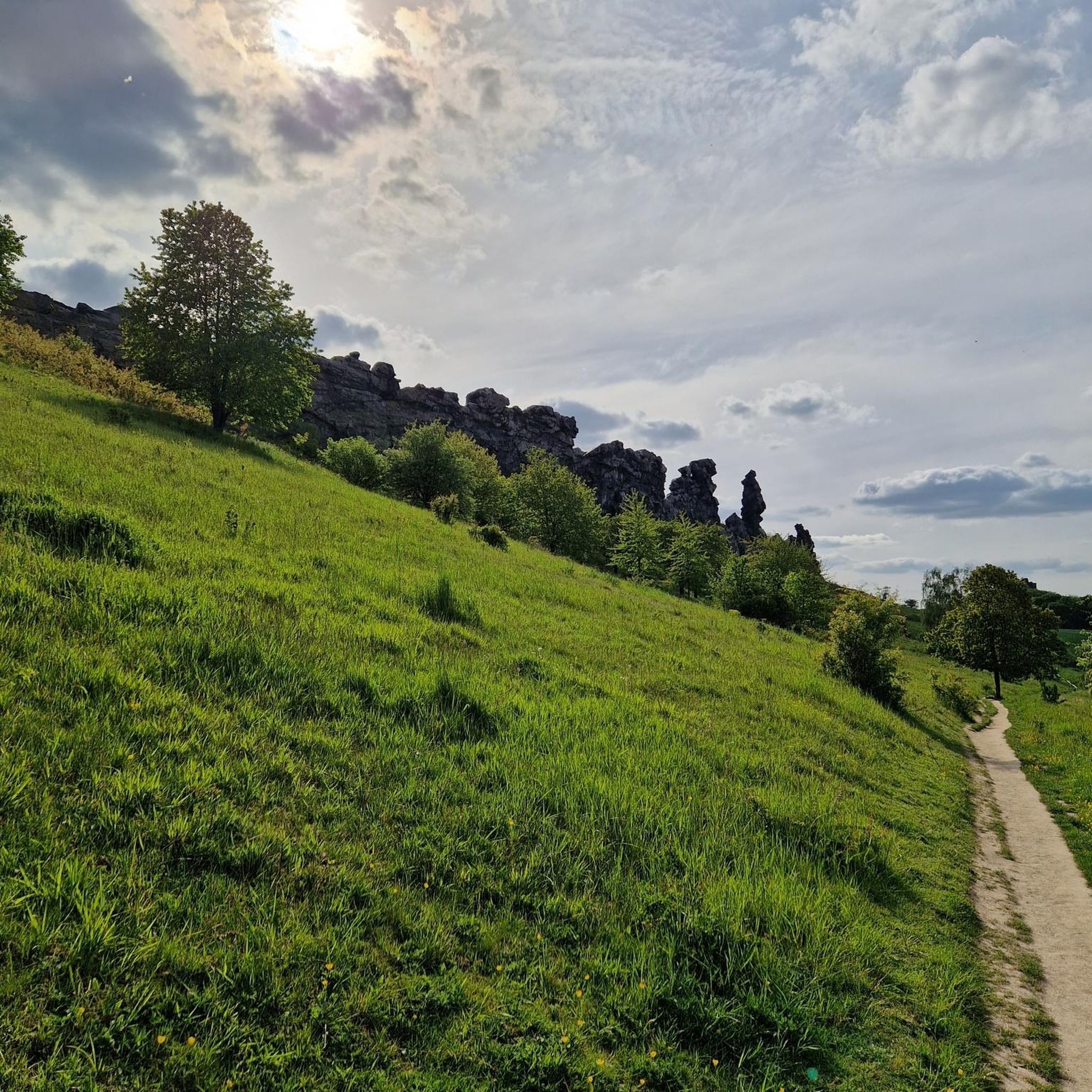
At the top of the valley, this huge rock is a top climbing spot. The view is also impressive.
2
0
There are three caves there. One of them would have been used by smugglers who stored salt there. Is the name related to this activity?
3
0

An interesting article to read here: https://www.lunetoile.com/2018/03/13/labime-du-creux-perce-pasques-21/
3
0
This chasm or sinkhole, in the town of Pasques, in the middle of the woods, is impressive and really worth a detour. It can also be the goal of a hike or mountain bike. Especially since a chalet built nearby offers a nice shelter - for a picnic, or a bivouac.
2
0

Good sturdy walking shoes with a lot of profile are absolutely a must.
1
0
Frequently Asked Questions
What types of underground features can I explore around Hauteville-Lès-Dijon?
The region offers a variety of underground sites, including natural monuments with cave-like formations, actual cave systems, and historical rural shelters known as 'cabiotes' or 'cadoles'. These range from small, accessible caves to larger systems with underground rivers, providing opportunities to explore geological interests and local heritage.
Are there any significant natural monuments or viewpoints related to caves in the area?
Yes, the area features several notable natural monuments. La Roche Virante is a natural monument with cliffs and a cave known as 'the cave of wolves,' also famous for its large, balancing rock formation. Another impressive site is the Gouffre du creux Percé, a chasm approximately 60 meters deep.
What is the <a href="https://www.komoot.com/highlight/6537947" target="_blank" rel="noopener">Gouffre du creux Percé</a> known for?
The Gouffre du creux Percé is a chasm or sinkhole, about 60 meters deep, primarily known to speleologists. It's remarkable for its sub-zero temperatures even in summer, historically serving as a natural icehouse. It's an impressive natural feature worth a detour during a hike or mountain bike ride.
Can I find large cave systems with underground rivers near Hauteville-Lès-Dijon?
Yes, the Gouffre de la Combe aux Prêtres is a huge cave system featuring an underground river. It has multiple entrances and a total length exceeding 28 km, making it a significant site for experienced speleologists.
Are there any historical underground sites or shelters to discover?
Beyond natural caves, the region around Hauteville-lès-Dijon is home to historical rural shelters known as 'cabiotes' or 'cadoles.' These small stone constructions were traditionally used by peasants and offer insight into past agricultural practices. Some have been restored and can be found along hiking routes.
What is the <a href="https://www.komoot.com/highlight/961131" target="_blank" rel="noopener">Caves of Parc de Jouvence</a>?
The Caves of Parc de Jouvence refers to a cave system located within a park. This park is known for its many hiking trails and information boards, situated in an important karst area, making it a popular starting point for various outdoor activities.
Are there any easy-to-access caves for casual visitors?
The Célerons Caves offer relatively easy access to two of its three caves, with one even allowing visitors to walk through it. This makes them a good option for those seeking a less challenging exploration.
What outdoor activities can I do near these caves?
The area around Hauteville-Lès-Dijon offers a range of outdoor activities. You can find numerous running trails, cycling routes, and road cycling routes. Many of these trails pass by natural monuments and offer scenic views of the region's landscape.
Are there hiking trails that incorporate cave exploration?
Yes, several hiking trails in the region allow you to explore cave features. For instance, the area around La Roche Virante is a popular spot for hiking, offering an almost mountainous atmosphere and leading to 'the cave of wolves.' The Parc de Jouvence also has many hiking trails within its karst area.
What is the 'Trou du Duc' and where is it located?
The Trou du Duc is a fascinating natural formation located near Arcenant, a short distance from Hauteville-lès-Dijon. Access involves descending a metallic ladder beneath a trapdoor, offering a magnificent view of the comb (steep-sided valley). It's part of a varied hiking path that includes impressive cliffs and forest trails, and holds historical significance as a hiding place for resistance fighters.
What should I wear when visiting caves in the region?
When exploring caves, especially those with sub-zero temperatures like the Gouffre du creux Percé, it's advisable to wear layers of warm clothing, even in summer. Sturdy, non-slip footwear is also essential for navigating potentially wet or uneven terrain.
Is there any wildlife to observe in or around the caves?
While specific wildlife within the caves of Hauteville-lès-Dijon is not detailed, the surrounding natural areas, particularly along hiking routes near sites like the Trou du Duc, offer opportunities to appreciate wild fauna in the ancient forests and comb valleys.
Most popular routes around Hauteville-Lès-Dijon
Most popular attractions around Hauteville-Lès-Dijon

Get inspired with the komoot mobile app


Explore more
Extend your search for the best caves by checking out these guides of the top ones around Hauteville-Lès-Dijon:
