Top 9 Caves around Sant Cugat Del Vallès
Best caves around Sant Cugat Del Vallès are primarily found within the wider Barcelona province, as the municipality itself, known for its significant portion of the Serra de Collserola Natural Park, does not feature prominent tourist-focused caves. Sant Cugat Del Vallès is characterized by extensive woodlands, hiking trails, and natural beauty. The region offers a blend of natural landscapes and historical sites, providing a diverse outdoor experience.
Best caves around Sant Cugat Del Vallès
- The most popular caves is Turó…
Last updated: June 7, 2026
Juanita Mine
Highlight • Cave
Translated by Google •
Tip by

Cova d'en Genís Paradolmen
Highlight • Cave
Translated by Google •
Tip by

Sign up now to discover places like this
Get recommendations on the best single tracks, peaks, & plenty of other exciting outdoor places.
Sign up for free
Waterfall and Grotto in Parc de Torreblanca
Highlight • Waterfall
Translated by Google •
Tip by

Mina Grott
Highlight • Cave
Translated by Google •
Tip by

The Cave Near Can Coll
Highlight • Cave
Translated by Google •
Tip by

Sign up for free to discover even more caves around Sant Cugat Del Vallès.
Sign up for free
Already have an account?
Start today with a free account
Your next adventure awaits.
Login or Signup
Popular around Sant Cugat Del Vallès
Other adventures around Sant Cugat Del Vallès

Tips from the Community

Genís Cave, also known as Genís Cave, is a paradolmen located in the municipality of Santa Coloma de Gramenet. It is located in the Serralada de Marina park, on the southwest side of the Pollo hill, near the hermitage of Sant Climent and 500 meters from the Puig Castellar archaeological site.
22
0

The Grott Mine is a tunnel of almost one and a half kilometers that is located in the Sierra de Collserola. Its construction was to carry water from the Pantano de Vallvidrera to the old municipality of Sarrià.
2
0

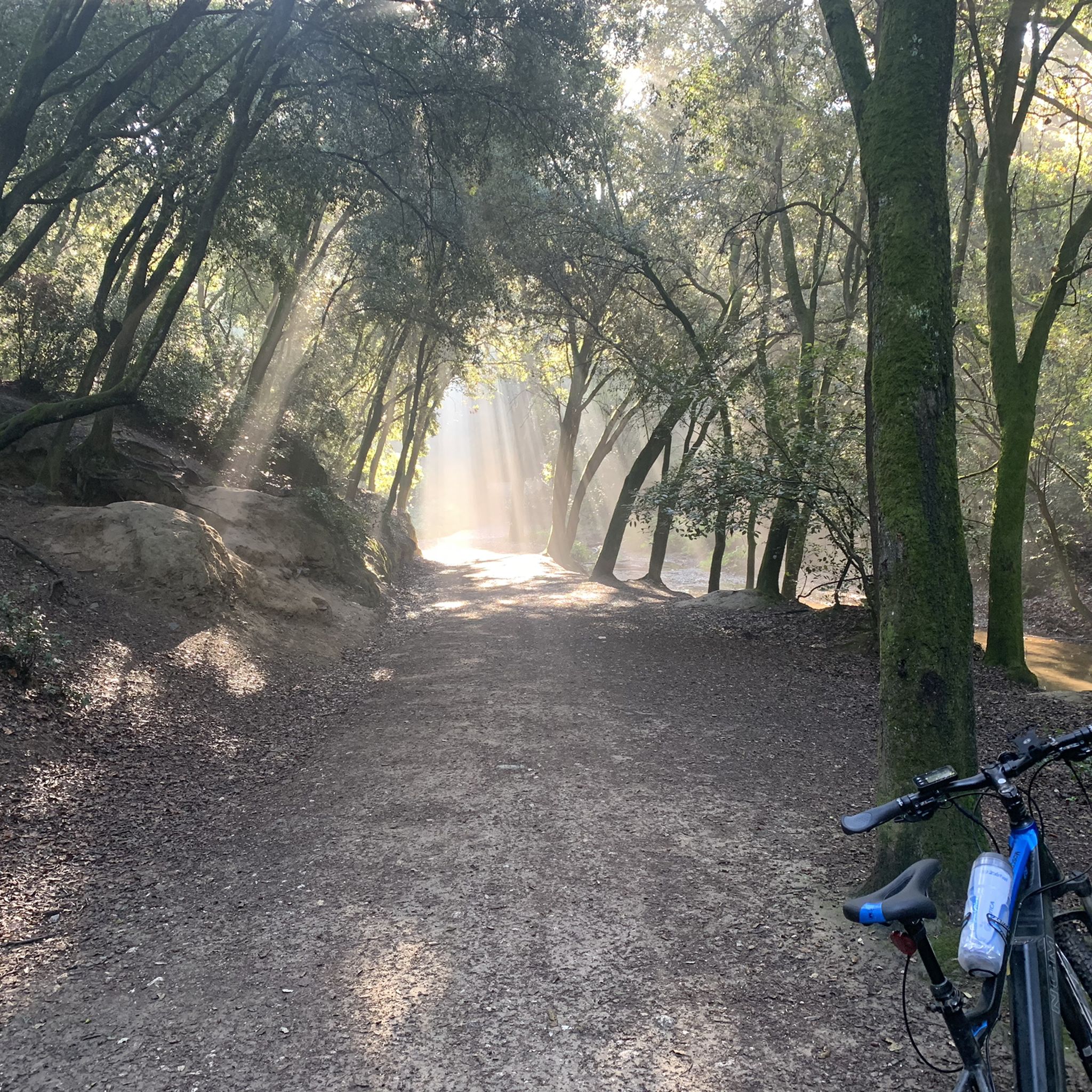
A strange cave in the side of the trail. It is a popular place for people to visit on a nice trail near Can Coll. I am not sure if the cave actually goes anywhere but the trail at the right time of the day gets beams of light that are magical.
5
1

According to Sergi Falguera, a collaborator of the Friends of the Geology Museum association, the site began to be exploited in the 17th century, but the most important extractions date back to the 19th and 20th centuries, when it was named Juanita. . It was part of the land of the Masia de Santa Caterina, in the neighborhood of Pedralbes. The mine still has several access tunnels. It is low in water, but it is not drinkable because it carries the acid that is formed from the oxide of minerals
3
0

A Dolmen with good views and hides if you can't find the way.
7
0

End station/Exit of an old tunnel built en the early 19C, which was firstly used as the water channel for transporting the reservoir water into the city, then as the end station for the express train taking visitors from the city to the heart of the natural park.
0
0

Discovered in 1955 by Genís Ibàñez, a member of the Puig Castellar hiking center. In the excavations, remains of bones and two ceramic vessels corresponding to the Bronze Age were found. It was initially believed to be a megalithic construction, but is now considered to be a natural structure.
7
0

They are small caves, within the area between Coll del Portell and Carretera de les Aigües, the best access is from the Aigües road and they are also better seen when going to see them, from Coll del Portell you can also go down although the path, being made of very loose slate stone, is more slippery.
6
0
Frequently Asked Questions
What are the most popular caves and underground features near Sant Cugat Del Vallès?
While Sant Cugat Del Vallès itself is known for its natural park and urban green spaces, several significant cave systems are within a reasonable distance. These include the prehistoric Toll Caves near Moià, the archaeologically rich Cova Simanya in Sant Llorenç del Munt i l'Obac Natural Park, and the visually stunning Cuevas de Montserrat in Collbató. Within the immediate area, visitors appreciate the historical Mina Grott, a tunnel originally built to transport water, and the unique Waterfall and Grotto in Parc de Torreblanca, a romantic garden feature.
Are there family-friendly caves to visit near Sant Cugat Del Vallès?
Yes, several options are suitable for families. The Toll Caves offer guided tours that explain prehistoric findings, and the site includes a prehistoric park and museum, making it educational and engaging. Cova Simanya is also considered accessible for families, providing insight into ancient human history. Additionally, the Waterfall and Grotto in Parc de Torreblanca is a pleasant, family-friendly spot with an imaginative design.
What historical or archaeological significance do the caves in this region hold?
The caves near Sant Cugat Del Vallès are rich in history. The Toll Caves are a major prehistoric complex with archaeological and paleontological discoveries, including remains of Quaternary fauna and evidence of human habitation from the Mid-Palaeolithic and Neolithic periods. Cova Simanya also has ongoing archaeological studies confirming Palaeolithic settlements. The Juanita Mine is a historical site dating back to the 17th century, and Mina Grott is a 19th-century tunnel with a fascinating past related to water transport and early tourism.
What natural features can I expect to see in these caves?
The caves offer diverse natural formations. The Cuevas de Montserrat are renowned for their intricate speleothems, including stalactites, stalagmites, and columns. The Toll Caves feature a river flowing through them, enhancing their natural beauty. Even the man-made Waterfall and Grotto in Parc de Torreblanca is designed to imitate natural forms, surrounded by lush vegetation.
What is the best time to visit the caves near Sant Cugat Del Vallès?
Caves generally maintain a constant temperature year-round, making them a good option in various seasons. For example, the Cuevas de Montserrat maintain a constant 14°C. However, consider the weather for travel to and from the caves, especially if they are part of a larger outdoor activity. Spring and autumn often offer pleasant conditions for exploring the surrounding natural parks.
Are there hiking trails near these caves?
Yes, many caves are located within or near natural parks that offer extensive hiking opportunities. Cova Simanya is within the Sant Llorenç del Munt i l'Obac Natural Park, which has numerous trails. The Turó de Montcada i Reixac, which includes caves, is part of the Serra de Collserola Natural Park. You can find various hiking routes in the area by exploring the Hiking around Sant Cugat Del Vallès guide.
What should I wear or bring when visiting caves?
It's advisable to wear comfortable clothing and sturdy, closed-toe shoes, as cave floors can be uneven and slippery. For some caves like Cova Simanya, waterproof footwear is recommended due to potentially wet conditions. Caves maintain cooler temperatures, so a light jacket might be useful even in summer. If exploring less developed caves, bring good lighting, such as a headlamp or flashlight.
What other outdoor activities can I do near the caves around Sant Cugat Del Vallès?
The region offers a wide range of outdoor activities. The natural parks surrounding many of these caves are ideal for hiking and cycling. For example, the Serra de Collserola Natural Park, where Turó de Montcada i Reixac is located, has many trails. You can explore options like Gravel biking around Sant Cugat Del Vallès or Cycling around Sant Cugat Del Vallès for routes in the area.
Are there any challenging caving experiences available?
While many tourist caves offer accessible paths, some areas or less developed caves can be more challenging. For instance, the Juanita Mine is categorized as challenging, and exploring it requires careful navigation due to loose stone trails. Always assess your skill level and inquire about specific requirements or guided tours for more demanding cave explorations.
What do visitors enjoy most about the caves and underground sites in this region?
Visitors particularly enjoy the blend of natural beauty and historical insight. The panoramic views from spots like Turó de Montcada i Reixac, which also features caves, are highly appreciated. The unique experience of exploring ancient human history in the prehistoric caves and the engineering marvel of sites like Mina Grott are also popular. The serene and imaginative design of the Waterfall and Grotto in Parc de Torreblanca also receives positive feedback.
Are there any caves directly within the municipality of Sant Cugat Del Vallès?
The municipality of Sant Cugat Del Vallès itself does not feature prominent tourist-focused natural caves. Its natural landscape is primarily characterized by extensive woodlands and hiking trails within the Serra de Collserola Natural Park. However, the region offers man-made grottoes and historical mines, such as the Mina Grott, and the Waterfall and Grotto in Parc de Torreblanca, which are popular attractions.
Most popular routes around Sant Cugat Del Vallès
Most popular attractions around Sant Cugat Del Vallès

Get inspired with the komoot mobile app


Explore more
Extend your search for the best caves by checking out these guides of the top ones around Sant Cugat Del Vallès:
