Top 11 Caves around Ayora
Caves around Ayora, a municipality in the province of Valencia, Spain, offer diverse geological formations and historical significance. The region is characterized by its natural landscapes, including mountain ranges and valleys, providing a setting for various cave systems. These natural features contribute to the area's appeal for outdoor exploration. Ayora's caves are notable for their archaeological value, including prehistoric rock art and ancient human habitation sites.
Best caves around Ayora
- The most popular caves is Calicanto raft shelter, a…
Last updated: May 6, 2026
Calicanto raft shelter
Highlight • Historical Site
Translated by Google •
Tip by

End of the trail
Highlight • Viewpoint
Translated by Google •
Tip by
Sign up now to discover places like this
Get recommendations on the best single tracks, peaks, & plenty of other exciting outdoor places.
Sign up for free
Cueva de la Vieja Rock Art Site
Highlight • Cave
Translated by Google •
Tip by

La Araña Cave and La Rebolla Waterfall
Highlight • Cave
Translated by Google •
Tip by

Cueva de Don Juan
Highlight • Cave
Translated by Google •
Tip by
Sign up for free to discover even more caves around Ayora.
Sign up for free
Already have an account?
Start today with a free account
Your next adventure awaits.
Login or Signup

Other adventures around Ayora

Tips from the Community

There are two cavities that contain the cave paintings. In the first part of the first cave, Cave 1, you can see an archer and a deer on the left, a roe deer on the right, and between the two archers another human figure. In the second part of the first cave, Cave 2, the largest and with the largest number of paintings, you can admire the famous scene of the gathering of honey.
0
0

You can still distinguish some of the cave paintings drawn on the walls of the shelter. Currently, it is fenced to protect this ancestral work from any vandalism.
1
0
It is a large cave that is located in the Sierra del Boquerón at 660 meters above sea level. Inside you can see numerous formations created throughout history as a result of dripping and runoff of water (stalactites and stalagmites among others). Without a doubt, it is one of the attractions of the area and its interior can be visited during the summer months through the following link: https://www.cuevadedonjuan.es/es/pagina/horarios-y-tarifas
1
0

Important archaeological remains such as flint tools, animal bone remains and human remains have been discovered. In addition, numerous cave paintings have been found that represent animals, human figures and geometric shapes. It has been the subject of numerous studies by archaeologists and paleontologists since it was discovered in the 19th century.
2
0
This cave treasures prehistoric cave paintings. Currently you have to ask permission from the town hall to be able to visit them.
1
0
The tour ends in a small esplanade where there is a tree and some rocks that can serve as a seat while you observe the views of the river and recharge your batteries. Behind the bushes, there is a metal ladder that goes up to the tunnel that was built to channel the water from the river.
2
0

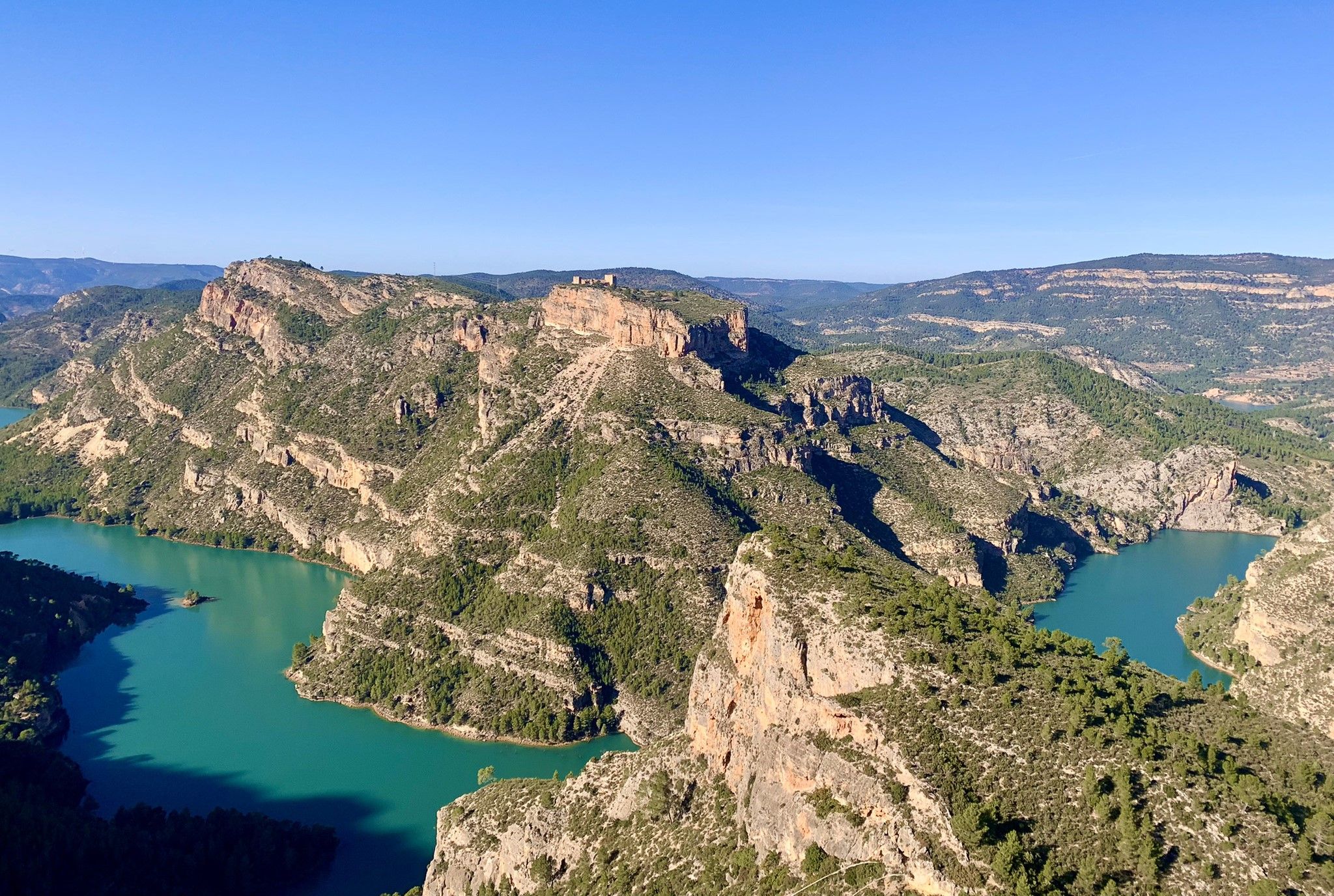
Archaeological site with views of the Chorrador de La Rebolla, the Hongares ravine. From the viewpoint to the chorrador you can take the path on foot to reach the caves that remain closed except by appointment to enter.
2
0
Frequently Asked Questions
What kind of historical or archaeological discoveries can be found in the caves around Ayora?
The caves in Ayora are rich in history. Cueva de la Vieja Rock Art Site and La Araña Cave feature significant prehistoric cave paintings, including depictions of animals, human figures, and even a famous honey gathering scene. The Calicanto raft shelter also displays ancient cave paintings. Beyond these, Cueva Negra holds recently discovered Paleolithic engravings, indicating human habitation over 12,000 years ago, and Abrigo de Tortosilla is known for its Levantine and Schematic art. Cueva de San Pascual is believed to have been an Iberian sacred site.
Are there caves around Ayora with unique natural formations or underground lakes?
Yes, several caves offer impressive natural features. Cueva de Don Juan is known for its numerous stalactites and stalagmites. Cueva Negra also boasts spacious galleries with abundant stalactites and stalagmites. For a truly unique experience, Cueva del Lago (also known as Cueva del Pozo del Tío Vidal) features a distinct underground lake with coral-like formations.
What are the options for guided tours or access to the historical cave sites?
Access to some historical sites requires prior arrangement. Guided tours for Abrigo de Tortosilla's prehistoric rock paintings are available by appointment from March to October. To visit Cueva de la Vieja Rock Art Site, you need to ask permission from the town hall. La Araña Cave is also accessible by appointment. Cueva de Don Juan can be visited during the summer months; you can find schedules and rates on its official website.
Are there any family-friendly caves or activities suitable for children?
While specific caves aren't explicitly labeled 'family-friendly' in the data, sites like Cueva de Don Juan, with its accessible interior during summer, can be a good option for families. The archaeological sites with cave paintings, such as Cueva de la Vieja Rock Art Site and La Araña Cave, offer an educational experience, though access may require appointments. Always check specific access requirements and difficulty levels for younger visitors.
What kind of wildlife can be found in the caves around Ayora?
Cueva Negra is particularly notable for its wildlife, serving as a protected habitat for various bat species. These include *Rhinolophus ferrumequinum*, *Rh. hipposideros*, *Rh. euryale*, *Myotis myotis*, *M. emarginatus*, *Plecotus austriacus*, and *Miniopterus schreibersii*.
What outdoor activities or routes are available near the caves in Ayora?
The Ayora region offers a variety of outdoor activities. You can find numerous running trails, such as the 'Sima del Ayatonero – Cueva Negra loop' or the 'Ayora – Ermita del Santo Ángel loop'. For cyclists, there are road cycling routes like the 'Ayora-Cofrentes Valley Loop' and general cycling routes including the 'Ayora – White Poplar loop'. You can explore these and more on the respective guides for Running Trails around Ayora, Road Cycling Routes around Ayora, and Cycling around Ayora.
What is the best time of year to visit the caves in Ayora?
The summer months are a good time to visit some caves, as Cueva de Don Juan is open for visits during this period. For sites like Abrigo de Tortosilla, guided tours are available from March to October. Generally, spring and autumn offer pleasant weather for exploring the natural surroundings and accessing caves that might require some hiking.
Are there any caves that are less crowded or offer a more tranquil experience?
Cueva Horadada, located near Peñón de los Machos, is described as being in a tranquil and somewhat magical setting. It's more of a rock shelter with a distinctive stone formation and a nearby natural spring, offering a serene natural environment away from more structured tour experiences. Access can be moderately challenging, which may contribute to fewer visitors.
What should I bring when visiting the caves around Ayora?
For cave visits, especially those with challenging access or requiring appointments, it's advisable to wear sturdy footwear suitable for uneven or potentially slippery terrain. A headlamp or flashlight is always useful for exploring darker sections. If visiting archaeological sites, respect the protected nature of the art. For guided tours, bring any necessary booking confirmations.
Are there any viewpoints or natural attractions near the caves?
Yes, the region around Ayora offers beautiful natural attractions. Cueva Horadada is part of a hiking route that provides magnificent views, including those of the Peñón de los Machos. La Araña Cave is an archaeological site with views of the Chorrador de La Rebolla and the Hongares ravine, and it's near the La Rebolla Waterfall. The 'End of the trail' highlight also offers views of the river.
What are the accessibility considerations for caves in the Ayora region?
Accessibility varies significantly between caves. Some, like Cueva de Don Juan, are set up for visitor access during specific seasons. However, Cueva Horadada mentions moderately challenging access due to potentially slippery terrain. Archaeological sites like Calicanto raft shelter are fenced for protection, and others like Cueva de la Vieja Rock Art Site and La Araña Cave require prior permission or appointments, suggesting less developed public access infrastructure.
Most popular attractions around Ayora

Get inspired with the komoot mobile app


Explore more
Extend your search for the best caves by checking out these guides of the top ones around Ayora:
