Top 7 Castles around Taradell
Best castles around Taradell offer insights into the region's history and provide panoramic views. Taradell is situated in the Catalan region of Osona, characterized by its elevated terrain and strategic locations for medieval fortifications. The area features a mix of ruined castles and historical sites, often perched on rocky summits. These landmarks provide a historical context to the natural landscape.
Best castles around Taradell
- The most popular castles is Can Boix Castle, a castle and historical site that is…
Last updated: July 31, 2026
Casal de la Sala de Viladrau
Highlight • Historical Site
Translated by Google •
Tip by

Can Boix Castle
Highlight • Castle
Translated by Google •
Tip by

Sign up now to discover places like this
Get recommendations on the best single tracks, peaks, & plenty of other exciting outdoor places.
Sign up for free
Castell de Sant Llorenç del Munt
Highlight • Castle
Translated by Google •
Tip by

Castle of Tona
Highlight • Castle
Translated by Google •
Tip by
Castillo de Bellpuig de Sant Julià de Vilatora
Highlight • Castle
It is located within the limits of what was the
Castell de Sant Llorenç and
Also known as the CASAL de BELLPUIG.
Cataloged as a …
Translated by Google •
Tip by

Sign up for free to discover even more castles around Taradell.
Sign up for free
Already have an account?
Start today with a free account
Your next adventure awaits.
Login or Signup

Tips from the Community

place that is part of the Serrallonga Bandits route
0
0
The Castle 🏰 of Bellpuig It is located within the limits of what was the Castell de Sant Llorenç and Also known as the CASAL de BELLPUIG. Cataloged as a cultural asset of National Interest. There are no exact references From its construction but it is located between S-Xl and S-Xll Some later reforms from the 13th century.
2
0

Sant Llorenç Castle is a castle in the municipality of Sant Julià de Vilatorta (Osona) declared a cultural asset of national interest. There are remains of fortifications at the monastery and the base of a square tower at the top of the mountain. It was a termed castle, then a monastery. Documented in 884. At the beginning of the 11th century it was supplanted by the Castle of Meda and soon became the residence of Augustinian canons.
0
0

nice castle, with very good nature, it is not technical at all and it is easy to go down, but there are quite a few paths and you have to be careful and have it planned
1
0

It is located on a hill with a flat and extensive top, next to the urban area of the town of Tona in the Osona region. The castle is located in the northeast corner. There is an extraordinary panoramic view towards the Massif del Montseny, Collsuspina and Montanyola. Of the old Tona castle, all that remains today is a defense tower set directly on the rock. It has a square base, covered with a barrel vault, measuring 4.85 x 5.10 m. Average external height of 7.5 m. and wall thickness of 2.30 m. It has been said that it was perhaps a tower of Roman origin since a Roman road passed very close to this place, connecting the plain of Vich with Barcelona.
22
0

good views of the Plain of Vic and the Pyrenees and very fun downhill trails.
2
0

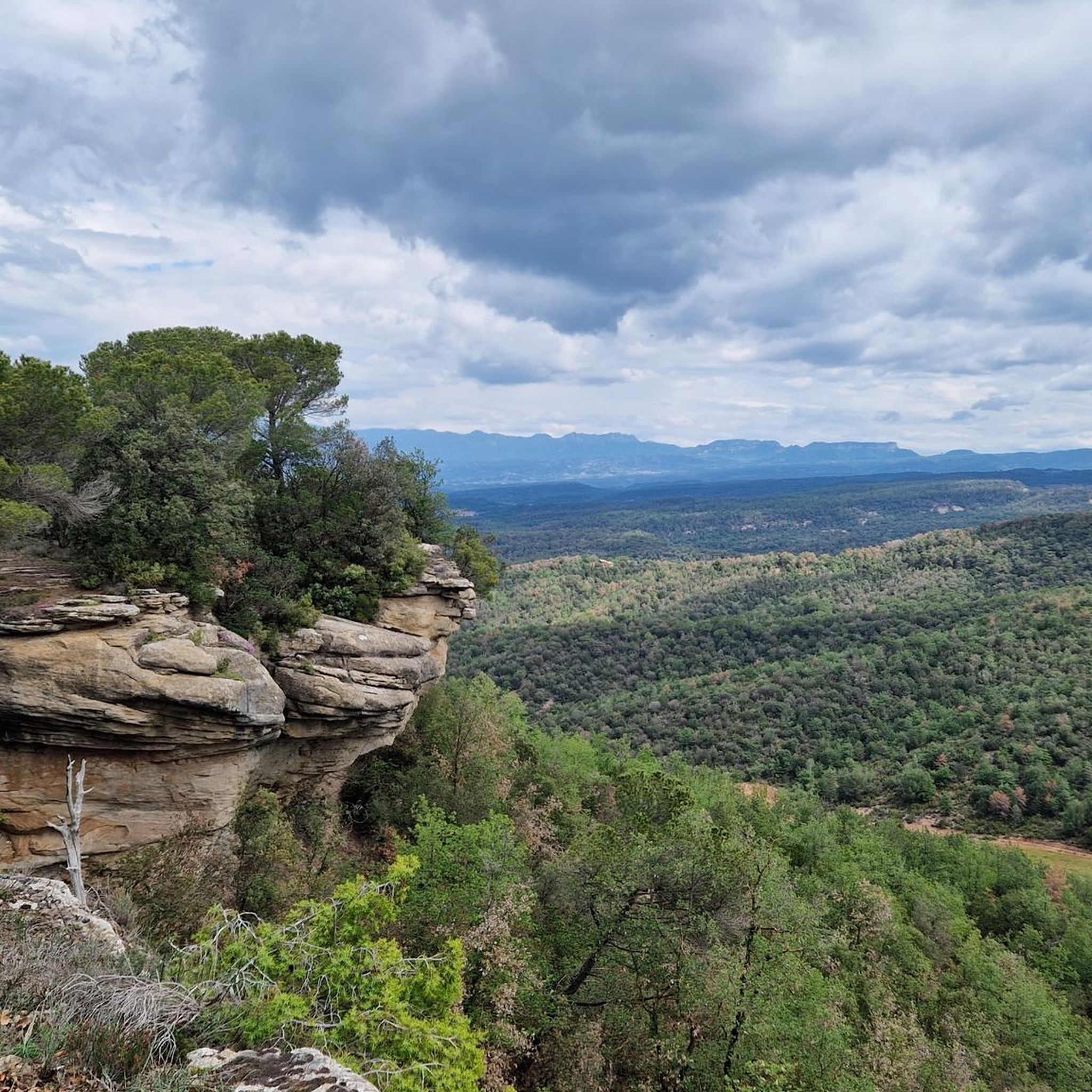
Can Boix Castle, also known as Taradell Castle, is located on some large rocks, at an altitude of 803 metres. Below the castle is a large cave. I think there are parts of the castle from the 10th century.
4
0
The ruins Castle of Bellpuig de Sant Julià de Vilatora
1
1
Frequently Asked Questions
What is the historical significance of the castles around Taradell?
The castles in the Taradell area, such as Can Boix Castle (also known as Castell de Taradell), have deep historical roots, with origins dating back as early as 893 AD. They served primarily military and defensive functions, strategically positioned to oversee the surrounding territory, including the Plain of Vic. These fortifications reflect centuries of regional history and the changing hands of noble families.
Which castles offer the best panoramic views in the Taradell region?
Many castles in the Taradell region are perched on elevated positions, offering impressive views. Can Boix Castle provides commanding views of the Plain of Vic and the Pyrenees. Similarly, Castell de Sant Llorenç del Munt offers excellent views of the area, and the Castle of Tona boasts panoramic vistas towards the Massif del Montseny.
Are there family-friendly castles to visit near Taradell?
Yes, the Castle of Tona is noted as family-friendly. Its location on a hill with a flat, extensive top makes it suitable for visitors of all ages, and it offers great views without being overly technical to access.
What kind of outdoor activities can I do near the castles in Taradell?
The area around Taradell's castles is excellent for outdoor activities. You can find numerous hiking trails, including moderate routes like the 'Circular route of Taradell - (PR-C 42)' and 'Views of Matagalls from GR-2 – Can Boix Castle loop'. For cycling enthusiasts, there are options for gravel biking and road cycling, with routes ranging from moderate to difficult. Explore more options in the Hiking around Taradell or Gravel biking around Taradell guides.
What are the architectural highlights of the castles in this region?
While many castles are in ruins, they retain significant architectural features. Can Boix Castle preserves remnants from the 10th-11th centuries and a large 14th-century wall. The Castle of Tona is notable for its defensive tower, known as the Tower of the Moors, which might have Roman origins. Castell de Savassona, though renovated, still features medieval elements, defensive walls, and a triangular tower.
Are there any easy walking trails to reach the castles?
Yes, there are easy walking options. For instance, the 'View – Can Boix Castle loop from Taradell' is an easy 6.7 km hike that takes you to Can Boix Castle. Many castle sites are accessible via well-maintained paths suitable for leisurely exploration.
What makes <a href="https://www.komoot.com/highlight/3792648" target="_blank" rel="noopener">Can Boix Castle</a> unique?
Can Boix Castle, or Castell de Taradell, is unique due to its strategic location atop a rocky summit at 803 meters, offering extensive views. A distinctive feature is its position on a large grotto, adding to its character. Its preserved ruins provide a tangible link to medieval history in the Osona region.
What is the best time of year to visit the castles around Taradell?
While specific seasonal data isn't provided, visiting during spring or autumn generally offers pleasant weather for exploring outdoor historical sites and hiking. These seasons typically avoid the peak heat of summer and the colder, potentially wetter conditions of winter, making for more comfortable walks and clearer views.
Can I find other historical sites besides castles in the Taradell area?
Yes, the region is rich in historical sites. For example, Castell de Sant Llorenç del Munt, while a castle, also features a small hermitage. The area's history extends beyond just fortifications, with many sites reflecting centuries of Catalan heritage.
What do visitors enjoy most about the castles around Taradell?
Visitors frequently highlight the impressive panoramic views, the historical significance of the ruins, and the unique natural settings. The journey to these castles often involves scenic routes, and the combination of history and nature is a major draw. Many appreciate the opportunity for fun downhill trails and the chance to explore ancient structures.
Is <a href="https://www.komoot.com/highlight/4382068" target="_blank" rel="noopener">Castell de Savassona</a> still inhabited?
Yes, Castell de Savassona, despite its ancient origins and renovations in the 17th and 19th centuries, is still inhabited. It remains a private estate, offering a unique blend of historical architecture and ongoing life.
Are there any castles near Taradell that were once monasteries?
Yes, Castell de Sant Llorenç del Munt was initially a termed castle and later became a monastery. Documented since 884, it eventually became the residence of Augustinian canons, showcasing its dual historical role.
Most popular routes around Taradell
Most popular attractions around Taradell

Get inspired with the komoot mobile app


Explore more
Looking for the best castles somewhere else? Discover other guides around Taradell:
