Top 6 Castles around Montefrío
Best castles around Montefrío are situated in a region known for its strategic historical significance, particularly as a frontier of Al-Andalus. The area features a landscape dominated by rocky outcrops and river valleys, which historically provided natural defensive positions. Montefrío itself was declared a Historic-Artistic Site in 1982, preserving its medieval character through its urban layout. The region's castles reflect centuries of architectural evolution and military importance.
Best castles around Montefrío
- The most popular castles is Fortaleza de la Mota…
Last updated: July 17, 2026
Alcalá la Real
Highlight • Settlement
Translated by Google •
Tip by

Fortaleza de la Mota (Castle of Alcalá la Real)
Highlight • Castle
Translated by Google •
Tip by

Sign up now to discover places like this
Get recommendations on the best single tracks, peaks, & plenty of other exciting outdoor places.
Sign up for free
Castle of Íllora
Highlight • Castle
Translated by Google •
Tip by

Castle of Priego de Córdoba
Highlight • Castle
Translated by Google •
Tip by

Montefrío
Highlight • Settlement
Translated by Google •
Tip by
Sign up for free to discover even more castles around Montefrío.
Sign up for free
Already have an account?
Start today with a free account
Your next adventure awaits.
Login or Signup

Tips from the Community

Don't mistake the Fortress of La Mota for a castle! The entire city of Alcalá la Real was once located within its walls, and you'll need more than an hour to explore it. Guided tours are also available in German, French, and English (in addition to Spanish) if you'd like (maicamero.com).
2
0

Alcalá la Real is located at a strategic point between the Guadalquivir Valley and the plains of Granada, which has given it a significant role in Andalusian history. The city's origins date back to prehistoric times, as evidenced by finds from the Paleolithic and Bronze Ages. During the Roman era, the settlement of Sucaelo was probably located here. An impressive marble sculpture of Hercules also dates from this period. Today, Alcalá la Real is characterized by a diverse cultural heritage. The impressive La Mota fortress is just one of many historical buildings, which also include numerous churches and monasteries. The city is also known for its lively traditional festivals and diverse cuisine, which attracts numerous visitors.
0
0

Easy route highly recommended
0
0

Beautiful and lively place. Nice restaurants and cafes
1
0

You shouldn't expect too much from the visit. The view from the tower over Priego de Cordoba is beautiful.
0
0
Well worth seeing and also very informative thanks to an audio guide.
1
0

Alcalá la Real is a spectacular town in Jaen that is located on a strategic natural communication route between the Guadalquivir valley and the Granada plain. This location has given it great importance over the centuries. On the hill of La Mota stands a fortress of the same name that is a collection of civilizations, especially from the Muslim period, although the Romans previously settled here, and later Gothic and Renaissance style buildings were added.
1
0

Also known as the castle of Alcalá la Real, the fortress of La Mota is a defensive enclosure, located on the hill of La Mota at 1029m, in the city of Alcalá la Real, in the province of Jaén. It is dated in the Nasrid period (13th and 16th centuries), although with some previous elements.
2
0
Frequently Asked Questions
What is the historical significance of the castles around Montefrío?
The castles in the Montefrío region, such as the Fortaleza de la Mota (Castle of Alcalá la Real), played a crucial role as part of the last frontier of Al-Andalus. They were strategically built on rocky outcrops and hills to control river valleys and routes, serving as vital military outposts and defensive enclosures during centuries of conflict. Montefrío itself was declared a Historic-Artistic Site in 1982, preserving its medieval character.
Are there any family-friendly castles to visit in the Montefrío area?
Yes, several castles in the region are considered family-friendly. For instance, Alcalá la Real, with its impressive fortress on La Mota hill, offers a rich historical experience suitable for all ages. The Castle of Íllora, perched on a cliff, also provides an engaging visit for families.
What kind of views can I expect from the castles in Montefrío?
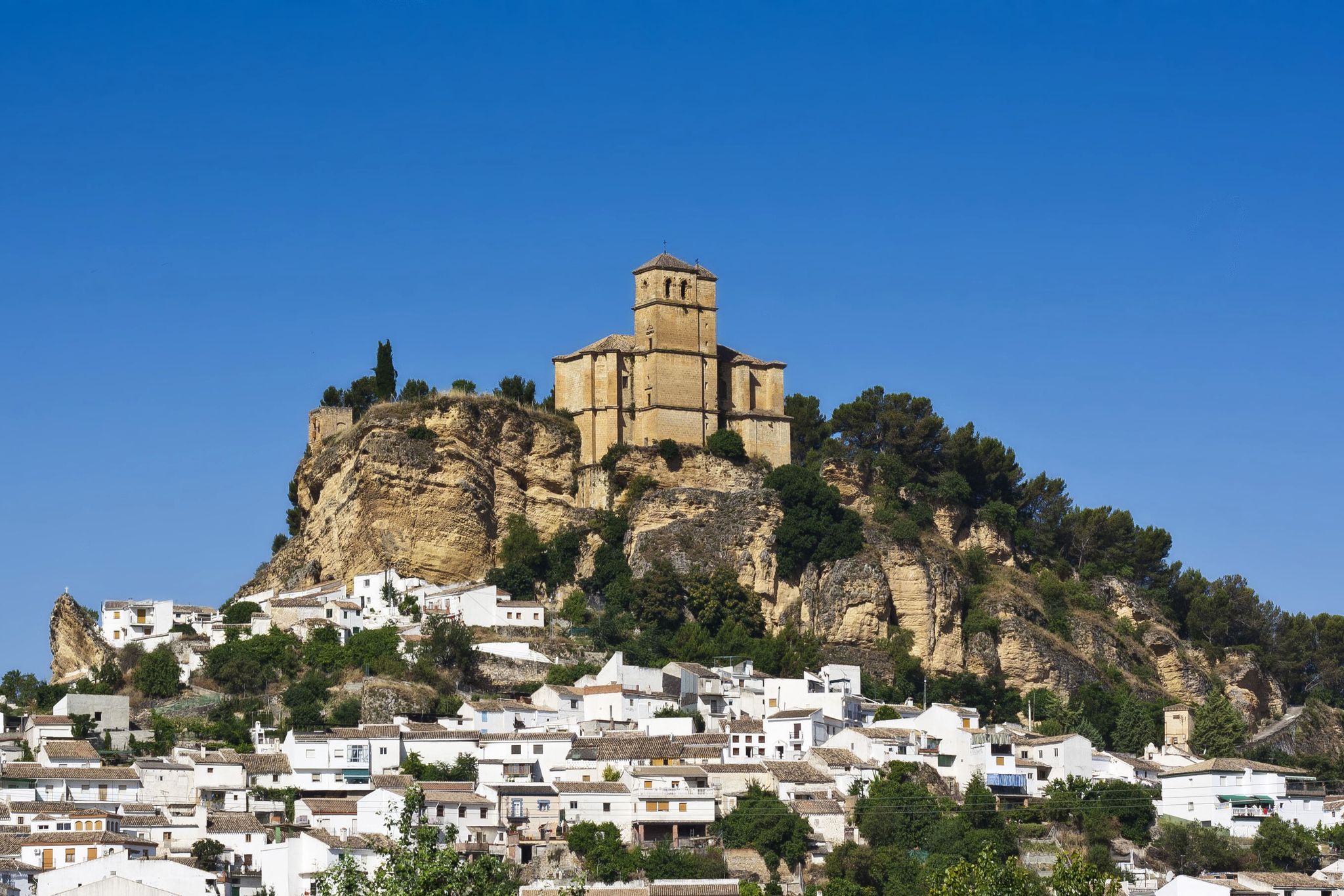
The castles around Montefrío are renowned for their strategic locations, offering breathtaking panoramic views. From the Castillo de Montefrío, you can see the entire Montefrío landscape, including the white town below and the surrounding olive groves. Similarly, the Castle of Íllora provides commanding views over its town and the wider region.
What outdoor activities can I do near the castles in Montefrío?
The Montefrío area is excellent for outdoor activities. You can explore numerous hiking trails, with options ranging from easy to difficult, such as the 'Montefrío Castle – Montefrío loop'. There are also cycling routes, including a challenging 'Castillo de Montefrio -- circular via Tocon and Villanueva Mesia', and mountain biking trails like 'Peña de los Gitanos — circular desde Montefrío'. You can find more details on these activities in the hiking, cycling, and MTB guides for Montefrío.
How long does it typically take to visit the Castillo de Montefrío?
While the exact duration can vary based on your interest, a visit to the Castillo de Montefrío, which includes the Iglesia de la Villa and the Interpretation Centre of the Last Frontier of Al-Andalus, can take approximately 1 to 2 hours. This allows time to explore the historical structures, enjoy the views, and learn about its significance.
Are there any watchtowers connected to the Montefrío castle system?
Yes, Montefrío's defensive system extended beyond the main castle. It included a network of watchtowers (atalayas) like Atalaya del Cortijuelo, Atalaya de los Anillos, and Torre-atalaya de los Guzmanes. These towers were crucial for surveillance and early warnings, highlighting the comprehensive border defense of the Nasrid frontier.
What is the best time of year to explore the castles around Montefrío?
The best time to visit the castles around Montefrío is generally during the spring (April-May) and autumn (September-October) months. During these periods, the weather is milder and more pleasant for exploring historical sites and engaging in outdoor activities, avoiding the intense heat of summer and the cooler, sometimes wetter, winter months.
What are some notable architectural features of the castles in this region?
The castles in the Montefrío region showcase a blend of Nasrid and Castilian architectural styles. For example, the Fortaleza de la Mota dates from the Nasrid period with later additions. The Castillo de Montefrío, originally an Arab fortress, later incorporated the 16th-century Gothic-Renaissance Iglesia de la Villa designed by Diego de Siloé, symbolizing the shift in power.
Where can I find parking when visiting the castles?
Parking availability varies by castle. For the Castillo de Montefrío, parking is typically available in the town below, with a walk up to the castle. For other castles like Fortaleza de la Mota, there are often designated parking areas closer to the site, though it's advisable to check local signage upon arrival.
What do visitors enjoy most about the castles in the Montefrío area?
Visitors frequently praise the stunning panoramic views from the castle heights, the rich historical context of these frontier fortresses, and the well-preserved medieval charm of towns like Montefrío. The opportunity to explore centuries of history, from Nasrid defenses to Castilian transformations, combined with the beautiful natural landscape, makes for a memorable experience.
Are there cafes or restaurants near the castles in Montefrío?
Yes, the towns surrounding the castles, such as Montefrío and Alcalá la Real, offer a variety of cafes and restaurants. In Alcalá la Real, visitors often highlight the beautiful and lively atmosphere with nice restaurants and cafes. You'll find options for local cuisine and refreshments conveniently located within walking distance of the castle sites or in the town centers.
What is the significance of the Iglesia de la Villa within the Castillo de Montefrío?
The Iglesia de la Villa, constructed within the remains of the Castillo de Montefrío in the 16th century, is highly significant. Designed by Diego de Siloé in a Gothic-Renaissance style, it symbolized the shift in power after the Castilian conquest. Today, it houses the Interpretation Centre of the Last Frontier of Al-Andalus, known as 'El Centinela', offering deep insights into the region's historical importance.
Most popular attractions around Montefrío

Get inspired with the komoot mobile app


Explore more
Looking for the best castles somewhere else? Discover other guides around Montefrío:
