Top 5 Caves around Cardedeu
Best caves around Cardedeu are found within the wider Catalonia region, offering diverse geological formations and historical underground sites. The area is characterized by its natural landscapes, including mountains and valleys, which host various cave systems. These formations range from natural rock shelters to ancient mines and prehistoric sites. Exploring these locations provides insight into the region's geology and human history.
Best caves around Cardedeu
- The most popular caves is Cave Hill, a summit featuring a cave below its…
Last updated: July 31, 2026
The Swallows' Rock
Highlight • Natural Monument
Translated by Google •
Tip by

Balma la Miquelona
Highlight • Cave
Translated by Google •
Tip by

Sign up now to discover places like this
Get recommendations on the best single tracks, peaks, & plenty of other exciting outdoor places.
Sign up for free
Socau Mine
Highlight • Cave
Translated by Google •
Tip by

Costa de Can Martorell Burial Cave
Highlight • Historical Site
Translated by Google •
Tip by

Can Nadal Cave
Highlight • Cave
Introduction
The Can Nadal cave is a large monolithic block with a hollow interior that is protected to the east and at the top by a natural rock wall …
Translated by Google •
Tip by

Sign up for free to discover even more caves around Cardedeu.
Sign up for free
Already have an account?
Start today with a free account
Your next adventure awaits.
Login or Signup

Tips from the Community

Jaciment arqueològic amb pintures rupestres, declarat Patrimoni de la Humanitat.
0
0

A curious story circulates among the locals: during the post-war years, a man nicknamed "the Clockmaker" lived here for almost a decade, repairing clocks and small appliances in exchange for food. They say that at night a flickering light could be seen emerging from the cave, its ticking audible all the way to the Can Nadal road. Today, only the marks on the rock remain, along with a silence that seems to continue measuring time.
0
0
Hidden among the forests of Figaró, the Socau Mine was a small magnetite mine in the late 19th century. Today, half-covered by vegetation, it retains its entrance tunnel and some of the rusted mine carts. Some hikers say that as they approach, the air feels colder, as if the earth still breathes from within. Some leave candles or stones at the entrance, following an old local custom of asking for protection before entering places where the mountain "speaks."
1
0
This cave, inhabited in prehistoric times, contains remains that demonstrate its use in the Neolithic or Bronze Age, such as stone tools, pottery fragments, and evidence of fire. Its strategic location, hidden but with good visibility of the surroundings, made it ideal as a refuge or stopover. Today, for cyclists like us, it's an excellent shelter in case of rain or to enjoy breakfast in the shade, thanks to its peaceful and protected location.
1
0

The "Pedra de Les Orenetes" (Swallows' Stone) is made up of a large granite block about 8 m long, 3 m wide and 3 m high, which has been heavily eroded. The basal part shows several cavities, one of which is a medium-sized shelter, which is the main area of the paintings. From this concavity, through which the block can be crossed from below, other concavities and eroded points with pictographic representations continue to the right. These correspond to curved, serpentine strokes, points, female figures, cruciform figures, bars, finger marks, anthropomorphic forms, quadrupeds, branch-shaped figures and human representations, as well as remains of pigment that are difficult to interpret. the schematic-semi-schematic to the stylized and naturalistic), chromatic (reddish, reddish-brown, reddish-orange and yellowish-orange) and techniques (fingering, simple stroke and flat ink) as well as a diverse degree of erosion that seems to indicate a process with superimpositions and diverse phases, some of which seem to be related to those of the Cogul shelter.
1
0

Spectacular rocks found in this area near the Bosc de Rsucalleda, with curious shapes.
6
0

According to Anna Gómez, it is about "(...) iron ore or magnetite mines that were in operation between the years 1880 and 1895. To extract the mineral, a wagon road was built that went from Vallcàrquera to the 'ancient path ral del Congost, behind the Torre de Can Parera'. The mine has comfortable dimensions throughout its route (about two meters high by one and a half meters wide). The mouth is partially obstructed by a collapse of the margin where it is open, but it is still quite comfortably accessible. After 17 meters with about thirty centimeters of water, the gallery continues inland for another 14 meters. Now the floor is covered by a thread of water that flows from an underground course that appears almost at the end of the main gallery.
0
0
It is a mixed structure consisting of a burial chamber with a corridor excavated in the granite rock of the southern slope of the hill, with a vestibule or vestibule with megalithic access. The chamber has a semicircular floor plan (5m length x 3m width x 2m height) without a roof, given that it collapsed above the archaeological level. The corridor (2.25m length x 1.60m width x 1.40m height), with an elongated floor plan, connects the hall with the bedroom. The antechamber (1.75m width x 1m length), with a trapezoidal plan, is made up of three large slabs arranged and nailed to the subsoil (the slab-door was documented to have been displaced from its original place). The archaeological intervention documented three different stratigraphic levels: the surface level, made up of soil and scattered bone remains, a second level made up of the stone blocks that formed the original vault that covered the chamber and the corridor, and a third level where it was documented abundance of human bone remains (affected by the demolition) and much of the documented archaeological material. Specifically, between 195 and 205 buried individuals of both sexes were documented, mostly between 20 and 40 years old, although there were also children. Among these remains were documented 68 flint arrowheads, several fragments of bell-shaped pottery, two manual stone mills and various faunal remains, among others. The archaeological research concluded that an accidental event, probably a war conflict between groups, led to the death of a significant volume of the population. Chronologically, the site belongs to the Chalcolithic period (2200-1800 BC).
0
0
Frequently Asked Questions
What types of caves can I explore around Cardedeu?
The caves around Cardedeu offer a diverse range of experiences, from natural rock shelters with prehistoric traces to historical mines. You can find natural monuments like The Swallows' Rock with ancient pictographs, or the former Socau Mine, which was a magnetite mine in the late 19th century. There are also natural shelters like Balma la Miquelona, known for ancient human occupation.
Are there any caves with historical or archaeological significance near Cardedeu?
Yes, several caves in the wider Catalonia region accessible from Cardedeu hold significant historical and archaeological value. The Swallows' Rock contains prehistoric pictographic representations and evidence of Neolithic or Bronze Age human use. Balma la Miquelona also shows traces of ancient human occupation. Further afield, the Montserrat Caves (Coves de Salnitre) and The Toll Caves offer insights into prehistoric life and geology.
What are some natural features and viewpoints associated with the caves?
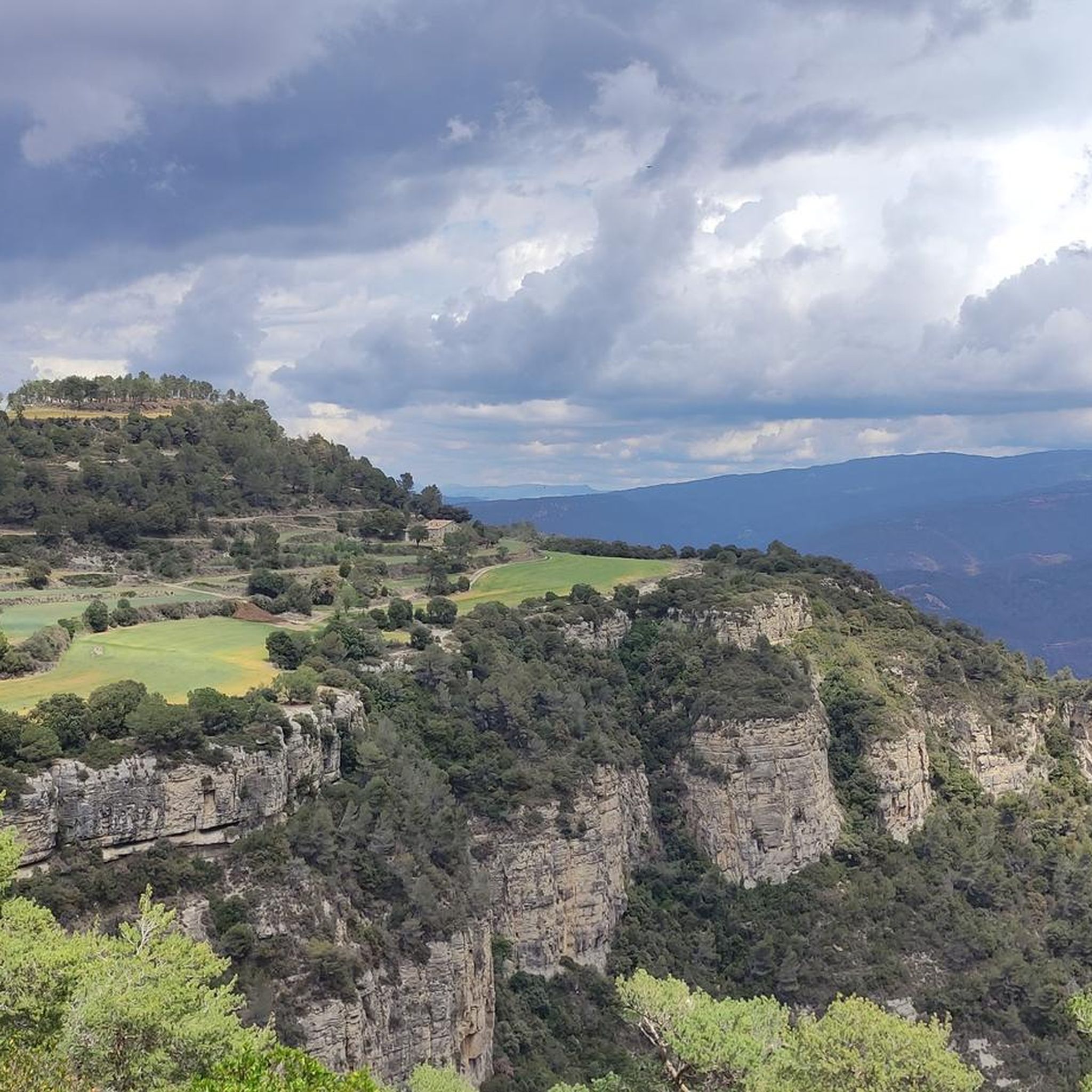
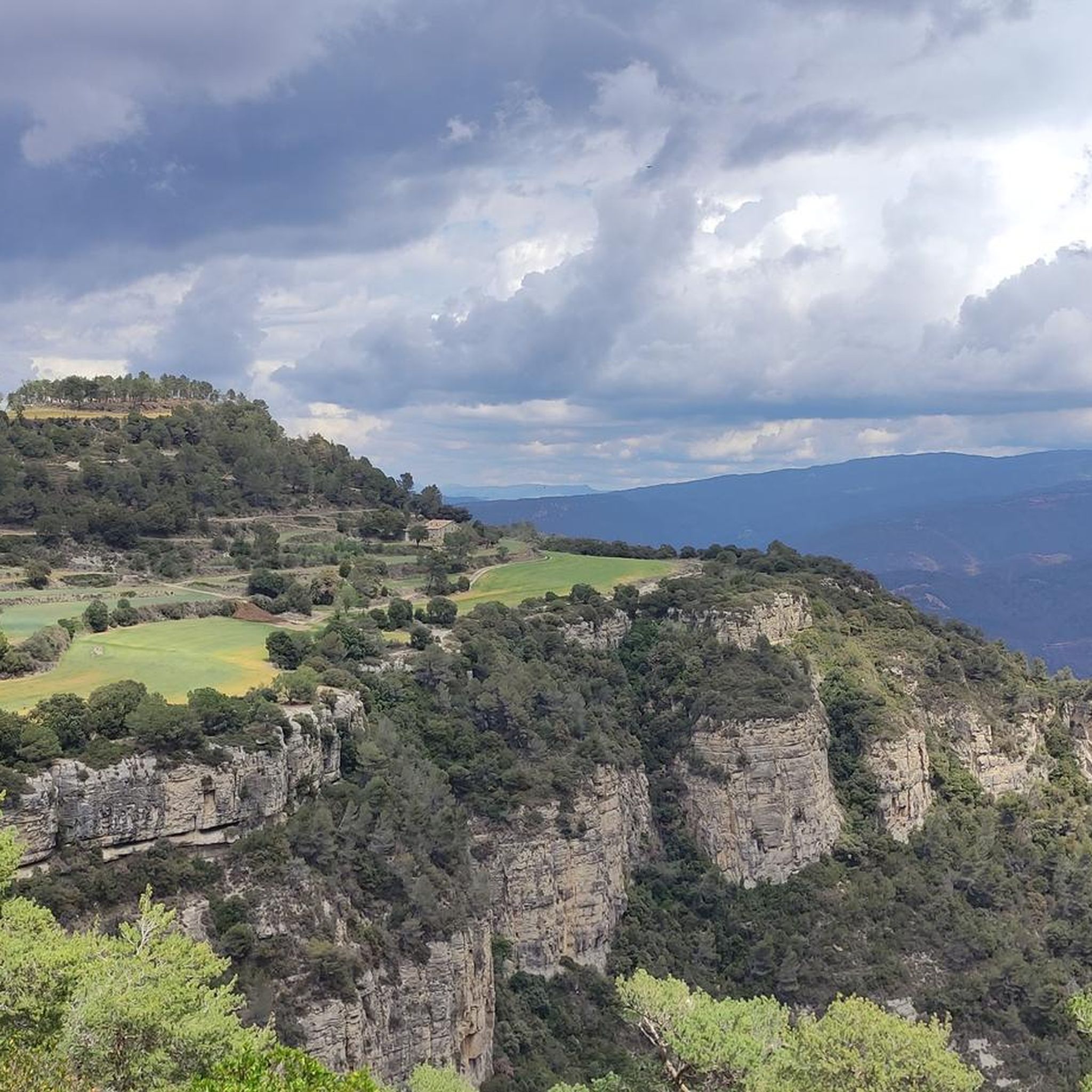
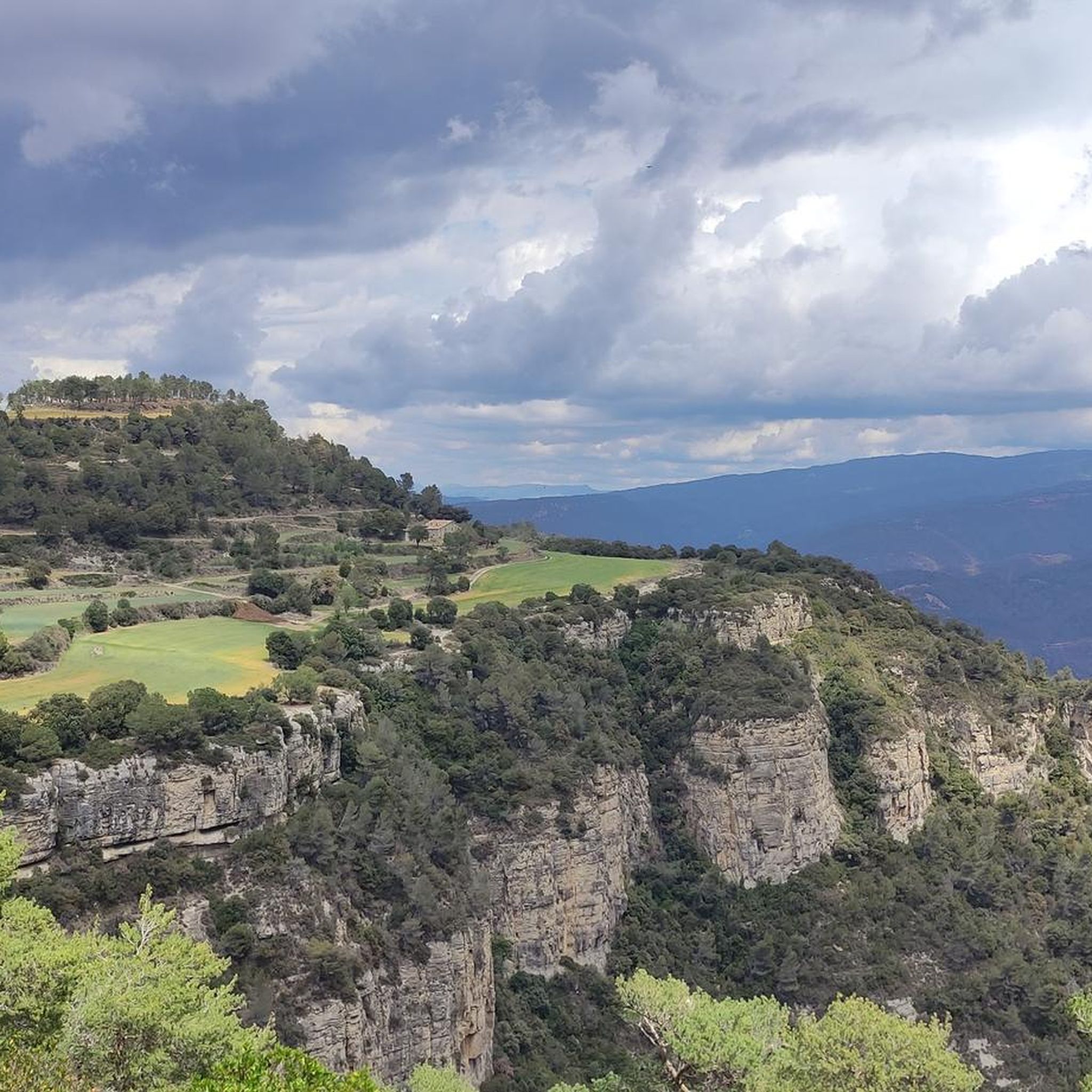
Many cave sites around Cardedeu are nestled within beautiful natural landscapes. Cave Hill, for example, is a summit featuring a cave below its peak and offers expansive views of the Montseny region. The Swallows' Rock is a natural monument with unique rock formations in the Bosc de Rsucalleda.
Are there family-friendly caves to visit around Cardedeu?
While the immediate Cardedeu area features more rugged, natural shelters, the wider Catalonia region offers family-friendly options. The Montserrat Caves (Coves de Salnitre) are prepared for tourist visits, though they involve navigating around 500 steps. The Toll Caves complex also features replicas of Neolithic huts, which can be engaging for families.
What outdoor activities can I do near these caves?
The area around Cardedeu, including the locations of many caves, is excellent for various outdoor activities. You can find numerous road cycling routes, running trails, and gravel biking routes. These routes often pass through natural parks and offer opportunities to explore the region's diverse landscapes.
What is the best time to visit the caves around Cardedeu?
The best time to visit the caves and explore the surrounding natural areas is generally during spring and autumn when the weather is mild and pleasant for outdoor activities. Summer can be hot, but the consistent cool temperatures inside natural caves (around 14°C in Montserrat Caves) can offer a refreshing escape. Winter visits are also possible, but some trails leading to less accessible caves might be more challenging.
What should I wear when exploring caves near Cardedeu?
When exploring natural caves and rock shelters, it's advisable to wear sturdy, comfortable walking shoes or hiking boots. Layers of clothing are recommended, as temperatures inside caves can be cooler than outside, and some caves maintain a consistent cool temperature and high humidity. For more rugged or less developed sites, a headlamp or flashlight can be very useful.
Are there any caves that are easily accessible or suitable for those with limited mobility?
Many of the natural rock shelters and historical mines around Cardedeu, such as Balma la Miquelona or Socau Mine, require some hiking on trails that can be steep or uneven. For more accessible options, the Codorníu Caves (winery cellars) offer tours that are generally more accessible, though they are not natural caves. For natural caves, the Montserrat Caves are prepared for tourists but involve many steps.
What do visitors enjoy most about the caves around Cardedeu?
Visitors appreciate the unique blend of natural beauty and historical intrigue. Many enjoy the quiet hiking trails leading to sites like Balma la Miquelona, offering new perspectives around every bend. The prehistoric significance of places like The Swallows' Rock and the folklore surrounding Pedra Foradada also captivate explorers. The views from locations like Cave Hill are also highly rated.
Can I find cafes or accommodation near the caves?
While some of the more remote cave sites may not have immediate facilities, the region around Cardedeu is well-equipped with amenities. Cardedeu itself offers various cafes, pubs, and accommodation options. For caves further afield, such as those near Montserrat or in other parts of Catalonia, you will find towns and villages nearby with services for visitors.
Are there any guided tours available for the caves?
For some of the larger, more developed cave systems in Catalonia, such as the Montserrat Caves (Coves de Salnitre) and The Toll Caves, guided tours are available. These tours often provide historical and geological context. For smaller, natural rock shelters and historical mines closer to Cardedeu, exploration is typically self-guided, often as part of a hiking route.
What is the geological background of the caves in the Cardedeu area?
The caves and rock formations around Cardedeu are primarily shaped by the natural landscapes of Catalonia, which include mountains and valleys. Many are formed by erosion, such as Balma la Miquelona, excavated by stream activity. The region's geology often features granite and other sedimentary rocks, leading to diverse formations, including natural shelters and cavities like those found at The Swallows' Rock.
Most popular routes around Cardedeu
Most popular attractions around Cardedeu

Get inspired with the komoot mobile app


Explore more
Extend your search for the best caves by checking out these guides of the top ones around Cardedeu:
