Top 5 Caves around Montseny
Best caves around Montseny are located within the Montseny Natural Park, a UNESCO Biosphere Reserve recognized for its diverse landscapes, lush forests, and rich biodiversity. The region features smaller, historically significant natural shelters and cave-like formations rather than extensive show caves. These sites offer historical and archaeological significance, connecting visitors to ancient human activity and early medieval history. Exploring these natural geological shelters provides insight into the region's past within a forested environment.
Best caves around Montseny
- The most popular…
Last updated: July 30, 2026
Balma la Miquelona
Highlight • Cave
Translated by Google •
Tip by

Can Boix Castle
Highlight • Castle
Translated by Google •
Tip by

Sign up now to discover places like this
Get recommendations on the best single tracks, peaks, & plenty of other exciting outdoor places.
Sign up for free
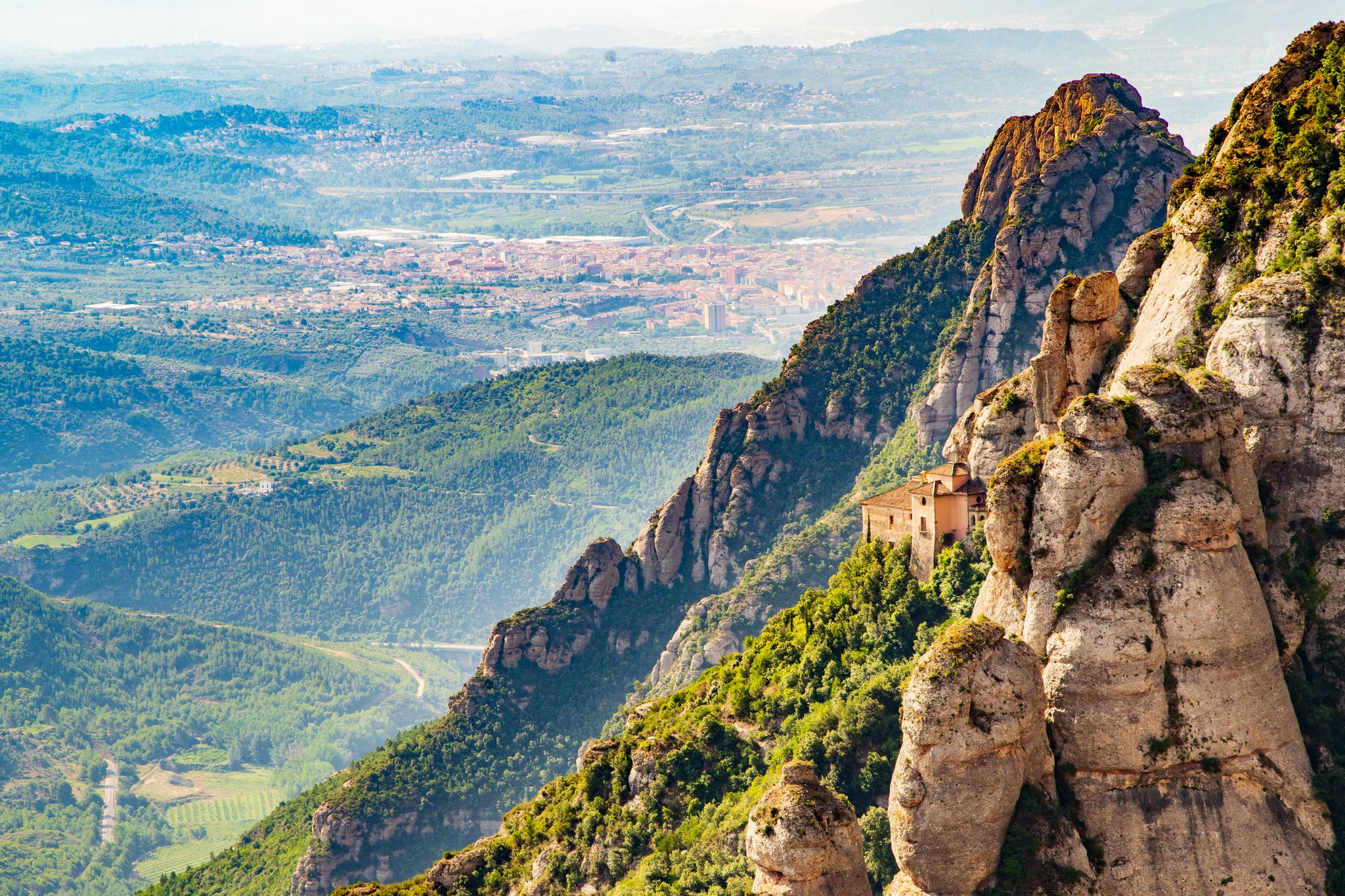
Sant Segimon Sanctuary
Highlight • Religious Site
Legend has it that this sanctuary was inhabited …
Translated by Google •
Tip by

Socau Mine
Highlight • Cave
Translated by Google •
Tip by

Start today with a free account
Your next adventure awaits.
Login or Signup
Other adventures around Montseny

Tips from the Community

Hidden among the forests of Figaró, the Socau Mine was a small magnetite mine in the late 19th century. Today, half-covered by vegetation, it retains its entrance tunnel and some of the rusted mine carts. Some hikers say that as they approach, the air feels colder, as if the earth still breathes from within. Some leave candles or stones at the entrance, following an old local custom of asking for protection before entering places where the mountain "speaks."
1
0

According to Anna Gómez, it is about "(...) iron ore or magnetite mines that were in operation between the years 1880 and 1895. To extract the mineral, a wagon road was built that went from Vallcàrquera to the 'ancient path ral del Congost, behind the Torre de Can Parera'. The mine has comfortable dimensions throughout its route (about two meters high by one and a half meters wide). The mouth is partially obstructed by a collapse of the margin where it is open, but it is still quite comfortably accessible. After 17 meters with about thirty centimeters of water, the gallery continues inland for another 14 meters. Now the floor is covered by a thread of water that flows from an underground course that appears almost at the end of the main gallery.
0
0

good views of the Plain of Vic and the Pyrenees and very fun downhill trails.
2
0

Can Boix Castle, also known as Taradell Castle, is located on some large rocks, at an altitude of 803 metres. Below the castle is a large cave. I think there are parts of the castle from the 10th century.
4
0

Small bauma located on the right bank of the PR-33 that leads from Figaró to Montmany, inside the Sot del Bac. Bauma formed by the lateral excavation of the Sot del Bac stream, 35-40 meters above the current talveg. It is a not very deep cavity excavated in a rocky margin or slope where the light penetrates. This has graffiti and evidence of occupation inside, with traces of having been set on fire. It is a suitable place for shelter or bivouac. At least before it was very common to use it. The Sot del Bac pass would be a natural path used by the first human communities, both to stock up on various natural resources (water, hunting and gathering) and as a place of passage and communication between the Gorge sector and Puiggraciós and the Cingles de Bertí. Currently this is occupied sporadically by walkers and climbers.
1
0

The origin of the sanctuary of Sant Segimon dates back to the 13th century when a chapel was built using the cave. Legend has it that this sanctuary was inhabited by the King of Burgundy, Sigismund (hence its Catalan name "Segimon"), who acted as a hermit.
0
0
The origin of the sanctuary of Sant Segimon dates back to the 13th century when a chapel was built using the cave. Legend has it that this sanctuary was inhabited by the King of Burgundy, Sigismund (hence its Catalan name "Segimon"), who acted as a hermit.
2
0

Great, quiet hiking trail through the steep rocky valley. Around almost every bend there is a new perspective.
1
0
Frequently Asked Questions
What is the historical significance of the caves and rock shelters in Montseny?
The caves and rock shelters in Montseny are primarily significant for their archaeological and historical value. Sites like the Cova de la Granota served as Neolithic burial sites, while the Cave-crypt of Aiguafreda de Dalt contains early medieval burials. These formations offer insights into prehistoric settlement patterns and early human and medieval life in the region.
Are there any caves in Montseny with unique geological features?
While Montseny is not known for extensive show caves with elaborate speleothems, you can find unique natural formations. Balma la Miquelona is a natural rock shelter formed by the lateral excavation of a stream in a steep rocky valley. The Can Boix Castle is notably built on a large grotto, making it a distinctive site.
What kind of natural features can I expect to see when visiting caves in Montseny?
When visiting the caves and rock shelters around Montseny, you'll primarily experience them within their natural forested environments. Many are accessed via hiking trails, offering views of the Montseny valley, such as from Cave Hill. You'll encounter diverse landscapes, lush forests, and the geological formations themselves, which are often rock shelters or small grottoes rather than deep caverns.
Are there any family-friendly options for exploring caves in the Montseny area?
The caves and rock shelters in Montseny are generally accessed via hiking trails, which can vary in difficulty. While there aren't specific 'family-friendly' cave attractions with extensive infrastructure, families who enjoy hiking can explore sites like Balma la Miquelona, which offers a quiet trail through a rocky valley. Always check the trail difficulty before heading out with children.
What outdoor activities can I do near the caves in Montseny?
The Montseny region offers a wide range of outdoor activities. You can find numerous road cycling routes, such as the challenging Turó de l'Home Climb Loop, or explore running trails like the Matagalls loop. For touring cyclists, routes like the Santa Fe del Montseny loop are available. You can find more details on these activities in the Road Cycling Routes around Montseny, Running Trails around Montseny, and Cycling around Montseny guides.
Are there any historical buildings or sanctuaries associated with caves in Montseny?
Yes, the Sant Segimon Sanctuary is a notable example. Its origin dates back to the 13th century when a chapel was built using a cave. Legend says King Sigismund of Burgundy lived there as a hermit. Additionally, Can Boix Castle, with remains from the 10th and 11th centuries, is built on a large grotto.
What is the best time of year to visit the caves and surrounding areas in Montseny?
Montseny Natural Park is a UNESCO Biosphere Reserve, offering diverse landscapes throughout the year. While specific cave conditions don't vary significantly by season, the best time for hiking and exploring the surrounding forested environment is typically during spring and autumn when temperatures are mild. Summer can be warm, and winter may bring colder conditions, especially at higher elevations.
Are there any former mines or industrial sites related to caves in Montseny?
Yes, the Socau Mine is a small magnetite mine that operated in the late 19th century. Located among the forests of Figaró, it still retains its entrance tunnel and some rusted mine carts, offering a glimpse into the region's industrial past.
What do visitors enjoy most about the caves and rock shelters in Montseny?
Visitors appreciate the historical and archaeological significance of these sites, which offer a tangible connection to the ancient inhabitants of the region. Many enjoy the quiet hiking trails that lead to these formations, such as the one to Balma la Miquelona, and the scenic views of the Montseny valley, like those from Cave Hill.
Are there any specific tips for exploring the rock shelters and caves in Montseny?
Many of these sites are accessed via hiking trails, so wearing appropriate footwear is recommended. Some locations, like Balma la Miquelona, are suitable for shelter or bivouac. For the Socau Mine, some hikers note a colder air inside and follow a local custom of leaving candles or stones for protection.
What are the general difficulty levels for reaching the caves in Montseny?
The difficulty levels for reaching the caves and rock shelters in Montseny vary. Many are located along intermediate hiking trails, such as the path to Balma la Miquelona. Some, like the Socau Mine, are described as challenging to access due to their hidden location and terrain. Always check the specific trail information for each site.
Most popular routes around Montseny
Most popular attractions around Montseny

Get inspired with the komoot mobile app


Explore more
Extend your search for the best caves by checking out these guides of the top ones around Montseny:
