Top 5 Caves around Sant Hilari Sacalm
Caves around Sant Hilari Sacalm are primarily found within the Guilleries massif, a region characterized by lush forests, natural springs, and mountainous terrain. While not known for extensive solutional limestone caves, the area features unique geological formations and historical shelters. These sites often hold cultural significance, with local legends contributing to their appeal. Visitors can explore these features as part of scenic hiking routes that showcase the natural beauty of the region.
Best caves around Sant Hilari Sacalm
- The most…
Last updated: May 22, 2026
Salt del Molí Bernat
Highlight • Waterfall
Translated by Google •
Tip by

Sant Segimon Sanctuary
Highlight • Religious Site
Legend has it that this sanctuary was inhabited …
Translated by Google •
Tip by

Sign up now to discover places like this
Get recommendations on the best single tracks, peaks, & plenty of other exciting outdoor places.
Sign up for free
Cave of the Pixarelles
Highlight • Cave
Considered one of the oldest …
Translated by Google •
Tip by
Bauma de les Piques
Highlight • Cave
Translated by Google •
Tip by

Bauma de la Baronesa
Highlight • Cave
Translated by Google •
Tip by

Sign up for free to discover even more caves around Sant Hilari Sacalm.
Sign up for free
Already have an account?
Start today with a free account
Your next adventure awaits.
Login or Signup


Tips from the Community

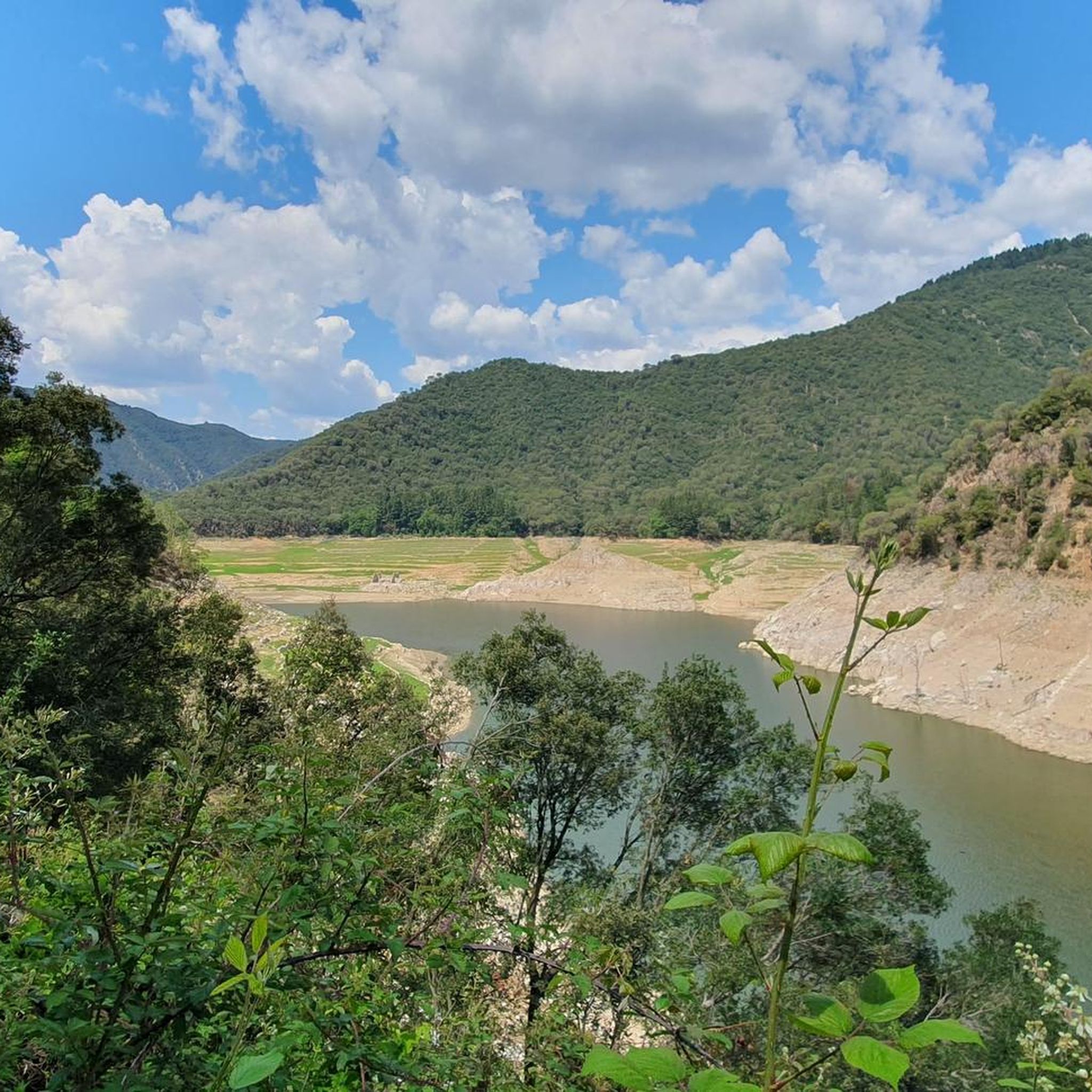
We were here in April 2026. Unfortunately, the hiking trail is not in good condition. The descent to the waterfall is quite steep but passable. The paths to the stairs of the Riscos de la Perereda are all overgrown, and only a shortened path past an old mill back to the parking lot is passable.
0
0

Idyllic place to stop for a bite and disconnect from everything
0
0

Shelter dug into the rock with a small picnic area and fountain of the same name.
1
1

The origin of the sanctuary of Sant Segimon dates back to the 13th century when a chapel was built using the cave. Legend has it that this sanctuary was inhabited by the King of Burgundy, Sigismund (hence its Catalan name "Segimon"), who acted as a hermit.
0
0
The origin of the sanctuary of Sant Segimon dates back to the 13th century when a chapel was built using the cave. Legend has it that this sanctuary was inhabited by the King of Burgundy, Sigismund (hence its Catalan name "Segimon"), who acted as a hermit.
2
0

It is one of the largest pools in the Collsacabra, with a width of 70 m, although it is not very deep, it has a maximum of 7 m. The maximum height is 4 m. Inside there are two large rectangular sinks (one simple and one double) dug into the rock that collect the water that falls from the roof of the balma. It was possibly the primitive house of the Baumes, located well below. It could also have been the refuge of the famous Serrallonga, since according to a legend, he used to rest in a balma near Tavertet that had room for 60 men and beasts of burden. It is a balm, that of Spades, which meets these conditions, due to its capacity and strategy.
0
1
The Salt del Molí Bernat is one of the most impressive waterfalls in the country with a 50 meter drop, it belongs to the Gorgàs stream, from the Sot de Balà. The whole of the balma, the jump and the remains of the mill make up one of the most attractive and unique places in the region. If you want to see the jump in all its glory, we recommend doing the route after rains, despite the added difficulty because of the mud you can find on the way down, but seeing the water fall from inside the balma is really impressive .
2
1
Caves that during the Neolithic and until the Iberian period had been a lookout and hunting settlement (complementary to the town of Pla del Castell). Considered one of the oldest documented stable occupations, dating from the year 3100 to 900 before our era. Although no human remains have been found, the discovery in this lower level of a prehistoric home and a fauna deposit (with the supposed remains of a wild boar half consumed by the ancient settlers) will help to study what life was like in this space six years ago. a thousand years.
1
1
Frequently Asked Questions
What kind of caves can I expect to find around Sant Hilari Sacalm?
The caves around Sant Hilari Sacalm are primarily natural rock shelters, historical sites, and unique geological formations rather than extensive solutional limestone caves. You'll find waterfall caves, ancient settlements, and large rock overhangs, often embedded in local legends and scenic hiking routes.
Are there any caves with historical significance in the area?
Yes, the region is rich in historical caves. The Cave of the Pixarelles is a notable historical cave and natural monument, serving as a lookout and hunting settlement during the Neolithic and Iberian periods, with evidence of stable occupation dating back over 4000 years. Additionally, the Sant Segimon Sanctuary incorporates a cave that was used as a chapel, with origins dating back to the 13th century and legends of hermits.
Which caves offer impressive natural features?
The Salt del Molí Bernat is a waterfall that features an internal passage, notable for its 50-meter drop and the remains of an old mill. It offers an impressive natural spectacle, especially after rains. The Bauma de les Piques is a large natural rock shelter, measuring 70 meters wide, featuring two large rectangular sinks dug into the rock that collect water.
What is the Cova dels Encantats and why is it significant?
The Cova dels Encantats (Cave of the Enchanted) is primarily known for its captivating local legends. Folklore suggests nymphs once resided there, and it's a popular destination for those interested in local tales and myths. It's typically visited as part of a scenic hiking route through the picturesque Guilleries forests, offering a blend of natural beauty and cultural history.
What is the best time of year to visit the caves around Sant Hilari Sacalm?
Visiting after rains is recommended if you want to see waterfalls like the Salt del Molí Bernat in their full glory, though this may mean muddier trails. Generally, the lush forests and natural springs of the Guilleries massif make spring and autumn pleasant for hiking and exploring, avoiding the peak heat of summer or potential winter chill.
Are there family-friendly options for exploring caves in this region?
While specific caves aren't explicitly labeled 'family-friendly,' many are accessible via hiking routes that can be enjoyed by families. The Cova dels Encantats, for example, is part of a relatively short (3 km, 1-hour) hiking trail suitable for a family outing, combining nature with local folklore. Always check the difficulty of the specific route leading to a cave.
What kind of outdoor activities can I do near the caves?
The region around Sant Hilari Sacalm offers a variety of outdoor activities. You can find numerous routes for gravel biking, running, and mountain biking. For example, there are challenging gravel biking routes like the 'Source of the Onyar – Crosa Volcano loop' and moderate running trails such as the 'Camí Ral Girona to Vic loop'. You can explore more options on the Gravel biking around Sant Hilari Sacalm, Running Trails around Sant Hilari Sacalm, and MTB Trails around Sant Hilari Sacalm guide pages.
What are the typical difficulty levels for reaching these caves?
Many of the caves and shelters are reached via hiking trails that range from intermediate to challenging. For instance, the Salt del Molí Bernat is considered challenging, especially after rain due to mud. The Sant Segimon Sanctuary, Cave of the Pixarelles, Bauma de les Piques, and Bauma de la Baronesa are generally intermediate. Always check specific route details for current conditions and difficulty.
Are there any caves that offer a viewpoint or scenic outlook?
Yes, the Sant Segimon Sanctuary, which incorporates a cave, is situated in the middle of a cliff on the slopes of Matagalls, offering a viewpoint. The Bauma de la Baronesa also offers a viewpoint, nestled within a forest setting.
What do visitors enjoy most about the caves and surrounding area?
Visitors appreciate the unique blend of natural beauty, historical significance, and local folklore. The impressive waterfalls, ancient settlements, and large rock shelters provide diverse experiences. The tranquil natural environment of the Guilleries massif, with its lush forests and serene atmosphere, is also a major draw, making the journey to these sites as rewarding as the destinations themselves.
Are there any hidden gems or lesser-known caves worth exploring?
While the Guilleries massif is known to have 'secret caves,' specific details about their geological features or accessibility are not widely promoted for tourism. The listed highlights like Bauma de la Baronesa, a shelter dug into the rock with a small picnic area, offer a more secluded and idyllic experience for those looking to disconnect.
What geological features characterize the caves around Sant Hilari Sacalm?
The Guilleries massif, where these caves are located, is primarily composed of ancient granitic and shale materials. This means the region is not characterized by large, solutional limestone caves with impressive stalactites and stalagmites. Instead, you'll find natural rock shelters, overhangs, and formations shaped by erosion and the region's unique geology, often featuring water collection points like the sinks in Bauma de les Piques.
Most popular routes around Sant Hilari Sacalm
Most popular attractions around Sant Hilari Sacalm

Get inspired with the komoot mobile app


