Top 15 Castles around Figline E Incisa Valdarno
Best castles around Figline E Incisa Valdarno are found in a historically significant area within the Florentine upper Arno valley. This region features numerous historical castles and fortified sites, offering insights into its rich past and strategic importance. These structures range from well-preserved examples to evocative ruins, set amidst the Tuscan landscape. The area provides a tangible link to medieval conflicts and daily life in ancient Tuscan communities.
Best castles around Figline E Incisa Valdarno
- The most popular castles is…
Last updated: August 10, 2026
Montefioralle Castle
Highlight • Castle
Tip by

Sammezzano Castle
Highlight • Castle
Too bad it is left in this state because it would have great potential.
Translated by Google •
Tip by

Sign up now to discover places like this
Get recommendations on the best single tracks, peaks, & plenty of other exciting outdoor places.
Sign up for free
Twin Sequoias of Sammezzano
Highlight • Natural Monument
Translated by Google •
Tip by

The Palazzaccio of Marcignano (Ruins of the Da Gavignano Castle)
Highlight • Castle
Translated by Google •
Tip by

Lamole Castle
Highlight • Castle
Tip by

Sign up for free to discover even more castles around Figline E Incisa Valdarno.
Sign up for free
Already have an account?
Start today with a free account
Your next adventure awaits.
Login or Signup
Popular around Figline E Incisa Valdarno
Tips from the Community

As a plant expert and botany enthusiast, Ferdinando Panciatichi Ximenes d’Aragona designed the large green area surrounding Sammezzano Castle, approximately 65 hectares, which constitutes the current Historic Park. Around the ancient "ragnaia" (woodland) formed by a high forest of holm oaks, Ferdinando decided to place numerous rare and exotic plants. Their purpose was to serve the dual purpose of beautifying the exterior and gradually introducing visitors and guests to the wonders of the "Moorish" style of the Villa-Castle of Sammezzano. Among the exotic species introduced by Ferdinando, the most well-known are undoubtedly the majestic sequoias (Sequoia sempervirens and Sequoia gigantea), which, as demonstrated by the remarkable size they reached in just 150 years, certainly found the geological, soil, and climatic conditions favorable to their growth. Among these, the so-called "twin sequoia" stands out, as its trunk forks into two enormous vertical branches a few meters from the base. It is almost 54 meters tall and, with a circumference of 837 centimeters, the tallest sequoia in Italy. It is not only one of Italy's monumental trees, but also one of the select group of "150 trees of exceptional environmental or monumental value."
0
0

A lovely road with a good surface and excellent views. The section closest to Lamole can be a little punchy, but it's a road to take slowly and enjoy the view!
3
0

Inserted among the most beautiful villages in Italy, this hamlet of Greve in Chianti reserves an atmosphere suspended in time, between stone houses and alleys and medieval fortifications.
0
0


In the forest with the largest number of sequoias in Italy, these two fascinating specimens grew side by side. An information sign indicates that their circumference exceeds 8 metres, but at least 5/6 people are needed to hug them
0
0

This medieval village, once heavily contested between the republics of Florence and Siena, today attracts visitors with its authentic medieval structure, ancient stone houses, part of the castle and largely preserved walls that still have three gates. Despite the uncertainty about its connection to Amerigo Vespucci, who owned a palace in the village, Montefioralle offers a unique atmosphere that transports visitors back in time. It is a place valued for its tranquility and beauty, far from the tourist crowds that flood other parts of Tuscany. The village has only a small number of accommodations, a pub and a wine bar where you can taste the local wines. A walk through the village takes visitors to the small church and offers a glimpse into real Italian village life. The restaurant La Castellana, just before you arrive at the village walls, is particularly recommended for its excellent cuisine and fair prices. The staff is known for their exceptional friendliness, making a visit to Montefioralle an unforgettable experience.
1
1

Castle surrounded by a park built between the 16th and 19th centuries, in a rare orientalist style. A precious gem of the territory.
0
0

Sammezzano Castle is a splendid and particular residence in the province of Florence. Wanted by the Marquis Ferdinando Panciatichi Ximenes of Aragon in the 19th century, he enriched it with exotic and imaginative decorations. It is surrounded by a vast park, where you can admire rare and monumental plants, such as sequoias.
0
0
Frequently Asked Questions
What historical castles can I explore in the Figline e Incisa Valdarno area?
The region offers a variety of historical sites. You can visit the well-preserved medieval village of Montefioralle Castle, which retains ancient stone houses and defensive walls. Another notable site is Poggio di Loro, a medieval village with castle wall remnants and characteristic stone houses. For a unique architectural experience, consider Sammezzano Castle, known for its rare orientalist style. Additionally, the area includes the evocative ruins of the Da Gavignano Castle, known as The Palazzaccio of Marcignano, and remnants of the ancient Castle of Incisa, significant for its connection to poet Francesco Petrarch.
Are there any family-friendly castles to visit in Figline e Incisa Valdarno?
Yes, several sites are suitable for families. Montefioralle Castle is listed as family-friendly, offering a charming medieval village to explore. The park surrounding Sammezzano Castle, which includes the majestic Twin Sequoias of Sammezzano, provides a pleasant natural setting for a family walk.
What kind of natural features or viewpoints can I find near these castles?
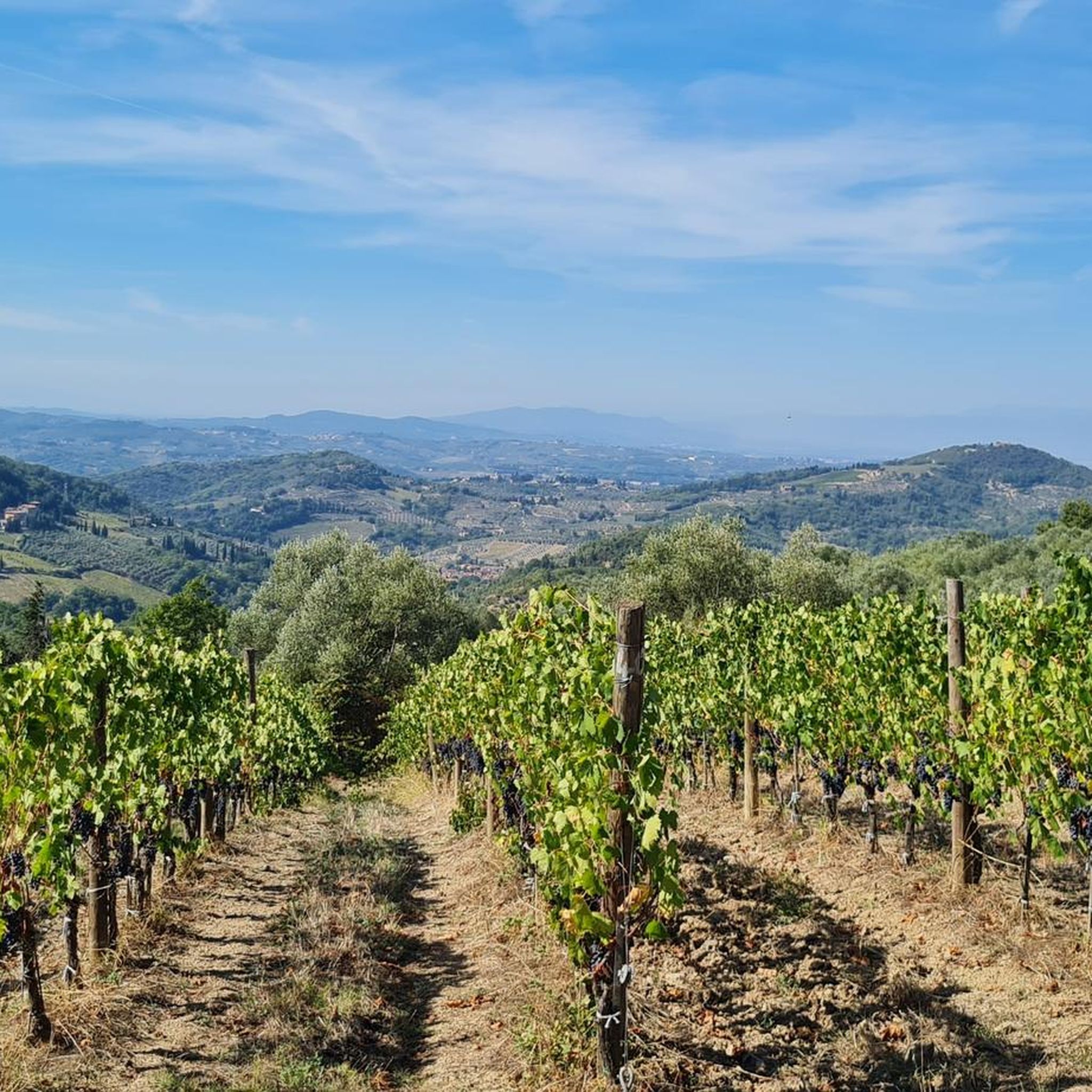
The castles are set within the beautiful Tuscan landscape. Near Montefioralle Castle, you'll find scenic viewpoints overlooking the Chianti region. The area around Sammezzano Castle is surrounded by a large park with a forest, home to the impressive Twin Sequoias of Sammezzano. The path leading to the remnants of the ancient Castle of Incisa also offers evocative panoramic viewpoints of the Arno valley.
What outdoor activities, like cycling or hiking, are available near the castles?
The region offers various outdoor activities. For cycling, you can explore routes like the 'Chianti Hills and Valdarno Loop' or 'Along the Arno between Figline Valdarno and San Giovanni Valdarno'. Gravel biking options include the 'Pieve of San Romolo in Gaville – Pieve di Gaville loop'. Mountain biking enthusiasts can try trails such as 'View of Figline Valdarno – Boscaroni loop'. You can find more details on these and other routes in the Cycling around Figline E Incisa Valdarno, Gravel biking around Figline E Incisa Valdarno, and MTB Trails around Figline E Incisa Valdarno guides.
When is the best time of year to visit the castles around Figline e Incisa Valdarno?
The Florentine upper Arno valley, where these castles are located, is beautiful throughout much of the year. Spring and autumn generally offer pleasant weather for exploring, with milder temperatures and lush landscapes. Summer can be warm, but still enjoyable, especially in the mornings or late afternoons. Some castles or their surrounding parks may have specific opening hours that vary seasonally, so it's advisable to check in advance.
Are there any less crowded or 'hidden gem' castles worth visiting?
While popular sites like Montefioralle Castle attract visitors, exploring the remnants of the ancient Castle of Incisa or the Palazzaccio of Marcignano (ruins of Da Gavignano Castle) can offer a more secluded experience. These sites provide a deeper dive into the region's history without the larger crowds, allowing for a more reflective visit.
Can I find places to eat or stay near the castles in Figline e Incisa Valdarno?
Yes, the region offers various options. For example, the Castello di Pratelli in Incisa provides a unique farm stay experience within its historic walls, complete with garden views and a swimming pool. In villages like Montefioralle Castle, you can find bed and breakfasts, pubs, and opportunities to taste local wines. The wider Figline e Incisa Valdarno area has cafes, restaurants, and accommodations to suit different preferences.
What is the history behind the castles in Figline e Incisa Valdarno?
The castles in Figline e Incisa Valdarno reflect the region's strategic importance throughout centuries. Structures like the original Castle of Incisa date back to the 11th century, while the settlement of Figline itself originated around the Castle of Feghine in 1008. These sites were often involved in medieval conflicts, such as Figline's alignment with the Ghibellines, which led to the destruction of its original castle. Many castles, like Castello di Celle, also show strong historical ties to religious institutions, illustrating the interplay between secular and religious powers.
Is it possible to reach any of the castles using public transport?
While specific public transport routes directly to every castle might be limited, Figline e Incisa Valdarno is a town with train and bus connections. From there, local buses or taxis might be available to reach some of the more accessible castle sites or villages. For more remote locations, a car is generally recommended for convenience.
Are there any castles that offer a unique experience beyond just historical ruins?
Absolutely. The Castello di Pratelli in Incisa offers a unique farm stay experience, blending historical charm with modern amenities like a swimming pool. Sammezzano Castle stands out for its rare orientalist architectural style, offering a visual experience unlike traditional Tuscan castles. The path to the ancient Castle of Incisa is enhanced with installations featuring verses by Petrarch, appealing to literature enthusiasts.
What do visitors enjoy most about the castles in Figline e Incisa Valdarno?
Visitors appreciate the authentic medieval urban structures found in places like Montefioralle Castle and Poggio di Loro. The unique orientalist style of Sammezzano Castle and its surrounding forest are also highly regarded. Many enjoy the tangible link to the region's past, set against the beautiful Tuscan landscape, and the opportunity for scenic walks and exploration.
Are the castles accessible for visitors with limited mobility or wheelchairs?
Accessibility can vary significantly between sites. Well-preserved medieval villages like Montefioralle Castle often have cobbled streets and uneven terrain, which can be challenging. Ruined sites like The Palazzaccio of Marcignano are typically less accessible due to their natural, overgrown state. It is best to check specific accessibility details for each individual castle or site before planning your visit.
Most popular routes around Figline E Incisa Valdarno
Most popular attractions around Figline E Incisa Valdarno

Get inspired with the komoot mobile app


Explore more
Looking for the best castles somewhere else? Discover other guides around Figline E Incisa Valdarno:
