Top 5 Castles around Gerace
Best castles around Gerace are found in a historic town perched on a cliff in Calabria, Italy. This region is characterized by its strategic elevated positions, offering commanding views of the surrounding valley and the Ionian Sea. Gerace's landscape is rich in history, with ancient origins and fortifications dating back to Byzantine and Norman periods. The area provides a tangible connection to its diverse past, from its medieval urban arrangement to preserved historic centers.
Best castles around Gerace
- The most popular castles is San Giorgio Morgeto Castle, a castle ruin with a wonderful view of the Gioia Tauro plain and the Thyrhennian Sea. Probably built in the pre-Norman age, around the 9th-10th century AD, this bastion made the entire town impregnable during Saracen invasions.
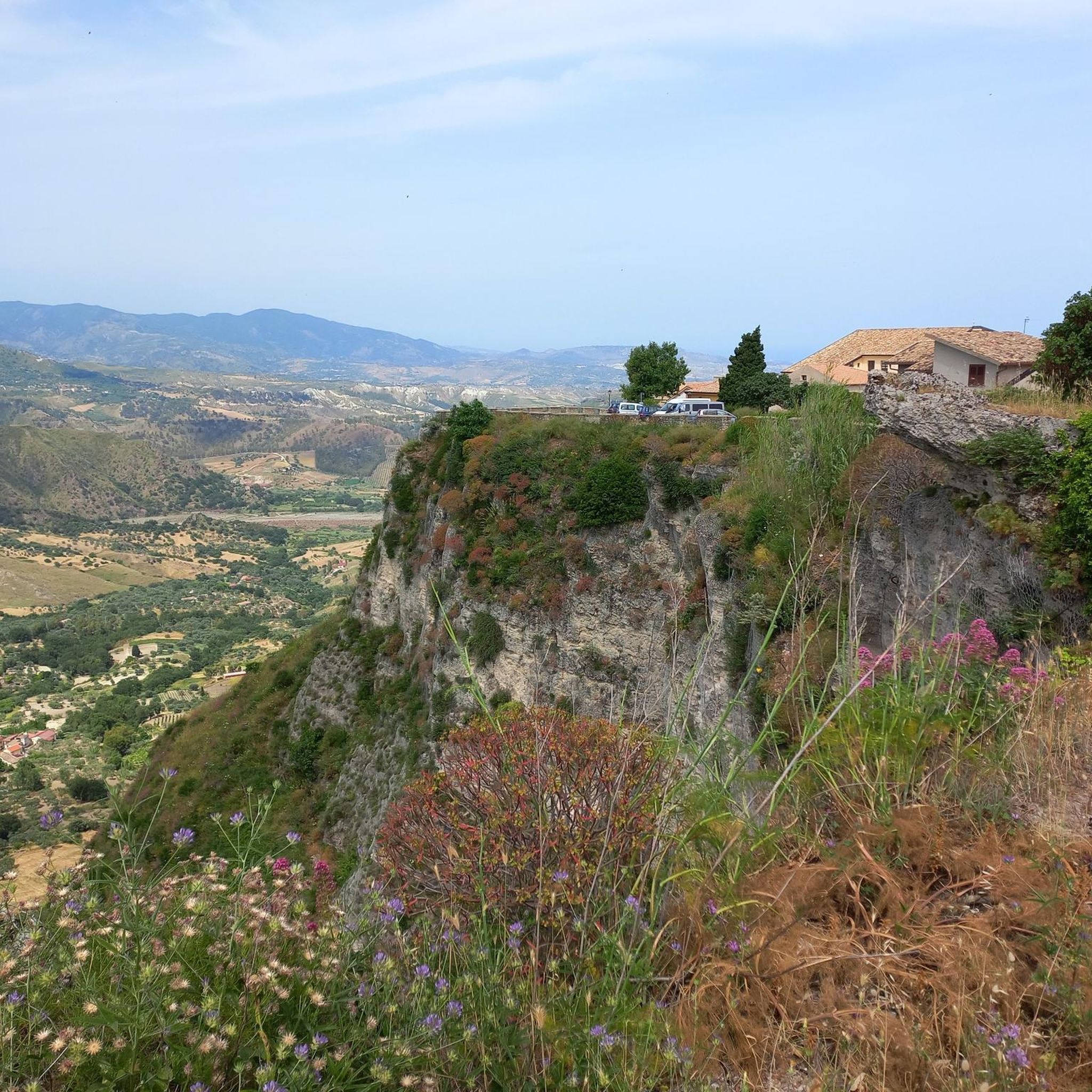
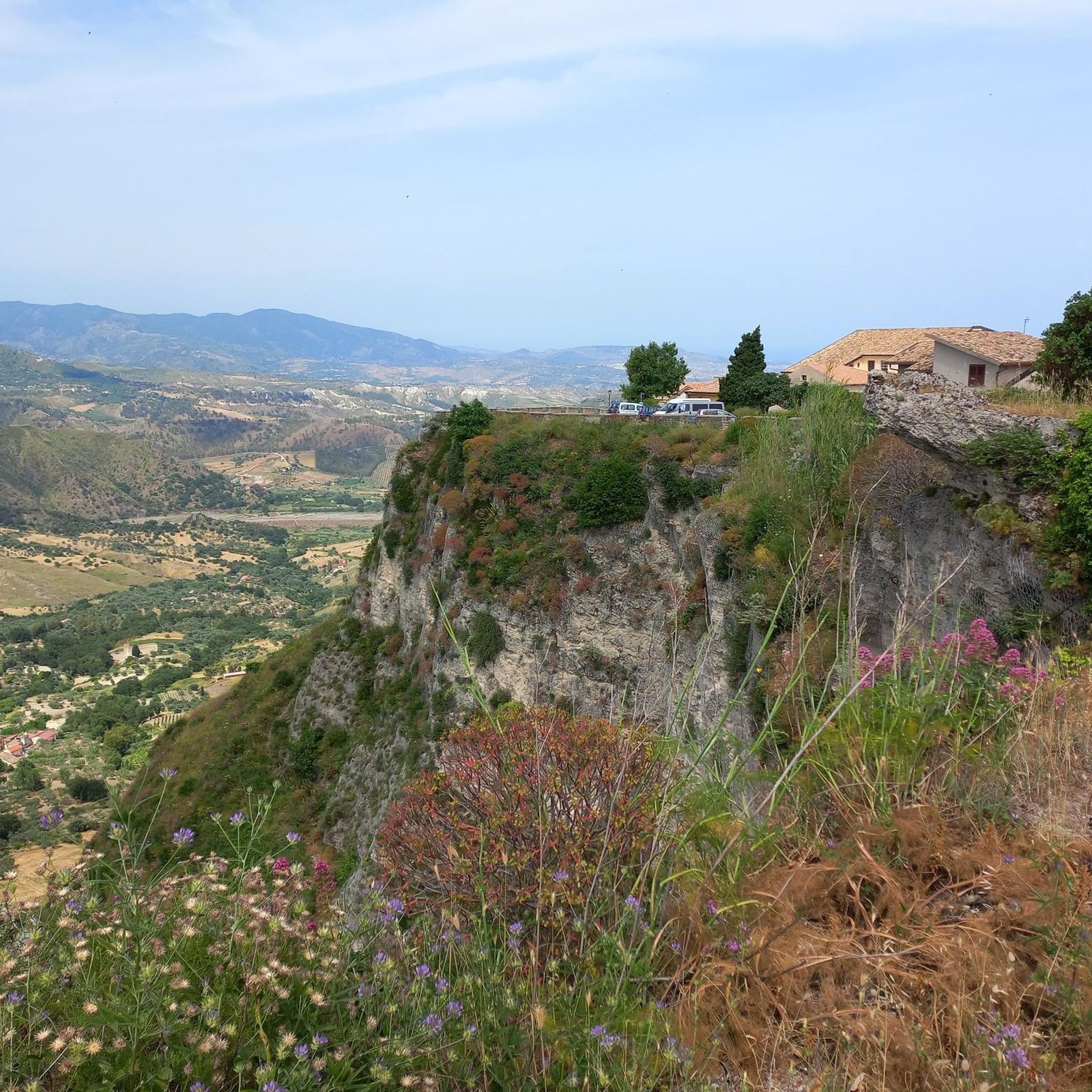
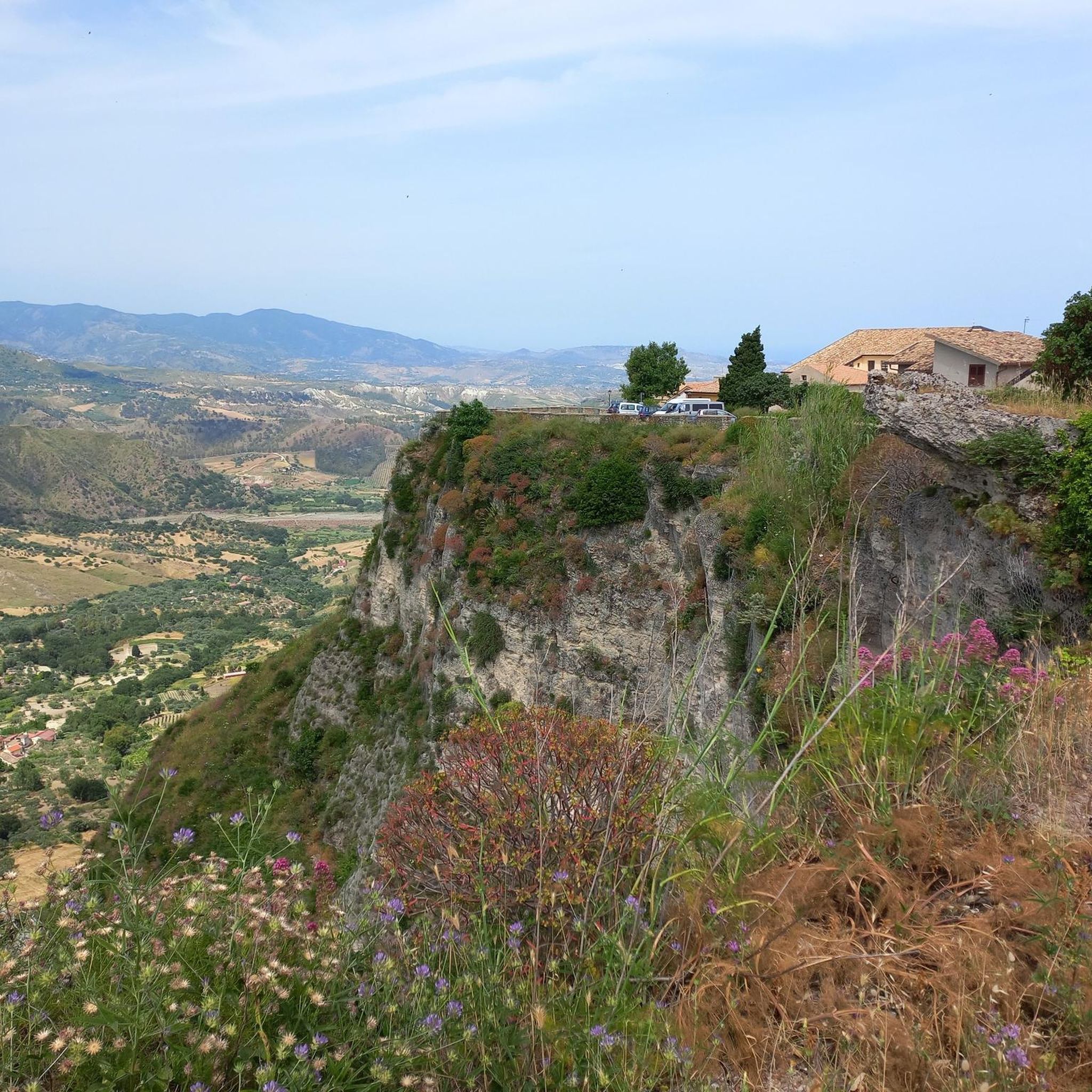
- Another must-see spot is Norman Castle of Gerace, a castle, historical site, and viewpoint. The castle was probably built in the 7th century AD, restructured and fortified by the Normans around 1050. Remnants include a large tower and walls, partly obtained from the rock and rising above surrounding ravines.
- Visitors also love Medieval Castle of Grotteria, a castle and historical site. Grotteria, a small Calabrian jewel, was born around a temple dedicated to the goddess Minerva. It has a rich architectural history, marked by various dominations and earthquakes.
- Gerace is known for Norman castles, medieval castles, and castle ruins. These sites offer insights into the region's defensive architecture and historical significance.
- The castles around Gerace are appreciated by the komoot community, with more than 6 upvotes and 13 photos shared.
Last updated: July 14, 2026
San Giorgio Morgeto Castle
Highlight • Castle
Translated by Google •
Tip by

Norman Castle of Gerace
Highlight • Castle
Translated by Google •
Tip by

Sign up now to discover places like this
Get recommendations on the best single tracks, peaks, & plenty of other exciting outdoor places.
Sign up for free
Medieval Castle of Grotteria
Highlight • Castle
Translated by Google •
Tip by

Keep of the Byzantine-Norman Castle
Highlight • Castle
Translated by Google •
Tip by

View from Condojanni Castle
Highlight • Viewpoint
Translated by Google •
Tip by

Start today with a free account
Your next adventure awaits.
Login or Signup
Tips from the Community

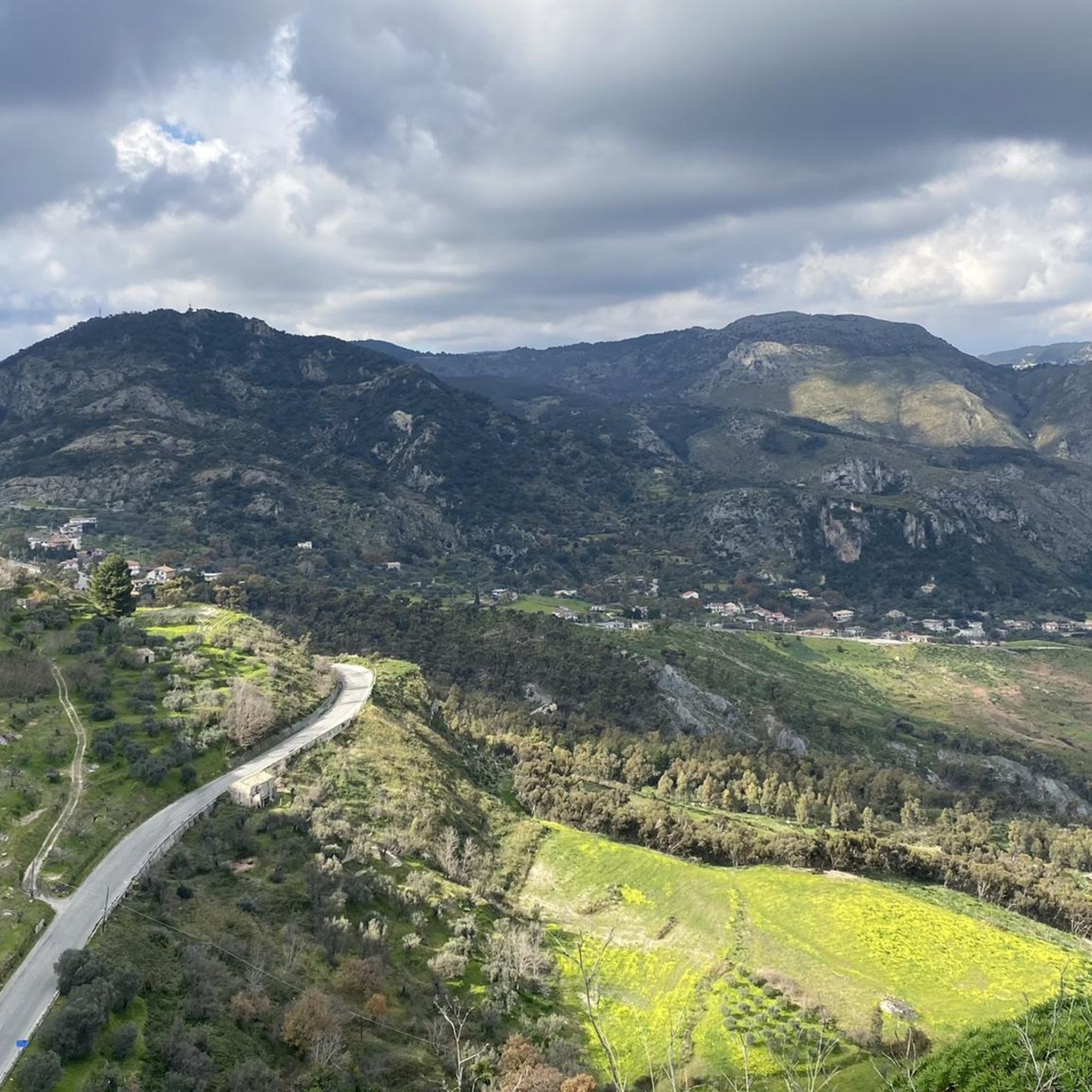
Worth a visit, for its historic location and the 360° panorama you can admire.
0
0
Beautiful 360° panoramic view
0
0

Grotteria, a small Calabrian jewel, was born around a temple dedicated to the goddess Minerva, known as Eruma Atenaies between the 8th and 9th centuries BC. It became Crypta-Aurea under the emperor Hadrian due to the gold reserves in the area, and underwent Locrian, Byzantine, Norman and Swabian domination. Marked by earthquakes, it has a rich architectural history, from churches to noble palaces, such as Palazzo Lupis.
0
0

The whole village is worth a visit and the climb to the castle offers an exceptional view but only after having enjoyed the very fresh water that flows from the fountains of the village and above all from the "beautiful" fountain
0
0

Castle dating back to the 11th century built by the Normans. The castle, built in stone and wood, was used to control the southern Ionian coasts.
1
0

The castle was probably built in the 7th century AD, its existence is attested as early as the 10th century AD when it was devastated by the Byzantines together with the city. With the arrival of the Normans around 1050, it was restructured and fortified. In the following centuries it suffered the devastation of several catastrophic earthquakes.
2
0

Angevin Norman Castle Probably built in the pre-Norman age, around the 9th-10th century. AD, the sumptuous Morgezio Castle dominates the entire plain of Gioia Tauro and its majesty is visible from the entire surrounding area. According to legend, inhabited by King Morgete, a descendant of the Enotria lineage, this bastion made the entire town impregnable, according to the historian-theologian Domenico Cangemi, during the Saracen invasions. There is historical information of its existence since 1269, the last Swabian period of which it reflects the typical defensive architecture. There are also numerous documents from the Angevin age that report news of it. The defensive system is still visible, consisting of a wall with access doors and circular towers, whose grandiose remains stand out on the top of the hill. At various altitudes, there are environments of different shapes and functions, while at the top of the complex, on a spur of granite rock, there is the central body of the keep, the donjon, which had defensive and residential functions. Two levels are recognizable, each consisting of three rooms, and there was probably a third floor. The analysis of the structures has highlighted several subsequent construction phases to which a large tank belongs. Thanks to its deliberate location on a rock, its remains can be visited throughout the year also thanks to the care with which the competent authorities manage the entire surrounding natural park.
1
0

Castle ruin with a wonderful view of the Gioia Tauro plain and the Thyrhennian Sea
1
0
Frequently Asked Questions
What historical significance do the castles around Gerace hold?
The castles in the Gerace region, such as the Norman Castle of Gerace and San Giorgio Morgeto Castle, are deeply rooted in the area's history. They date back to Byzantine and Norman periods, with some origins as early as the 7th century AD. These fortifications were strategically built to offer commanding views and defend against invasions, reflecting the region's diverse past under various dominations like Swabians, Angevins, and Aragonese.
Are there any castles around Gerace that offer panoramic views?
Yes, several castles provide breathtaking panoramic views. The Norman Castle of Gerace, perched at the highest point of the town, offers spectacular views of Gerace's historic center, the surrounding valley, and the Ionian Sea. Similarly, San Giorgio Morgeto Castle provides a wonderful view of the Gioia Tauro plain and the Tyrrhenian Sea. The View from Condojanni Castle also offers a beautiful 360° panorama.
What is the best time of year to visit the castles in Gerace?
The castles around Gerace can be visited throughout the year. However, for the most comfortable experience, spring (April-June) and autumn (September-October) offer pleasant weather for exploring the ruins and enjoying the views. Summer can be quite warm, while winter visits might be cooler but still offer unique perspectives of the historical sites.
Are there hiking opportunities near the castles around Gerace?
Yes, the region offers various hiking opportunities. You can find trails like the Monte Tre Pizzi Trail or an urban hike in the town of Gerace itself. For more options, explore the Hiking around Gerace guide, which includes routes in the nearby Aspromonte National Park.
Can I visit the castles with my family?
Many of the castles are historical sites and ruins, making them suitable for families interested in history and exploration. While specific 'family-friendly' categories aren't always assigned, the open-air nature of many sites like the Norman Castle of Gerace allows for engaging visits. Always check the specific site for accessibility and safety information, especially with younger children, as some areas might be uneven.
What kind of architectural elements can I expect to see at these castles?
You can observe a range of architectural elements reflecting different historical periods. For instance, the Norman Castle of Gerace features remnants of a large cylindrical tower and walls partly carved from rock, with megalithic blocks used by the Normans. San Giorgio Morgeto Castle showcases a defensive system with access doors and circular towers, and a central keep (donjon) with defensive and residential functions.
Are there any nearby natural features or landmarks to combine with a castle visit?
The castles themselves are often situated in scenic locations, offering natural viewpoints. The Norman Castle of Gerace provides views extending to the Ionian Sea. The surrounding area is characterized by valleys and hills, and the Aspromonte National Park is also nearby, offering opportunities to combine historical exploration with nature walks and scenic drives.
What are the options for parking when visiting castles around Gerace?
For castles located within or very close to towns, such as the Norman Castle of Gerace, parking is typically available in designated areas within the town. It's advisable to check local signage for specific parking regulations and availability, especially in historic centers where access might be restricted.
Are there any other outdoor activities besides hiking that I can do near the castles?
Beyond hiking, the region around Gerace offers other outdoor activities. You can find various running trails, such as those listed in the Running Trails around Gerace guide. Road cycling is also popular, with routes like 'Ionian Seafront: Locri to Roccella Ionica' available in the Road Cycling Routes around Gerace guide.
What do visitors particularly enjoy about the castles in this region?
Visitors frequently appreciate the historical significance and the stunning panoramic views offered by these castles. The opportunity to connect with Gerace's diverse past, from its Byzantine and Norman roots to later dominations, is a major draw. The atmosphere of the timeless village and the archaeological interest of the surviving structures also contribute to a memorable experience.
Is the Norman Castle of Gerace the only significant fortress in the area?
While the Norman Castle of Gerace is the most prominent fortress in Gerace itself, the broader region features other significant castles. These include the San Giorgio Morgeto Castle and the Medieval Castle of Grotteria, each with its own unique history and architectural remnants.
Are there any legends or notable stories associated with the castles?
Yes, the castles are steeped in local legends and historical tales. For example, tradition holds that a cave near the Norman Castle of Gerace was where St. Anthony of the Castle performed his penance. Another tale suggests that initial discussions for the constitution of the Kingdom of Naples took place in the castle's 'Mileto' hall, involving an alliance between Robert Guiscard and Roger D'Altavilla.
Most popular attractions around Gerace

Get inspired with the komoot mobile app


Explore more
Looking for the best castles somewhere else? Discover other guides around Gerace:
