Top 10 Caves around Arsiè
Caves around Arsiè are located in the Belluno Dolomites, a region characterized by its geological features and natural landscapes. The area provides access to various cave systems, some of which are suitable for exploration. These natural landmarks offer insights into the region's subterranean world and geological history. The surrounding terrain includes challenging hiking routes and viewpoints.
Best caves around Arsiè
- The most popular caves is Grotta dell'acqua nera, a cave that features a large entrance hall with an underground…
Last updated: May 2, 2026
Grotta dell'acqua nera
Highlight • Cave
Translated by Google •
Tip by

Bus de la Bela
Highlight • Cave
Translated by Google •
Tip by

Sign up now to discover places like this
Get recommendations on the best single tracks, peaks, & plenty of other exciting outdoor places.
Sign up for free
Old Road of the Cismon Gorge
Highlight • Gorge
Translated by Google •
Tip by

Buso dei Quaranta
Highlight • Cave
Translated by Google •
Tip by
Ernesto Cave
Highlight • Cave
Translated by Google •
Tip by

Sign up for free to discover even more caves around Arsiè.
Sign up for free
Already have an account?
Start today with a free account
Your next adventure awaits.
Login or Signup

Tips from the Community

Suggestive place: with little sun!
0
0

The large entrance hall of this cave conceals a deep, dark mouth, filled by an underground stream that is always well-fed, even in dry periods. This is the entrance—reserved for cave divers—to a vast and intricate network of cavities deep within the mountain. The water is actually clear, and it is thought that the name derives from the dark moss-covered floor, over which the stream flows before flowing into the Senaiga. Due to the cave's complex morphology and technical difficulties, exploration began only in the 1970s, and so far, cave divers have discovered a 1,600-meter stretch of siphons and difficult passages. In the 1930s, dye injections proved that this cave communicates with the Castello Tesino Caves, a few kilometers away. Furthermore, an examination of the fine sand found inside, rich in granite crystals, testifies to a significant contribution of water coming from the Cima d'Asta group, much higher and much more distant!
2
0
This large cave has various names: Bus de la Bela, Bus de la Vecia, Bus de la Tosa, Grotta di San Donato, and Grotta dell'Orso. The skeleton of an Ursus Spalaeus (Cave Bear) was found there, a prehistoric animal of imposing size that surpassed that of today's grizzly bear: 3.5 meters (standing) and weighing almost 1 ton. Three explanatory panels at the entrance tell its story. The skeleton is visible free of charge at the Lamon Town Hall. The remains of this mammal have been found in numerous caves across Europe, an environment they used as a dwelling and for hibernation. They often competed with prehistoric humans for ownership of the cave, and one theory suggests they became extinct precisely because of predation by our ancestors. In ancient times, the bones found were attributed to dragons or griffins! Opposite the cave, climbing a short, exposed ramp equipped with a cable leads to a beautiful waterfall. https://it.wikipedia.org/wiki/Ursus_spelaeus
0
0

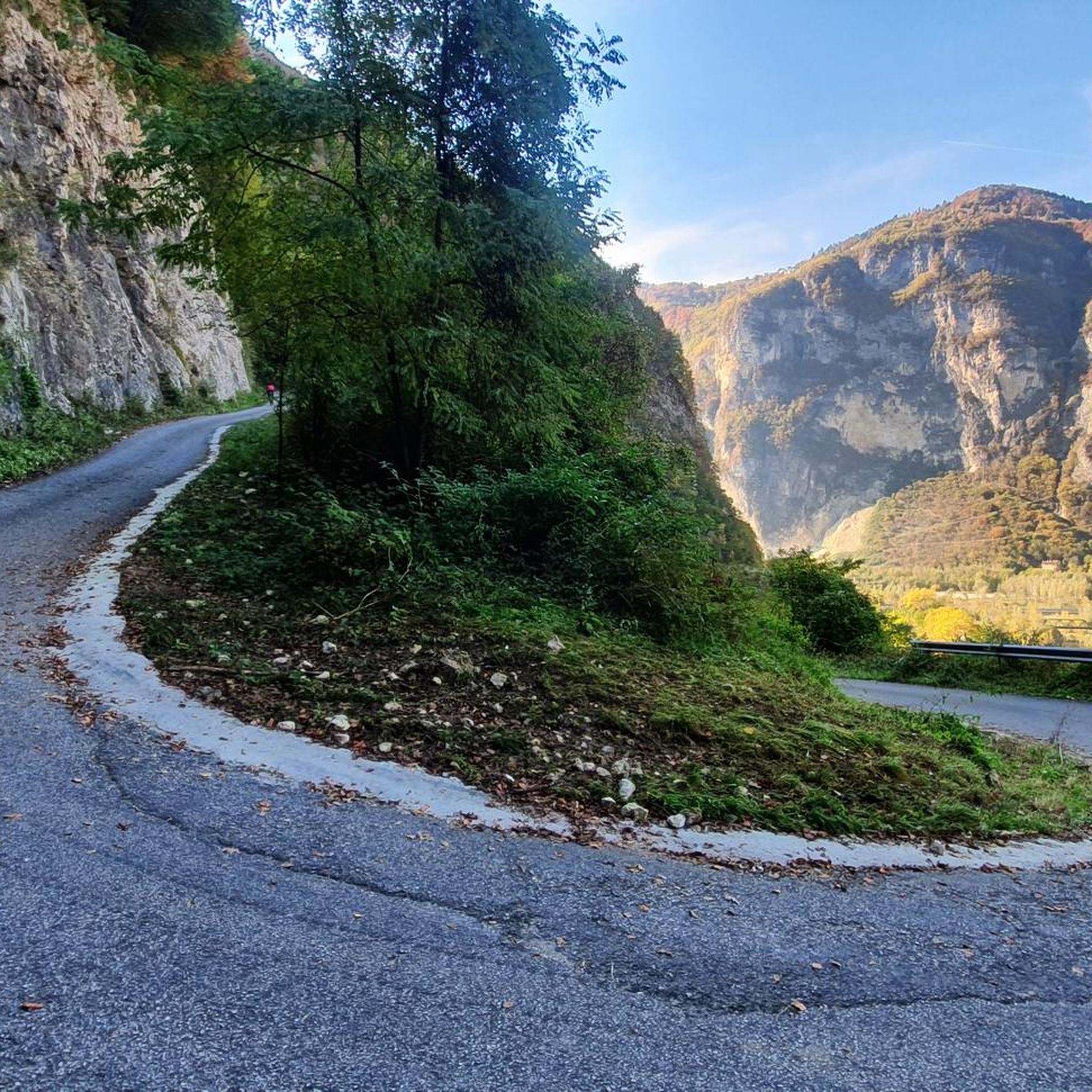
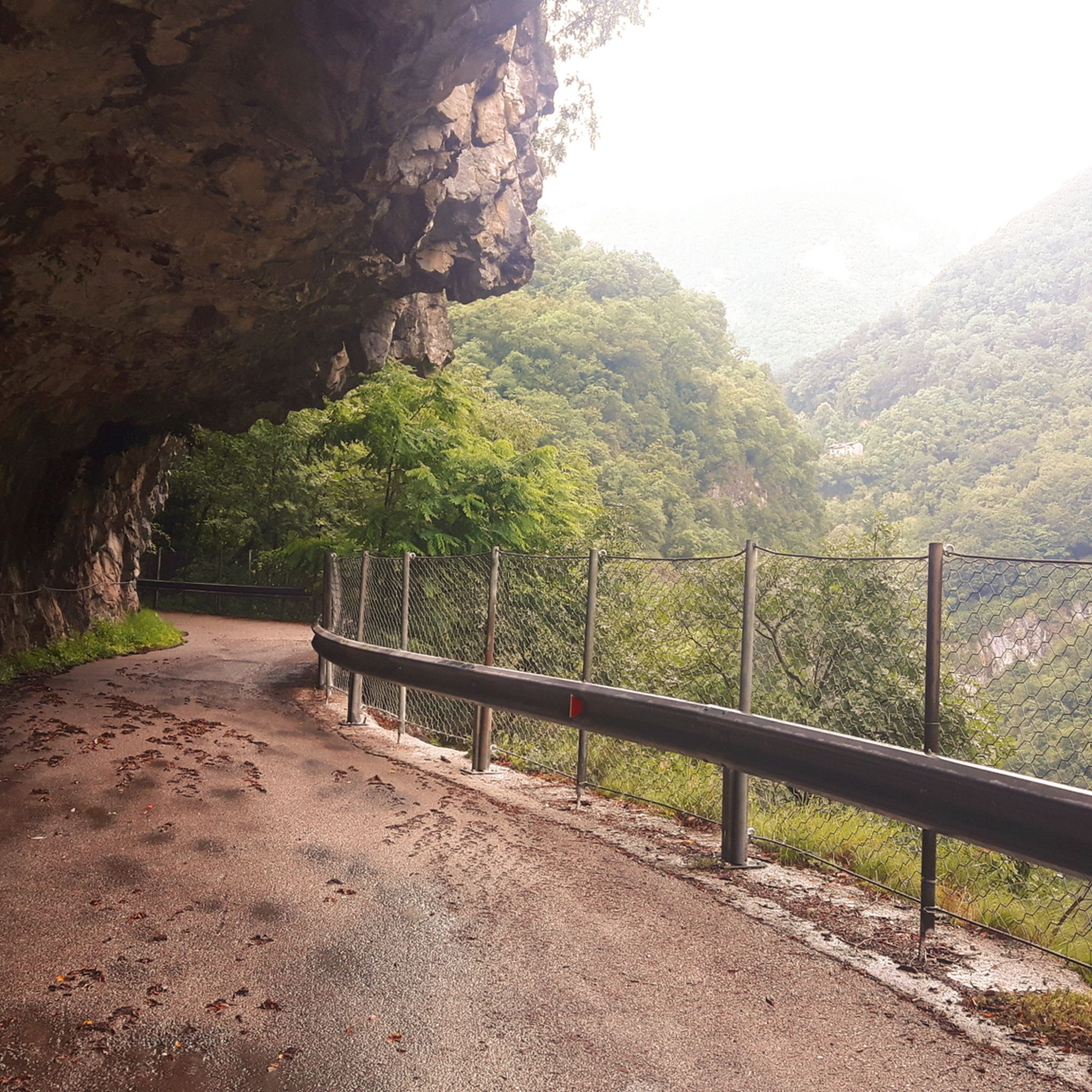
Road that overlooks a deep gorge of the Cismon torrent. The old asphalt road is currently closed for works and it is very difficult to cross the torrent on the dam wall
0
1

Old road that runs alongside the infamous "strada statale 50 del Grappa e del Passo Rolle" and reaches the border with Trentino-Alto Adige. It is one of the most well-known and appreciated mountain roads in the Alps, especially for the suggestive scenarios and natural landscapes in which its route winds.
3
0
Important discovery occurred in 1983 by a boy from the area. Evidence of use of the cave by primitive settlements has been found, with evidence of many finds. The link below describes the studies carried out by the Tridentine Museum of Natural Sciences https://apsat.mpasol.it/biblio/uploadedfiles/Awsiuk%20R.,%20Bartolomei%20G.,%20Cattani%20L.,%20Cavallo%20C.,%20Dalmeri%20G.,%20d'Errico%20F. ,%20Giacobini%20G.,%20Girod%20A.,%20Hercman%20H.%201994,%20La%20Grotta%20d%E2%80%99Ernesto%20(Trento).pdf
4
0

The skeleton is currently preserved in a glass case visible at the Lamon town hall...👍
0
0

In this deep cave, which can be visited in part, remains of Ursus spalaeus (Cave Bear), a large mammal that existed during the middle and late Pleistocene, were found.
1
0
Frequently Asked Questions
What types of caves can I explore around Arsiè?
The Arsiè area offers a variety of caves, from those with large entrance halls and underground streams like Grotta dell'acqua nera, to significant karst sinkholes such as Buso dei Quaranta. There are also historical caves like Ernesto Cave, which show evidence of primitive settlements.
Are there any caves with historical or paleontological significance near Arsiè?
Yes, the Bus de la Bela (also known as Grotta dell'Orso) is notable for paleontological discoveries. Remains of Ursus spelaeus (Cave Bear) were found there, offering a glimpse into the region's prehistoric fauna. A skeleton from this cave is exhibited at the Civic Museum of Crocetta del Montello, and others are in Lamon. Additionally, Ernesto Cave is an important historical site with evidence of primitive settlements.
What are the options for experienced cave explorers near Arsiè?
For experienced cave divers, Grotta dell'acqua nera offers a vast and intricate network of cavities deep within the mountain, with over 1,600 meters of explored siphons and challenging passages. The broader Erera – Piani Eterni karst system, though not directly in Arsiè, is a regional highlight for ambitious speleologists, featuring over 30 kilometers of galleries and deep abysses.
Can I visit caves near Arsiè with my family?
While some caves require specialized equipment or experience, parts of the Bus de la Bela are partly visitable and accessible via hiking trails, making it an option for families who enjoy hiking. The initial sections can be explored, but some trails may require sure-footedness. Always check specific access requirements and safety guidelines before visiting.
Are there hiking trails that lead to or near these caves?
Yes, several caves, such as Bus de la Bela, are accessible via hiking trails. The region around Arsiè is rich in outdoor activities. You can find various hiking routes, including moderate to difficult trails, in guides like Hiking around Arsiè and Mountain Hikes around Arsiè.
What kind of natural features can I expect to see in the caves or surrounding area?
The caves themselves showcase geological formations, underground streams, and vast networks of cavities. For example, Grotta dell'acqua nera features a deep opening with a constantly flowing underground stream. The surrounding Belluno Dolomites region is characterized by karst landscapes, deep gorges like the Old Road of the Cismon Gorge, and natural monuments, offering breathtaking scenery and alpine grasslands.
Is there a large cave system in the broader region worth knowing about?
Yes, the Erera – Piani Eterni karst plateau, located in the Belluno Dolomites National Park, is home to the longest cave in Veneto and one of the largest in Italy, with over 30 kilometers of galleries. This immense system is a testament to the powerful geological processes in the area, though it's primarily for experienced speleologists. The plateau above offers stunning natural beauty and wildlife.
What is the best time of year to visit the caves around Arsiè?
The best time to visit depends on the specific cave and your activity. For hiking to partially accessible caves, spring and autumn offer pleasant temperatures. Summer can also be suitable, but some trails might be more challenging due to heat. Winter caving opportunities may exist for experienced individuals, but generally, the warmer months are more accessible for general exploration.
What should I wear or bring for a cave visit in the Arsiè area?
For any cave exploration, even partial, wear sturdy, non-slip footwear suitable for uneven and potentially wet terrain. Layers of clothing are advisable as cave temperatures can be cooler than outside. A headlamp or flashlight is essential, even if you don't plan to go deep. For more advanced caving, specialized equipment and guidance from local speleological groups are necessary.
Are permits or special regulations required for caving in Arsiè?
For extensive or technically challenging cave systems, especially those reserved for experienced speleologists, permits and adherence to specific regulations are often required. It's advisable to check with local authorities or speleological associations in the Belluno Dolomites region for the most up-to-date information on permits and access rules for specific caves.
How difficult is it to explore the caves around Arsiè?
The difficulty varies significantly. Some caves, like Grotta dell'acqua nera, are classified as challenging and are reserved for experienced cave divers due to their complex morphology and technical difficulties. Others, such as Bus de la Bela, are partly visitable and rated as intermediate, requiring sure-footedness on hiking trails. Always assess your skill level and consult local guides or information before attempting exploration.
Are there any other outdoor activities I can combine with a cave visit in Arsiè?
Absolutely. The Arsiè region offers a wide range of outdoor activities. Besides hiking to cave entrances, you can explore various trails for hiking and mountain hikes. There are also options for gravel biking, allowing you to experience the diverse landscapes of the Belluno Dolomites.
Most popular routes around Arsiè
Most popular attractions around Arsiè

Get inspired with the komoot mobile app


Explore more
Extend your search for the best caves by checking out these guides of the top ones around Arsiè:
