Top 5 Castles around Rocchetta Sant'Antonio
Best castles around Rocchetta Sant'Antonio include the D'Aquino Castle, a significant historical structure in this village in Puglia, Italy. Positioned at the highest point of the village, it offers wide views over the Ofanto valley. The area is characterized by its historical context, with villages perched on hills offering panoramic views of the Tavoliere and Monti Dauni. These landmarks and viewpoints around Rocchetta Sant'Antonio provide insight into the region's past.
Best castles around Rocchetta Sant'Antonio
- The most popular castles is Ascoli Satriano, a historical settlement with pre-Roman origins. This small city features a Norman castle, which also served as a ducal palace, accessible through characteristic alleys.
- Another must-see spot is Monteverde Castle, a castle built by the Lombards. It dominates the valley, with records of its existence dating back to 897, and was once home to noble families like the Grimaldis of Monaco.
- Visitors also love Sant'Agata di Puglia, a village perched on a hill. Its castle dominates the town, offering panoramic views of the Tavoliere and Monte Vulture.
- Rocchetta Sant'Antonio is known for its historical castles, ducal palaces, and fortified settlements. Visitors can explore a variety of structures, from ancient Norman castles to Renaissance architectural examples.
- The castles around Rocchetta Sant'Antonio are appreciated by the komoot community, with 6 photos and 9 upvotes highlighting their appeal.
Last updated: May 18, 2026
Ascoli Satriano
Highlight • Settlement
Translated by Google •
Tip by

Monteverde Castle
Highlight • Castle
Translated by Google •
Tip by

Sign up now to discover places like this
Get recommendations on the best single tracks, peaks, & plenty of other exciting outdoor places.
Sign up for free
Sant'Agata di Puglia
Highlight • Settlement
Translated by Google •
Tip by
Rione Fossi of Accadia
Highlight • Historical Site
Translated by Google •
Tip by
View of Monteverde and the Osento Valley
Highlight • Viewpoint
It dominates a valley of the Campania Apennines from the top of a rocky spur of 700 meters, straddling the Osento stream and the Ofanto river.
For some years it has been included in the circuit of the most beautiful villages in Italy, due to its historic center of Norman origin and the castle characterized by four towers, two round and two square. In the 2018 edition of the Rai3 television program Il borgo dei borghi Monteverde was selected to represent Campania.
Translated by Google •
Tip by
Start today with a free account
Your next adventure awaits.
Login or Signup
Popular around Rocchetta Sant'Antonio
Tips from the Community

Ascoli Satriano is a small city of pre-Roman origins, historically the scene of important battles between Rome and Hannibal. The ancient village is accessed from the Porta di Sant'Antonio Abate, and through characteristic alleys you can visit the Basilica Cathedral Nativity of the Blessed Virgin Mary, the Norman castle which was also the ducal palace, the Clock Tower and the Arch of Porta Nuova .
1
0
Rione Fossi is a district of Accadia which was abandoned in 1930 due to a strong earthquake. It was the original nucleus of the town, founded by the Lombards and enriched by Roman temples and palaces. Today it is a ghost town, a suggestive and timeless place, where you can see the houses and streets carved into the rock, the Byzantine church of Saints Peter and Paul and the remains of the castle and the ducal palace.
2
0
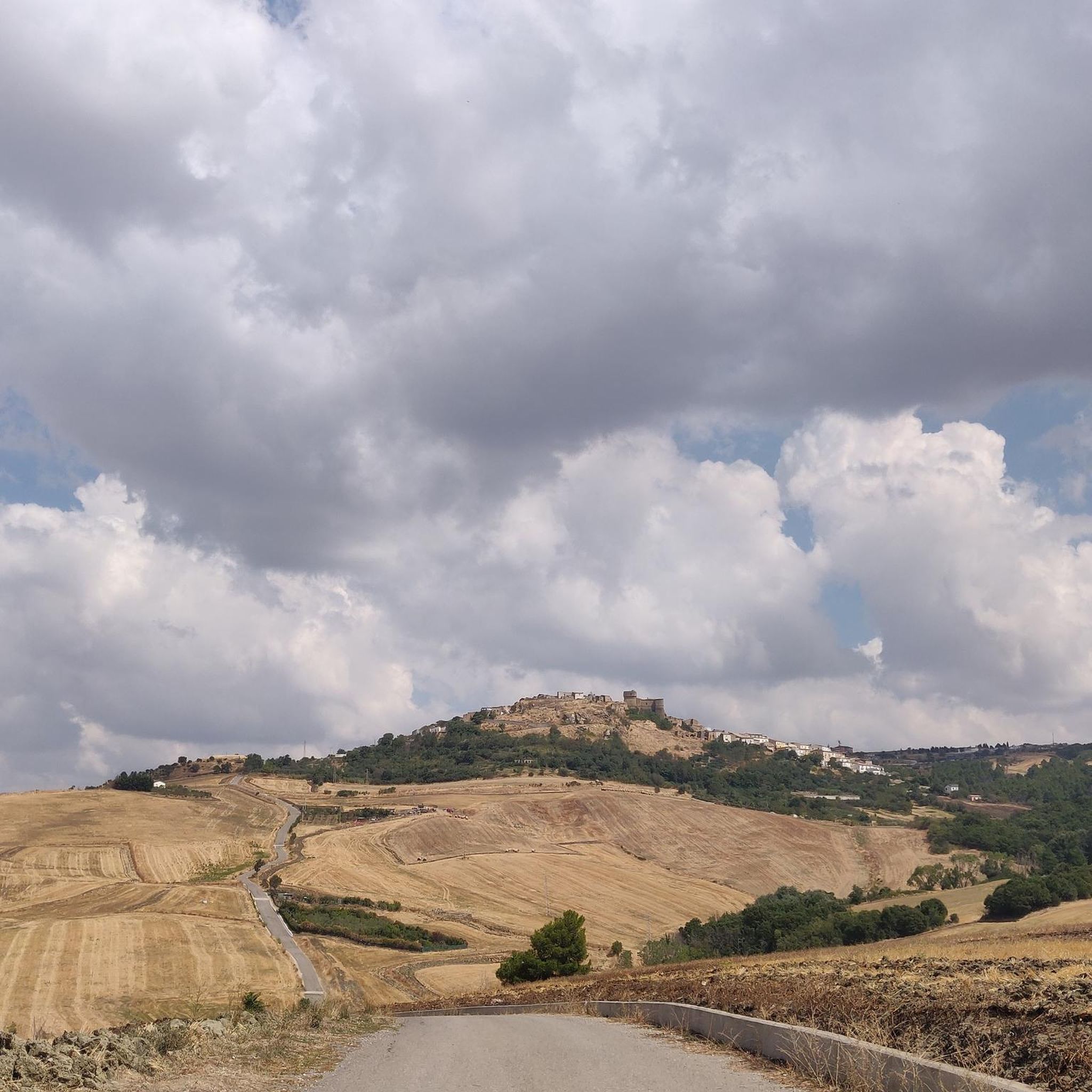
Sant'Agata di Puglia is a village perched on a hill at the southern limits of the Monti Dauni. It is nicknamed the "Loggia delle Puglie" because it offers a panoramic view of the Tavoliere and up to Monte Vulture in Basilicata. The castle on the top dominates the town, and to reach it you need to take a walk through the alleys paved with cobblestones, not really suitable for racing bikes.
1
0

The castle of Monteverde, built by the Lombards, dominates the valley crossed by the two rivers mentioned above and the first certain information about its existence comes from a parchment dating back to 897, in which it is certified that it had a fortified building. Of the noble families who lived there, the Grimaldis of Monaco are the main one, in addition, of course, to the one that gave the building its name. The castle, together with the territory of Monteverde and other fiefdoms, was donated, in 1532, by the emperor to Onorato I Grimaldi, Prince of Monaco, in exchange for his loyalty and his successors.
0
0
Monteverde is a small village that has just over 700 inhabitants in the province of Avellino. It dominates a valley of the Campania Apennines from the top of a rocky spur of 700 meters, straddling the Osento stream and the Ofanto river. For some years it has been included in the circuit of the most beautiful villages in Italy, due to its historic center of Norman origin and the castle characterized by four towers, two round and two square. In the 2018 edition of the Rai3 television program Il borgo dei borghi Monteverde was selected to represent Campania.
0
0
Frequently Asked Questions
What are some notable castles and historical sites to visit around Rocchetta Sant'Antonio?
Beyond the D'Aquino Castle in Rocchetta Sant'Antonio, you can explore several other significant historical locations. These include Ascoli Satriano, a pre-Roman settlement with a Norman castle that also served as a ducal palace. Another is Monteverde Castle, a Lombard-built structure dominating its valley, and Sant'Agata di Puglia, a village with a castle offering extensive views.
What makes the D'Aquino Castle in Rocchetta Sant'Antonio unique?
The D'Aquino Castle, built around the 1500s, is a notable example of Renaissance architecture. It features a distinctive polygonal or triangular plan with striking pointed, almond-shaped towers, reminiscent of a ship's bow. These unique towers are thought to be influenced by architectural theories for defensive works by Francesco di Giorgio Martini. The castle is built entirely of robust limestone.
Can I visit the interior of the D'Aquino Castle in Rocchetta Sant'Antonio?
While the D'Aquino Castle is a prominent landmark and symbol of Rocchetta Sant'Antonio's history, it is currently privately owned and generally not open to public visitors. However, its external architecture and historical presence are central to the village's identity and visual appeal, and you can appreciate it from the outside.
Are there any castles around Rocchetta Sant'Antonio that offer panoramic views?
Yes, several castles and historical settlements in the region provide excellent panoramic views. The D'Aquino Castle itself is positioned at the highest point of Rocchetta Sant'Antonio, offering wide views over the Ofanto valley. Similarly, the castle in Sant'Agata di Puglia dominates its hilltop village, providing views of the Tavoliere and Monte Vulture. Monteverde Castle also dominates its valley.
What is the best time of year to visit the castles in the Rocchetta Sant'Antonio area?
The best time to visit the castles and explore the Rocchetta Sant'Antonio area is typically during the spring (April to June) and autumn (September to October). During these seasons, the weather is generally mild and pleasant for walking and sightseeing, avoiding the intense heat of summer and the colder, potentially wetter conditions of winter.
Are there family-friendly castles or activities near Rocchetta Sant'Antonio?
Many of the historical settlements and castles, such as Sant'Agata di Puglia and Ascoli Satriano, offer charming historic centers with alleys to explore, which can be enjoyable for families. While specific 'family tours' might vary, the general experience of discovering ancient structures and scenic viewpoints can be engaging for all ages. The View of Monteverde and the Osento Valley is also noted as family-friendly.
What outdoor activities can I do near these castles?
The region around Rocchetta Sant'Antonio offers various outdoor activities. You can find numerous routes for mountain biking, cycling, and road cycling. For example, there are challenging road cycling routes like the 'Sant'Agata di Puglia and Accadia Loop' or moderate MTB trails such as the 'Fontana Maruggia loop from Melfi'. You can find more details on these and other routes in the MTB Trails around Rocchetta Sant'Antonio, Cycling around Rocchetta Sant'Antonio, and Road Cycling Routes around Rocchetta Sant'Antonio guides.
Are there hiking trails near the castles of Rocchetta Sant'Antonio?
While specific hiking trails directly to or from each castle are not detailed, the region's natural landscape, particularly the Monti Dauni and Ofanto valley, provides opportunities for walking and exploring. Many of the castles are situated in historic villages that require walks through cobbled alleys to reach them, such as in Sant'Agata di Puglia. For more structured outdoor walking, consider the cycling and MTB routes in the area, which often traverse scenic landscapes.
What is the Rione Fossi of Accadia and is it worth visiting?
The Rione Fossi of Accadia is the original nucleus of Accadia, a district abandoned in 1930 after a strong earthquake. It's a suggestive 'ghost town' where you can see houses and streets carved into the rock, the Byzantine church of Saints Peter and Paul, and the remains of a castle and ducal palace. It offers a unique, timeless glimpse into the region's past and is certainly worth visiting for its historical and atmospheric significance.
Are there any cafes or amenities near the castles in Rocchetta Sant'Antonio?
The castles are typically located within or adjacent to historic villages like Rocchetta Sant'Antonio, Ascoli Satriano, and Sant'Agata di Puglia. These villages usually offer local cafes, restaurants, and other amenities where visitors can find refreshments and meals. Exploring the historic centers often leads to discovering these local establishments.
What historical context does the region around Rocchetta Sant'Antonio offer?
The region is rich in history, with evidence of pre-Roman origins, Lombard settlements, and significant battles. Castles like the D'Aquino Castle and Monteverde Castle have served as both aristocratic residences and military outposts, undergoing modifications across centuries. The area provides an extraordinary testimony to art and architecture from periods like the Renaissance, with structures built by noble families and influenced by prominent architects.
Most popular routes around Rocchetta Sant'Antonio
Most popular attractions around Rocchetta Sant'Antonio

Get inspired with the komoot mobile app


Explore more
Looking for the best castles somewhere else? Discover other guides around Rocchetta Sant'Antonio:
