Top 9 Caves around Maslianico
Best caves around Maslianico are located in a region known for its diverse natural features, situated between Lake Como and Lake Lugano. This area, near the Italian-Swiss border, offers a range of underground formations. Visitors can explore geological wonders and historical sites within these cave systems. The region is characterized by its proximity to significant lakes and mountainous terrain, contributing to the formation of various natural caves and former quarry systems.
Best caves around Maslianico
- The most popular caves is…
Last updated: August 9, 2026
Cave Bear Cave (Grotta dell'Orso), Monte Generoso
Highlight • Cave
Translated by Google •
Tip by

Scalota del Cico
Highlight • Trail
Translated by Google •
Tip by

Sign up now to discover places like this
Get recommendations on the best single tracks, peaks, & plenty of other exciting outdoor places.
Sign up for free
Grotta del Cepp
Highlight • Cave
Translated by Google •
Tip by

Marenghi Park Marian Grotto
Highlight • Cave
Before climbing the steps of the lighthouse, on the left is the small Marenghi park with a Marian grotto.
Translated by Google •
Tip by

Grotta della Bögia
Highlight • Cave
Translated by Google •
Tip by

Sign up for free to discover even more caves around Maslianico.
Sign up for free
Already have an account?
Start today with a free account
Your next adventure awaits.
Login or Signup
Tips from the Community

Here is a wooden statue of a bear
0
0
suggestive path among the remains of a mine
0
0

From the Grotta del Cepp locality, numerous paths begin that lead to Monte Boletto, Monte Bolettone and Alpe del Vicerè in the Albese Valley.
0
0

It is a classic type of cavity with an articulated karst morphology. It opens a few meters above the stream bed and has a triangular entrance. It has galleries, tunnels, narrow passages, halls, shafts, a small lake and numerous ascending and descending branches with different gradients. The main ascending branch has always been known, but subsequent studies, explorations and deconstruction work by Alex "Pino" Beati, Francesco Bianchi-Demicheli, Nicola Oppizzi, Riki Pontiggia and Luigi Tantardini have brought to light a descending branch with considerable development and important tributaries. There are numerous forms of concretions. The galleries are crossed by water curtains and drains, while the lower sections are hydrologically active. The clay deposits are considerable in places.
0
0

Also known as Caverna Generosa, it was discovered in 1988 by two speleologists of the Ticino Section who, traveling through the area in the summer, identified its opening. Given the small size of this opening, it had to be enlarged in any case to allow passage.
1
0

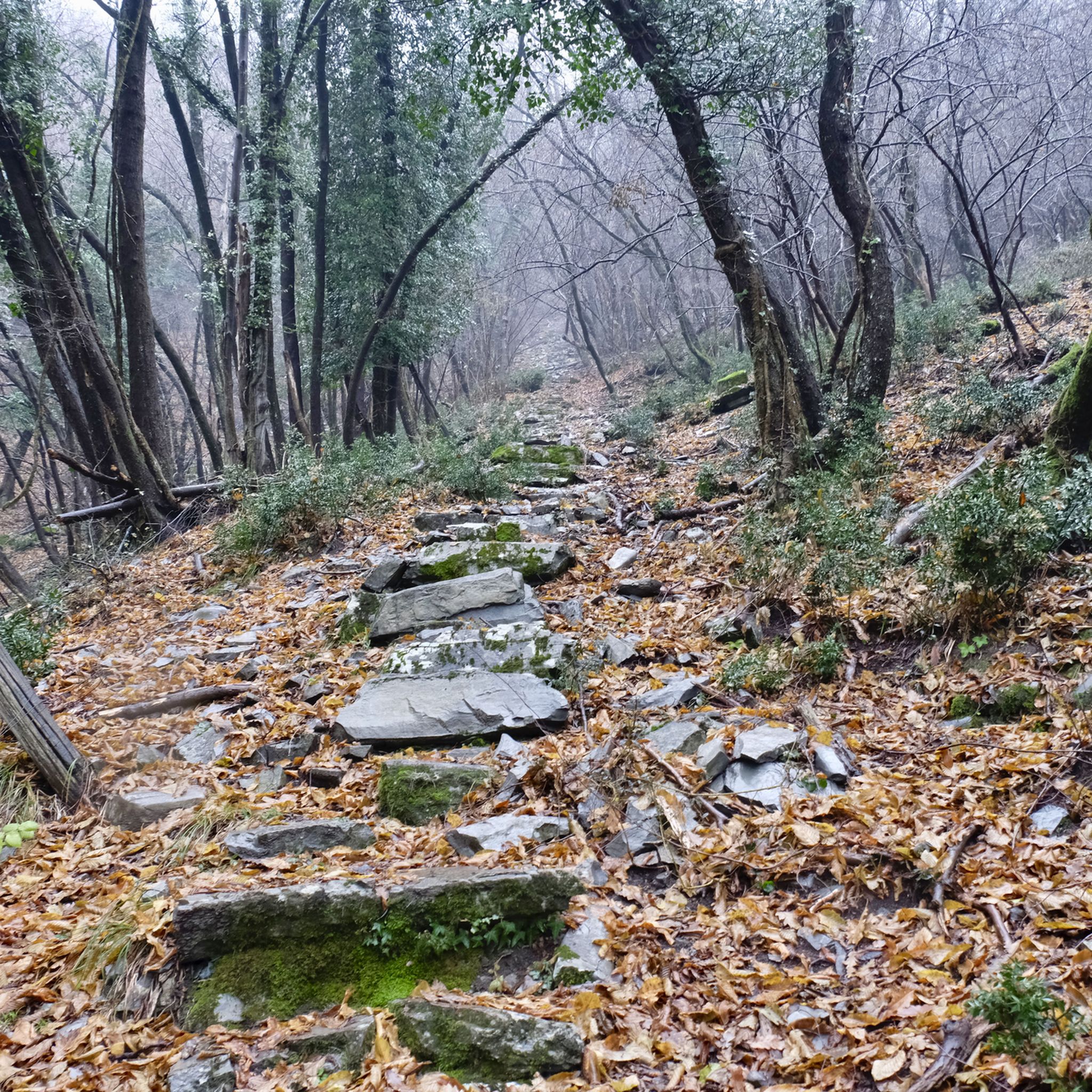
Steep stretch of path which, going up the abandoned quarries of Carate Urio, allows you to quickly reach the Carate - Murelli refuge mule track starting from the churchyard of Santa Marta
1
0
Frequently Asked Questions
What types of caves can I explore near Maslianico?
The region around Maslianico offers a diverse range of underground experiences. You can find natural caves with impressive geological formations, ancient historical sites with paleontological discoveries, and former quarry systems that showcase human ingenuity. Examples include the Cave Bear Cave (Grotta dell'Orso), known for its archaeological significance, and the Grotte di Rescia, famous for its travertine formations.
Are there any caves with historical or archaeological significance?
Yes, the area is rich in historical caves. The Cave Bear Cave (Grotta dell'Orso) on Monte Generoso is a significant archaeological site where remains of over 500 cave bears and findings attributed to Neanderthal Man have been discovered. The Malnate Caves and Molera Quarries are also ancient sites, historically used for extracting sandstone.
Which caves are known for their unique geological features?
The Grotte di Rescia are particularly notable for their geological features, including a series of seven natural caves formed from travertine, with majestic stalactites and stalagmites. The Molera Quarries, while man-made, also present unique geological interest with their expansive vaulted rooms and geometric perspective effects reflected in pools of water.
Are there family-friendly caves to visit near Maslianico?
For a family-friendly experience, the Marenghi Park Marian Grotto is a good option. The Grotte di Rescia also offer an accessible 500-meter walking route through the caves, and they sometimes host cultural events and art installations, making them engaging for families.
What is the best time of year to visit the caves?
The Grotte di Rescia are typically open from April to September in the afternoons. However, they are also known to be particularly evocative during Christmastime when decorated and illuminated. For other caves, it's advisable to check specific opening times, as conditions can vary.
What kind of outdoor activities can I do near the caves?
Beyond exploring the caves, the region around Maslianico offers various outdoor activities. You can find numerous running trails, including challenging routes like the Cernobbio-Monte Bisbino Trail. There are also excellent options for mountain hikes and road cycling routes, such as the Riva San Vitale Loop.
Are there guided tours available for cave exploration?
Yes, for a deeper understanding of the sites, guided tours are available. For instance, visits to the Cave Bear Cave (Grotta dell'Orso) are always carried out with an expert guide, providing insights into its paleontological and archaeological significance.
What are some of the more challenging cave experiences in the area?
While many caves offer accessible routes, some areas present more challenging terrain. The Scalota del Cico, for example, is a steep stretch of path among abandoned quarries, rated as challenging. The Sovaglia Cave is also of great speleological interest, with a shaft that goes far into the rock, making it ideal for diving for experienced cavers.
Can I see any waterfalls or gorges near the caves?
Yes, an excursion to the Grotte di Rescia can also lead to the impressive Orrido of Santa Giulia, a canyon featuring a 70-meter-high waterfall, offering a beautiful natural spectacle in addition to the cave exploration.
What do visitors enjoy most about the caves around Maslianico?
Visitors appreciate the diverse experiences offered by the caves, from the historical and paleontological insights at the Cave Bear Cave to the natural beauty of the karst formations and the unique atmosphere of the ancient quarries. The region's blend of natural wonders and historical significance is highly valued.
Are there any caves that are particularly good for photography?
The Grotte di Rescia are often highlighted for their photographic potential, especially during cultural events or Christmastime when they are illuminated. The Molera Quarries, with their vaulted rooms and water reflections, also offer unique geometric perspectives for photographers.
Most popular routes around Maslianico
Most popular attractions around Maslianico

Get inspired with the komoot mobile app


Explore more
Extend your search for the best caves by checking out these guides of the top ones around Maslianico:
