Top 7 Castles around Borgo Val Di Taro
Best castles around Borgo Val Di Taro are found in a region rich in history, situated where Emilia Romagna, Tuscany, and Liguria meet in the Apennine mountains. The town itself holds remnants of an ancient fortress, while the surrounding area features impressive and well-preserved castles. This strategic location made it a vital stopping point for pilgrims and traders along the Via Francigena. The landscape offers a blend of historical fortifications and natural beauty.
Best castles around Borgo Val Di Taro
- The most popular castles is Piagnaro Castle and Museum of Lunigiana Stele Statues, a castle located on a hill overlooking the historic center of Pontremoli. It houses the museum of the Stele statues, showcasing many special statues.
- Another must-see spot is Bardi Castle, an imposing fort on the Ceno Valley. This medieval castle offers an excellent view of the entire municipality of Bardi and the surrounding valley.
- Visitors also love Compiano Castle, a fortification dating back to the 9th century. Located in the characteristic village of Compiano, it dominates the upper Taro valley.
- Borgo Val Di Taro is known for medieval fortresses, ancient castles, and historical sites. Visitors can explore ruins within the town and well-preserved structures in the nearby valleys.
- The castles around Borgo Val Di Taro are appreciated by the komoot community, with 72 upvotes and 39 photos shared across the highlights.
Last updated: July 13, 2026
Historic Center of Pontremoli
Highlight • Historical Site
You will find a beautiful church on the central square of the city. Next door is the city's most famous coffee shop, the Caffè Pasticceria Aichta.
Do you follow the signs towards the castle? Then you take a beautiful walk to the Castle of Piagnaro. Here is the museum of the Stele statues, where you can see many special statues.
Walk around the old center and you will immediately notice: there are many bridges here. Pontremoli literally means shaking bridge.
Pontremoli has many beautiful buildings and the best preserved is perhaps the Villa Dosi Delfini. This Villa is a true work of art in Baroque style.
Translated by Google •
Tip by

Piagnaro Castle and Museum of Lunigiana Stele Statues
Highlight • Castle
Translated by Google •
Tip by

Sign up now to discover places like this
Get recommendations on the best single tracks, peaks, & plenty of other exciting outdoor places.
Sign up for free
Bardi Castle
Highlight • Castle
Translated by Google •
Tip by

Berceto
Highlight • Settlement
Berceto is a stop on the Via Francigena, the pilgrimage route of early medieval Christianity to Rome. The ancient village preserves the character and atmosphere typical of the Middle Ages, with stone houses, buildings from the 12th to the 17th centuries and the ruins of a castle.
Some of the main attractions are the Cathedral of St. Moderanno, an important example of Romanesque architecture, and the ruins of the Castle of Berceto. Next to the church is the Cathedral Museum, which preserves sacred furniture and vestments, including the 12th century Cape of San Moderanno.
Translated by Google •
Tip by
Compiano Castle
Highlight • Castle
Translated by Google •
Tip by

Sign up for free to discover even more castles around Borgo Val Di Taro.
Sign up for free
Already have an account?
Start today with a free account
Your next adventure awaits.
Login or Signup
Popular around Borgo Val Di Taro
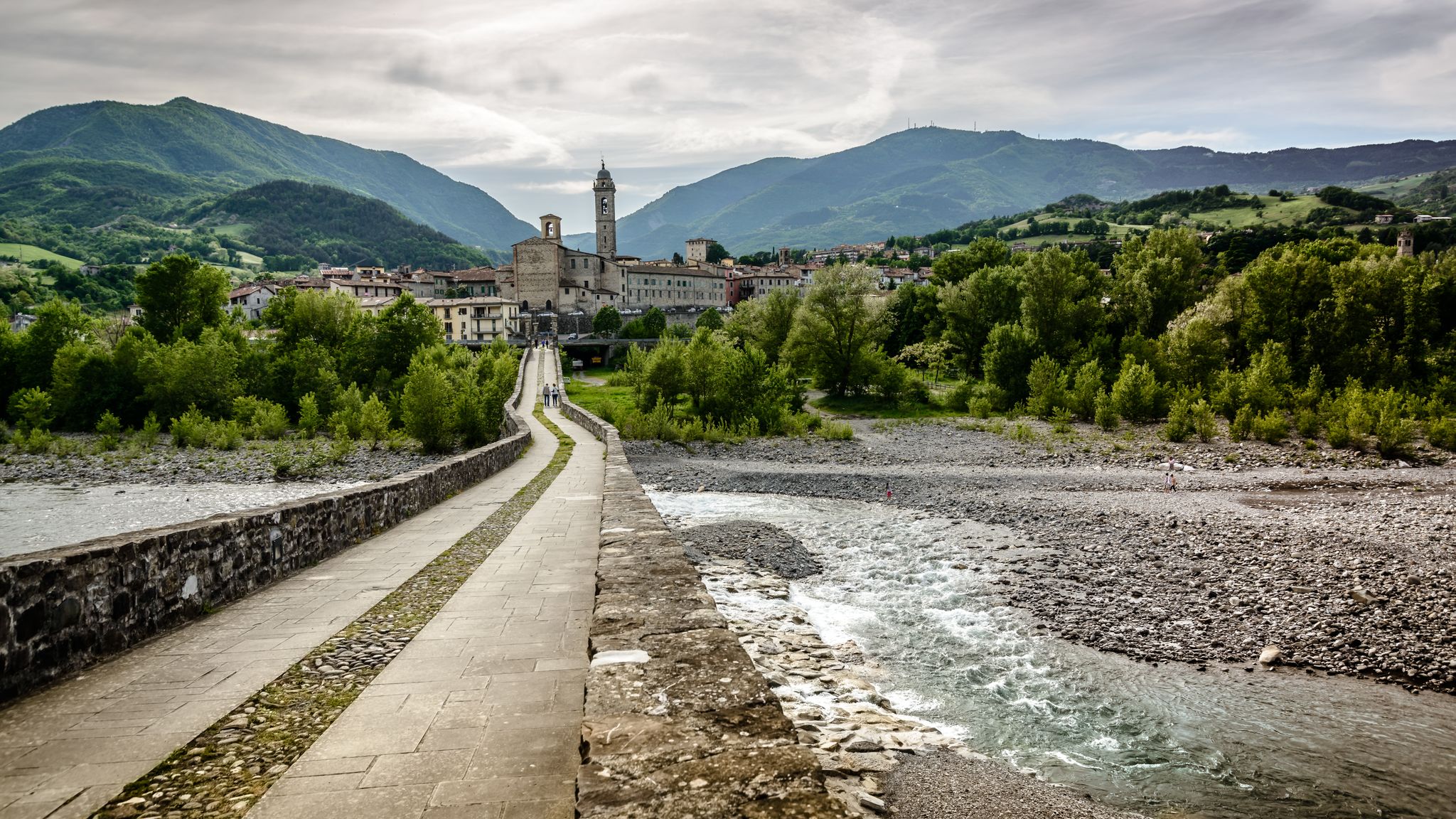
A historic hike from Pavia to Pontremoli – Via degli Abati
Bike rides to the Italian coast – 10 ways to take a dip
Hiking around Borgo Val Di Taro
Road Cycling Routes around Borgo Val Di Taro
Cycling around Borgo Val Di Taro
Running Trails around Borgo Val Di Taro
MTB Trails around Borgo Val Di Taro
Gravel biking around Borgo Val Di Taro


Tips from the Community

Even before the castle was built, the monks of the Abbey of Bobbio passed through Bardi on their Way to the Sea.
0
0

The Statue Stele are anthropomorphic vertical stone sculptures, of variable size but generally between 2 and 3 meters in height. These mysterious works of art are testimonies to the culture and spirituality of the ancient peoples who inhabited Lunigiana. Their exact function remains a subject of debate among scholars. Some hypothesize that the Statue Stele could represent ancient gods or local deities, while others suggest they could be funerary symbols or commemorative monuments. The carved figures often feature enigmatic and abstract symbols, such as concentric circles, cupules, and linear engravings, which may have religious, astronomical, or ritualistic significance. The understanding of these symbols is still the subject of research and study by archaeologists and experts.
0
0

A beautiful town in the Parma Apennines. Worth a visit.
0
0

The singular basaltic monolith beneath the Bardi castle is located at the beginning of the Bardi - Borgo Val di Taro stage of the Via degli Abati
0
0

The Piagnaro Castle is a fortress built in a strategic point to protect the Apennine passes and around which the first medieval nucleus was formed, built around the year 1000. For centuries it has been an integral part of the city's defensive system. In its thousand-year history it has undergone numerous destructions and subsequent reconstructions that have brought it to its current appearance. The Castle maintained its military function until the end of the 18th century. Its name derives from the so-called piagne, the gray sandstone slabs used in Lunigiana to cover the roofs of buildings, including that of the castle.
0
0

The hike up to the castle is worth it. Great views!
0
0

A pretty little village with its characteristic castle, a convenient stopover for those taking the Appennino Bike Tour.
0
0

Campanone is a term used in Pontremoli to refer to a medieval tower, the only remaining part of a medieval fortress called Fortezza di Cazzaguerra. The tower was built in 1322. Its purpose was to keep the Guelph and Ghibelline factions of the city separated. The central tower was equipped from the beginning with a bell to warn the citizens of possible dangers. Only later was the tower raised and the actual bell tower built.
4
0
Frequently Asked Questions
What historical castles can I visit directly in Borgo Val di Taro?
Within the historic center of Borgo Val di Taro, you can explore the **remains of its medieval fortress**. Originally a significant territorial stronghold dating back to the 13th century, only portions of the original walls and a truncated tower survive today. These ruins offer a glimpse into the town's past as a vital stopping point on the Via Francigena and its role in shaping the town's layout. You'll often find them alongside the 13th-century Romanesque church of Sant'Antonino.
Which castles near Borgo Val di Taro are particularly well-preserved and offer unique experiences?
Two prominent, well-preserved castles stand out:
- Compiano Castle, about 11 km away, is known for its unique blend of medieval architecture and the personal collections of Marchesa Lina Raimondi Gambarotta, including the Gambarotta Museum and an International Masonic Museum.
- Bardi Castle, approximately 30 km away, is a striking example of medieval military engineering perched on a red jasper outcrop. It features historical exhibits, panoramic views, and is famous for the legend of Moroello, its resident ghost.
Are there family-friendly activities or features at the castles in the Borgo Val di Taro region?
Yes, several castles offer family-friendly experiences. Bardi Castle frequently hosts historical re-enactments, especially during Easter and Halloween, and offers guided night tours suitable for families. The castle also has an archaeological museum and a museum of valley civilization. The Historic Center of Pontremoli, which includes Piagnaro Castle, is also listed as family-friendly, offering a charming medieval town to explore.
What kind of views can I expect from the castles in this area?
Many castles in the region offer stunning panoramic views due to their strategic elevated positions. From Compiano Castle, you can enjoy breathtaking vistas of the Borgo Val di Taro and the surrounding Taro Valley and Apennine mountains. Bardi Castle, perched on a sheer outcrop, provides commanding views of the surrounding valleys and hills, particularly from its Artillery Bastion and patrol paths. Piagnaro Castle also offers excellent viewpoints overlooking Pontremoli.
What is the best time of year to visit the castles around Borgo Val di Taro?
The best time to visit the castles and enjoy the surrounding region is generally during the **spring (April-June) and autumn (September-October)**. During these seasons, the weather is pleasant for exploring, and the natural landscapes of the Apennine mountains are particularly beautiful. Summer can also be a good option, though it might be warmer and more crowded. Some castles, like Compiano Castle, may have specific visiting days, so it's advisable to check their schedules.
Are there any unique museums or collections housed within these castles?
Yes, several castles host unique museums. Compiano Castle houses the Gambarotta Museum, showcasing the Marquise's personal collections, and an International Masonic Museum with Anglo-Saxon Masonic artifacts. Bardi Castle features an archaeological museum, a museum of valley civilization, and a unique Museum of Fauna and Poaching. Piagnaro Castle in Pontremoli is home to the Museum of Lunigiana Stele Statues, displaying ancient stone figures.
Can I find accommodation or dining options at or near the castles?
Yes, some castles offer hospitality services. A part of Compiano Castle functions as a hotel and convention center, complete with a restaurant serving traditional Emilian cuisine. For other castles, you'll find cafes, restaurants, and accommodation options in the nearby towns and villages, such as Borgo Val di Taro itself, Bardi, Compiano, and Pontremoli.
What outdoor activities can I combine with a castle visit in the Borgo Val di Taro area?
The region around Borgo Val di Taro, situated in the Apennine mountains, offers various outdoor activities. You can find numerous hiking trails, such as the Molinatico Loop Trail or the Borgo Val di Taro, Marmitte dei Giganti, and San Cristoforo Trail. There are also options for gravel biking and running. For more details on routes, you can explore the hiking guide, gravel biking guide, or running trails guide for the area.
Are there any castles or historical sites that are less crowded alternatives to the main attractions?
While Bardi Castle and Compiano Castle are popular, the **remains of the ancient fortress within Borgo Val di Taro** itself offer a more understated historical experience, often less crowded as it's integrated into the town's public space. Additionally, the village of Berceto, a stop on the Via Francigena, preserves the character of the Middle Ages with stone houses and the ruins of its own castle, providing a quieter historical exploration.
What is the historical significance of the castles in the Borgo Val di Taro region?
The castles in this region, including the ancient fortress of Borgo Val di Taro, played a crucial role due to the area's strategic location where Emilia Romagna, Tuscany, and Liguria meet. They were often under the rule of powerful noble families like the Malaspina and Landi, serving as territorial strongholds, defensive structures, and vital stopping points for pilgrims and traders along the Via Francigena. Their history reflects centuries of power struggles and regional development.
What should I wear when visiting the castles in the Borgo Val di Taro area?
When visiting the castles, especially those with extensive grounds or located on hills, it's recommended to wear **comfortable shoes** as the ground can be uneven, and you might encounter stairs or cobbled paths. Layered clothing is also advisable, as temperatures can vary, particularly when exploring interiors or exposed ramparts. For the castle ruins in Borgo Val di Taro, comfortable shoes are specifically recommended.
Are there any specific legends or ghost stories associated with the castles?
Yes, Bardi Castle is particularly famous for the legend of Moroello, a ghost said to roam its halls. This makes it one of Italy's most haunted places and a popular destination for those interested in paranormal folklore. The castle frequently hosts guided night tours that delve into these stories.
Most popular routes around Borgo Val Di Taro
Most popular attractions around Borgo Val Di Taro

Get inspired with the komoot mobile app


Explore more
Looking for the best castles somewhere else? Discover other guides around Borgo Val Di Taro:
