Top 4 Castles around Montelibretti
Best castles around Montelibretti are situated in the Roman Sabina area, a region known for its historical significance and varied terrain. The village of Montelibretti itself is home to the Barberini Castle, a prominent example of the area's fortifications. This region features a mix of medieval fortresses, baronial palaces, and castle ruins, reflecting centuries of architectural evolution and strategic importance. These historic sites offer insights into the area's past, from Roman origins to significant events like the Risorgimento.
Best castles…
Last updated: June 2, 2026
Nazzano and the Castle
Highlight • Castle
Translated by Google •
Tip by

Ruins of Stazzano Vecchio
Highlight • Historical Site
Translated by Google •
Tip by

Sign up now to discover places like this
Get recommendations on the best single tracks, peaks, & plenty of other exciting outdoor places.
Sign up for free
Orsini Ducal Castle
Highlight • Castle
Translated by Google •
Tip by

Castello Orsini
Highlight • Castle
Tip by

Frasso Sabino
Highlight • Settlement
Showing Translation
Tip by
Start today with a free account
Your next adventure awaits.
Login or Signup

Tips from the Community

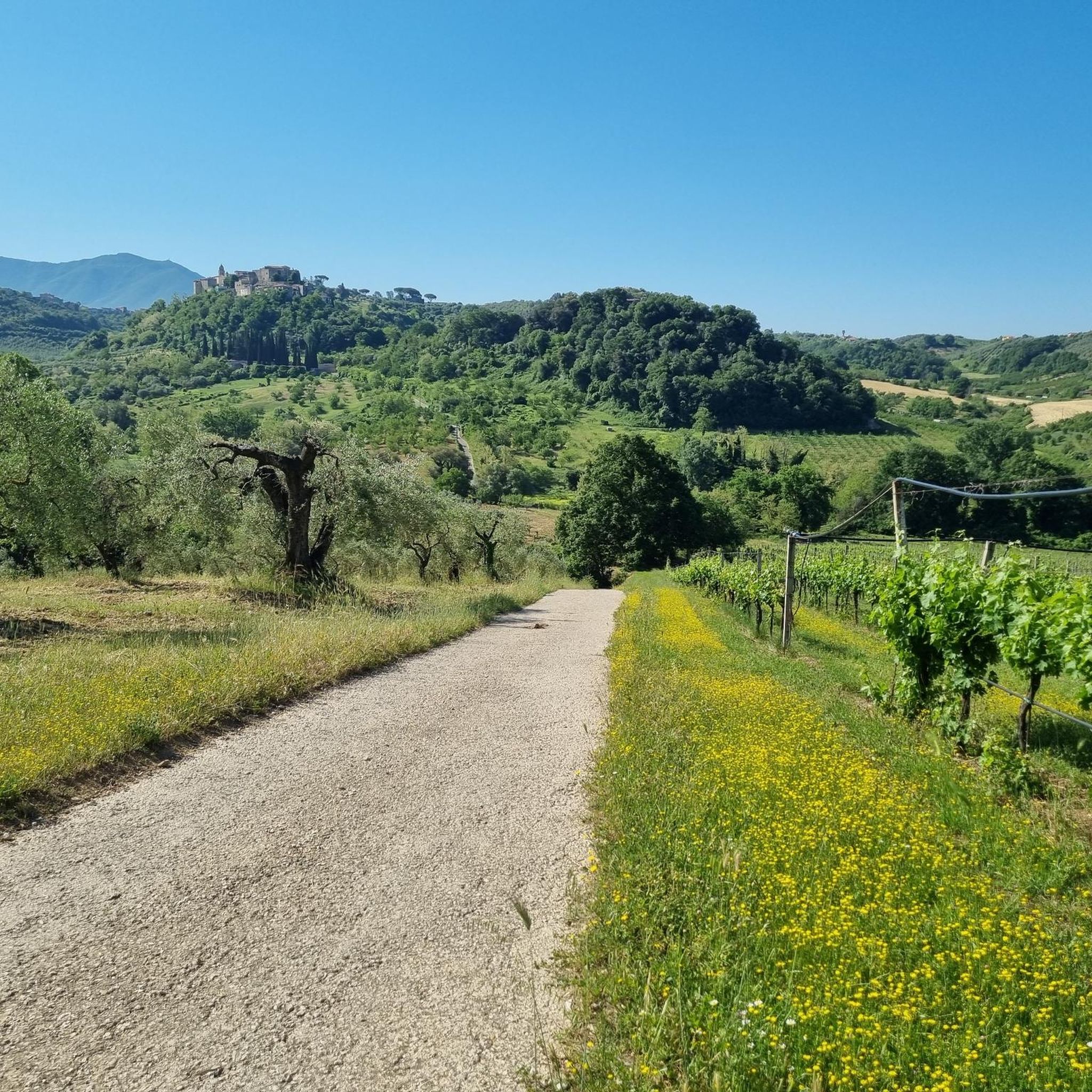
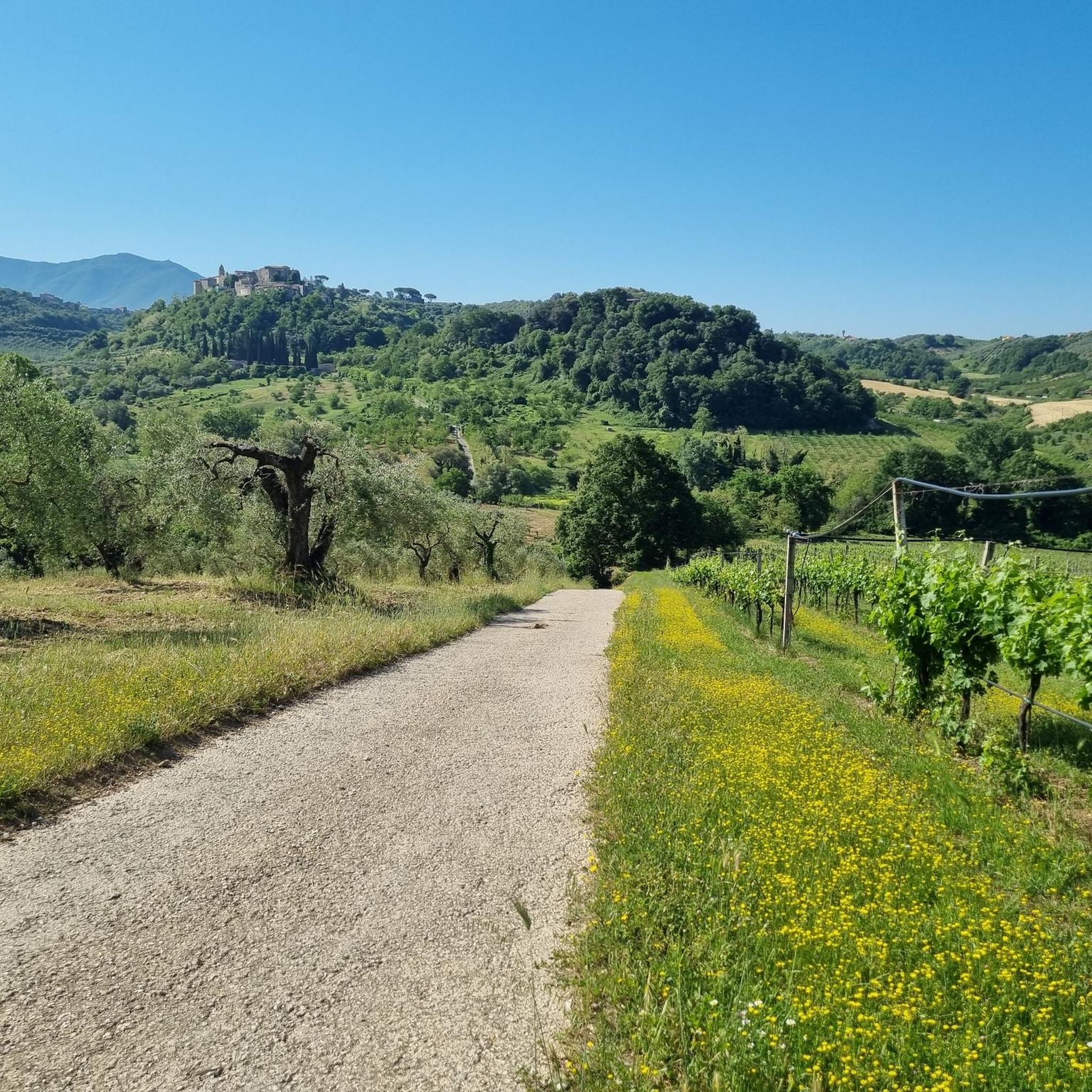
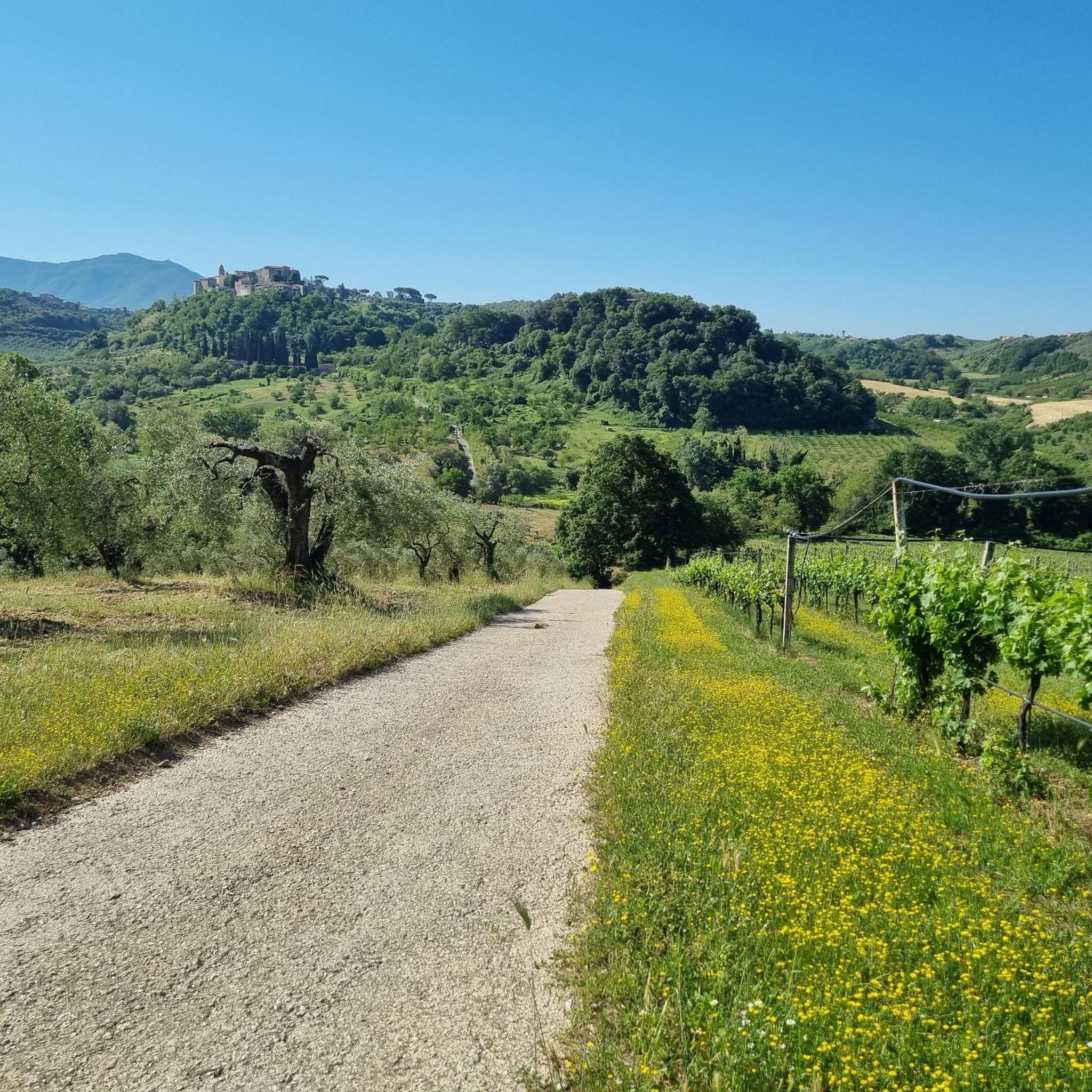
Frasso Sabino is a village in the Sabina reatina with origins at least from the early Middle Ages, closely linked to the Abbey of Farfa. Its first known documentary attestation dates back to 955, in the Regestum Farfense, where it appears as “locus ubi dicitur ad Frassum”. In 1055, Alberto, son of Gibbone, donated the castle of Frasso to the abbot of Farfa, Berardo I, confirming the importance of the center in the territorial system of the abbey. Already in 1118, however, Frasso was no longer under the jurisdiction of Farfa, nor is it mentioned in 1198 among the assets confirmed to the abbey by Pope Innocent III. Between the 14th and 15th centuries, the fief passed to the Brancaleoni, and then in 1441 entered the possessions of the Cesarini through the marriage between Orso Cesarini and Simodea Brancaleoni. After various disputes with the Savelli, the Cesarini definitively consolidated their dominion in 1573 and retained possession of the place until 1817. Even the name of the town has debated origins: according to one tradition, it derives from the once abundant ash trees, while other hypotheses connect it to fraxum as a guard post or to the position “among the stones” near the springs of the Farfa. In summary, the history of Frasso Sabino is that of a small Sabine castle born in the orbit of Farfa, then transformed into a lordly fief and remaining for centuries an important outpost of the territory.
0
0

A lovely little place. If you're nearby, it's worth a stop.
0
0
The first inhabited center of Stazzano Vecchio was probably built on the remains of a Roman settlement. The term "Stazzano", in fact, could derive from the Latin statio, with the dual meaning of "place of a garrison", or "Post Station". Even today the origins of Stazzano are not clear but it seems certain that a town developed around a castle, built between the 10th and 11th centuries by the Savelli family, a powerful family that influenced the historical events of this part of Lazio. The castle and the town passed into the hands of the Borghese family between the sixteenth and seventeenth centuries. Access to the town consisted of a single door that opened between the outermost tower of the castle and the Church of Santa Maria, a distinguishable sign that Stazzano had been conceived as a "village-castle". A terrible seismic event which occurred on 24 April 1901, with its epicenter in nearby Montelibretti and calculated at the VIII degree of the Mercalli Scale, put an end to the peaceful peasant life. From that moment on, the village of Stazzano was inevitably abandoned and the ruins of the houses were used to build the new town a short distance away. https://www.lazionascosto.it/citta-fantasma-borghi-abbandonati-del-lazio/stazzano-vecchio/
0
0

Beautiful village above the Tiber
1
0

Excellent place for a quiet break before leaving again
0
0

The Orsini di Fiano Romano ducal castle was built between 1489 and 1493 on commission of Niccolò III Orsini, count of Pitigliano, Sovana and Nola. The Castle took on the name of Castello ducale only in the seventeenth century, when the fief of Fiano passed from the Orsini family to Caterina de 'Nobili. It was in fact the son of Caterina de 'Nobili, Cardinal Francesco Sforza, who after receiving the fiefdom as a gift from his mother in 1606 had Fiano built as a duchy with a bull of Pope Paul V of 18 July 1608.
2
0


The structure dates back to the thirteenth century, with a quadrangular plan, is characterized by two imposing towers in a panoramic position over the Tiber valley. It can be reached via a single road that winds its way through the town, a feature that makes it original among the castles of Lazio. Belonging to the brotherhood of the monks of S. Paolo with continuity since the 16th century, today the castle belongs to the CESMIL company (Centro Studi Medievale Lazio).
2
0
Frequently Asked Questions
What are the most notable castles to visit around Montelibretti?
While Montelibretti itself is home to the historic Barberini Castle, the surrounding region offers several other significant sites. You can explore the medieval structure of Nazzano and the Castle with its panoramic views over the Tiber valley, or discover the impressive Orsini Ducal Castle in Fiano Romano, built by Niccolò III Orsini. The Ruins of Stazzano Vecchio also offer a unique glimpse into a former 'village-castle' concept.
What is the historical significance of the castles in the Montelibretti area?
The castles in this region are rich in history, reflecting centuries of strategic importance and changing ownership. The Barberini Castle in Montelibretti, for instance, dates back to the 11th-12th centuries and played a role in the Risorgimento. The Ruins of Stazzano Vecchio show the evolution from a Roman settlement to a medieval castle town, while the Orsini Ducal Castle in Fiano Romano highlights the power of noble families like the Orsini and Sforza.
Are there any castles with good viewpoints or panoramic vistas?
Yes, Nazzano and the Castle is particularly noted for its two imposing towers that offer panoramic views over the Tiber valley. It's a great spot to appreciate the landscape surrounding the historic structure.
What outdoor activities can I combine with a visit to these castles?
The Montelibretti area is excellent for outdoor enthusiasts. You can find various routes for cycling, running, and mountain biking. For example, there are several cycling routes that pass near castles like Castello Orsini, and running trails around Fiano Romano near the Orsini Ducal Castle. You can also find traffic-free bike rides that explore the natural reserves and historical sites in the wider region.
Is the Barberini Castle in Montelibretti accessible to the public?
The Barberini Castle (Palazzo Barberini) in Montelibretti is privately owned. While its imposing presence within the historic center is a key landmark, public access to the interior may be limited. You can appreciate its architectural evolution from a medieval fortress to a baronial palace from the outside. For more information on its history and potential viewing opportunities, you might consult local tourism resources like italia.it or visitlazio.com.
Are there any 'hidden gem' castles or lesser-known historical sites nearby?
Beyond the more prominent castles, the Ruins of Stazzano Vecchio offer a fascinating 'village-castle' experience. This abandoned village, significantly impacted by an earthquake in 1901, provides a unique glimpse into a past way of life and the remains of a castle built by the Savelli family. It's a poignant and less-traveled historical site.
What is the best time of year to visit the castles around Montelibretti?
The spring (April-June) and autumn (September-October) months generally offer the most pleasant weather for exploring the castles and their surroundings. Temperatures are mild, making it comfortable for walking and enjoying the outdoor activities. Summer can be quite hot, while winter might be cooler and some sites could have reduced opening hours.
Can I find information about the Orsini family's influence in the region?
Yes, the Orsini family had a significant presence in the region. The Orsini Ducal Castle in Fiano Romano was commissioned by Niccolò III Orsini. The Barberini Castle in Montelibretti was also originally built by the Orsini family before passing to others. Their legacy is deeply embedded in the architecture and history of many local fortifications.
Are there any castles that are particularly suitable for a short, easy visit?
For a relatively easy visit, the village of Nazzano and its Castle can be a good option. The castle is accessible via a single road winding through the town, making it straightforward to reach and explore the immediate area. The Orsini Ducal Castle in Fiano Romano is also described as a 'lovely little place' worth a stop if you're nearby.
What kind of natural features can I expect to see near these castles?
Many of the castles in the Montelibretti area are situated in scenic locations. Nazzano and the Castle, for example, offers stunning views over the Tiber valley. The region is part of the Roman Sabina, characterized by rolling hills, olive groves, and the Tiber River, providing a beautiful natural backdrop for historical exploration.
Are there any castles that are also hotels or offer accommodation?
Yes, Castello Orsini is noted as a luxury hotel. While it's a beautiful sight to see from the outside, you can also consider staying there for a unique historical experience.
Most popular routes around Montelibretti
Most popular attractions around Montelibretti

Get inspired with the komoot mobile app


Explore more
Looking for the best castles somewhere else? Discover other guides around Montelibretti:
