Top 9 Castles around Sagogn
Best castles around Sagogn are found within the municipality of Graubünden, Switzerland, offering insights into the region's historical landscape. The area features significant structures like Schiedberg Castle and Casti Aspermont, showcasing diverse architectural styles. Sagogn is situated in a region known for its natural beauty, including the nearby Ruinaulta, or Rhine Gorge, formed by ancient geological events. These historical sites provide a glimpse into medieval life and strategic importance within the Alpine landscape.
Best castles around Sagogn
- The most popular…
Last updated: July 25, 2026
Confluence of the Vorderrhein and Hinterrhein
Highlight • River
Dominated by Reichenau Castle, the hamlet lies at the confluence of the Vorderrhein and Hinterrhein rivers, making it virtually the birthplace of the …
Translated by Google •
Tip by

Reichenau Castle
Highlight • Castle
At the confluence of the Hinterrhein and Vorderrhein, at the birthplace of the Alpine Rhine, lies the historic site of Reichenau. Reichenau already had great importance in the …
Showing Translation
Tip by
Sign up now to discover places like this
Get recommendations on the best single tracks, peaks, & plenty of other exciting outdoor places.
Sign up for free
Rhäzüns Castle above the Hinterrhein
Highlight • Castle
It is not known when the plant or its predecessors were built. A castle probably existed on the site of today's palace as …
Translated by Google •
Tip by
Canaschal Castle Ruins
Highlight • Castle
Translated by Google •
Tip by

Belmont Castle Ruins
Highlight • Castle
Translated by Google •
Tip by

Sign up for free to discover even more castles around Sagogn.
Sign up for free
Already have an account?
Start today with a free account
Your next adventure awaits.
Login or Signup

Other adventures around Sagogn

Tips from the Community

The RhB Reichenau train station, with parking available, is very well suited as a starting point for bike or hiking tours through the wild Vorderrhein Gorge to Sagogn or Ilanz. Along the gorge, there are small RhB train stations, at Trin, Versam-Safien, or Valendas-Sagogn, for intermediate stops or return journeys back to Reichenau.
0
0

The history of the castle continued after its purchase by the Swiss expatriate community. In 1958, Hovag Domat/Ems, under Dr. Werner Oswald, bought Rhäzüns Castle. Since 1984, it has been owned by Ems-Chemie AG, with residential rights granted to the family of Silvia and Christoph Blocher. Therefore, it is not possible to visit the castle.
0
0

A place of power in a special class
0
0

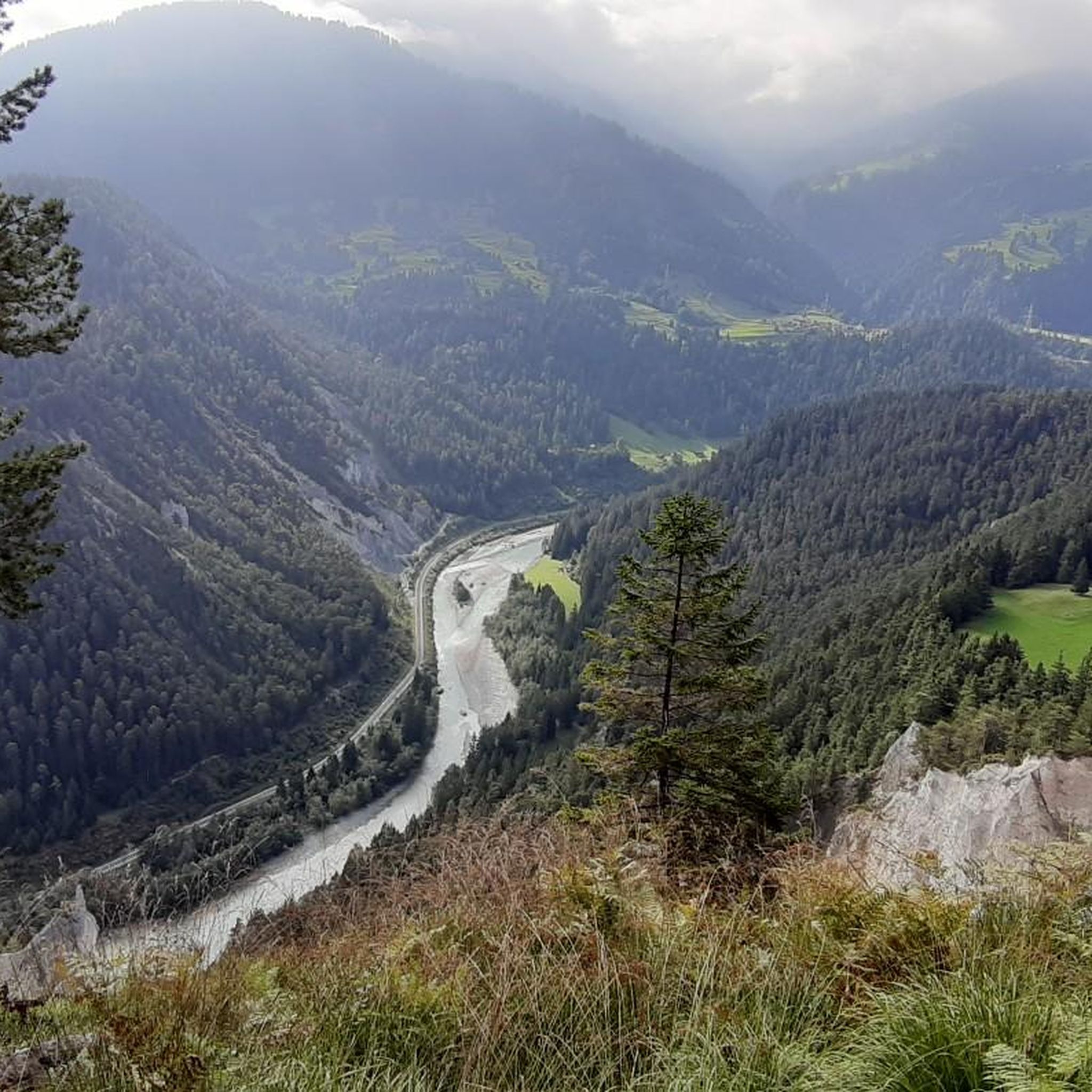
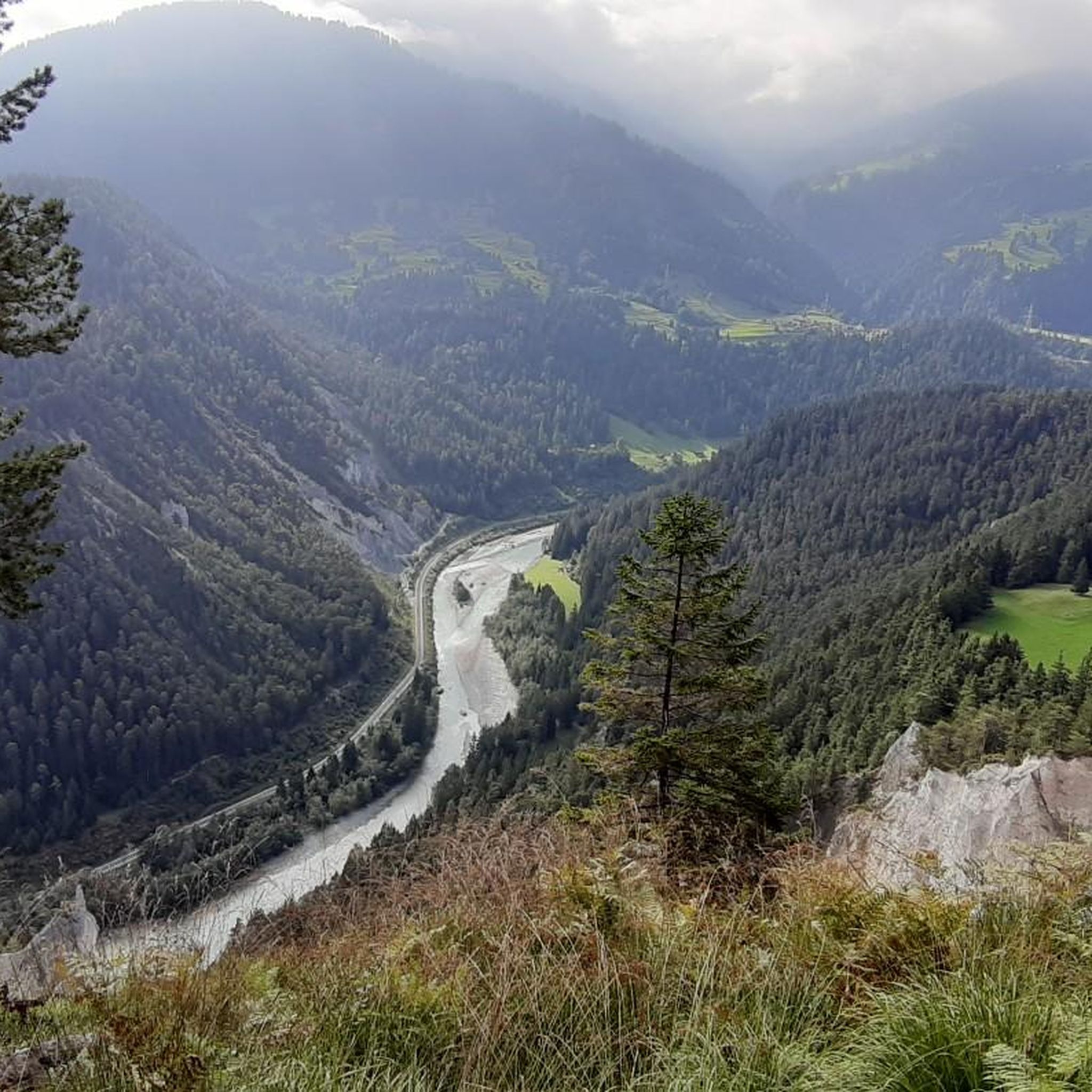
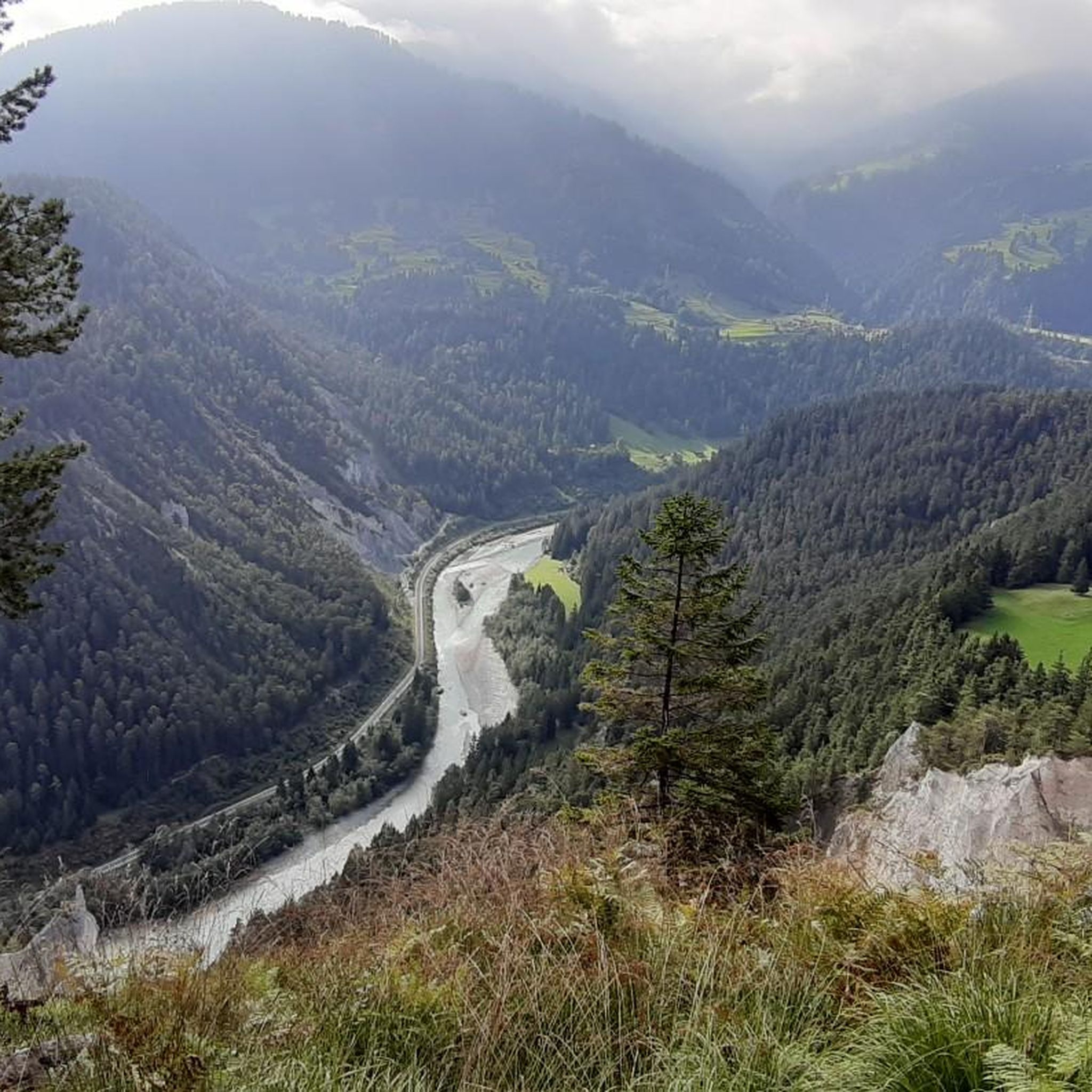
Ruinaulta Rhine Gorge The Ruinaulta, or Rhine Gorge, is a gorge of the Vorderrhein River, up to 400 meters deep and approximately 13 kilometers long, between Ilanz and the mouth of the Hinterrhein River near Reichenau in the canton of Graubünden in Switzerland. The Romansh name 'Ruinaulta' is composed of the two words ruina (scree slope, quarry) and aulta (high). The Ruinaulta was formed after the Flims Landslide almost 10,000 years ago. At that time, over 10 billion cubic meters of rock broke off between the Flimserstein and Piz Grisch, burying the Vorderrhein Valley between the present-day villages of Castrisch and Reichenau under a mass of debris several hundred meters thick. Because the Vorderrhein River could no longer drain away, a lake was dammed over a length of approximately 25 kilometers. Over time, the river cut deep into the landslide, and the resulting lake drained away completely. What remained was the Ruinaulta, with its steep limestone scree cliffs in impressive erosion formations. Text / Source: Wikipedia https://de.wikipedia.org/wiki/Ruinaulta
16
0
Schloss Reichenau At the confluence of the Hinterrhein and Vorderrhein, at the birthplace of the Alpine Rhine, lies the historic site of Reichenau. Reichenau already had great importance in the past: in the 14th century, as long-distance traffic over the Grisons Alpine passes increased significantly, two bridges and a customs house were built. Reichenau was considered a traffic hub, where all traffic could be controlled. In Reichenau, the routes of the north-south axis separate, along the Vorderrhein into the Oberland towards the Lukmanier and Oberalp passes, and along the Hinterrhein through the Domleschg via the Splügen and San Bernardino. Text / Source: Weinbau von Tscharner & Events Schloss Reichenau, Schloss Reichenau, Reichenauerstr. 59, 7015 Reichenau https://www.reichenau.ch/de/reichenau/geschichte-lage
16
0
At the confluence of the Hinterrhein and Vorderrhein, at the birthplace of the Alpine Rhine, lies Reichenau Castle. Built in the 17th century by the episcopal ministerial family Schauenstein, it looks back on a long history. The last king of France even lived here once.
15
0
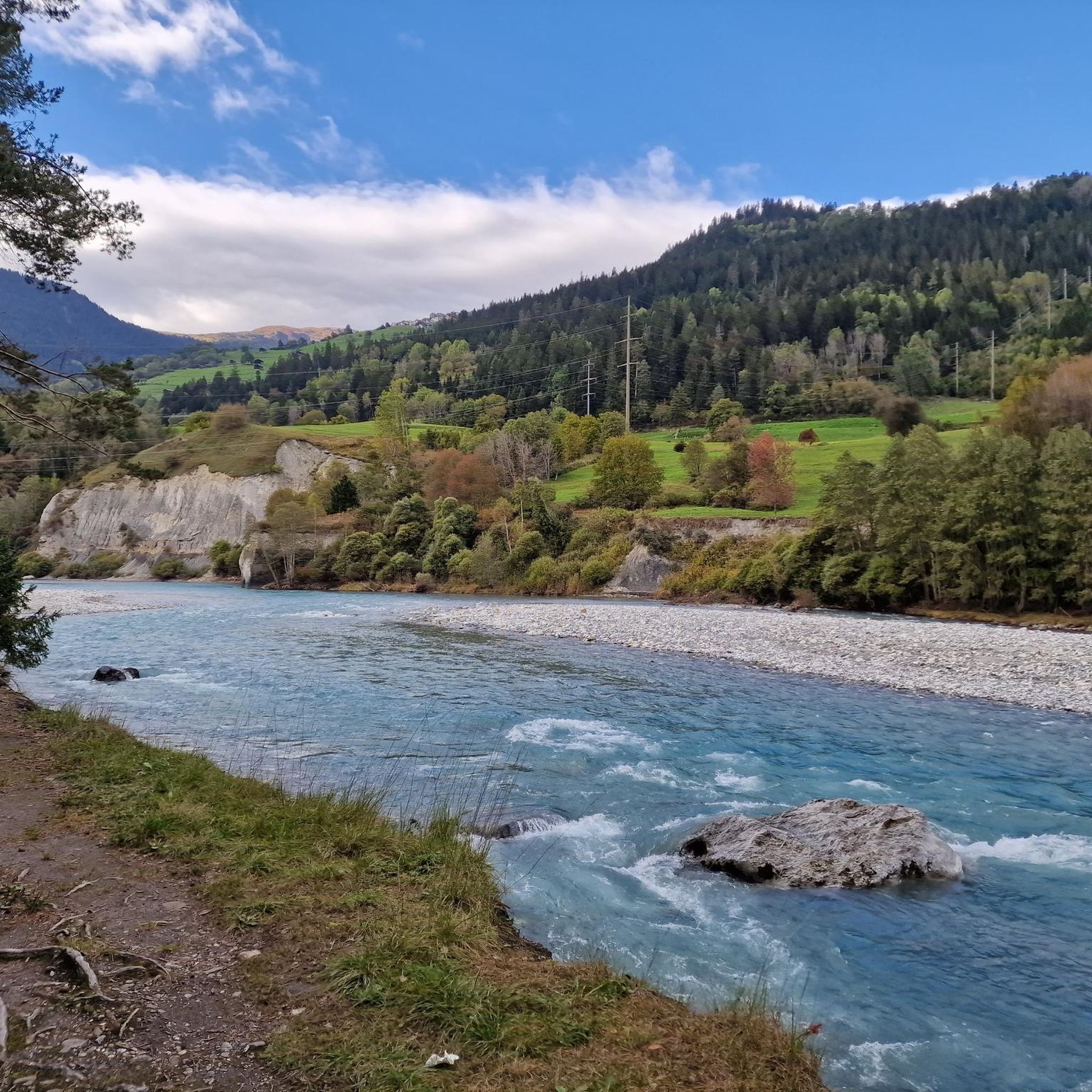
Confluence of the Vorderrhein and Hinterrhein, Reichenau Dominated by Reichenau Castle, the hamlet lies at the confluence of the Vorderrhein and Hinterrhein rivers, making it virtually the birthplace of the Rhine. It all began 10,000 years ago. Between the Flimserstein (a high plateau) and Piz Grisch, over 10,000 cubic meters of rock broke off and thundered down into the valley. Towards Reichenau, the Vorderrhein valley disappears under a gigantic mass of rubble. From there, the Rhine diligently ate its way through the rock, creating the spectacular Swiss "Grand Canyon" – the Ruinaulta. Text / Source: myswitzerland.com https://www.myswitzerland.com/de-ch/erlebnisse/route/vom-zusammenfluss-der-rheine-in-die-rheinschlucht/
16
0

Frequently Asked Questions
What historical insights do the castles around Sagogn offer?
The castles in the Sagogn area provide a deep dive into the region's past. For instance, Schiedberg Castle, a significant ruin, dates back to around 1000 AD and was the seat of the free lords of Sagogn. Its history includes potential links to a 'castrum' mentioned in 765 AD. Casti Aspermont, on the other hand, showcases architectural evolution from an episcopal manor around 1390, reflecting the influence of various noble families like the Castelli family.
Can I visit Schiedberg Castle, and what should I expect?
Yes, you can visit the ruins of Schiedberg Castle. It is a Swiss heritage site of national significance, offering an opportunity to explore ancient origins and enjoy panoramic views of the surrounding landscape. The castle was destroyed in the 14th century, so you will primarily see the remains of its elongated complex, including a central tower and defensive walls. For more historical context, you can visit the Wikipedia page.
What is Casti Aspermont used for today?
Casti Aspermont, located within the village core of Sagogn-Ausserdorf, has a rich history of private ownership and architectural modifications. Today, after renovations by architect Rudolf Olgiati, it is used for private and cultural events, offering a unique perspective on the living history of Sagogn.
Are there family-friendly castles or historical sites around Sagogn?
Several sites around Sagogn are suitable for families. Reichenau Castle is listed as family-friendly and offers a historical experience, though it's now a winery. The area also features natural attractions like the Confluence of the Vorderrhein and Hinterrhein, which is also family-friendly and offers insights into the formation of the Rhine Gorge.
What natural attractions are near the castles in Sagogn?
The Sagogn area is rich in natural beauty. Near Reichenau Castle, you'll find the spectacular Confluence of the Vorderrhein and Hinterrhein, which is considered the birthplace of the Rhine. This area is also the gateway to the Ruinaulta, or Rhine Gorge, a stunning natural monument formed by ancient geological events, offering dramatic landscapes and viewpoints.
Are there hiking trails that include castle ruins near Sagogn?
Yes, the region offers various hiking opportunities that incorporate historical sites. For example, the ruins of Schiedberg Castle are situated on a hill and can be reached via hiking paths, providing excellent views. Similarly, the Canaschal Castle Ruins are easily accessible on foot and offer views from their elevated position. You can find more hiking options in the Running Trails around Sagogn guide, which often overlap with walking routes.
What outdoor activities can I do near the castles in Sagogn?
Beyond exploring castles, the Sagogn region is excellent for outdoor activities. You can find numerous road cycling routes, such as the 'Versam Curves – Heidsee loop' or 'Ilanz – Climb in Graubünden loop' in the Road Cycling Routes around Sagogn guide. For gravel biking, consider routes like 'Kunkels Pass from Flims' or 'Around the Rhine Gorge from Flims' from the Gravel biking around Sagogn guide. There are also running and walking trails, including those that pass by the Rhine Gorge.
What do visitors enjoy most about the castles around Sagogn?
Visitors particularly appreciate the panoramic views offered by many of the castle ruins. For instance, from Belmont Castle Ruins, you can see the entire Flims, Laax, and Falera region. The historical significance and the opportunity to explore ancient structures like Schiedberg Castle also draw many visitors. The komoot community has shared over 65 photos and given more than 270 upvotes, highlighting the visual appeal and historical interest of these sites.
Are there parking options near the castle ruins in Sagogn?
While specific parking details for each ruin may vary, generally, for castle ruins like Schiedberg Castle or Canaschal Castle Ruins, you would typically find parking in nearby villages or designated hiking trailheads. From there, the ruins are often accessible via a walk or hike. It's advisable to check local signage upon arrival.
How can I reach the castles around Sagogn by public transport?
Sagogn and its surrounding areas are generally accessible by public transport, primarily buses that connect to larger train stations. For specific castle ruins, you would likely take a bus to the nearest village and then proceed on foot. For example, Sagogn itself has bus connections. Checking local bus schedules for Graubünden would provide the most accurate information for reaching specific starting points for castle visits.
What is the best season to visit the castles around Sagogn?
The best season to visit the castles around Sagogn largely depends on your preferred activities. Spring and autumn offer pleasant temperatures for hiking and exploring the ruins without extreme heat or cold. Summer is also popular, though it can be warmer. Winter visits are possible, especially for those interested in seeing the snow-covered landscapes, but some paths might be less accessible, and certain facilities might have reduced hours.
Are dogs allowed at the castle sites near Sagogn?
Generally, dogs are permitted on hiking trails and at outdoor historical sites like castle ruins in Switzerland, provided they are kept on a leash and owners clean up after them. For indoor areas or specific cultural event venues like Casti Aspermont, it's best to check directly with the organizers or venue beforehand. Always respect local regulations and signage.
Is Rhäzüns Castle open to the public?
Rhäzüns Castle, located above the Hinterrhein, has a long and complex history. While it is a significant historical site, it has been privately owned since 1958 by Hovag Domat/Ems and later by Ems-Chemie AG. Residential rights are granted to the family of Silvia and Christoph Blocher, and therefore, it is not possible to visit the castle.
Most popular routes around Sagogn
Most popular attractions around Sagogn

Get inspired with the komoot mobile app


Explore more
Looking for the best castles somewhere else? Discover other guides around Sagogn:
