Top 9 Castles in Santarém
Castles in Santarém offer a journey through Portugal's rich history, set against a backdrop of diverse landscapes. The district features a mix of Templar fortresses, medieval strongholds, and historic ruins, many strategically positioned on hills or along rivers. These sites provide insights into the Christian Reconquest and the Age of Discoveries. Visitors can explore architectural styles ranging from Romanesque to Manueline, often with panoramic views of the Tagus River and surrounding plains.
Best castles in Santarém
- The most popular castles is Convent of Christ and Castle of Tomar, a castle that illustrates seven centuries of Portuguese history and served as the headquarters for the Knights Templar. This UNESCO World Heritage site contains several important reminders of decisive moments in Western history.
- Another must-see spot is Abrantes Castle and Panoramic View, a castle with medieval defensive walls and bulwarks. The site offers expansive views over the surrounding area.
- Visitors also love Almourol Castle, a castle on a small island with a commanding position. This Templar castle is well-preserved and accessible by a short boat ride.
- Santarém is known for its Templar castles, medieval fortresses, and historic ruins. The region offers a variety of castles to see and explore, each with distinct historical and architectural features.
- The castles in Santarém are appreciated by the komoot community, with 74 upvotes and 198 photos shared across 8 highlights.
Last updated: July 11, 2026
Convent of Christ and Castle of Tomar
Highlight • Castle
Translated by Google •
Tip by

Tomar Templar Castle
Highlight • Castle
This castle was also the headquarters of the Knights Templar in Portugal.
opctj.pt/castelo-templario-charola-e-convento-de-cristo-de-tomar
The castle complex, with its walls and extensive gardens, is open to the public free of charge.
Translated by Google •
Tip by

Sign up now to discover places like this
Get recommendations on the best single tracks, peaks, & plenty of other exciting outdoor places.
Sign up for free
Almourol Castle
Highlight • Castle
Translated by Google •
Tip by

Abrantes Castle and Panoramic View
Highlight • Castle
Translated by Google •
Tip by

Main Cloister (Cloister of D. João III), Convent of Christ
Highlight • Historical Site
King John III had it built outside the castle walls.
Adjacent to the monastery church, the main cloister flanks the south façade of the Manueline nave, with which his father, King Manuel I, had already expanded the existing Templar church.
To help you place the eight cloisters within the complex jumble of buildings on the site of today's Convent do Christo, you can find help here:
anyformsdesignmapas.blogspot.com/2014/09/convento-de-cristo-tomar.html
de.wikipedia.org/wiki/Convento_de_Cristo#/media/Datei:TomarChurchPlanCC3-pt.jpg
Translated by Google •
Tip by
Alcanede Castle
Highlight • Castle
Translated by Google •
Tip by

Castelo de Abrantes
Highlight • Castle
Don't miss visiting this place full of history where you can visit the Almeida Pantheon, currently a museum that you can visit and learn about the history of the city. There you can also climb the Ménage Tower from where you can glimpse a fantastic landscape and also stroll through the beautiful castle garden. You can explore the entire historic area of the centuries-old city where you will find beautiful gardens and excellent places to eat, stay overnight and even buy regional products in local shops.
Translated by Google •
Tip by

Quinta da Alorna
Highlight • Historical Site
This farm has a farmhouse, a castle, a vineyard, a shop and an equestrian center.
The castle is still inhabited by its owner.
In the yard, there is an old tree with a huge trunk.
Translated by Google •
Tip by

Start today with a free account
Your next adventure awaits.
Login or Signup

Tips from the Community

Summer hours are from 10:00 AM to 6:00 PM and winter hours are from 9:00 AM to 5:00 PM. Don't miss visiting this place full of history where you can visit the Almeida Pantheon, currently a museum that you can visit and learn about the history of the city. There you can also climb the Ménage Tower from where you can glimpse a fantastic landscape and also stroll through the beautiful castle garden. You can explore the entire historic area of the centuries-old city where you will find beautiful gardens and excellent places to eat, stay overnight and even buy regional products in local shops.
1
0


Closes at 4pm (May 25), the courtyard has been kindly opened until 5pm.
0
0

The Templar Castle was built at a strategic point to defend the territory and support the conquest beyond the Tagus River. Construction began in 1160 under the Templar Master D. Gualdim Pais. The north wing and higher ground housed the Templar Palace, with two pillars: to the east and at its highest point, the citadel with its rectangular control tower, and to the west, the fortified religious temple—the Templar Charola. Several towers and turrets are located along the extensive wall. The entire outer perimeter of this wall was protected by a rampart—a stone wall simulating a hill at the base, thus impeding the advance of assault engines, sentinels, and climbers. The wall, towers, and quadrangular and semicircular turrets contain rectilinear loopholes and broad battlements. The various military-architectural solutions undoubtedly originate from the Middle East, where King Gualdim Pais stayed for five years during the Crusades. The Charola was probably built or completed shortly after the fortifications and is intended to commemorate the Holy Sepulchre and Solomon's Temple. This castle was also the headquarters of the Knights Templar in Portugal. https://opctj.pt/castelo-templario-charola-e-convento-de-cristo-de-tomar/ The castle complex, with its walls and extensive gardens, is open to the public free of charge.
1
0
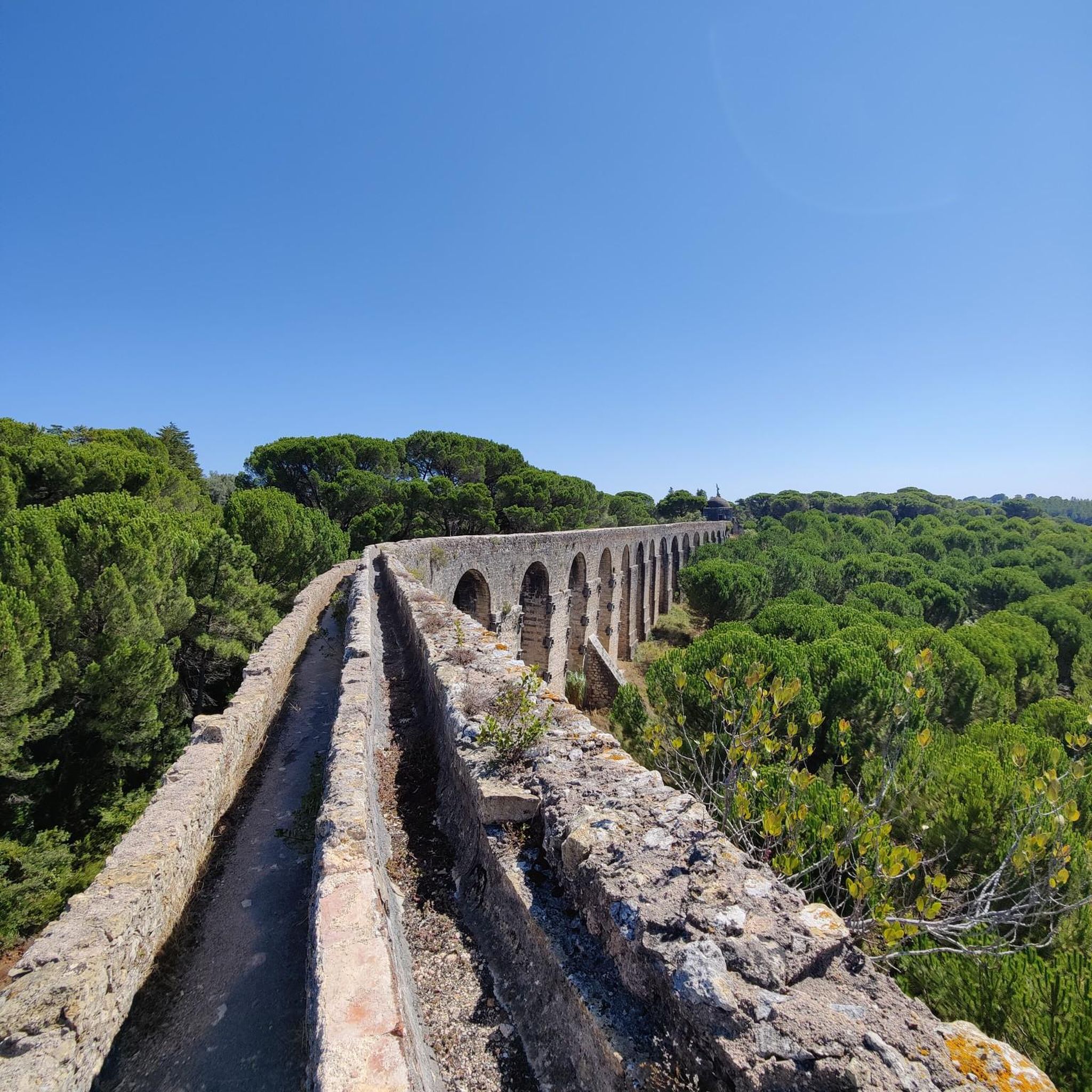
Built from 1554 onwards, the imposing building is considered a masterpiece of the European Renaissance. The fountain at its very center is fed by the waters of the Aqueduct of Pegões. King John III had it built outside the castle walls. Adjacent to the monastery church, the main cloister flanks the south façade of the Manueline nave, with which his father, King Manuel I, had already expanded the existing Templar church. To help you place the eight cloisters within the complex jumble of buildings on the site of today's Convent do Christo, you can find help here: https://anyformsdesignmapas.blogspot.com/2014/09/convento-de-cristo-tomar.html https://de.wikipedia.org/wiki/Convento_de_Cristo#/media/Datei:TomarChurchPlanCC3-pt.jpg
1
0
Detailed plans of the complex, including the identification of the individual parts and monasteries, can be found here: https://campanha.cmjornal.pt/portugal-monumental/ https://de.wikipedia.org/wiki/Convento_de_Cristo#/media/Datei:TomarChurchPlanCC3-pt.jpg https://blogger.googleusercontent.com/img/b/R29vZ2xl/AVvXsEjONUon4tGroEfnLT311dfFBPy 7gkSdMIt7aDFXuB2X61MqnwjBYUVJwZs3nELeNox-cEindezimgkuppLnXY6-XxrO-2WJQ_62jz9Qme64FlLgng2leHtQJZ3iuys8kl6z1fh1M1Ns6SOV/s1600/05Tomar.jpg https://de.wikipedia.org/wiki/Convento_de_Cristo#/media/File:TomarChurchPlanCC3-pt.jpg
1
0


The remains of the Knights Templar in Tomar
12
1
Frequently Asked Questions
What is the historical significance of castles in Santarém?
The castles in Santarém district played a crucial role in Portugal's history, particularly during the Christian Reconquest. Many, like the Convent of Christ and Castle of Tomar and Almourol Castle, were strategic strongholds for the Knights Templar. They showcase centuries of architectural evolution, from Romanesque to Manueline styles, and offer insights into the region's past as a defensive frontier.
Which castles are associated with the Knights Templar in Santarém?
The Santarém district is rich in Templar history. The most prominent Templar sites are the Convent of Christ and Castle of Tomar, which served as the headquarters for the Knights Templar and later the Order of Christ, and Almourol Castle, a remarkably preserved 12th-century Templar fortress on the Tagus River.
Which castles offer the best panoramic views?
Several castles in Santarém provide stunning panoramic views. Abrantes Castle and Panoramic View is known for its expansive vistas. The Castle of Ourém, situated atop a hill, offers unique views over the surrounding landscape. The remains of the Castle of Santarém, now part of Jardim das Portas do Sol, also provide fantastic views over the Tagus River and its fertile plain.
Are there any castles with unique access methods?
Yes, Almourol Castle offers a unique experience as it is located on a small island in the middle of the Tagus River. Access to the castle is exclusively by a short boat ride, adding to its adventurous appeal.
What is the best time of year to visit the castles in Santarém?
The Santarém region generally experiences mild winters and hot summers. Spring (April-May) and autumn (September-October) are often considered the best times to visit, offering pleasant temperatures for exploring the outdoor castle grounds and enjoying the scenic views without the intense summer heat.
Are there public transport options to reach the castles, especially Castelo de Santarém?
While specific public transport routes to every castle can vary, Santarém city itself is accessible by train and bus. The Castle of Santarém (Jardim das Portas do Sol) is located within the city and can be reached by local transport or a walk from the city center. For castles further afield like Almourol or Tomar, a combination of regional trains/buses and local taxis or a car rental might be necessary.
Are the castles in Santarém generally accessible for visitors with mobility concerns?
Accessibility varies by castle. Historic sites like these often have uneven terrain, stairs, and limited ramp access due to their age and preservation efforts. For example, Convent of Christ and Castle of Tomar is a vast complex with multiple levels. It is advisable to check specific accessibility details for each castle directly before visiting if mobility is a concern.
Are there family-friendly castles to visit in Santarém?
Many castles in Santarém can be enjoyed by families. The Tomar Templar Castle is listed as family-friendly. The unique boat ride to Almourol Castle and its island setting can be an exciting adventure for children. Exploring the medieval village within the Castle of Ourém also offers an engaging experience for all ages.
What outdoor activities or trails are available near the castles?
The Santarém region offers various outdoor activities. You can find numerous hiking trails, including routes like the 'Central Portuguese Way of St. James: Tomar to Alvaiázere' or the 'Arribas do Tejo Trail'. For cycling enthusiasts, there are MTB trails such as the 'Castelo do Bode and Zêzere Great Route Loop'. Additionally, running trails like the 'Igreja de São João de Alporão – Jardim das Portas do Sol loop from Santarém' are available.
Are there dog-friendly options near the castles?
While specific castle interiors might have restrictions, the outdoor areas and surrounding landscapes often provide opportunities for dog-friendly walks. For instance, the Jardim das Portas do Sol at the Castle of Santarém is a public park where you can enjoy views with your dog. Many of the nearby hiking and running trails are also suitable for walks with leashed dogs.
What do visitors particularly enjoy about the castles in Santarém?
Visitors frequently highlight the stunning panoramic views, the rich historical significance, and the unique architectural features. The well-preserved nature of sites like Almourol Castle and the vastness of the Convent of Christ and Castle of Tomar are often praised. The sense of stepping back in time and the picturesque settings are also highly appreciated.
Where can I find cafes or restaurants near the castles?
Most castles are located near towns or villages where you can find dining options. For example, the Convent of Christ and Castle of Tomar is in Tomar, which has numerous cafes and restaurants. The Castle of Santarém is within the city of Santarém, offering a wide range of choices. Smaller castles might have fewer immediate options, but nearby villages usually provide local eateries.
Most popular routes in Santarém
Most popular attractions in Santarém

Get inspired with the komoot mobile app


Didn’t find what you were looking for?
Explore Santarém’s best castles region by region:
Explore more
Looking for the best castles somewhere else? Discover other guides in Santarém:
