Top 20 Lakes in Murcia
Lakes in Murcia offer diverse aquatic landscapes, ranging from significant reservoirs to a unique saltwater lagoon. The region features artificial lakes constructed for irrigation and flood control, alongside natural formations. These bodies of water contribute to the area's natural features and provide varied environments for outdoor activities. Murcia's lakes are integral to its geography, supporting local ecosystems and recreational use.
Best lakes in Murcia
- The most popular lakes is Salt Flats and Sand Dunes of San Pedro del Pinatar,…
Last updated: August 7, 2026
Mud Baths at Villananitos Beach
Highlight • Beach
Translated by Google •
Tip by

Rambla de Algeciras Reservoir
Highlight • Lake
Translated by Google •
Tip by

Sign up now to discover places like this
Get recommendations on the best single tracks, peaks, & plenty of other exciting outdoor places.
Sign up for free
The Mar Menor
Highlight • Lake
Translated by Google •
Tip by

Salt Flats and Sand Dunes of San Pedro del Pinatar
Highlight • Natural Monument
Translated by Google •
Tip by

Alfonso XIII Reservoir Dam and Quípar River Canyon
Highlight • Canyon
Translated by Google •
Tip by

Somogil Baths
Highlight • Natural Monument
Translated by Google •
Tip by
Santomera Dam
Highlight • Monument
Translated by Google •
Tip by

Mar Menor (Little Sea)
Highlight • Lake
The Mar Menor, Spanish for "Little Sea", is actually a saltwater …
Translated by Google •
Tip by
Las Salinas y Arenales de San Pedro del Pinatar Regional Park
Highlight • Natural Monument
Translated by Google •
Tip by

Santomera Reservoir
Highlight • Lake
Translated by Google •
Tip by
Sign up for free to discover even more lakes in Murcia.
Sign up for free
Already have an account?
Start today with a free account
Your next adventure awaits.
Login or Signup
Popular around Murcia
On the road to the sun — bikepacking to southeast Spain
La Vuelta 26 — All Official Stages
Path of the Cross of the Altiplano – GR 251

European D̶I̶V̶I̶D̶E̶ Connect Trail Project – a journey across Europe
10 gravel routes to discover hidden gems in Spain
Path of the Templars — Path of the True Cross (GR 250)
Gorges, valleys and orchards — BTT along the Segura River (GR 127)
Mediterranean industry and nature – hike the GR 92 in Murcia
The lungs of Murcia in Spain – Sierra Espuña
Disconnection in the mountains – Sierra Espuña by MTB
Other adventures in Murcia


Tips from the Community

the dam is worth it as a destination - but here there are further single trails to explore
0
0
Architecturally beautiful dam - dare to climb over the wall to get to the other side, it's worth it
0
0

Where do you cross over to Morocco?
0
0

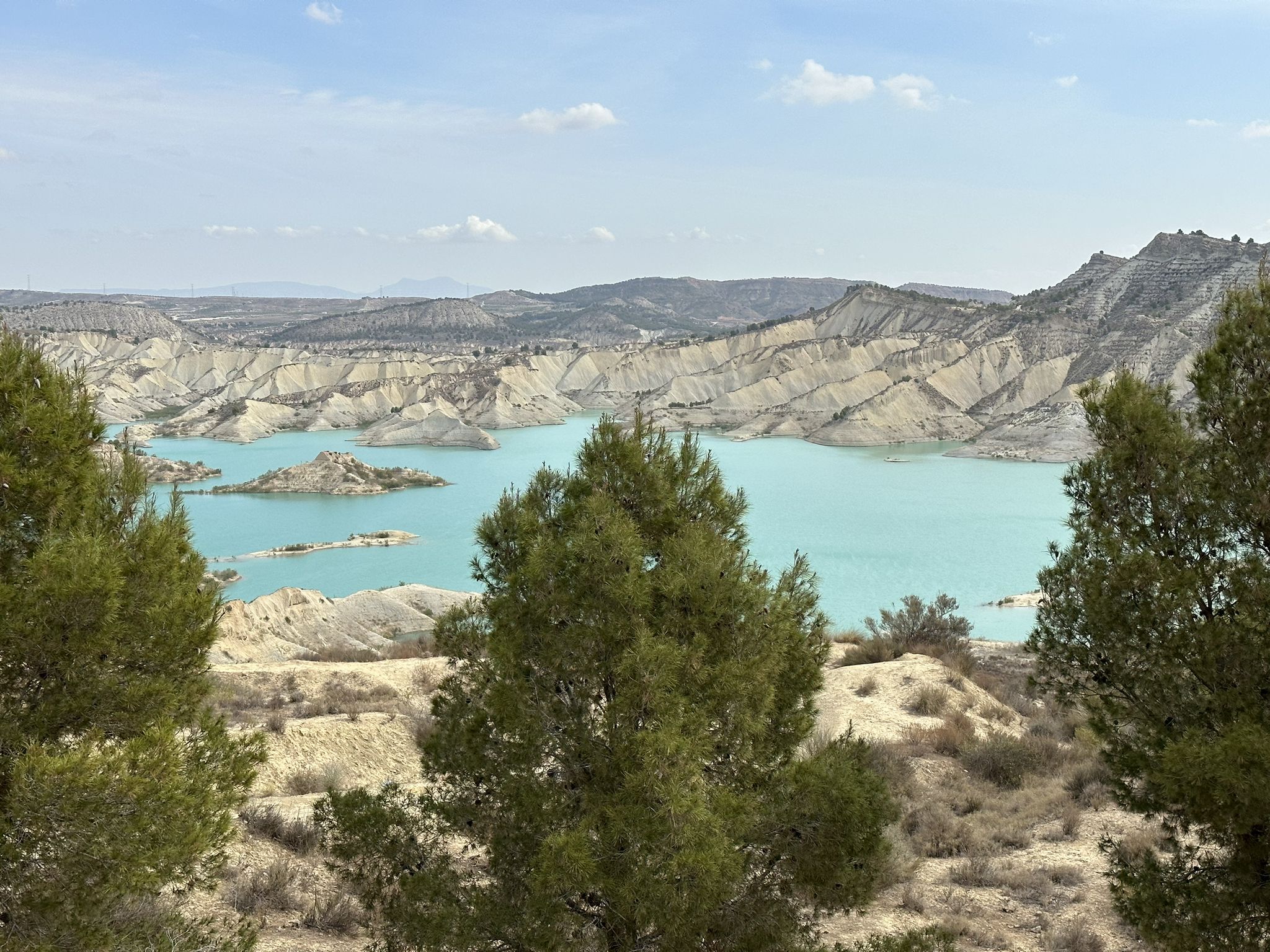
The Rambla de Algeciras Reservoir is located in the municipality of Alhama de Murcia, in the region of Murcia. It was built as part of the General Flood Defense Plan for the Segura River Basin. The reservoir has several purposes, including flood control, water storage, and regulating the flow of water for irrigation.
5
0

The mud of the ponds is the result of centuries of action of the sun and the very salty water of the Mar Menor. The result is a mud that, when applied to the skin, has great therapeutic value for all types of ailments: rheumatism, arthritis, gout, skin pathologies, rehabilitation after fractures, throat, etc. The ideal complement to the treatment is to take a bath in the mineralized water of the Mar Menor.
4
0

Outdoor mud therapy area. The mud of the Salinas is characterized by long exposure to the sun and the salty water from the Mar Menor. The result is a clay mud that is applied to the skin and is said to have great therapeutic value for all kinds of ailments. Rheumatism and arthritis are among them. In addition, on the opposite side you can take a bath in the mineralized water of the Mar Menor. There are thalassotherapy and spa centers in the area.
1
0

Here you can enclose your body in mud; it is said to help against many diseases. Definitely an experience!
1
0
The Somogil Baths are a hidden natural treasure in the Sierra de Moratalla, in the Region of Murcia, Spain. These natural pools offer a unique and refreshing experience in the middle of nature. Explore the Somogil Baths and immerse yourself in the freshness of its waters. A thermal gem in the middle of nature! 🌿🌊
2
0
Frequently Asked Questions
What unique natural features can I find around Murcia's lakes?
Murcia's lakes offer diverse natural features. The Mar Menor is Europe's largest saltwater lagoon, separated from the Mediterranean by the 22-kilometer-long La Manga strip. The Embalse de Alfonso XIII is surrounded by pine trees and features islands, recognized as a Special Protection Area for Birds (ZEPA). The Embalse de Santomera boasts distinct salt marshes and saline steppes with unique halophilic plant species, and even has archaeological evidence of ancient coral reefs. The Rambla de Algeciras Reservoir is known for its unique geological formations and striking turquoise water.
Are there opportunities for birdwatching near the lakes in Murcia?
Yes, the Embalse de Alfonso XIII is recognized as a Special Protection Area for Birds (ZEPA), particularly during wintering. You can observe species like Common Pochard, Great Crested Grebe, Great Cormorant, Grey Heron, and Little Egret there.
What kind of water sports can I do in Murcia's lakes?
The Mar Menor, with its warm and shallow waters, is ideal for swimming, paddleboarding, and kayaking. The private Santa Rosalía Lake within the Santa Rosalía Lake & Life Resort also offers swimming and water sports like paddleboarding and kayaking in a purified, closed-circuit system.
Are there family-friendly lakes in Murcia?
Yes, several lakes are great for families. The Mar Menor is very popular due to its warm, shallow, and calm waters, with many beaches offering facilities. The Embalse de Santomera provides benches, barbecue areas, shade, and multi-sport courts for family recreation. The Salt Flats and Sand Dunes of San Pedro del Pinatar, which borders the Mar Menor, is also considered family-friendly with easy trails and informative posters.
What outdoor activities can I do near Murcia's lakes?
You can find various outdoor activities. Hiking is popular, with routes like 'The Salinas and Arenales of San Pedro del Pinatar' and 'The Usero Jump' nearby. Cycling is also a great option, with routes such as 'La Manga del Mar Menor — round trip from Playa de las Amoladeras'. For more details on hiking routes, visit the Hiking in Murcia guide, and for cycling, check the Cycling in Murcia guide.
Can I go wild swimming in Murcia's lakes?
While the Mar Menor is excellent for swimming, bathing is generally not a primary activity or is forbidden in some of the reservoirs. For example, bathing is forbidden at La Cierva Reservoir. The Embalse de Santomera's water is relatively saline, making it less ideal for swimming. Always check local regulations before entering the water.
What is the best time to visit the lakes in Murcia?
Murcia generally enjoys a sunny climate. The Mar Menor is particularly popular due to consistent sunshine. For birdwatching at the Embalse de Alfonso XIII, winter is an excellent time. For general outdoor activities, spring and autumn offer pleasant temperatures, avoiding the peak heat of summer.
Are there any mud baths or therapeutic waters in the region?
Yes, the Mud Baths at Villananitos Beach, located near the Mar Menor, offer therapeutic mud. The mud, rich in minerals from the very salty water, is believed to have benefits for various ailments. It's an open-air and free spa experience, complemented by bathing in the mineralized water of the Mar Menor.
What are the parking and public transport options for visiting Murcia's lakes?
Parking availability varies by location. For popular spots like the Mar Menor, there are usually designated parking areas near beaches. For reservoirs like La Cierva, access might be more limited, often requiring a short walk from parking spots. Public transport options are generally more robust for coastal areas like the Mar Menor, while more remote reservoirs may require private vehicle access.
Can I fish in any of Murcia's lakes?
Fishing is possible in some reservoirs, but often requires official permission. For instance, with official permission, the Embalse de la Cierva is a place for fishing trout, barbel, or carp. Always ensure you have the necessary permits and adhere to local fishing regulations.
Are there any historical or archaeological points of interest near the lakes?
The Embalse de Santomera holds archaeological interest, with evidence of ancient coral reefs from the Miocene era found upstream. While the reservoirs themselves are often man-made for flood control and irrigation, the surrounding areas can reveal deeper historical layers.
What kind of terrain can I expect around the lakes in Murcia?
The terrain varies significantly. Around the Mar Menor and the Salt Flats and Sand Dunes of San Pedro del Pinatar, you'll find flat, coastal paths ideal for easy walks and cycling. Reservoirs like Embalse de Alfonso XIII and Embalse de la Cierva are often surrounded by more rugged, natural landscapes with small paths, and can include pine forests or unique geological formations as seen at the Rambla de Algeciras Reservoir.
Most popular routes in Murcia
Most popular attractions in Murcia

Get inspired with the komoot mobile app


Didn’t find what you were looking for?
Find the best lakes in Murcia per region:
Explore more
Still not found your perfect lake in Murcia? Check out the guides of these regions to see even more beautiful places.
