Top 8 Lakes in Trnava
Best lakes in Trnava are situated within a region of Slovakia known for its diverse natural landscapes, including the Little Carpathians and the Danubian Lowland. The area features a mix of natural and man-made water bodies, providing various recreational opportunities. These lakes contribute to the region's appeal for outdoor activities. The Trnava region offers a range of aquatic environments, from large reservoirs to smaller ponds.
Best lakes in Trnava
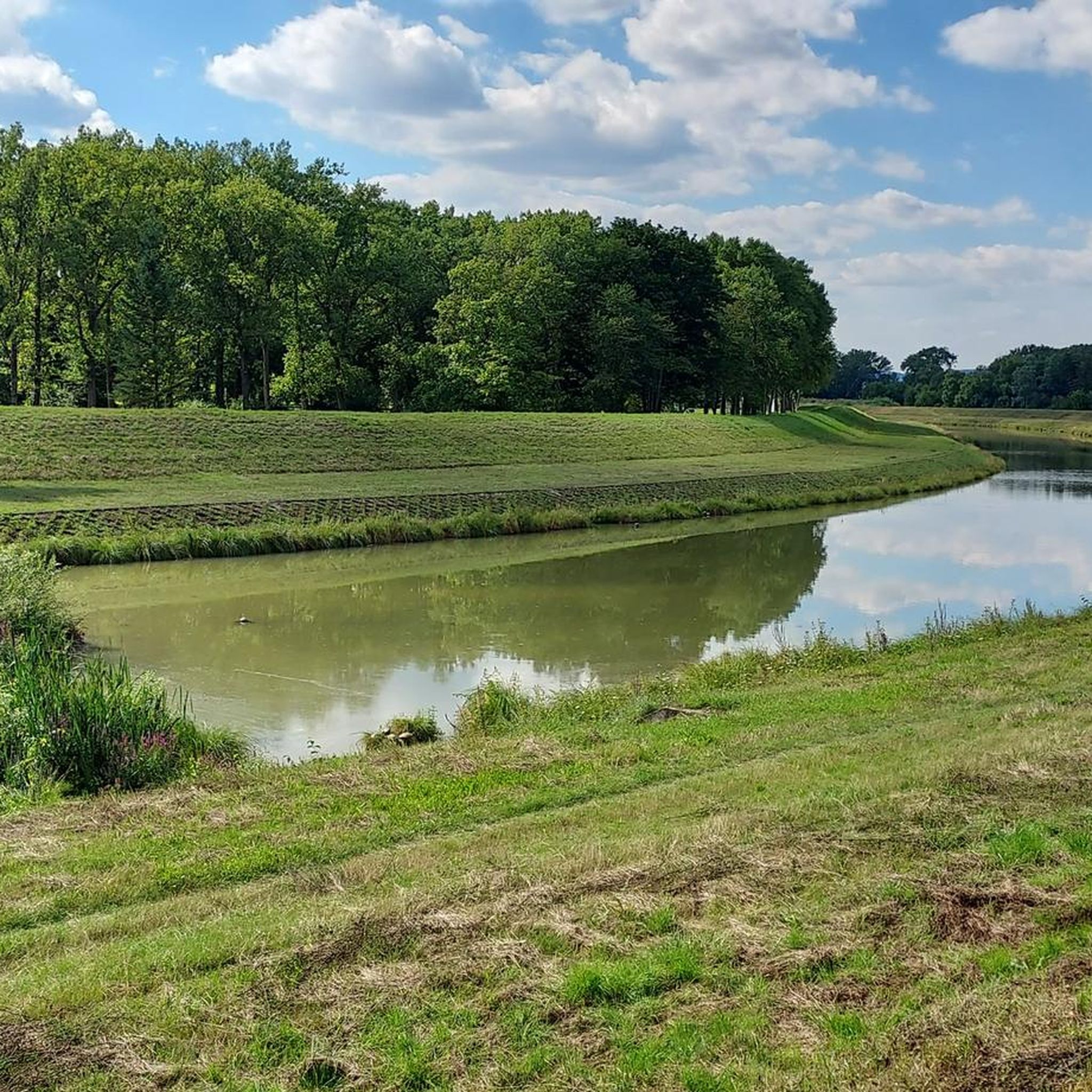
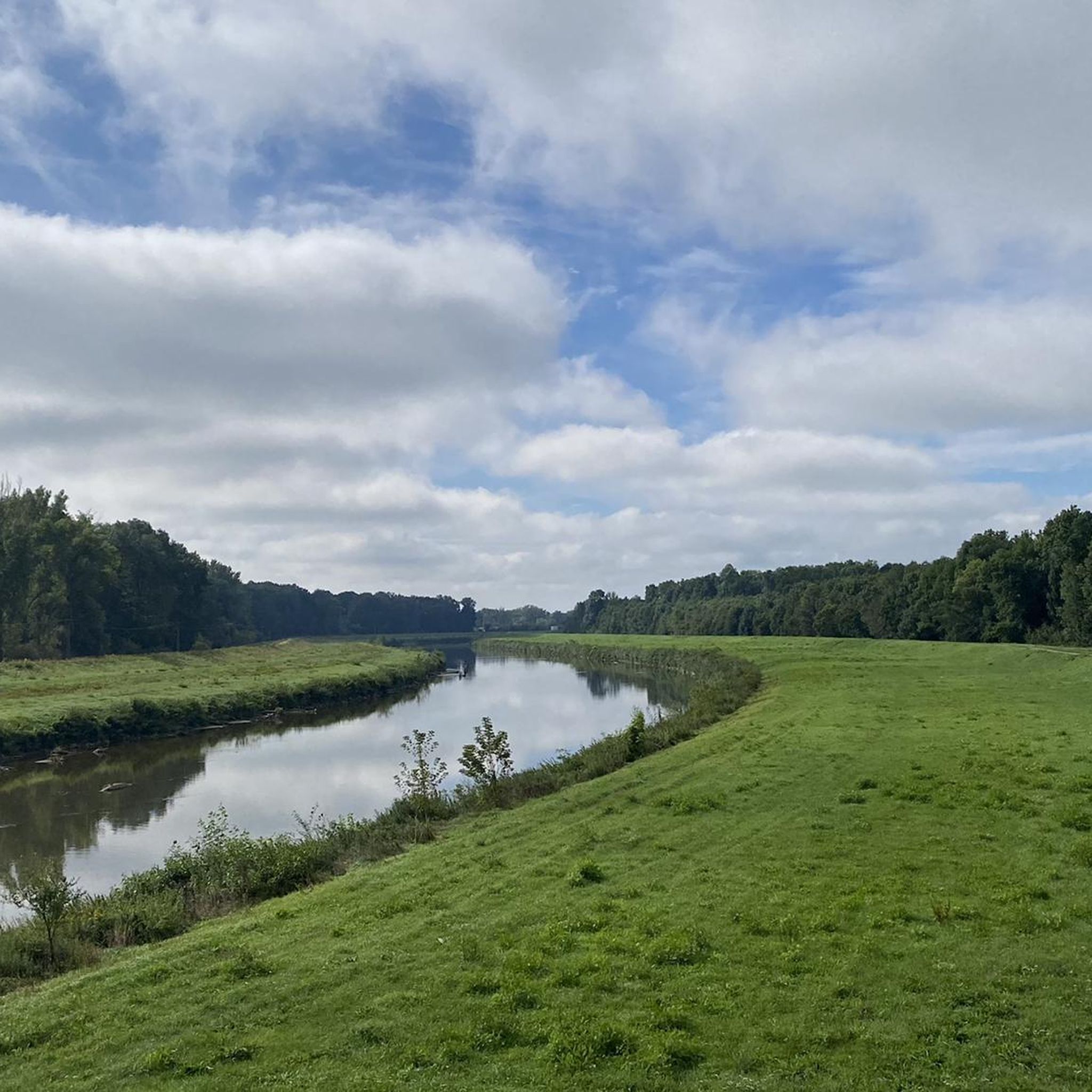
- The most popular lakes is Kráľová Reservoir, a lake where the Váh river is dammed. It features a cycle path along its banks.
- Another must-see spot is Kunov Reservoir, a lake with a beach. This reservoir is suitable for swimming and offers a Mediterranean atmosphere in some areas.
- Visitors also love Mlynky Reservoir and State Border, an intermediate lake. This reservoir is located in the upper valley of the Hnilec river.
- Trnava is known for large reservoirs, natural lakes, and protected pond systems. These water bodies offer diverse environments for recreation and nature observation.
- The lakes in Trnava are appreciated by the komoot community. The guide features 9 highlights and includes 23 photos, with 26 upvotes from visitors.
Last updated: July 25, 2026
Gabčíkovo Reservoir
Highlight • Lake
As early as 1947 Stalin wanted to make the shallow alluvial plain between Győr and Bratislava navigable all year round. A canal was intended to enable Soviet warships to reach the borders of what was then the Eastern Bloc. In the 1950s, the first plans were drawn up but never realised.
After major floods in the area in the 1950s and 1960s, particularly in 1954 and 1965, Hungary and Czechoslovakia signed an agreement on September 16, 1977 to build the Gabčíkovo–Nagymaros barrage system, the so-called “Budapest Agreement”. A large power plant was planned in Gabčíkovo, shortly before that an approximately 60 km² Dunakiliti-Hrušov reservoir and a second smaller one around 120 km downstream in the Hungarian city of Nagymaros (as an equalizing reservoir) on the Danube bend. This would have required 200 km of canalization or diking of the Danube. The construction costs should be borne equally by both states. Since the majority of the objects to be built were located on Czechoslovak territory, Hungary undertook to build Czechoslovak objects named in the agreement at its own expense. The electrical energy generated should also be shared equally.[1] According to the original agreement, the works were to be fully completed by 1991, with full commissioning of the Gabčíkovo power plant expected in 1989 and the Nagymaros power plant a year later.
As early as 1981, the Hungarian government wanted to suspend the project for financial reasons, and in 1983 Czechoslovakia and Hungary agreed to extend the work by four years. In 1984, Hungarian environmentalists (Duna Kör) reinforced their ecological concerns about this mammoth project with a signature campaign. Concerns about drinking water and the existence of the riparian forests in particular played a major role. After the end of the Kádár government in 1988, the new government stopped all work in Hungary in May 1989 without giving a reason after a scientific study of the ecological consequences of the project, after only three months earlier it had signed a protocol to accelerate construction. By that time, 85 to 90 percent of the work on the Czechoslovak side had already been completed. On October 31, the Hungarian Parliament decided to halt work on the Nagymaros power plant and gave the government powers to negotiate an amendment to the 1977 Budapest Agreement.
In 1993 both countries agreed to appeal to the International Court of Justice in The Hague. On September 25, 1997, the Court ruled that both countries had breached their legal obligations, Hungary in almost every point of the treaty. Czechoslovakia (later Slovakia) had the right to complete the construction but not to put it into operation. The original contract continues to apply and both countries should negotiate a new, more environmentally friendly solution. In its decision, the ICJ held that the agreement concluded between Hungary and Czechoslovakia was a treaty with territorial ties. For such a treaty, it follows from customary international law that a successor state must take over the treaties of the territorial predecessor. Slovakia is therefore bound by the former treaty between Czechoslovakia and Hungary. To settle the dispute, representatives of both governments agreed on a framework agreement in March 1998. To date, no real agreement has been reached, which has strained relations between Hungary and Slovakia for years.[7] In June 2017, a representative of the Slovak government sent an application to the ICJ to end the proceedings, which had been ongoing since 1998, for an additional decision. The Hungarian side stated in July 2017 that they did not oppose the Slovak request.
Translated by Google •
Tip by

Bačorina Marina
Highlight • Rest Area
In the dock there is a crane for launching boats weighing up to 1.5 t. The port has not yet been completed. In the future, it is planned to build a clubhouse with social facilities and accommodation.
Translated by Google •
Tip by

Sign up now to discover places like this
Get recommendations on the best single tracks, peaks, & plenty of other exciting outdoor places.
Sign up for free
View of Smolenice Castle
Highlight • Viewpoint
Tip by

Žitný Ostrov (Great Rye Island)
Highlight • Natural
With a length of 84 km and a width of 15 to 30 km, the Danube forms a network of numerous meanders and tributaries, including the Little Danube. There are about 500 islands and islets between the arms of the river.
The Great Rye Island begins near Bratislava at river kilometer 1865 and covers an area of 1,885.19 km².[1] When considered as a single island, it is the largest river island in Europe.
The Great Rye Island is, in contrast to the Small Rye Island, exclusively on Slovak territory and administratively largely belongs to Okres Dunajská Streda in the Trnavský kraj in the center and west and to Okres Komárno in the Nitriansky kraj in the east. Parts of Bratislavský kraj (Okres Senec and Okres Bratislava II) are located in the extreme west of the island.
The most important cities of the Big Rye Island are Komárno, Dunajská Streda and Šamorín. In addition, part of the capital Bratislava extends on the island. There is a significant Hungarian minority among the inhabitants of the area. The area is mainly used for agriculture and drinking water. Literally translated into German, the Slovak name means "rye island".
Translated by Google •
Tip by
Kráľová Reservoir
Highlight (Segment) • Lake
More information: de.wikipedia.org/wiki/Waag
Translated by Google •
Tip by

Mlynky Reservoir and State Border
Highlight • Lake
Translated by Google •
Tip by

Kunov Reservoir
Highlight • Lake
Translated by Google •
Tip by

Buková Reservoir
Highlight • Lake
Translated by Google •
Tip by

Červený Rybník
Highlight • Lake
Translated by Google •
Tip by

Sĺňava Reservoir
Highlight • Lake
Showing Translation
Tip by

Sign up for free to discover even more lakes in Trnava.
Sign up for free
Already have an account?
Start today with a free account
Your next adventure awaits.
Login or Signup

Tips from the Community

I only drove past, it was very windy. Nice area. However, outside the cities, there can be no talk of cycle paths.
0
0

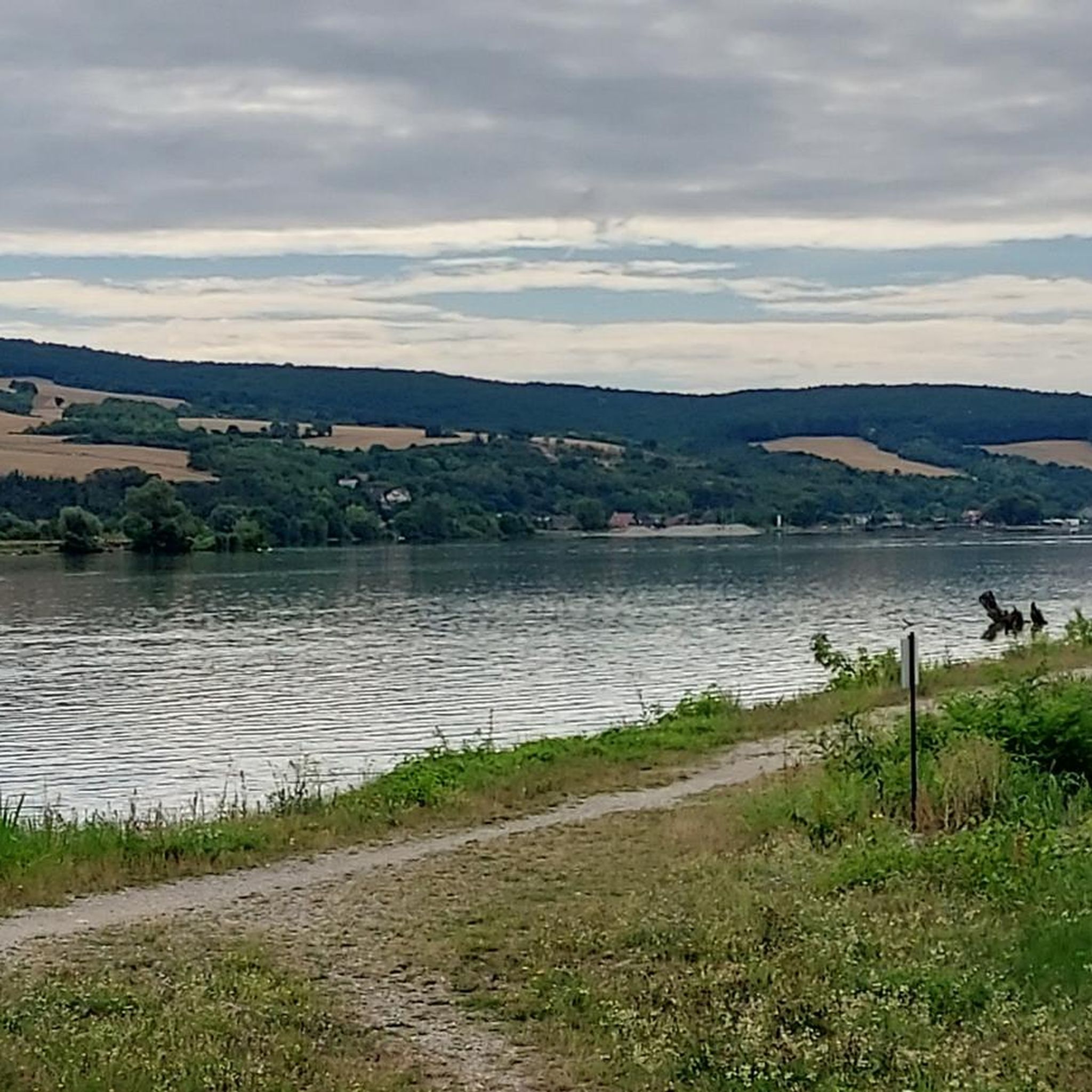
The Gabčíkovo Reservoir (Slovak: Vodné dielo Gabčíkovo) is a colossal hydraulic engineering project on the Danube, which is much more than just a simple lake. It is the scene of one of the longest legal disputes in European history and a technical heavyweight.
0
0

The dam on the Hrudky Stream is a popular spot, especially for fishing. There's also a buffet at the lake.
1
0

Dams the Danube to form a small sea. Impressive.
0
0

One of the greatest attractions of the eastern foot of the Little Carpathians is the "fairytale castle" of Smolenice. It is one of the most important buildings in Slovakia, modeled on the castles of central France and rebuilt in the Romantic style. The castle was built on the site of a 14th century castle. The castle protected the border passes in the Carpathians and the Bohemian Way. From 1777 it was owned by the Pálffys, who rebuilt it in the Romantic style in the second half of the 19th century. Smolenice Castle is dominated by a mighty tower with a viewing terrace. The steep roofs, towers, the fortified courtyard with a chapel and bastions, and the beautiful greenery complete the fairytale charm. Today the castle is the seat of the Slovak Academy of Sciences - the Slovak Academy of Sciences Congress Centre, and numerous conferences and symposia are held there throughout the year. Every Saturday, newlyweds stroll in and around the castle to take photos and film. During the summer months of July and August, the castle is open to the public. The romantic appearance of the castle is also reinforced by the surrounding park, which merges into a dense forest.
0
0


The Great Rye Island (Slovakian Žitný ostrov, formerly Čalokez, German also Great Schuett, Hungarian Csallóköz) is a river island (or river island group) between the Danube, the Little Danube (Malý Dunaj) and the Vah (Váh) on the left side of the river of the main stream in southwest Slovakia. With a length of 84 km and a width of 15 to 30 km, the Danube forms a network of numerous meanders and tributaries, including the Little Danube. There are about 500 islands and islets between the arms of the river. The Great Rye Island begins near Bratislava at river kilometer 1865 and covers an area of 1,885.19 km².[1] When considered as a single island, it is the largest river island in Europe. The Great Rye Island is, in contrast to the Small Rye Island, exclusively on Slovak territory and administratively largely belongs to Okres Dunajská Streda in the Trnavský kraj in the center and west and to Okres Komárno in the Nitriansky kraj in the east. Parts of Bratislavský kraj (Okres Senec and Okres Bratislava II) are located in the extreme west of the island. The most important cities of the Big Rye Island are Komárno, Dunajská Streda and Šamorín. In addition, part of the capital Bratislava extends on the island. There is a significant Hungarian minority among the inhabitants of the area. The area is mainly used for agriculture and drinking water. Literally translated into German, the Slovak name means "rye island".
0
0
The Gabčíkovo power plant is a run-of-river power plant in Slovakia at river kilometer 1836 and uses the hydroelectric power of the Danube. It is the largest hydroelectric power plant in Slovakia and generates around 11% of the national electricity requirement. As early as 1947 Stalin wanted to make the shallow alluvial plain between Győr and Bratislava navigable all year round. A canal was intended to enable Soviet warships to reach the borders of what was then the Eastern Bloc. In the 1950s, the first plans were drawn up but never realised. After major floods in the area in the 1950s and 1960s, particularly in 1954 and 1965, Hungary and Czechoslovakia signed an agreement on September 16, 1977 to build the Gabčíkovo–Nagymaros barrage system, the so-called “Budapest Agreement”. A large power plant was planned in Gabčíkovo, shortly before that an approximately 60 km² Dunakiliti-Hrušov reservoir and a second smaller one around 120 km downstream in the Hungarian city of Nagymaros (as an equalizing reservoir) on the Danube bend. This would have required 200 km of canalization or diking of the Danube. The construction costs should be borne equally by both states. Since the majority of the objects to be built were located on Czechoslovak territory, Hungary undertook to build Czechoslovak objects named in the agreement at its own expense. The electrical energy generated should also be shared equally.[1] According to the original agreement, the works were to be fully completed by 1991, with full commissioning of the Gabčíkovo power plant expected in 1989 and the Nagymaros power plant a year later. As early as 1981, the Hungarian government wanted to suspend the project for financial reasons, and in 1983 Czechoslovakia and Hungary agreed to extend the work by four years. In 1984, Hungarian environmentalists (Duna Kör) reinforced their ecological concerns about this mammoth project with a signature campaign. Concerns about drinking water and the existence of the riparian forests in particular played a major role. After the end of the Kádár government in 1988, the new government stopped all work in Hungary in May 1989 without giving a reason after a scientific study of the ecological consequences of the project, after only three months earlier it had signed a protocol to accelerate construction. By that time, 85 to 90 percent of the work on the Czechoslovak side had already been completed. On October 31, the Hungarian Parliament decided to halt work on the Nagymaros power plant and gave the government powers to negotiate an amendment to the 1977 Budapest Agreement. In 1993 both countries agreed to appeal to the International Court of Justice in The Hague. On September 25, 1997, the Court ruled that both countries had breached their legal obligations, Hungary in almost every point of the treaty. Czechoslovakia (later Slovakia) had the right to complete the construction but not to put it into operation. The original contract continues to apply and both countries should negotiate a new, more environmentally friendly solution. In its decision, the ICJ held that the agreement concluded between Hungary and Czechoslovakia was a treaty with territorial ties. For such a treaty, it follows from customary international law that a successor state must take over the treaties of the territorial predecessor. Slovakia is therefore bound by the former treaty between Czechoslovakia and Hungary. To settle the dispute, representatives of both governments agreed on a framework agreement in March 1998. To date, no real agreement has been reached, which has strained relations between Hungary and Slovakia for years.[7] In June 2017, a representative of the Slovak government sent an application to the ICJ to end the proceedings, which had been ongoing since 1998, for an additional decision. The Hungarian side stated in July 2017 that they did not oppose the Slovak request.
0
0
Frequently Asked Questions
What recreational activities can I enjoy at the lakes in Trnava?
The lakes in Trnava offer a variety of recreational activities. At Kunov Reservoir, you can swim, enjoy non-motorized boating, fish, and rent water bikes or paddleboards. It also has facilities for tennis, football, mini-golf, and beach volleyball. Kráľová Reservoir features a cycle path along its banks, perfect for cycling. Zelená Voda is excellent for swimming, windsurfing, kayaking, paddleboarding, and fishing, with additional land sports facilities and playgrounds. Dolné Dubové Lake is suitable for swimming and fishing (catch and release).
Are there family-friendly lakes in the Trnava region?
Yes, several lakes in the Trnava region are well-suited for families. Kunov Reservoir offers a sandy beach, a playground with a sandbox and trampoline, and various sports facilities. Zelená Voda is known for its hygienically clean water, making it safe for swimming for all ages, and provides playgrounds and beach bars. Kráľová Reservoir and Gabčíkovo Reservoir also have family-friendly amenities, including cycle paths.
Where can I go for nature walks and birdwatching around Trnava's lakes?
For nature walks and birdwatching, the Trnavské rybníky (Trnava Ponds) are an excellent choice. This protected area is known for its rich natural biodiversity and is a significant locality for birdwatching, with up to 150 protected bird species observed. The surroundings feature remnants of floodplain forests and offer tranquil field roads and paths for peaceful walks.
What are the best lakes for swimming in the Trnava region?
Zelená Voda is highly recommended for swimming due to its hygienically clean water and suitability for all ages. Kunov Reservoir also offers a sandy beach and is suitable for swimming, providing a pleasant Mediterranean atmosphere in some areas. Dolné Dubové Lake's water is also suitable for swimming.
Are there cycling routes near the lakes in Trnava?
Yes, cycling is a popular activity around the lakes. Kráľová Reservoir features a dedicated cycle path along its banks. A cycling route also connects Kunov Reservoir with Senica, passing through scenic nature along the Teplica stream, ideal for cycling and inline skating. Gabčíkovo Reservoir also offers cycle ways.
What historical or cultural landmarks can be viewed near the lakes?
Near some of the lakes, you can find historical landmarks. For instance, the View of Smolenice Castle offers a beautiful perspective of this significant building, which is modeled on central French castles and rebuilt in the Romantic style. The castle is open to the public during July and August.
Where can I find accommodation or dining options near the lakes?
Accommodation and dining options are available near some of the popular lakes. Around Kunov Reservoir, you can find cottages, a tourist hostel, restaurants, and buffets. Zelená Voda also offers a campsite for accommodation, along with beach bars.
What kind of fishing opportunities are available at Trnava's lakes?
Fishing is a popular activity at several lakes. At Kunov Reservoir, fishing is permitted. Dolné Dubové Lake is known for fish like carp, pike-perch, and pike, operating under a 'catch and release' policy. Zelená Voda also offers excellent conditions for fishing.
Are there any easy hiking or walking trails around the lakes?
Yes, there are easy walking opportunities. The Trnavské rybníky (Trnava Ponds) feature field roads and paths that are ideal for leisurely walks. For more structured hiking, you can explore various routes in the region. For easy hikes, consider routes like the Nové Hory – Katarínka Forest Railway loop, which is an easy 3.4 km trail. You can find more options in the Easy hikes in Trnava guide.
What are some popular running trails near the lakes in Trnava?
For running enthusiasts, there are several trails in the vicinity of the lakes. Popular routes include the Sĺňava – Biskupický kanál loop from Piešťany (9.6 km, moderate) and various Leknové jazierka loops. More running options can be found in the Running Trails in Trnava guide.
What natural features can I expect to see around Trnava's lakes?
The lakes in Trnava are surrounded by diverse natural features. You can find sandy beaches at Kunov Reservoir, and remnants of floodplain forests and rich biodiversity at Trnavské rybníky. Lakes like Červený Rybník are nestled within forests, offering scenic viewpoints. The region also features the Little Carpathians and the Danubian Lowland, contributing to varied landscapes.
Is there a marina or facilities for boats at any of the lakes?
Yes, there are facilities for boats. The Bačorina Marina in the quiet surroundings of Kráľová Reservoir offers parking for smaller vessels and a crane for launching boats up to 1.5 tons. Kunov Reservoir also offers rentals for non-motorized boats like water bikes and paddleboards.
Most popular routes in Trnava
Most popular attractions in Trnava

Get inspired with the komoot mobile app


Explore more
Still not found your perfect lake in Trnava? Check out the guides of these regions to see even more beautiful places.
