Top 20 Caves around Niederschlettenbach
Best caves around Niederschlettenbach are primarily characterized by unique rock formations and historical rock chambers within the Dahner Felsenland region. This area is known for its impressive red sandstone structures, which often feature overhangs, rock shelters, and crevices. While traditional deep cave systems are not prominent, the natural landscape offers various geological features for exploration. The region's natural beauty lies in these formations and the extensive hiking trails Niederschlettenbach provides.
Best caves around Niederschlettenbach
- The most popular caves is Hollow…
Last updated: May 30, 2026
Rosskegel Rock
Highlight • Natural Monument
Translated by Google •
Tip by

Viewing chamber on the Büttelfels (viewpoint)
Highlight • Viewpoint
To reach via a climbing ladder.
Translated by Google •
Tip by

Sign up now to discover places like this
Get recommendations on the best single tracks, peaks, & plenty of other exciting outdoor places.
Sign up for free
Buchkammerfels Rock Chambers
Highlight • Cave
Translated by Google •
Tip by

Hollow Rocks
Highlight • Natural Monument
Translated by Google •
Tip by

Löchelfelsen
Highlight • Viewpoint
Translated by Google •
Tip by

Sign up for free to discover even more caves around Niederschlettenbach.
Sign up for free
Already have an account?
Start today with a free account
Your next adventure awaits.
Login or Signup
Popular around Niederschlettenbach
Tips from the Community

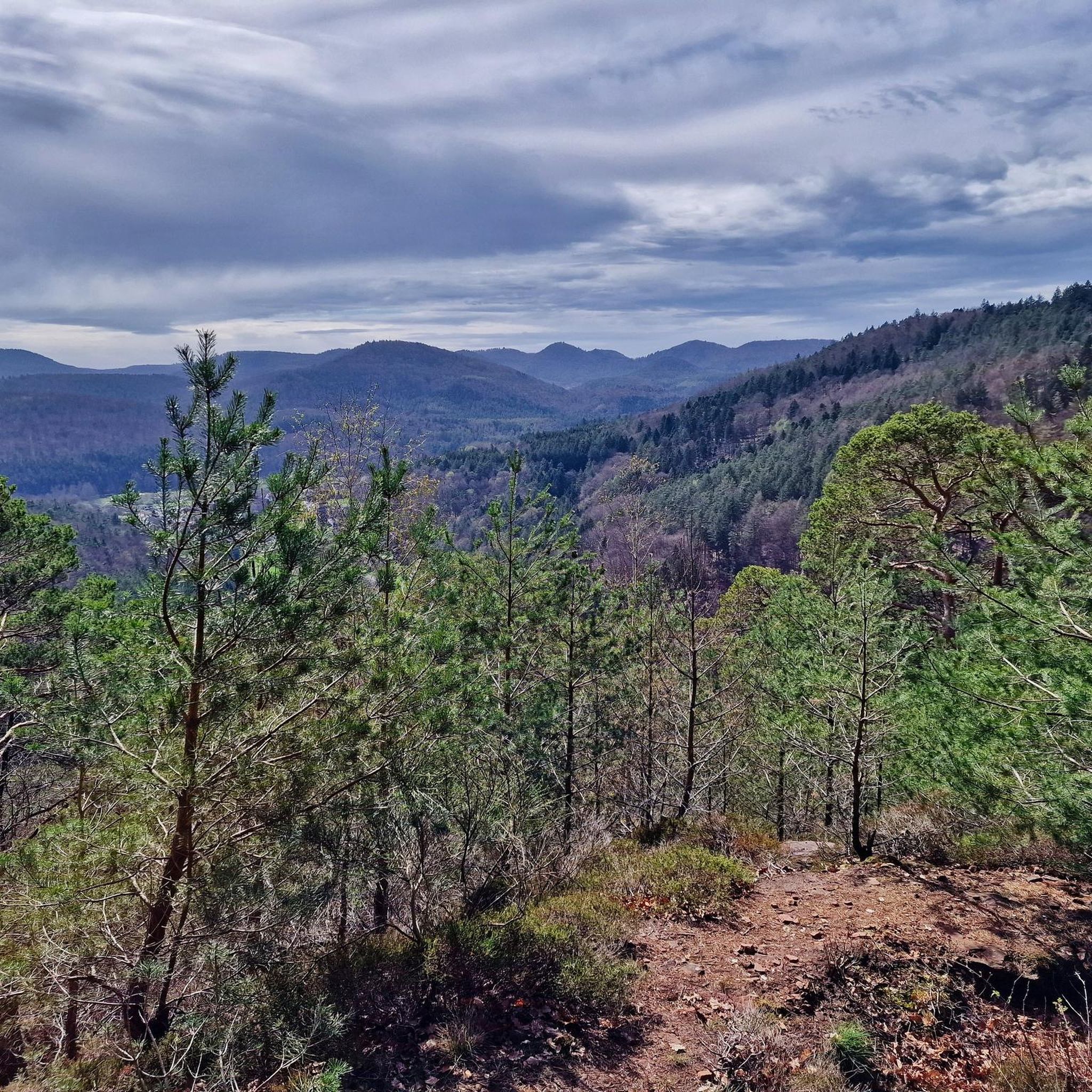
The Buchkammerfels is located in the foothills of the Heidenberg, south of the Drachenfels castle ruins and southeast of the municipality of Busenberg. It is a special cultural monument, also known as the Heidenkammern (Heathen Chambers). The origin and function of the three artificially created, inaccessible rock chambers are still not fully understood. However, it is assumed that they were either outposts or guard posts for Drachenfels Castle, or that the chambers served as a prison for the castle.
5
0

Wonderful natural cave... quite big in my opinion
10
2

Very impressive heavily overhanging rocks with some small caves and shelters with fire pits
3
0


It looks dangerous, but it isn't. Great tour!
13
1
One of the typical sandstone rocks in the Palatinate
10
1

You get up close and personal with the rocks.
15
2

The Buchkammerfels is accessible from the mountain. After crossing a crevice, you can walk almost to the very top, from where you have a beautiful view, including views of Drachenfels Castle. The entrance to the eponymous chambers is located eight meters above the ground on a small ledge on the almost vertical north face of the rock. With a little practice, you can also climb up here without safety equipment. However, this is not without danger, especially the descent. If in doubt, take a look at my photos. There are four chambers and a few peepholes, three of which face the south side.
15
1
Frequently Asked Questions
What kind of 'caves' can I expect to find around Niederschlettenbach?
The region around Niederschlettenbach, particularly the Dahner Felsenland, is known for its unique red sandstone rock formations. Instead of traditional deep cave systems with stalactites and stalagmites, you'll discover impressive overhangs, rock shelters, and intriguing crevices. These natural features are valued for their scenic beauty and geological interest.
Are there any historical rock chambers to explore in the area?
Yes, the Buchkammerfels Rock Chambers are a notable historical site. These four rock chambers were hewn out of the rock eight meters above ground on a small ledge. They offer a viewpoint with views of Drachenfels Castle and are unique in the entire Wasgau region.
Is the St. Anna Iron Ore Mine Visitor Center considered a 'cave' experience?
While not a natural cave, the St. Anna Iron Ore Mine Visitor Center (Nothweiler) offers a unique underground experience. You can take guided tours to learn about historical ore mining and the formation of sandstone in the Palatinate, providing an interesting man-made 'cavern' exploration.
Are there family-friendly options for exploring these rock formations?
Many of the rock formations and associated hiking trails are suitable for families. The St. Anna Iron Ore Mine Visitor Center is specifically listed as family-friendly. When planning, look for trails with moderate difficulty and consider the age and ability of your family members.
What are some of the unique geological features in the region?
The region is characterized by its impressive red sandstone structures. You can find features like the large sandstone massif of Hollow Rocks, and the natural window at the Viewing chamber on the Büttelfels (viewpoint), which offers views of the Lämmerfels group. These formations often include fascinating overhangs and crevices.
Are there any challenging rock formations for experienced explorers?
Yes, the Viewing chamber on the Büttelfels (viewpoint) involves a challenging climb via a ladder to reach a natural window high up in the cliff. The Buchkammerfels Rock Chambers also require navigating a crevice and climbing to a ledge, which can be challenging without safety equipment.
What should I wear or bring when exploring the rock formations?
Comfortable hiking shoes with good grip are essential, as the terrain can be uneven and involve climbing. Layers of clothing are advisable, as temperatures can vary. Bring water, snacks, and a headlamp or flashlight if you plan to explore any deeper crevices or chambers. For challenging climbs, consider appropriate safety gear.
Can I bring my dog to the rock formations and trails?
Many hiking trails in the Palatinate Forest, which encompasses these rock formations, are dog-friendly. However, specific access rules for certain rock formations or historical sites may vary. Always keep your dog on a leash and be mindful of other visitors and wildlife. For challenging climbs like the Büttelfels, it might not be suitable for dogs.
What other outdoor activities are available near Niederschlettenbach's rock formations?
The region offers a variety of outdoor activities. You can find numerous cycling routes, including easy and moderate options like the 'Stone weir on the Wieslauter – Bruchweiler Village Church loop'. There are also running trails, such as the 'Wegelnburg Castle Ruins – Hohenbourg Castle loop', and gravel biking routes. For more details, explore the Cycling around Niederschlettenbach, Running Trails around Niederschlettenbach, and Gravel biking around Niederschlettenbach guides.
How long does it typically take to visit these sites?
Visiting individual rock formations like Hollow Rocks or Löchelfelsen can take anywhere from 30 minutes to a couple of hours, depending on how much you explore and if you combine them with a hike. A guided tour of the St. Anna Iron Ore Mine typically takes about an hour. Plan for longer if you're tackling more challenging routes or visiting multiple sites.
Is there parking available near the rock formations?
Parking is generally available near trailheads and popular starting points for hikes that lead to these rock formations. Specific parking information can often be found on local hiking maps or in detailed route descriptions. It's advisable to check for designated parking areas before your visit.
What is the best time of year to visit the rock formations around Niederschlettenbach?
Spring and autumn are often considered the best times to visit due to pleasant temperatures and vibrant natural colors. Summer can also be good, but be prepared for warmer weather. Winter visits are possible, but some paths might be slippery or less accessible, and the St. Anna Iron Ore Mine has seasonal opening hours (April to September for guided tours).
Are there any 'hidden gem' rock formations worth seeking out?
While not explicitly 'hidden,' the Löchelfelsen is a typical sandstone rock in the Palatinate that can be easily reached on a narrow path and offers a beautiful view over Erfweiler from its northern end. It's a less prominent but rewarding spot for those exploring the area.
Do I need a permit to explore the rock formations or historical chambers?
Generally, no special permits are required for hiking and exploring the natural rock formations in the Palatinate Forest. However, for specific activities like climbing, or for guided tours at sites like the St. Anna Iron Ore Mine, there might be fees or booking requirements. Always respect local regulations and private property.
Where can I find refreshments or cafes after exploring?
Niederschlettenbach and the surrounding villages offer various options for refreshments. You can find cafes and pubs in nearby towns. It's a good idea to check local listings or maps for current operating hours and locations, especially in smaller communities.
Most popular routes around Niederschlettenbach
Most popular attractions around Niederschlettenbach

Get inspired with the komoot mobile app


Explore more
Extend your search for the best caves by checking out these guides of the top ones around Niederschlettenbach:
