Top 9 Castles around Burtenbach
Castles around Burtenbach offer a glimpse into centuries of German aristocratic history and architectural evolution. The region is home to notable historical landmarks, including Schloss Burtenbach, a Renaissance château that underwent Baroque renovations. While primarily privately owned, its exterior and grounds are accessible, providing picturesque views within a densely wooded park. Visitors can explore various historical sites and natural features in the Burtenbach area.
Best castles around Burtenbach
- The most popular castles is Seyfriedsberg Castle Park, a castle that…
Last updated: May 14, 2026
Seyfriedsberg Castle Park
Highlight • Castle
Translated by Google •
Tip by

Hattenberg Castle Ruins
Highlight • Historical Site
Translated by Google •
Tip by

Sign up now to discover places like this
Get recommendations on the best single tracks, peaks, & plenty of other exciting outdoor places.
Sign up for free
Wolfsberg Castle Ruins
Highlight • Castle
In the Middle Ages, the Wolfsberg castle ruins belonged to the noble family of Fraßen vom Wolfsberg, who also founded the hamlet of Stadel near Dinkelscherben. The …
Translated by Google •
Tip by

Neuburg Castle
Highlight • Castle
Translated by Google •
Tip by

Zusameck Castle and Chapel
Highlight • Castle
Translated by Google •
Tip by

Sign up for free to discover even more castles around Burtenbach.
Sign up for free
Already have an account?
Start today with a free account
Your next adventure awaits.
Login or Signup

Tips from the Community

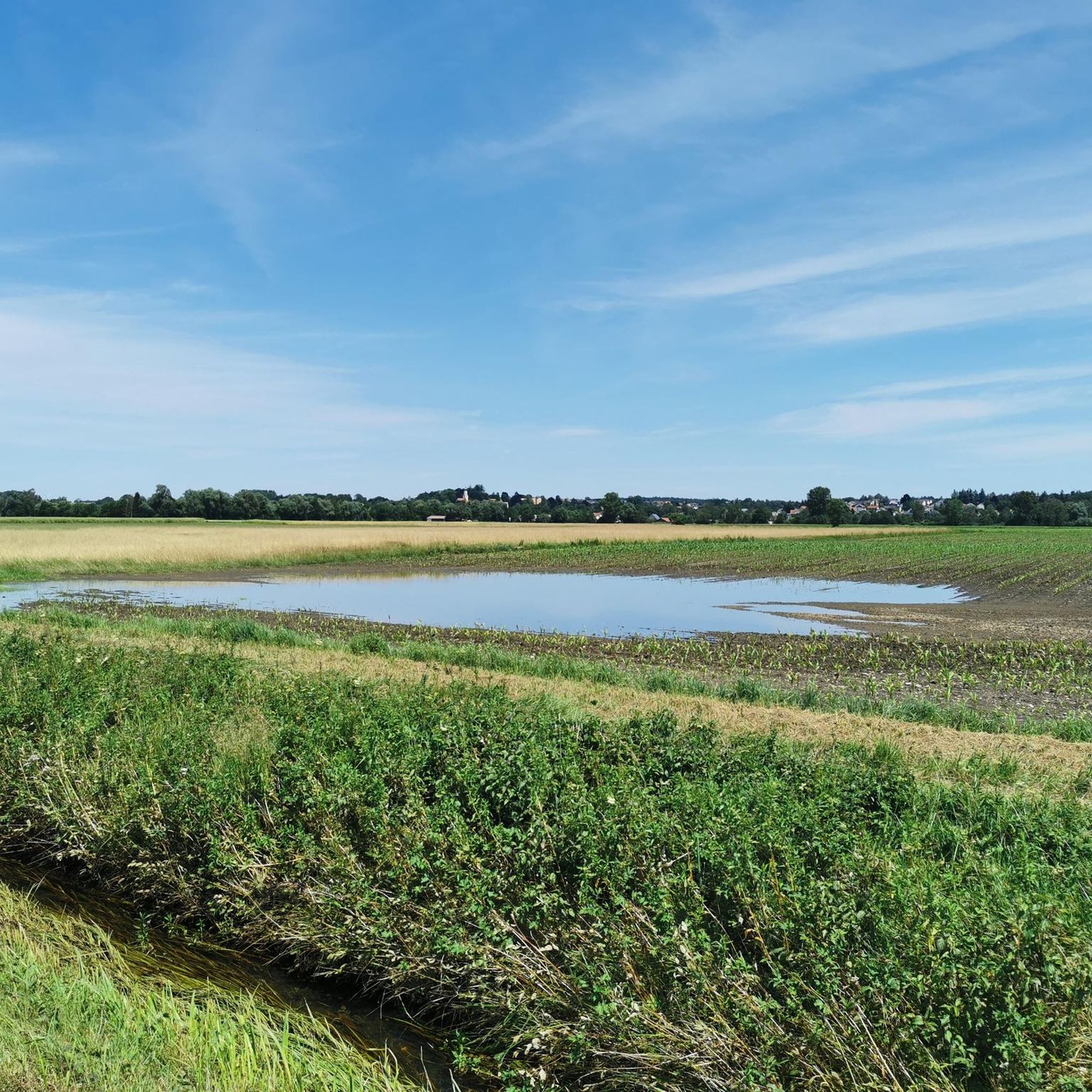
Hattenberg Castle Site The castle was built in the 12th century by the Chamberlains of Kemnat. The Hohenstaufen dynasty had granted the family the sub-advocateship over the possessions of the Bishopric of Augsburg in this area. The branch of the Kemnat family residing at Hattenberg subsequently took its name from the fortress. Several members of the family appear in contemporary documents from the 13th century. However, the castle was devastated in 1297 during a feud between the lord of the castle, Heinrich von Hattenberg, and Bishop Wolfhard von Rohr. The Prince-Bishopric of Augsburg then acquired the associated rights of lordship. Nevertheless, in 1304, the Hattenberg family was appointed Landvogt (governor) of Upper Swabia and city and district governor of Augsburg. Heavily indebted due to his military service in the army of Albrecht I of Austria, the nobleman attempted to improve his financial situation through several raids and highway robberies. The citizens of Augsburg, together with the bishop and the cathedral chapter, sued the knight before King Albrecht in 1305. Shortly thereafter, the "robber knight" was stripped of his bailiwick over the bishop's estates. The Hattenberg family line likely died out with Marquard von Hattenberg around 1370. The castle site had already been pledged by the Prince-Bishopric in 1365. In 1641, the Augsburg Cathedral Chapter purchased the Lordship of Hattenberg. Around 1780, the castle's remaining walls were demolished to make way for the construction of the brewery in Ustersbach. Later, the conical shape of the main castle was partially removed by quarrying the conglomerate rock deposits found there.
0
0

The castle was built in the 12th century by the chamberlains of Kemnat. The Hohenstaufen dynasty had granted the dynasty the sub-bailiwick over the possessions of the Diocese of Augsburg in this area. The branch of the Kemnat family based in Hattenberg subsequently named itself after the fortress. Several bearers of this name appear in contemporary documents in the 13th century. The castle was, however, already devastated in 1297 during a feud between the lord of the castle, Heinrich von Hattenberg, and Bishop Wolfhard von Rohr. The Bishopric of Augsburg subsequently acquired the associated sovereign rights.
1
0

Rhododendron blossom at Seyfriedsberg Castle
1
0

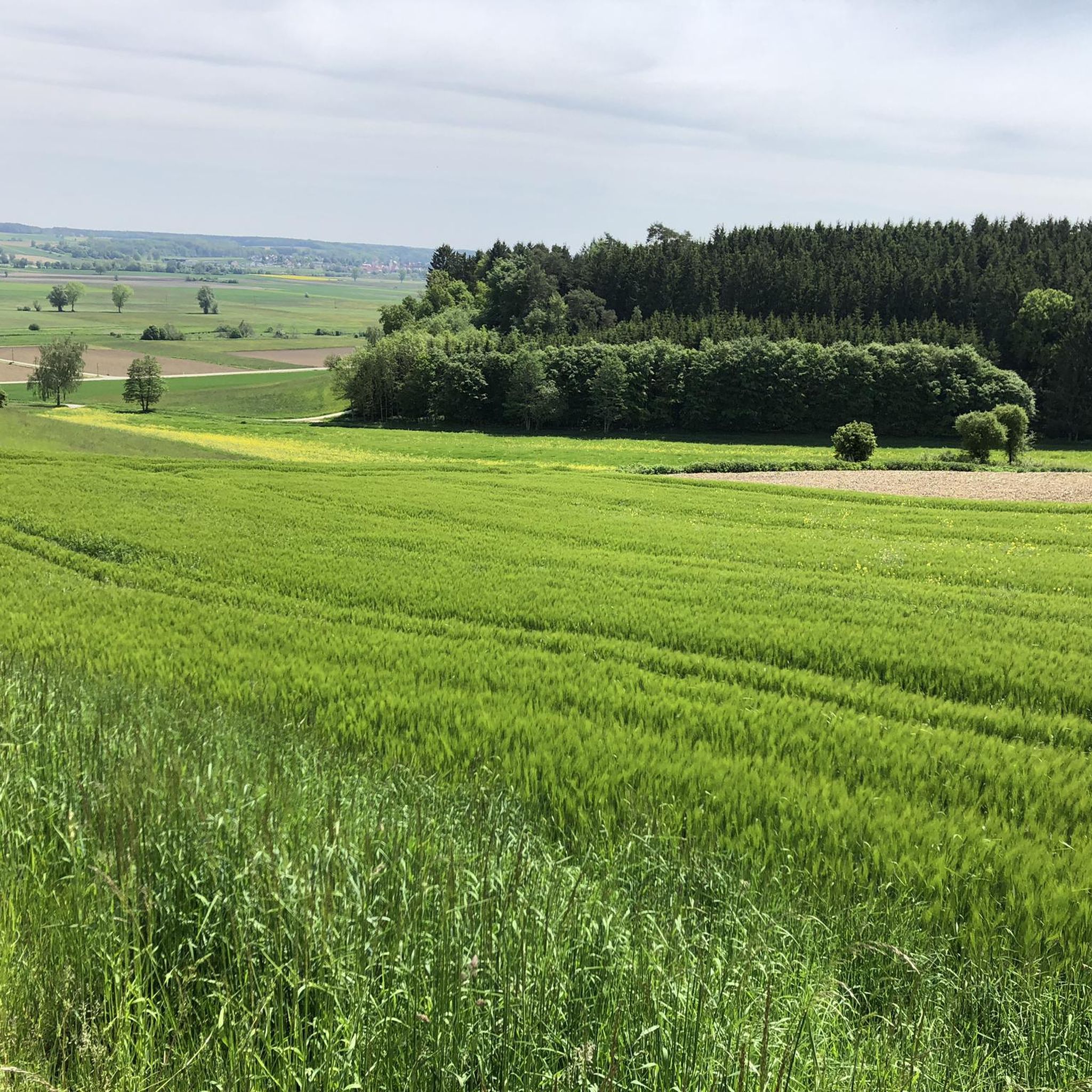
Former castle ruins with a notice board, which probably also belonged to the Oberschönefeld monastery!
1
0
Parts of an old castle that is permanently secured and with the appropriate information boards
1
0

According to the inscription above the pointed arch gate, the patrician Hans Christoph Vöhlin and his wife Veronika von Freyberg had the castle built between 1562 and 1567. The old castle was demolished. During the Thirty Years' War the building suffered significant damage from fire. Around 1658 the ruined castle was rebuilt by Christoph von Vöhlin in the Renaissance style. The rooms were further modernized from 1720 to 1730. When the male line of the Vöhlin family died out, the daughters inherited the castle and lived there until 1816. The area subsequently fell to the Bavarian crown and was given to the baronial Aretin family, who owned it until 1984. After the sale by the Aretins, extensive renovation work was carried out. The palace complex has been used as a restaurant since 1998. Source: https://de.wikipedia.org/wiki/Schloss_Neuburg_an_der_Kammel
1
0
Neuburg an der Kammel Castle is located elevated above the market town of Neuburg an der Kammel in the Günzburg district. Together with the parish church of St. Mariae Himmelfahrt, which stands on a lower plateau, the building complex, consisting of the three-story main building with a gable roof and crenellated tail gable, two-aisled chapel, gate tower and various utility buildings, determines the townscape. Source: https://de.wikipedia.org/wiki/Schloss_Neuburg_an_der_Kammel
1
0
The first stone castle was built in the 12th century as the seat of the Margraves of Burgau. From 1231 to 1301 these "milites de zusemekke" appear several times in the written sources. The castle above the Zusamtal was first destroyed in 1388 during the "City War". The troops of the imperial city of Augsburg stormed the residence after Bishop Burkhard von Ellerbach had ordered a raid on an imperial city trading train. In 1430 the Augsburg cathedral chapter bought the castle. 1485 Emperor Friedrich III. the cathedral chapter the blood ban for the reign of Zusameck. In the course of secularization fell to the Bavarian state. The castle was already in very poor condition and parts of it had to be demolished in 1801. Today only small remains of the ring wall are visible. A large part of the stone material was also taken for the construction of the Augsburg-Ulm railway line.
1
0
Frequently Asked Questions
What is the main castle in Burtenbach, and can I visit it?
The primary historical landmark in the area is Schloss Burtenbach. While it is privately owned and not open for regular public visits, you can admire its impressive Renaissance and Baroque architecture from the outside. The castle grounds, featuring a densely wooded park, are accessible via paths on both the west and east sides, offering picturesque views.
Are there any castle parks with unique natural features to explore?
Yes, Seyfriedsberg Castle Park is a notable botanical palace park. It features impressive, more than 100-year-old tree giants from around the world, including redwoods, and ancient rhododendron bushes that are particularly stunning when in bloom in May and June. The site is privately owned but accessible for visitors.
Which castle ruins offer a glimpse into the region's history?
You can visit Hattenberg Castle Ruins, a historical site that serves as a landmark of Wollmetshofen. There's a notice board detailing its past, allowing visitors to learn about its history. Another option is Wolfsberg Castle Ruins, which also has interesting trails around the historical site.
Are there family-friendly activities or places near the castles?
Many of the castle areas, such as Seyfriedsberg Castle Park and Hattenberg Castle Ruins, are listed as family-friendly. The botanical park at Seyfriedsberg offers open spaces and diverse trees for exploration. For specific family activities, consider exploring the broader Burtenbach area, which often has local events or natural areas suitable for families.
What kind of outdoor activities can I do near the castles around Burtenbach?
The region around Burtenbach offers a variety of outdoor activities. You can find numerous routes for gravel biking, road cycling, and running. For example, there are road cycling routes like the 'Paved cycle path (Gabelbach) – Ursberg Monastery loop' and running trails such as the 'Schloss Jettingen loop'. You can explore more options in the Gravel biking around Burtenbach, Road Cycling Routes around Burtenbach, and Running Trails around Burtenbach guides.
Are there hiking trails around the castles?
Yes, several castles have trails nearby. Wolfsberg Castle Ruins, for instance, is known for its interesting trails around the ruins. While Schloss Burtenbach itself is privately owned, its surrounding wooded park has accessible paths for walking. For more extensive hiking, you can find various routes in the broader Burtenbach municipality.
Is there a castle that also functions as a restaurant or offers amenities?
Neuburg Castle, located high above the market town of Neuburg an der Kammel, has been used as a restaurant since 1998. It's worth a detour on your tour, offering both historical significance and modern amenities.
What is the best time of year to visit the castles around Burtenbach?
The spring and summer months (May to August) are generally ideal. During this time, the weather is pleasant for exploring castle grounds and ruins, and natural features like the rhododendrons at Seyfriedsberg Castle Park are in full bloom. Additionally, the Wolfsberg Castle Ruins host a castle festival on the first weekend of August.
Are there any castles with religious significance or chapels nearby?
Yes, the Zusameck Castle and Chapel features the Hl. Kreuz castle chapel. This chapel was renovated and redesigned in a neo-Gothic style around 1850, and a Calvary was added on the plateau of the main castle cone. While only small remains of the castle's ring wall are visible today, the chapel remains a point of interest.
What do visitors particularly enjoy about the castles and historical sites in the Burtenbach area?
Visitors appreciate the blend of historical exploration and natural beauty. Highlights like Seyfriedsberg Castle Park are loved for their diverse tree types and ancient rhododendrons. The historical context provided by sites like Hattenberg Castle Ruins and the trails around Wolfsberg Castle Ruins also receive positive feedback, offering a tangible connection to the region's past.
How accessible are the castle grounds and ruins for visitors?
Many sites, like the grounds of Schloss Burtenbach and Seyfriedsberg Castle Park, are accessible via paths, even if the main buildings are privately owned. However, some locations, such as Zusameck Castle and Chapel, might be challenging to reach by bike, suggesting that some areas may require walking or have uneven terrain.
Most popular routes around Burtenbach
Most popular attractions around Burtenbach

Get inspired with the komoot mobile app


Explore more
Looking for the best castles somewhere else? Discover other guides around Burtenbach:
