Top 4 Caves around Fürsteneck
Best caves around Fürsteneck are found within a region characterized by the Bavarian Forest and the Wolfsteiner Ohe River. This area features significant geological formations, including the Pfahl (Bavarian Pile), a 150 km long quartz vein. The landscape offers a mix of dense forests, rock formations, and river gorges. These natural features contribute to the formation of various cave types and rock shelters.
Best caves around Fürsteneck
- The most popular caves is Buchberger Leite Rock Tunnel, a cave that…
Last updated: May 30, 2026
Buchberger Leite Rock Tunnel
Highlight • Cave
Translated by Google •
Tip by

Little stone chapel
Highlight • Natural Monument
Translated by Google •
Tip by

Sign up now to discover places like this
Get recommendations on the best single tracks, peaks, & plenty of other exciting outdoor places.
Sign up for free
Diebstein
Highlight • Natural Monument
Translated by Google •
Tip by

Quartz Cave
Highlight • Cave
Translated by Google •
Tip by

Stone Forest Shrine
Highlight • Religious Site
Translated by Google •
Tip by

Sign up for free to discover even more caves around Fürsteneck.
Sign up for free
Already have an account?
Start today with a free account
Your next adventure awaits.
Login or Signup
Popular around Fürsteneck


Tips from the Community

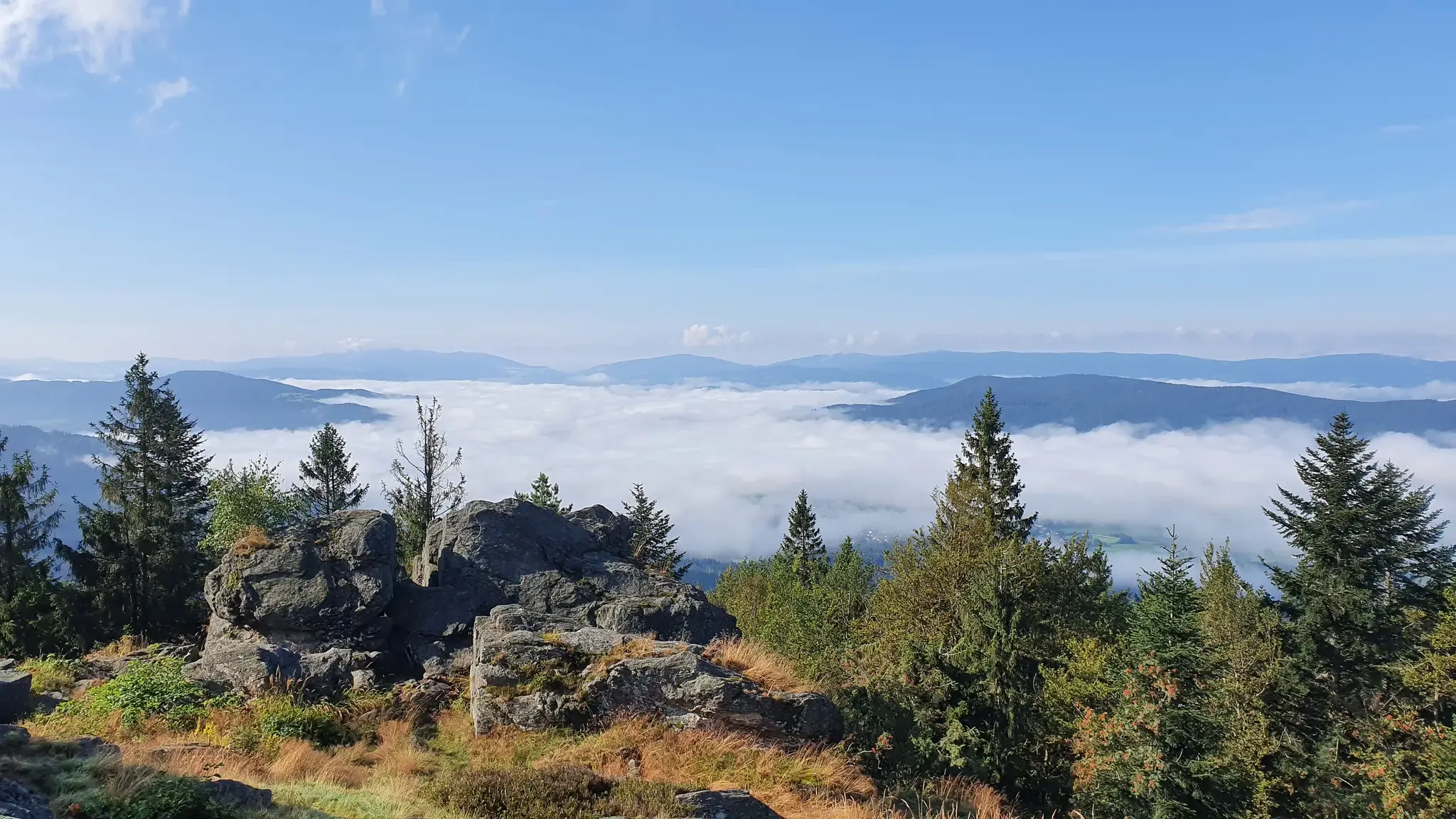
Geological observation Numerous rock outcrops with strong "Wollsack" weathering can be found in the entire area. During the Tertiary period, the rock was deeply weathered. Only in the area of more compact granite domes could the weathering not progress so quickly. During the Quaternary period, the weathered layers were eroded. Only the intact rock areas remained. The rock ensemble of rounded granite blocks near the "Steinernes Kirchlein" forms small hollows, niches, and rock passages. Bavarian State Office for the Environment (LfU). https://www.umweltatlas.bayern.de/standortauskunft/rest/reporting/sb_geotope/generate?additionallayerfieldvalue=272R028
0
0
The quartz cave is located on the northern edge of the Pfahl ridge at Thomasleite. It is part of the geotope. The outcrop is accessible via the field path from Kapfham, at the end of which is a hiking parking area. The rock ridge runs approximately east-west. In the east, the rocks consist almost entirely of gray to beige-gray quartz vein breccia of the Bavarian Pfahl, which, despite its closely spaced jointing, is quite compact due to secondary silicification. In the west, the rock ridge consists predominantly of ultramylonite, which is strongly silicified and interspersed with sharply defined quartz veins. The outcrop is bordered to the north by Pfahl schists, and on the southeast edge, there is evidence of old mining in the ultramylonite (whetstone?). A small quarry ("quartz quarry") is located on the signposted historical hiking trail of the municipality of Ringelai. Bavarian State Office for the Environment (LfU). https://www.umweltatlas.bayern.de/standortauskunft/rest/reporting/sb_geotope/generate?additionallayerfieldvalue=272R022
0
0


The Stone Church is a rock formation. The weathered rocks form towers, crevices and caves. An iron cross is attached to one such cave. Hence the name Stone Church.
1
0

It's worth a small deviation from the path. But once you see it, it's just a small cave
0
0

Beautiful landscaped grotto in the green
3
0

Mining at this quartz cave once provided the raw material for glass making
1
0
Frequently Asked Questions
What natural features can I see in the caves around Fürsteneck?
The caves around Fürsteneck are characterized by the Bavarian Forest and the Wolfsteiner Ohe River. You can explore rock tunnels, natural caves formed by weathering, and quartz caves. Notable features include the Buchberger Leite Rock Tunnel, a rock breakthrough along the Wolfsteiner Ohe River, and the Diebstein, a natural monument formed by semi-finished weathering.
Do the caves around Fürsteneck have historical significance?
Yes, several caves in the region have historical connections. The Buchberger Leite Rock Tunnel is a rock breakthrough and tunnel from WWII. The Diebstein cave was historically used as a refuge for poachers. Additionally, the Quartz Cave was once mined for raw materials used in glass making.
Are there family-friendly caves around Fürsteneck?
While specific caves may vary in accessibility, the Stone Forest Shrine is considered family-friendly. It features a beautifully landscaped grotto dedicated to Saint Mary. For other caves, it's advisable to check individual highlight details for specific accessibility information.
What is the best time to visit the caves around Fürsteneck?
The caves around Fürsteneck can be visited throughout the year, though accessibility and conditions may vary. For caves that are part of hiking trails, like the Buchberger Leite Rock Tunnel, spring to autumn generally offers the most pleasant weather for outdoor activities. Some unlit tunnels may require a flashlight regardless of the season.
What kind of geological formations can be found in the Fürsteneck region?
The Fürsteneck region is known for its significant geological formations, including the Pfahl (Bavarian Pile), a 150 km long quartz vein. This hard rock formation, carved out by weathering and erosion, contributes to the unique landscape of dense forests, rock formations, and river gorges, which in turn leads to the formation of various cave types and rock shelters.
What outdoor activities can I do near these caves?
The area around Fürsteneck offers various outdoor activities. You can find numerous routes for gravel biking, cycling, and running. For example, there are gravel biking routes like the 'Lake Erlauzwiesel – Erlauzwieseler Reservoir loop' and cycling tours such as the 'Schrottenbaummühle – Ilz Bridge Near Dießenstein loop'. Running trails include the 'Ilz Valley – Ilz Riverside Trail loop'. You can explore more options in the Gravel biking around Fürsteneck, Cycling around Fürsteneck, and Running Trails around Fürsteneck guides.
Are there any impressive dripstone caves in the wider region of Bavaria?
While Fürsteneck itself features natural rock formations and tunnels, the wider Bavarian region is home to impressive dripstone caves. The König-Otto-Tropfsteinhöhle in Neumarkt in der Oberpfalz is considered one of Germany's most beautiful dripstone caves, showcasing spectacular stalactites and stalagmites. Another notable one is Teufelshöhle (Devil's Cave) near Pottenstein in Franconian Switzerland, known for its large halls and extensive stalactite formations.
What do visitors enjoy most about the caves around Fürsteneck?
Visitors appreciate the unique blend of natural beauty and historical intrigue. Many enjoy the adventurous stretch of hiking trail that includes the Buchberger Leite Rock Tunnel, noting the great nature behind the rock breakthrough. The hidden aspects of places like the Little stone chapel, where you slip through rocks to find an altar, also captivate visitors.
Are there guided tours available for the caves in the Fürsteneck area?
The caves directly around Fürsteneck, such as the Buchberger Leite Rock Tunnel and Diebstein, are generally explored independently as part of hiking trails. However, larger, more developed dripstone caves in the wider Bavarian region, like the Teufelshöhle near Pottenstein, do offer guided tours, often with audio guides in English.
What should I wear or bring when visiting the caves around Fürsteneck?
For exploring the caves and rock tunnels around Fürsteneck, especially those part of hiking trails, comfortable hiking shoes are recommended. For unlit tunnels like the Buchberger Leite Rock Tunnel, a flashlight is useful, though not always strictly necessary. Layers of clothing are advisable as temperatures inside caves can be cooler than outside.
Can I find food and drink options near the caves?
While specific cafes or pubs might not be directly adjacent to every cave entrance, the Fürsteneck region offers various options. Many hiking trails that incorporate these caves pass through or near villages where you can find places to eat and drink. It's a good idea to check local amenities along your chosen route.
Most popular routes around Fürsteneck
Most popular attractions around Fürsteneck

Get inspired with the komoot mobile app


Explore more
Extend your search for the best caves by checking out these guides of the top ones around Fürsteneck:
