Top 4 Caves around Göfis
Best caves around Göfis are located within the mountainous landscape of Vorarlberg, Austria. This region features natural rock formations and geological monuments, offering insights into the area's natural history. These sites provide opportunities for exploration and hiking, showcasing the diverse natural features of the Rhine Valley. The area is characterized by its limestone geology, contributing to the formation of various cave systems.
Best caves around Göfis
- The most popular cave is Kalkofenhöhle Cave, a cave that was exposed during the construction of the Rhine Valley motorway. This cave was formed approximately 10,000 years ago by water and features stalactites.
- Another must-see spot is Witeleloch Cave, a natural monument and challenging cave. This rock boundary cave is one of the longest known in Vorarlberg, with a length of over 200 meters and a depth difference of 29 meters.
- Visitors also love Marien-Lourdes Grotto, Bendern, a religious building and cave. This Marian shrine, modeled on the grotto of Lourdes, was built in 1896 and serves as a site for quiet contemplation.
- Göfis is known for natural karst caves, water-formed caves, and religious grottoes. These sites offer a variety of experiences, from geological exploration to historical and spiritual reflection.
- The caves around Göfis are appreciated by the komoot community. With over 60 upvotes and more than 100 photos, these sites are well-documented by visitors.
Last updated: September 29, 2026
Witeleloch Cave
Highlight • Cave
The cave has been designated a geological natural monument since April 1979.
Source: de.m.wikipedia.org/wiki/Witeleloch
Translated by Google •
Tip by

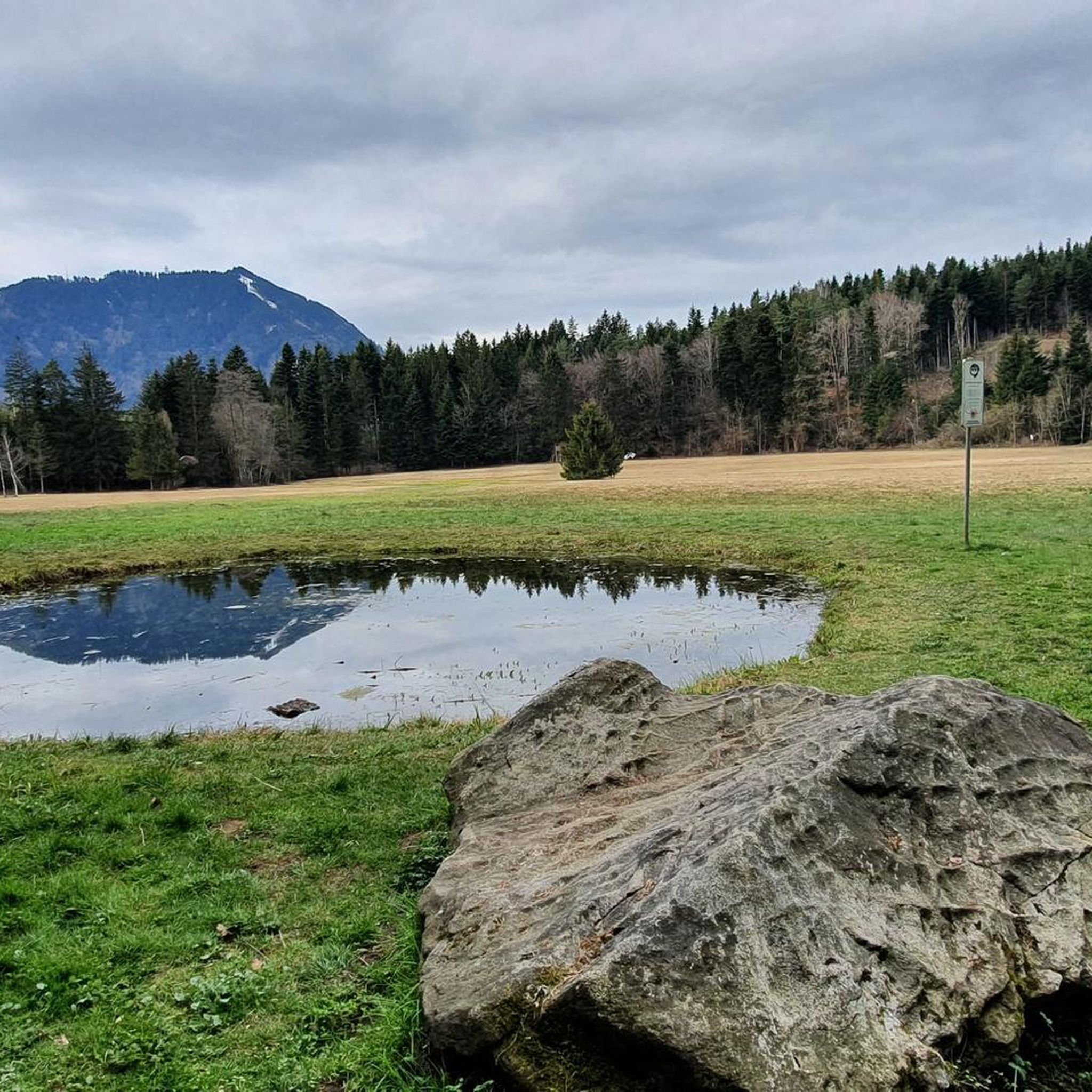
Kalkofenhöhle Cave
Highlight • Cave
Translated by Google •
Tip by

Sign up now to discover places like this
Get recommendations on the best single tracks, peaks, & plenty of other exciting outdoor places.
Marien-Lourdes Grotto, Bendern
Highlight • Religious Site
The Marien-Lourdes-Grotte is located on the west slope of the church hill of Bendern (municipality of Gamprin) at 455 m above sea level. The Marian shrine, modeled on the grotto of the Marian pilgrimage site of Lourdes (F), was built in 1896 under Pastor Franz Xaver Häusle; 1898 Consecration by the auxiliary bishop of Feldkirch. 1935 and 1979 renovations. Candlelight procession on May 1st, various pilgrimages.
Text / Source: historical lexicon - Author: Judith Niederklopfer-Würtinger
historisches-lexikon.li/Marien-Lourdes-Grotte
Translated by Google •
Tip by

Öffa Gorge
Highlight • Gorge
Daring teens or canyoning professionals sometimes dare to jump from about 6 meters into the dark water.
Translated by Google •
Tip by

Start today with a free account
Your next adventure awaits.

Tips from the Community

The Witeleloch was first described in a newspaper article around 1907 by archaeologist and amateur geologist Gero von Merhart, who used the name Elisabethhöhle. In 1922, the cave was described by Josef Blumrich, a teacher from Bregenz. The cave has been designated a geological natural monument since April 1979. Source: https://de.m.wikipedia.org/wiki/Witeleloch
8
0

Difficult to find from St. Arbogast if you don't get the right direction straight away, which can easily happen as there is no sign pointing to the cave. I ended up in the Örfla Gorge, it was nice too. You probably have to walk back along the road from St. Arbogast along Kalkofenweg, the name should actually be clue enough. Will try that soon too. Anyone who wants to can accompany me, whether young or old ;-)
1
0

The Marien-Lourdesgrotte on the Way of St. James near the church hill in Bendern is a small place of mercy of a special kind. It is used all year round at very different times of the day by people from a wide variety of backgrounds for quiet religious contemplation. A candle is lit and a fee is paid. As can be seen from some of the attached votive plaques, prayers to the Mother of God have had a positive effect in times of need. The grotto is located at the starting point of the historical high trail from Bendern to Schellenberg. The starting point of the Höhenweg, which is located in the Bendner Landstrassen crossing area, can be easily reached with the regular buses (bus station). Since the grotto is also part of the Liechtenstein cycle path network, you can also meet cyclists here. A small parking lot is available for motorists directly at the grotto. It's worth a visit!
1
0

The lime kiln cave was exposed in the course of the construction work for the Rhine Valley motorway. The bottom of the cave is two meters below the current valley floor. It was created around 10,000 years ago by the water of the original Lake Constance and later closed by the gravel of the Rhine. Stalactites and sintered tubes formed inside. The cave was opened on February 3rd, 1971 and in the next few days all stalactites were destroyed and stolen. Today the entrance to the cave is hidden behind a small pile of gravel - but can be visited. In the meantime, the first very small stalactites have formed again. (Source: Natur z'Koblach)
1
0

The first meters behind the impressive triangular portal are still accessible in daylight, the inner parts of the karst cave only with artificial lighting. At the entrance to the cave there is a small information board with an overview drawing. The hiking trail (Kapfweg) to the Witeleloch is partly steep, exposed, but easy to walk on. The cave itself should only be visited with good caving equipment.
3
0

One of the larger Maria Grottoes, below the church in Bendern.
0
0

Mary Lourdes Grotto The Marien-Lourdes-Grotte is located on the west slope of the church hill of Bendern (municipality of Gamprin) at 455 m above sea level. The Marian shrine, modeled on the grotto of the Marian pilgrimage site of Lourdes (F), was built in 1896 under Pastor Franz Xaver Häusle; 1898 Consecration by the auxiliary bishop of Feldkirch. 1935 and 1979 renovations. Candlelight procession on May 1st, various pilgrimages. Text / Source: historical lexicon - Author: Judith Niederklopfer-Würtinger https://historisches-lexikon.li/Marien-Lourdes-Grotte
18
0

Frequently Asked Questions
What types of caves can I explore around Göfis?
The region around Göfis offers a variety of cave experiences, including natural karst caves, water-formed caves, and religious grottoes. You can find geological natural monuments like the Witeleloch Cave, which is one of Vorarlberg's longest, or the Kalkofenhöhle Cave, exposed during motorway construction. There's also the Marien-Lourdes Grotto, Bendern, a Marian shrine for quiet contemplation.
Are there any challenging caves for experienced explorers near Göfis?
Yes, the Witeleloch Cave is known as a challenging cave and natural monument. It's a complex network of passages with a rapidly descending entrance hall, containing climbing sections and moist clay. It is not a show cave and lacks lighting, requiring good caving equipment and surefootedness for exploration. You can find more information about its geological significance on Wikipedia.
What are the geological features of the caves in the Göfis area?
The caves around Göfis are primarily formed in limestone, characteristic of the mountainous Vorarlberg region. The Witeleloch Cave, for instance, is a rock boundary cave formed in Schrattenkalk, originally by flowing water. The Kalkofenhöhle Cave was created by water from the original Lake Constance around 10,000 years ago, featuring stalactites and sintered tubes.
Are there any family-friendly cave experiences around Göfis?
For a family-friendly experience, the Marien-Lourdes Grotto, Bendern is a suitable option. It's a peaceful religious site modeled after the grotto of Lourdes, offering a quiet place for reflection. It's easily accessible and often visited by families.
What historical or cultural sites are associated with caves in this region?
The Marien-Lourdes Grotto, Bendern is a significant historical and religious site, built in 1896. It serves as a Marian shrine and a place for quiet contemplation. The Witeleloch Cave also has historical significance, having been described by archaeologist Gero von Merhart around 1907.
What outdoor activities can I combine with a visit to the caves near Göfis?
The area around Göfis offers various outdoor activities. You can find numerous hiking trails, including easy hikes like the 'Gletschertopf Göfis – View of Feldkirch Old Town loop'. For cyclists, there are road cycling routes and gravel biking tours, such as the 'Feldkirch Gravel Tour'.
Are there any hidden or less-known caves worth exploring?
While not strictly a cave in the traditional sense, the Öffa Gorge features an impressive natural rock dome/cave fed by a waterfall. It's described as an 'insanely beautiful little gorge' that can be challenging to navigate, sometimes requiring hip-deep water, and offers a more rugged, adventurous experience.
What is the best time of year to visit the caves around Göfis?
The best time to visit depends on the specific cave and your activity. For outdoor exploration and hiking to cave entrances, spring to autumn generally offers more favorable weather conditions. For caves that require specialized equipment like the Witeleloch, conditions inside can be consistent year-round, but access trails might be affected by snow or ice in winter.
What should I wear for caving or visiting cave sites in the Göfis area?
For caves like the Witeleloch Cave, which is challenging and lacks lighting, good caving equipment, including helmets, headlamps, and appropriate protective clothing, is essential. For more accessible sites or grottoes, comfortable walking shoes and layers of clothing are usually sufficient, as cave interiors can be cooler than outside temperatures.
Is public transport available to reach any of the cave sites?
While specific public transport routes directly to all cave entrances are not detailed, the region around Göfis is generally well-connected. For the Marien-Lourdes Grotto, Bendern, public buses can reach the starting point of the historical high trail near the church hill, making it accessible.
Where can I find parking when visiting caves near Göfis?
Parking availability varies by location. For the Marien-Lourdes Grotto, Bendern, a small parking lot is available directly at the grotto. For other natural cave sites, parking might be at trailheads or designated areas, requiring a short hike to the cave entrance.
How long does it typically take to explore the caves around Göfis?
The duration of exploration varies greatly. Visiting the Marien-Lourdes Grotto might take a short contemplative stop. For the Witeleloch Cave, which is over 200 meters long and challenging, exploration could take several hours, especially if you are equipped for deeper caving. Simpler caves like the Kalkofenhöhle Cave might be quicker to visit.
Most popular attractions around Göfis

Get inspired with the komoot mobile app


Explore more
Extend your search for the best caves by checking out these guides of the top ones around Göfis:
