The best cycling routes around Leech Lake
4.8
(5)
95
riders
6
rides
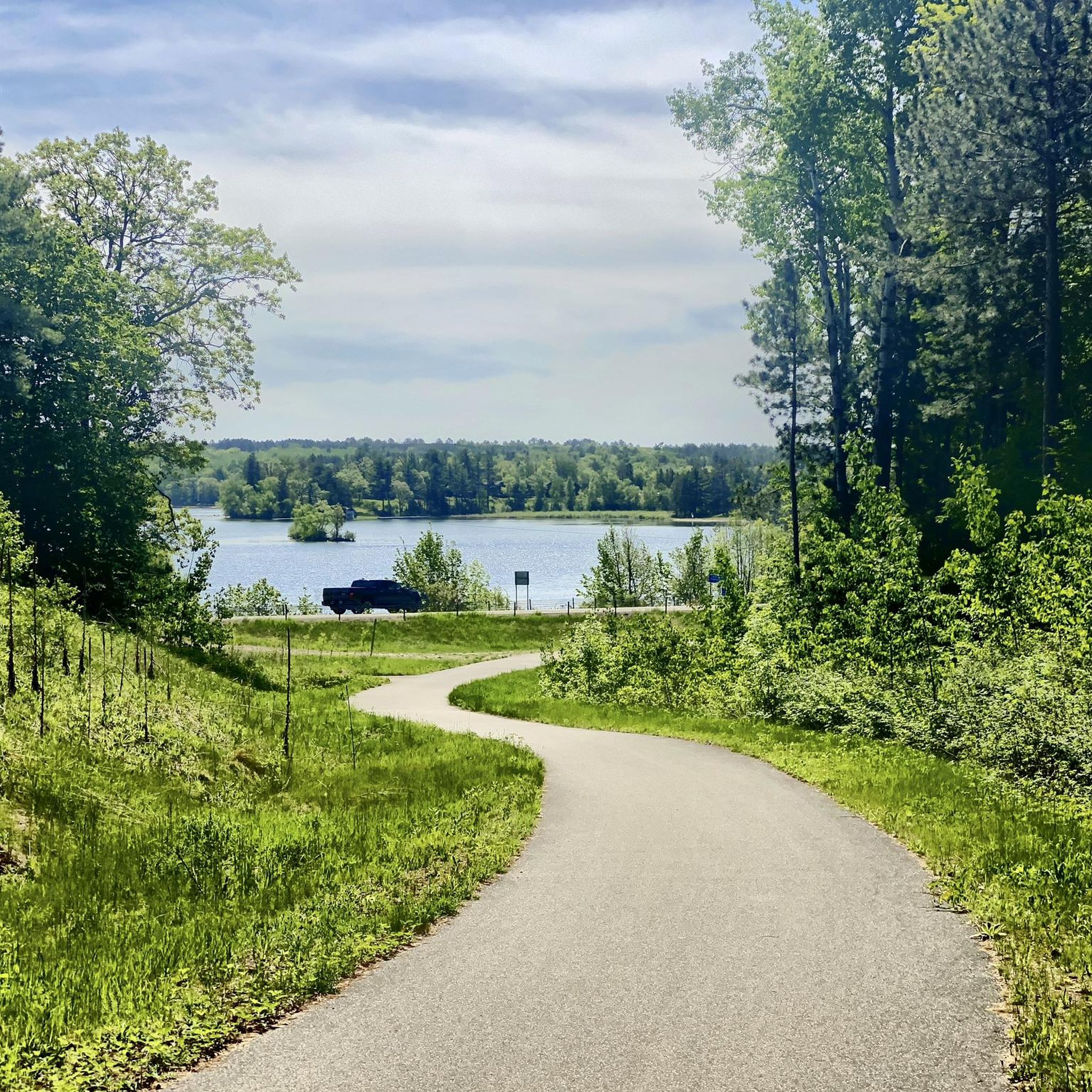
Touring cycling routes around Leech Lake are characterized by an extensive network of paved trails winding through dense forests and along the shores of Minnesota's third-largest lake. The landscape, shaped by glaciers, features varied terrain including open water, forested areas, and wetland habitats. The region is largely surrounded by the Chippewa National Forest and the Paul Bunyan State Forest, offering a mix of woodlands and gentle elevation changes suitable for cycling.
Best touring cycling routes around Leech Lake
- The most…
Last updated: November 7, 2026
5.0
(1)
18
riders
36.0km
02:10
240m
250m
Moderate bike ride. Good fitness required. Mostly paved surfaces.
5.0
(1)
20
riders
44.6km
02:40
280m
280m
Moderate bike ride. Good fitness required. Mostly paved surfaces.

10
riders
59.6km
03:33
320m
320m
Moderate bike ride. Good fitness required. Mostly paved surfaces.
4.0
(1)
4
riders
85.4km
04:55
310m
310m
Moderate bike ride. Good fitness required. Mostly paved surfaces.
5.0
(1)
21
riders
40.3km
02:26
270m
270m
Moderate bike ride. Good fitness required. Mostly paved surfaces.
Our route recommendations are based on thousands of hikes, rides, and runs completed by other people on komoot.

Tips from the Community

After the railway was built in the area, Patrick McGarry founded Walker in 1896. Walker sits on the edge of Leech Lake. It is the third largest lake in Minnesota. The Leech Lake Indian Reservation is near the city. The population consists of less than 1,000 inhabitants, but has hotels, shops and restaurants.
0
0
This museum happens to be an old train station. You will find many objects related to the railway. There are also three rooms exhibiting Native American artifacts. At the back of the museum, five log cabins show exactly what life in the forest was like over a hundred years ago.
0
0

This is the Junction of the Paul Bunyan Trail, heading west toward Akeley, Minnesota and the Shingobee Trail, heading north to Walker, Minnesota.
3
0

Lake Erin features a picnic area and short hike which leads around the perimeter of the lake. The trail is temporarily closed, but the parking lot and lakeside picnic area are open. For more information on the Lake Erin Loop Trail or to check for reopening, see the National Forest Service website: https://www.fs.usda.gov/recarea/chippewa/recarea/?recid=26832
0
0
Migizi is the Ojibwe word for bald eagle. Indeed, there are multiple bald eagle nests along the eastern shore of Pike Bay. Ojibwe, Ojibwa, or Chippewa are all words for the group of indigenous people in Northern Minnesota.
0
0
Both Pike Bay and Cass Lake are known for being one of the best fishing places in Minnesota. Walleye, northern pike, and perch populations are most notable. Pike Bay is named not for its pike population, but rather for commander Zebulon Montgomery Pike who took the region at the behest of the U.S. War Department in 1806. Cass Lake, once named Red Cedar Lake, is similarly named after General Cass.
0
0
South Pike Bay features well-maintained walking and biking paths along the Migizi Trail. The South Pike Bay Campground is open to reservations in the summer and offers lake, beach and trail access.
0
0

Originally built in the 1950s and rebuilt in 1991, Lucette is supposed to by Paul Bunyan's sweetheart. You'll know you're getting close as there are signs welcoming you to Hackensack with her likeness along the trail.
1
0
Frequently Asked Questions
How many touring cycling routes are available around Leech Lake?
There are 5 touring cycling routes available around Leech Lake, ranging from moderate to difficult, offering diverse experiences for cyclists.
Are there any family-friendly touring cycling routes in the Leech Lake area?
While all routes require a moderate level of fitness, the region is known for its extensive network of paved, multi-use trails like the Paul Bunyan State Trail and Heartland State Trail, which are generally suitable for families. These trails offer smooth surfaces and scenic views, making them enjoyable for various skill levels. For a specific route, consider the Paul Bunyan and Heartland Trail Loop, which covers 36 km.
What kind of terrain can I expect on touring cycling routes around Leech Lake?
The touring cycling routes around Leech Lake primarily feature paved rail-to-trail systems that wind through dense woodlands, along lake shores, and past wetland habitats. You'll encounter varied landscapes shaped by glaciers, including some rolling hills, especially along the southern shoreline of Leech Lake. The trails are generally well-maintained, offering a smooth ride through forests of pine, spruce, maple, and birch.
Are there any circular touring cycling routes around Leech Lake?
Yes, several routes offer a loop experience. For example, the Paul Bunyan and Heartland Trail Loop is a 36 km loop. Other circular options include the Lake Erin – Walker loop from Lake Erin (40 km) and the Shingobee Junction – Walker loop from Shingobee River (35 km).
What are some of the longer touring cycling routes available?
For a longer ride, the Red Bridge Park – Nevis Tiger Muskie Pavilion loop from Kabekona River is a challenging 100 km route. Another substantial option is the Walker – Nevis Tiger Muskie Pavilion loop from Nevis, covering 55 km.
When is the best time of year to go touring cycling around Leech Lake?
The best time for touring cycling around Leech Lake is typically from spring through fall. Summer offers warm weather and lush greenery, while autumn provides stunning vibrant fall foliage, making for incredibly scenic rides. The region is a year-round outdoor hub, but cycling is most comfortable outside of winter.
Where can I find parking and trailheads for touring cycling routes?
The Leech Lake area, being a 'Northern Minnesota Cycling Hub,' has numerous access points. Major trailheads with parking can be found along the Paul Bunyan State Trail and Heartland State Trail, particularly in towns like Walker, Park Rapids, and Cass Lake. These trails are well-integrated, with the Shingobee Connection Trail linking the Heartland Trail to the Paul Bunyan State Trail near Walker.
What natural features or wildlife might I see while cycling near Leech Lake?
While cycling, you'll be immersed in the natural beauty of the Chippewa National Forest and Paul Bunyan State Forest. Keep an eye out for diverse wildlife, including whitetail deer, raccoons, and various bird species. The Chippewa National Forest is particularly known for having one of the highest concentrations of Bald Eagles in the lower 48 states. You'll also enjoy views of Leech Lake's vast waters, bays, and islands, and might hear the distinctive call of loons.
Are there any challenging touring cycling routes for experienced riders?
Yes, for experienced riders seeking a challenge, the Red Bridge Park – Nevis Tiger Muskie Pavilion loop from Kabekona River is rated as difficult, covering 100 km with significant elevation changes. This route will test your endurance while offering expansive views of the region.
Can I find places to eat or drink near the cycling trails?
Yes, the charming town of Walker, located on the shores of Leech Lake, offers various dining and shopping options. As you cycle through the region, especially along the more populated sections of the Paul Bunyan and Heartland Trails, you'll find towns and communities with cafes, restaurants, and local establishments to refuel and relax.
What makes touring cycling around Leech Lake unique compared to other regions?
Leech Lake stands out due to its unique combination of extensive, well-maintained paved rail-to-trail systems, its status as Minnesota's third-largest lake, and its location within the vast Chippewa and Paul Bunyan State Forests. This provides a diverse cycling experience, from lakeside views to deep forest immersion, with opportunities for wildlife viewing and cultural experiences with the Leech Lake Band of Ojibwe.
What do other cyclists say about touring cycling in Leech Lake?
The area is highly rated by the komoot community, with an average score of 5.0 stars. Reviewers often praise the quiet woodlands, the well-maintained paved trails, and the stunning lake views that make for a truly immersive outdoor experience.
Are there any notable landmarks or attractions accessible from the cycling routes?
Beyond the natural beauty, the trails connect you to various points of interest. The Paul Bunyan State Trail itself is a landmark, being one of Minnesota's longest rail-to-trail systems. The town of Walker offers local culture, shops, and dining. While not directly on a route, Itasca State Park, home to the headwaters of the Mississippi River, is about an hour's drive away and offers additional hiking and biking opportunities.
Most popular routes around Leech Lake

Get inspired with the komoot mobile app


Explore more
Browse the best Cycling routes in other regions.
