The 20 Most Amazing Peaks around Ślemień
Mountain peaks around Ślemień offer diverse outdoor experiences in the mountainous region of southern Poland. The area is situated within the Beskid Mały and Beskid Makowski ranges, providing varied terrain for exploration. This location serves as a base for accessing numerous peaks, characterized by their natural features and historical significance. The landscape includes both forested slopes and open ridges, offering different perspectives of the surrounding mountains.
Best mountain peaks around Ślemień
- The most popular mountain peaks include Potrójna, a…
Last updated: October 29, 2026
Potrójna
Highlight • Viewpoint
Translated by Google •
Tip by

John Paul II's Groń
Highlight • Summit
Translated by Google •
Tip by

Sign up now to discover places like this
Get recommendations on the best single tracks, peaks, & plenty of other exciting outdoor places.
Kiczera Summit Shelter (827 m) – Beskid Mały
Highlight • Mountain Hut
Translated by Google •
Tip by

Łamana Skała (929 m)
Highlight • Summit
Translated by Google •
Tip by

Juniper (1,111 meters)
Highlight • Summit
Showing Translation
Tip by

Sign up for free to discover even more peaks around Ślemień.
Already have an account?
Start today with a free account
Your next adventure awaits.



Tips from the Community


A good place to relax. You can make a bonfire.
0
0

A place with a beautiful view. There's a shelter, a fire pit with a grill, and space to hang a hammock or pitch a tent.
0
0

Łamana Skała, also known as Madohora, is the highest peak of the Zasolskie Mountains and the second (after Czupel 933 m above sea level) peak of the entire Beskid Mały. Despite its height, it is not a tourist destination due to the lack of viewing points. The name Łamana Skała, used already in the Middle Ages, fully reflects the character of the mountain. On the summit, covered with abundant trees, there are rock outcrops made of sandstone and conglomerates, reaching a height of several meters. You can often meet rock climbers here.
2
0
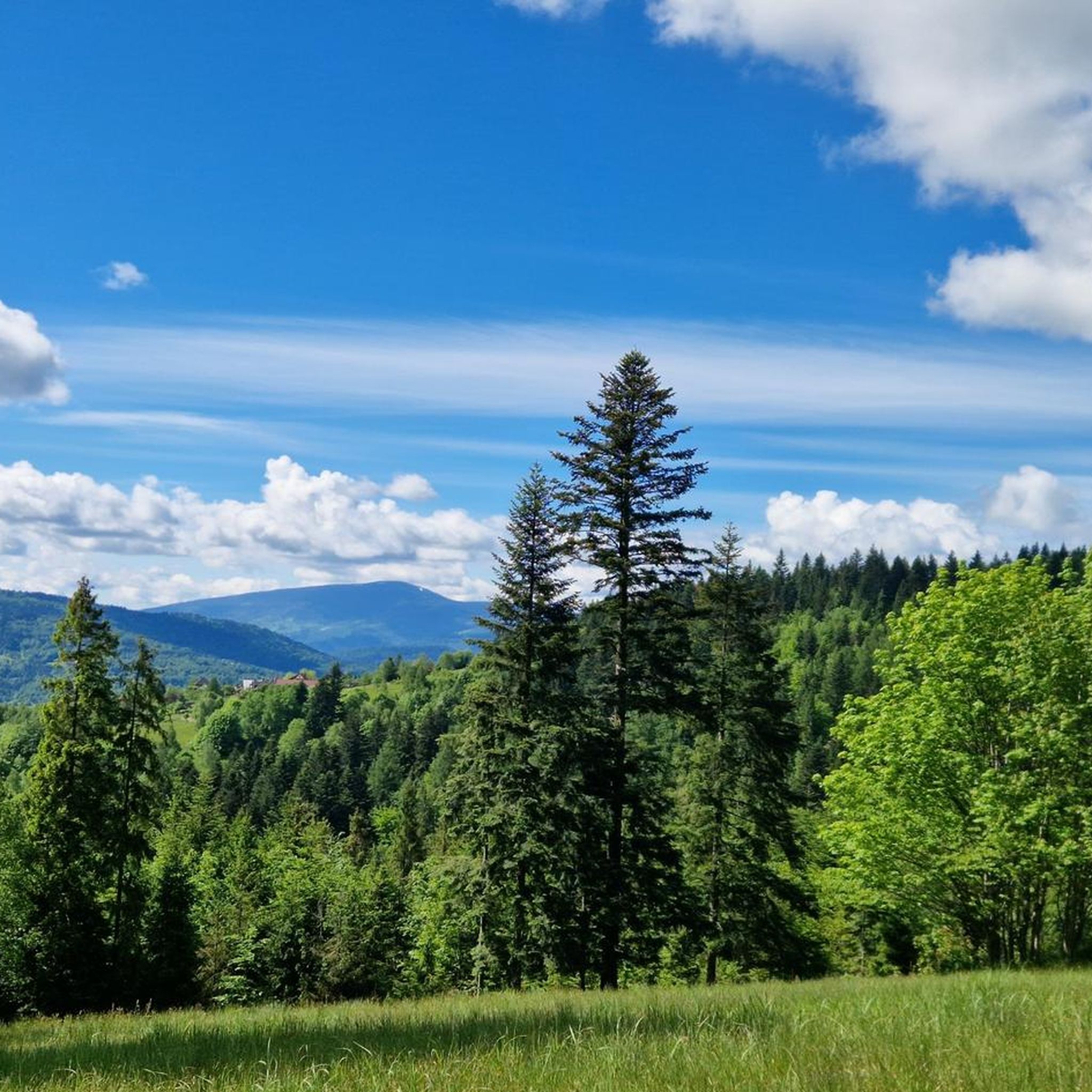
Two-peaked peak in the Beskid Andrychowski (eastern part of the Beskid Mały) Potrójna is an excellent viewpoint. Both of its peaks and the entire ridge are treeless. There are extensive pastoral pastures and meadows here, the views from which are among the most extensive in the entire Beskid Mały. The panorama includes: the Silesian Foothills, the Bliźniaków Range, the Rzycka Valley, the main ridge of the Beskid Mały, the Gorce Mountains, the Polica Range, Babia Góra, the Jałowieckie Range, Pilsko, the Żywiec Basin, the Lipowski Wierch and Romanka Group, the Wielka Racza Range and the Silesian Beskid from Glinny to Skrzyczne. On the lower peak there is a former shepherd's chapel with figures of the Virgin Mary, on the higher one there are two boards with described panoramas
1
0

A very nice, not demanding route on the Little Beskid Trail
0
0

From the beautiful summit of Jałowiec (1,111 meters) there is a wonderful panorama (views of Palenica and Kiczora, among others); there is also a board showing which mountain on the horizon is which. Many trails cross here (so there is a choice of where to go next...), there is also a shelter and a place for a campfire.
1
0

the peak of the Jałowiec Range is included in the Żywiec Beskids. The top of Jałowiec is where the borders of three towns meet: Koszarawa in the Silesian Voivodeship and Stryszawa and Zawoja, both in the Sucha County, in the Lesser Poland Voivodeship
0
0
Frequently Asked Questions
What are some of the most popular mountain peaks to explore near Ślemień?
The region around Ślemień offers several popular peaks. Potrójna is highly regarded for its extensive, treeless panoramas of the Silesian Foothills and other mountain ranges. Another notable peak is Łamana Skała (929 m), known for its unique rock outcrops that attract rock climbers. Additionally, John Paul II's Groń holds significant historical and spiritual value, offering beautiful mountain panoramas and featuring a tourist shelter.
Which mountain peaks near Ślemień have historical or spiritual significance?
John Paul II's Groń is particularly significant. It was frequently visited by Karol Wojtyła (later Pope John Paul II) during his youth. The peak features clearings and a tourist shelter, making it a popular spot for reflection and enjoying mountain views.
Are there family-friendly mountain peaks or trails around Ślemień?
Yes, Potrójna is considered family-friendly. Its accessible nature and rewarding panoramic views make it a great option for families looking to enjoy the outdoors together. The treeless ridge allows for unobstructed views, which can be particularly engaging for children.
What kind of unique natural features can I find on the mountain peaks near Ślemień?
Łamana Skała (929 m), also known as Madohora, is notable for its unique rock outcrops. These formations, made of sandstone and conglomerates, can reach several meters in height and attract rock climbers. The surrounding area also includes the Madohora Nature Reserve, adding to its natural appeal.
What outdoor activities can I do near the mountain peaks around Ślemień?
The region offers diverse outdoor activities. You can find numerous hiking trails, such as the moderate "Potrójna – Kocierska Pass loop from Little Beskids" or the more challenging "Kocierska Pass – Potrójna loop from Madohora Nature Reserve." For cycling enthusiasts, there are gravel biking and MTB trails, including the "Potrójna – Madohora Nature Reserve loop from gmina Ślemień." You can explore more options in the Hiking around Ślemień and MTB Trails around Ślemień guides.
Are there mountain shelters or accommodation options near the peaks?
Yes, there are options for hikers. Near John Paul II's Groń, you'll find a tourist shelter on Polana Bargłowa. Additionally, the PTTK Leskowiec Mountain Shelter is located at 890 m above sea level, just 800 meters from Leskowiec peak, offering amenities like a buffet, full-board kitchen, and accommodation for tourists.
What are the best viewpoints among the peaks near Ślemień?
Potrójna is renowned for its excellent vantage point, offering extensive, unobstructed views of the Silesian Foothills, Beskid Mały, and other mountain ranges due to its treeless ridge. The PTTK Leskowiec Mountain Shelter near Leskowiec also provides further mountain panoramas.
What is the difficulty level of hiking the mountain peaks near Ślemień?
The difficulty varies, with options ranging from intermediate to difficult. For example, the "Potrójna – Kocierska Pass loop from Little Beskids" is a moderate hike, while the "Kocierska Pass – Potrójna loop from Madohora Nature Reserve" is considered difficult. Peaks like Kiczera Summit Shelter (827 m) and Góra Żar are generally intermediate climbs, offering rewarding views at the top.
Can I find less crowded mountain peaks or trails around Ślemień?
While popular peaks like Potrójna offer stunning views, some areas might be less frequented. For instance, Łamana Skała (929 m), despite its height, is not a prime tourist destination for panoramic views due to its abundant tree cover, which might make it a quieter option for those seeking solitude and unique rock formations.
What is the best time to visit the mountains around Ślemień for hiking?
The Beskid Mały and Beskid Makowski ranges offer beautiful hiking experiences throughout the warmer months, typically from spring to autumn, when trails are clear and weather conditions are generally favorable for enjoying the scenic views and outdoor activities. Winter hiking is also possible but requires appropriate gear and awareness of snow conditions.
Are there any specific peaks known for rock climbing near Ślemień?
Yes, Łamana Skała (929 m) is particularly known for its rock outcrops made of sandstone and conglomerates, which can reach several meters in height. These formations attract rock climbers, offering a unique adventure in the region.
What do visitors enjoy most about the mountain peaks around Ślemień?
Visitors frequently appreciate the diverse experiences offered by the peaks. Many enjoy the breathtaking panoramic views from treeless summits like Potrójna, the historical and spiritual significance of John Paul II's Groń, and the unique geological features of Łamana Skała. The presence of mountain shelters and varied trail difficulties also contributes to a memorable visit.
Most popular attractions around Ślemień

Get inspired with the komoot mobile app


Explore more
See even more amazing summits around Ślemień with these guides:
