Attractions and Places To See around powiat tomaszowski - Top 12
Best attractions and places to see around powiat tomaszowski include a variety of historical sites, natural reserves, and cultural points of interest. The region features unique geological formations, such as former sand mines and karst springs, alongside significant historical landmarks like medieval castle ruins and 19th-century churches. Visitors can explore protected natural areas, including forests and river landscapes, offering diverse outdoor experiences. This area provides insights into regional history and natural heritage.
Best attractions and places to see around powiat…
Last updated: May 23, 2026
St. Michael the Archangel Church in Łosiniec
Highlight • Religious Site
Translated by Google •
Tip by

Susiec Observation Tower
Highlight • Viewpoint
Translated by Google •
Tip by
Sign up now to discover places like this
Get recommendations on the best single tracks, peaks, & plenty of other exciting outdoor places.
Sign up for free
Polish Soldiers' Memorial, Ulów Forest (September 1939)
Highlight • Monument
Translated by Google •
Tip by

Sylwester Chęciński Park
Highlight • Rest Area
Translated by Google •
Tip by
Zarośle Nature Reserve
Highlight • Forest
Translated by Google •
Tip by

Wólka Łosiniecka 400th Anniversary Memorial Cross
Highlight • Monument
Translated by Google •
Tip by
Memorial to the Victims of the 1944 UPA Massacre in Łubcze
Highlight • Monument
On April 5, 1944, the village was pacified by a UPA unit. …
Translated by Google •
Tip by
Łaszczów Jewish Cemetery
Highlight • Historical Site
Translated by Google •
Tip by
War cemetery from World War I and World War II
Highlight • Historical Site
The cemetery contains a large mass grave of soldiers who died in 1914, as well as the …
Translated by Google •
Tip by
Wapielnia
Highlight • Summit
Translated by Google •
Tip by
Sign up for free to discover even more attractions around powiat tomaszowski.
Sign up for free
Already have an account?
Start today with a free account
Your next adventure awaits.
Login or Signup
Tips from the Community

The war cemetery functions primarily as a separate section within the parish cemetery. The cemetery contains a large mass grave of soldiers who died in 1914, as well as the mass graves of approximately 300 Polish Army soldiers who died during the defensive war in September 1939, including during the Battle of Łaszczów. The Monument to the Fallen and Murdered also stands here, commemorating those who fought for the freedom of their homeland between 1939 and 1944.
0
0
The Jewish cemetery is located on Chopina Street, west of the market square. It was founded in the mid-18th century. During World War II, it was completely destroyed by the Nazis. They used the gravestones to pave roads and squares. Source: https://pl.wikipedia.org/wiki/Cmentarz_żydowski_w_Łaszczowie
0
0
The monument, along with the cross, commemorates the people who lived, worked, and fought in Wólka Łosiniecka. It was created in 2015 to commemorate the 400th anniversary of the founding of Wólka Łosiniecka by Ordynat Tomasz Zamoyski.
0
0

Wapielnia (386 m above sea level) is the highest peak in the Central Roztocze region. Its name comes from the fact that limestone was mined here for burning lime. There are no views, as the hill is covered in trees, but surrender to the magic of the trees, and you will relax and soothe your senses.
0
0
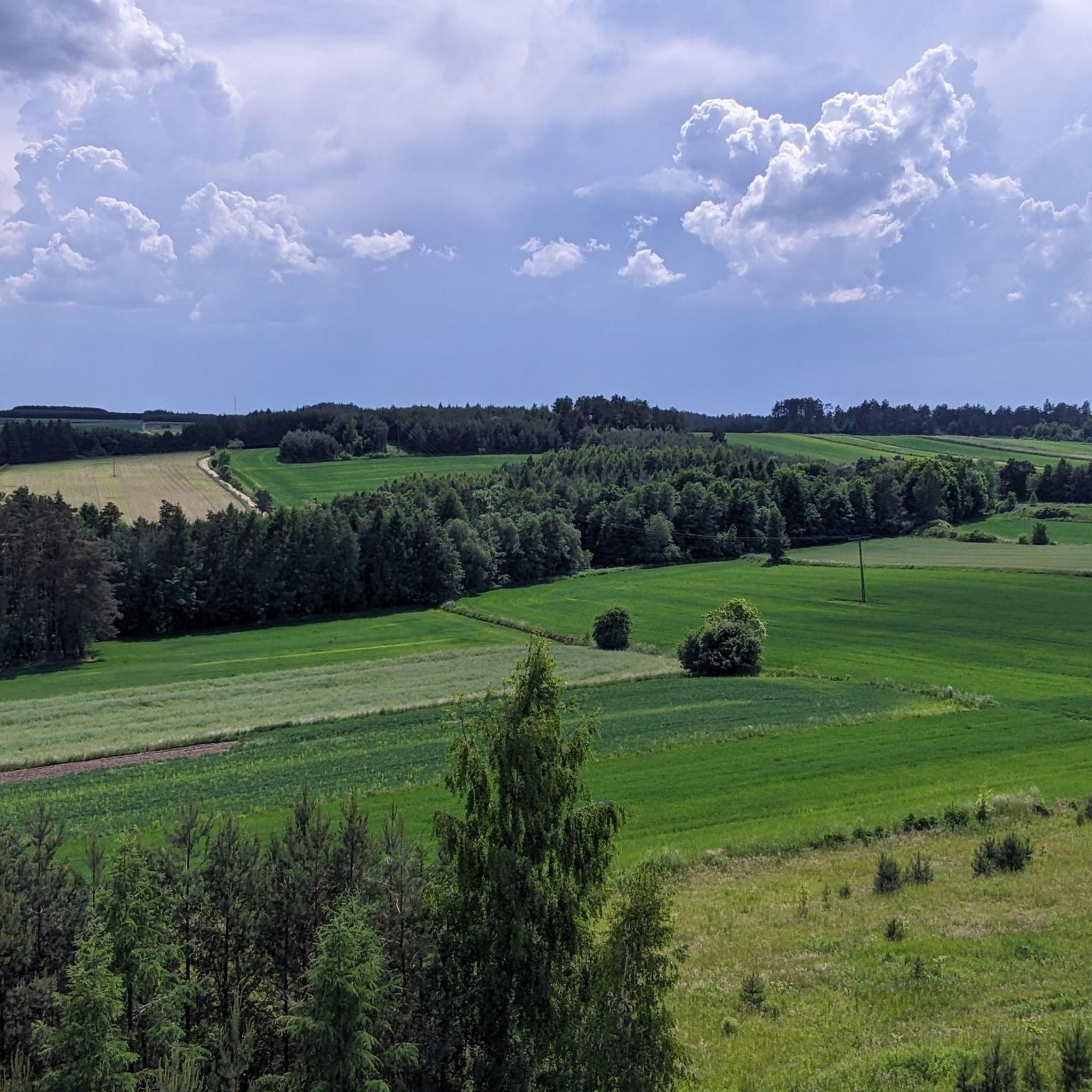
The beautiful and quiet Zarosle Reserve, with its magnificent, towering trees, lies within the Krasnobrodzki Landscape Park and covers over 60 hectares. Fir and beech trees are protected here. Here, you can escape the noise and bustle.
0
0
The inscription on the plaque reads: "A place sanctified by the heroic blood of Polish soldiers in the fight against the Nazi invader in September 1939. Glory to the heroes." The cemetery was established in September 1939 after the first Battle of Tomaszów Lubelski. In 1960, some of the buried soldiers were exhumed to war cemeteries in Łosieniec and Tomaszów Lubelski. During the fighting in the Ulów area, 216 soldiers died, including prisoners of war shot by the Germans after surrendering their weapons on September 20th in the forest near Ulów. Source: https://opencaching.pl/viewcache.php?cacheid=53196
0
0
Łubcze – a village in Poland located in the Lublin province, in Tomaszów county, in the Jarczów commune. On April 5, 1944, the village was pacified by a UPA unit. 115 people were murdered at that time, including 24 Ukrainians (according to the report, the commander of the attackers had a white and red armband on his sleeve, and the unit itself initially spoke Polish, which caused some of the Ukrainian inhabitants of the village to give Polish when asked about their nationality). Source: https://pl.wikipedia.org/wiki/Łubcze
0
0
Sylwester Chęciński (born May 21, 1930 in Susiec, died December 8, 2021 in Wrocław) - Polish film director and screenwriter, known mainly for comedies such as Sami swoi and Rozmowy Zarządu. Posthumously awarded the Grand Cross of the Order of Polonia Restituta (2021). Source: https://pl.wikipedia.org/wiki/Sylwester_Chęciński
0
0
Frequently Asked Questions
What natural attractions can I explore in Powiat Tomaszowski?
Powiat Tomaszowski offers diverse natural beauty. You can visit the unique Zarośle Nature Reserve, known for its protected fir and beech trees within the Krasnobrodzki Landscape Park. Other notable natural sites include the picturesque Niebieskie Źródła Nature Reserve with its ethereal blue-green springs, the intriguing Nagórzyckie Grottoes (former sand mines), and the scenic Czartowe Pole Nature Reserve, which protects a section of the Sopot stream with waterfalls.
Are there any historical sites or monuments worth visiting?
Yes, the region is rich in history. You can explore the ruins of Inowłódz Castle, built by King Casimir the Great, or visit the classicist Ostrowski Palace in Tomaszów Mazowiecki, which now houses a museum. Significant historical monuments also include the Polish Soldiers' Memorial in Ulów Forest, commemorating events from September 1939, and the Memorial to the murdered officers of the 13th Company, 75th Infantry Regiment.
What family-friendly activities are available in the region?
Families can enjoy a visit to the Park Edukacyjno-Rozrywkowy MIKROKOSMOS, an educational and entertainment park featuring giant insect models. The Ośrodek Hodowli Żubrów w Smardzewicach (Bison Breeding Center) is another unique attraction, being the only facility of its kind in central Poland. For active families, the Park Linowy nad Pilicą (Rope Park on the Pilica) offers three rope courses suitable for various ages.
Where can I find good hiking trails in Powiat Tomaszowski?
Powiat Tomaszowski offers several hiking opportunities. You can find detailed routes, including the 'Szlak Szumów' loop from Susiec station or trails around Jeleń Waterfall, on the Hiking around powiat tomaszowski guide. These trails often lead through natural reserves and scenic river landscapes.
Are there options for cycling enthusiasts?
Absolutely. The region provides various cycling routes for both mountain biking and road cycling. You can explore routes like the 'Orthodox church in Narol – Bukowy Las Nature Reserve loop' for MTB or the 'Lookout tower – Krasnobród Lake loop' for road cycling. More options are available in the MTB Trails around powiat tomaszowski and Road Cycling Routes around powiat tomaszowski guides.
What unique natural phenomena can I witness?
Beyond the blue springs, you can explore the Nagórzyckie Grottoes, which are former sand mine excavations now forming an underground tourist route with illuminated corridors and exhibitions. Another interesting geological feature is the Małe Groty Sandstone Caves, similar outcrops of Cretaceous sandstones. The Wapielnia summit, though tree-covered, is the highest peak in the Central Roztocze region and offers a tranquil forest experience.
Can I learn about the local culture and heritage?
Yes, the St. Michael the Archangel Church in Łosiniec is a prime example of traditional wooden sacral architecture, showcasing the region's cultural interpenetration. The Skansen Rzeki Pilicy (Pilica River Open-air Museum) is dedicated to preserving the natural and cultural values of the Pilica River, featuring a historic water mill and WWII military vehicles. Additionally, rural communes in Powiat Tomaszowski maintain vibrant folk craft traditions, often showcased at local events.
Are there any viewpoints offering scenic panoramas?
While the Wapielnia summit is covered in trees, offering a different kind of scenic experience, the Susiec Observation Tower provides a dedicated structure for elevated views of the surrounding landscape.
What kind of historical churches can I visit?
Powiat Tomaszowski is home to several historically significant churches. Besides the wooden St. Michael the Archangel Church in Łosiniec, you can visit the Neo-Gothic Evangelical Church of the Savior and the classicist Evangelical Holy Trinity Church, both in Tomaszów Mazowiecki. The Church of St. Anthony, the oldest Catholic church in Tomaszów Mazowiecki, and the wooden Church of St. Martin in Białobrzegi with its 16th-century paintings are also notable.
Is there a good time of year to visit Powiat Tomaszowski?
The region's natural attractions, such as Niebieskie Źródła and the various nature reserves, are particularly beautiful during spring and autumn when foliage is vibrant and birdwatching is excellent. Summer is ideal for water activities at Zalew Sulejowski and exploring outdoor parks. Historical sites and museums are generally accessible year-round, though some outdoor attractions might have seasonal operating hours.
Are there any memorials or sites related to wartime history?
Yes, the region has several poignant sites related to its wartime past. These include the Polish Soldiers' Memorial in Ulów Forest, the Memorial to the Victims of the 1944 UPA Massacre in Łubcze, and the Memorial to 75 Poles Murdered on December 25, 1942. There is also a War cemetery from World War I and World War II, and the Adam Loret House of Memory in Spała, dedicated to foresters who died during WWII.
What do visitors particularly enjoy about the attractions here?
Visitors appreciate the blend of historical depth and natural beauty. For instance, the St. Michael the Archangel Church in Łosiniec is valued for its unique wooden architecture and cultural significance. The Zarośle Nature Reserve is praised for its quiet, magnificent trees, offering an escape from the bustle. Many also find the historical memorials, like the Memorial to the murdered officers, to be moving and important for reflection.
Most popular routes around powiat tomaszowski

Get inspired with the komoot mobile app


Didn’t find what you were looking for?
Are you keen on exploring more awesome places nearby? Browse our guides:
Explore more
Still not found the Highlight you’re looking for? See guides of the top attractions in other regions:
