Attractions and Places To See around Terena (São Pedro) - Top 18
Attractions and places to see around Terena (São Pedro) include a mix of historical landmarks, cultural sites, and natural features in the Alentejo region of Portugal. This charming village is characterized by traditional whitewashed houses and is situated within the municipality of Alandroal. The area offers insights into ancient history, from Roman ruins to megalithic vestiges, alongside scenic natural landscapes.
Best attractions and places to see around Terena (São Pedro)
- The most popular attractions is Serra d'Ossa Boardwalks, a…
Last updated: May 20, 2026
Serra d'Ossa Boardwalks
Highlight (Segment) • Trail
Translated by Google •
Tip by

Nossa Senhora do Monte da Virgem
Highlight • Religious Site
Tip by
Sign up now to discover places like this
Get recommendations on the best single tracks, peaks, & plenty of other exciting outdoor places.
Sign up for free
Alto de São Gens
Highlight • Summit
Translated by Google •
Tip by

Alandroal town centre
Highlight • Settlement
Translated by Google •
Tip by

Menhir of Outeiro
Highlight • Monument
Translated by Google •
Tip by
Sign up for free to discover even more attractions around Terena (São Pedro).
Sign up for free
Already have an account?
Start today with a free account
Your next adventure awaits.
Login or Signup


Tips from the Community

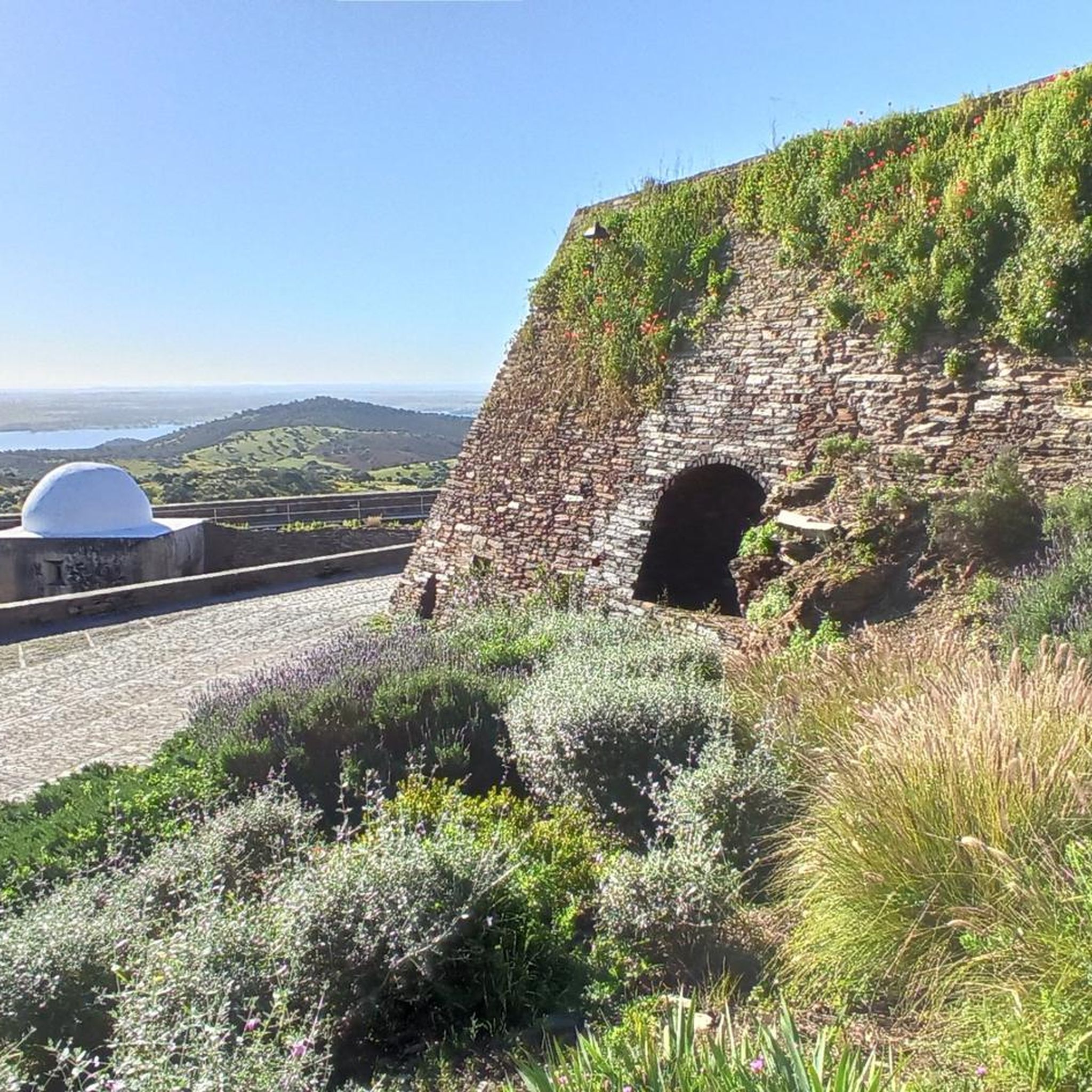
At the top of the Serra d’Ossa, at an altitude of 650 metres, stands the Alto de São Gens. Among the ruins of the old chapel dedicated to the saint, memories of an occupation that dates back more than three millennia, to the Bronze and Iron Ages, echo. This archaeological site, shrouded in legend and symbolism, was later associated by the monks of the Congregation of São Paulo with the mythical Mount of Venus, the refuge of Viriato, the legendary Lusitanian leader who, according to tradition, descended from here to confront the Romans.
0
0

This sanctuary is located in an elevated position that offers spectacular views of the city of Porto, the Douro River and the Atlantic Ocean. It is an important place of pilgrimage and devotion for the local community. In addition to its religious significance, the site is highly regarded for its viewpoint.
1
0
The municipality is known for its significant historical and cultural heritage, which includes the Alandroal Castle (its most emblematic monument), historic churches and Roman remains. Alandroal is also part of the Alentejo of wine, with quality wine production. You can stop for a break and enjoy its tranquility and the authenticity of its traditions.
1
0

At the top of the Serra d’Ossa, at an altitude of 650 metres, stands the Alto de São Gens. Among the ruins of the old chapel dedicated to the saint, memories of an occupation that dates back more than three millennia, to the Bronze and Iron Ages, echo. This archaeological site, shrouded in legend and symbolism, was later associated by the monks of the Congregation of São Paulo with the mythical Mount of Venus, the refuge of Viriato, the legendary Lusitanian leader who, according to tradition, descended from here to confront the Romans.
2
0

This is a typical rural building in Alentejo, consisting of: narthex, nave, chancel, baptistery and sacristy. Inside, in the chancel, you can see a mural painting of musicians with angels in female costumes and tiles, the latter of which were replaced during the restoration work in 1996, as was the case with the flooring.
4
1
The Serra d’Ossa Walkways run along the verdant valley of the Ribeira do Monte Virgem, along steep schist cliffs, between the village of Aldeia da Serra and the imposing Church of Nossa Senhora do Monte da Virgem, preceded by a long (and steep) staircase with approximately 300 steps. Although the Serra d’Ossa Walkways only opened in April 2021, they are already one of the must-see places in the Alentejo for all nature lovers. After all, walking along them allows you to discover a very different side of this region in the south of Portugal, more associated with vast plains than with steep cliffs. The Serra d’Ossa Walking Trail is only 1.5 km long (3 km round trip), which makes it a great walk to do with children. Not only because it is relatively short, but above all because it does not have significant differences in height, with the exception of the section of the staircase that precedes the Church of Nossa Senhora do Monte da Virgem. ( www.vagamundos.pt )
5
0
This is a typical Alentejo rurality construction, consisting of: narthex, nave, chancel, baptistery and sacristy. Inside, the chancel, one can see a mural musicians with angels in female attire and tiles, the latter, replaced during the restoration, in 1996, as happened with the pavement.
4
1
The Menhir do Outeiro (in Portuguese: Menir do Outeiro), also known as Menhir no Sítio do Penedo Comprido, is a megalith located halfway between the villages of Outeiro and Barrada, in the municipality of Reguengos de Monsaraz, in the district of Évora, in the Alentejo region of Portugal, just a few kilometres from the Portuguese-Spanish border. This menhir was discovered in 1969 by Henrique Leonor Pina and José Pires Gonçalves and, on their initiative, it was raised again around 1970. The menhir was classified as a Portuguese National Monument in 1971.
5
0
Frequently Asked Questions
What historical landmarks can I explore in Terena (São Pedro) and its surroundings?
Terena (São Pedro) is rich in history. You can visit the Castelo de Terena, a Gothic-style castle from the 13th century, and the Capela da Boa-Nova (Sanctuary of Nossa Senhora da Assunção da Boa Nova), a rare fortified church. The village also features the 16th-century Pelourinho and a Clock Tower. Nearby, explore the Roman ruins of Endovélico and the megalithic Menhir of Outeiro, a classified National Monument.
Are there any family-friendly activities or attractions in Terena (São Pedro)?
Yes, there are several options for families. The Serra d'Ossa Boardwalks offer an easy 1.5 km walk (3 km round trip) suitable for children, with minimal elevation changes. In summer, the Lucefécit Dam provides opportunities for swimming. Exploring the historic Alandroal town centre with its castle and churches can also be an engaging family outing.
What natural features and outdoor activities are available in the Terena (São Pedro) area?
The region offers beautiful natural landscapes. The Serra d'Ossa Boardwalks provide a unique perspective of the Alentejo's schist cliffs. The Lucefécit Stream and Dam area is historically significant and offers swimming in summer. You can also find megalithic remains like the Antas of Lucas and the impressive Menir da Pedra Alçada. The wider Alentejo region is known for cork and holm oak trees, wildflowers, and stargazing opportunities in the Alqueva Dark Sky Reserve.
What kind of hiking trails can I find near Terena (São Pedro)?
You can find a variety of hiking trails. The Serra d'Ossa Boardwalks offer an accessible 1.5 km trail along the Ribeira do Monte Virgem. For more extensive options, explore the running trails around Terena (São Pedro), which include routes like the 'Our Lady of Monte da Virgem – Alto de São Gens loop' and the 'Poio Grande – Anta do Lucas loop', ranging from moderate to difficult.
Are there cycling routes available around Terena (São Pedro)?
Yes, the area is suitable for cycling. You can find various routes for touring and road cycling. Options include scenic loops like the 'View of the Alqueva Reservoir loop' and the 'Castle of Alandroal – Alandroal town centre loop'. For more details and specific routes, refer to the Cycling around Terena (São Pedro) and Road Cycling Routes around Terena (São Pedro) guides.
What is the significance of the Lucefécit Stream and Dam?
The Lucefécit Stream and Dam area is one of Portugal's most ancient and historically rich natural sites. It has been considered a sacred place since pre-Roman times, with numerous archaeological artifacts dating back to the 3rd century BC discovered here. Beyond its historical importance, the dam offers opportunities for swimming during the summer months.
What is the <a href="https://www.komoot.com/highlight/6565020" target="_blank" rel="noopener">Serra d'Ossa Boardwalks</a> like, and is it suitable for everyone?
The Serra d'Ossa Boardwalks run along the Ribeira do Monte Virgem, offering a different perspective of the Alentejo region with its steep schist cliffs. The trail is 1.5 km long (3 km round trip) and is considered family-friendly due to its relatively short length and minimal elevation changes, making it suitable for most visitors, including children.
What can I expect to see in <a href="https://www.komoot.com/highlight/5149967" target="_blank" rel="noopener">Alandroal town centre</a>?
Alandroal town centre is known for its significant historical and cultural heritage. Visitors can explore the Alandroal Castle, historic churches, and Roman remains. It offers a glimpse into the tranquility and traditions of the Alentejo region, and is also part of the Alentejo wine region.
Are there any ancient archaeological sites near Terena (São Pedro)?
Yes, the area is rich in ancient history. You can find the Roman ruins of the fortified village of Endovélico and its sanctuary. Additionally, there are several megalithic vestiges from prehistoric times, such as the Antas of Lucas, and the impressive Menhir of Outeiro, which is a classified Portuguese National Monument.
What is the traditional architecture like in Terena (São Pedro)?
Terena (São Pedro) showcases typical Alentejo architecture. The tranquil streets are adorned with traditional whitewashed houses, often featuring distinctive blue or yellow trims, which contribute to the village's charming character.
What do visitors enjoy most about the attractions around Terena (São Pedro)?
Visitors appreciate the blend of historical depth and natural beauty. The Serra d'Ossa Boardwalks are a favorite for nature lovers, offering a unique landscape. The historical significance of sites like the Castelo de Terena and the Capela da Boa-Nova, combined with the authenticity and tranquility of places like Alandroal town centre, are highly valued.
Where can I find panoramic views in the Terena (São Pedro) area?
For spectacular views, head to Nossa Senhora do Monte da Virgem, which is located in an elevated position. Another excellent viewpoint is Alto de São Gens, situated at the top of the Serra d’Ossa, offering expansive vistas of the surrounding landscape.
Most popular routes around Terena (São Pedro)

Get inspired with the komoot mobile app


Explore more
Still not found the Highlight you’re looking for? See guides of the top attractions in other regions:
