The best walks and hikes in Isparta
4.1
(8)
33
hikers
4
hikes
Hiking in Isparta offers diverse landscapes, from the majestic Taurus Mountains to the serene shores of Lake Eğirdir. The region is characterized by its varied terrain, including mountain trails, ancient city ruins, and natural parks like Kovada and Gölcük. Hikers can explore a network of paths that traverse pine forests, canyons, and areas known for their rose and lavender fields.
Best hiking trails in Isparta
- The most popular hiking route is Tea Stop with Panoramic View – Ancient City of…
Last updated: May 19, 2026
3.7
(3)
16
hikers
Hard hike. Very good fitness required. Easily-accessible paths. Suitable for all skill levels.
3.7
(3)
8
hikers
6.02km
02:01
290m
290m
Moderate hike. Good fitness required. Easily-accessible paths. Suitable for all skill levels.

Sign up for free
5.0
(2)
6
hikers
Easy hike. Great for any fitness level. Easily-accessible paths. Suitable for all skill levels.
3
hikers
5.07km
01:46
280m
280m
Easy hike. Great for any fitness level. Easily-accessible paths. Suitable for all skill levels.
Our route recommendations are based on thousands of hikes, rides, and runs completed by other people on komoot.
Start today with a free account
Your next adventure awaits.
Login or Signup
Popular around Isparta
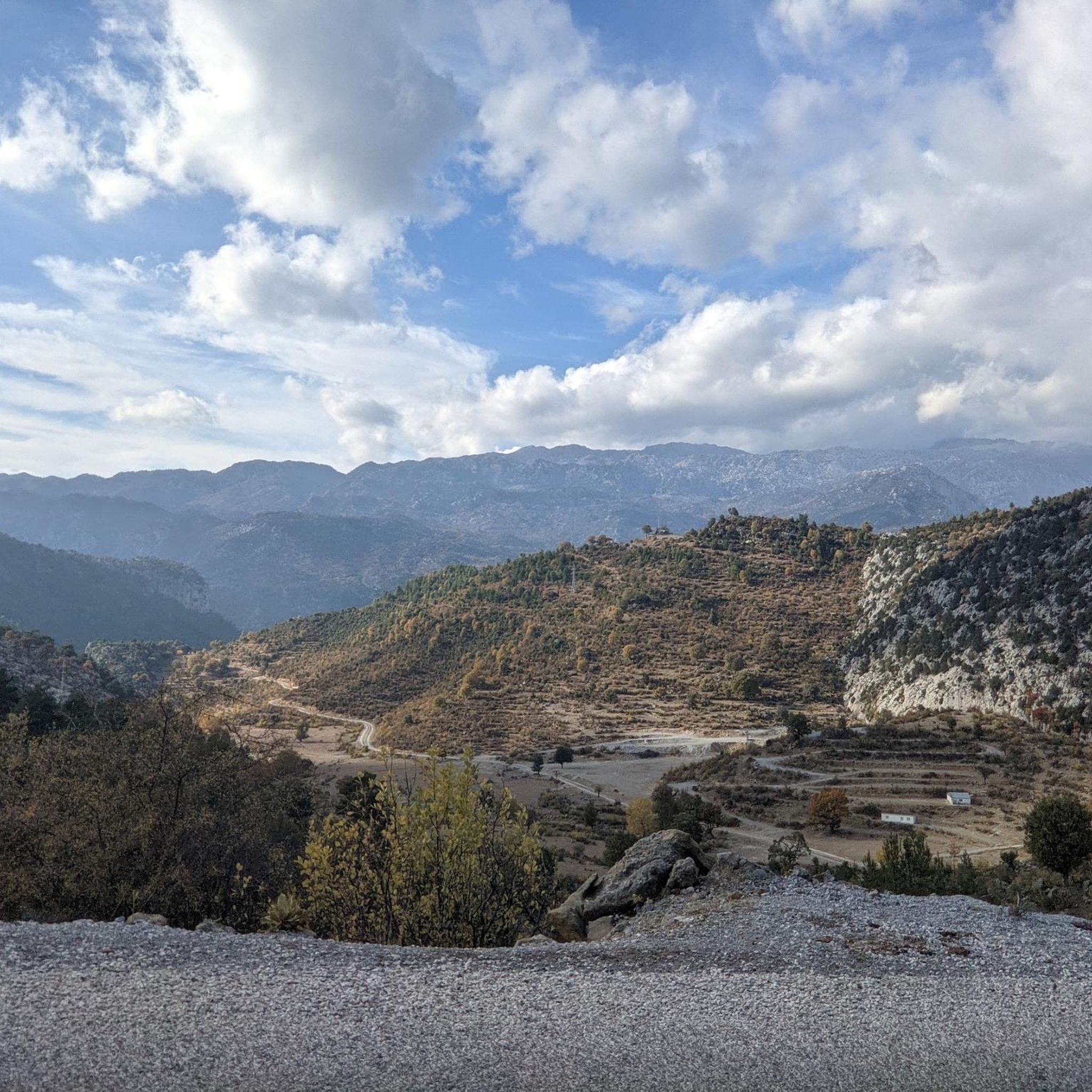
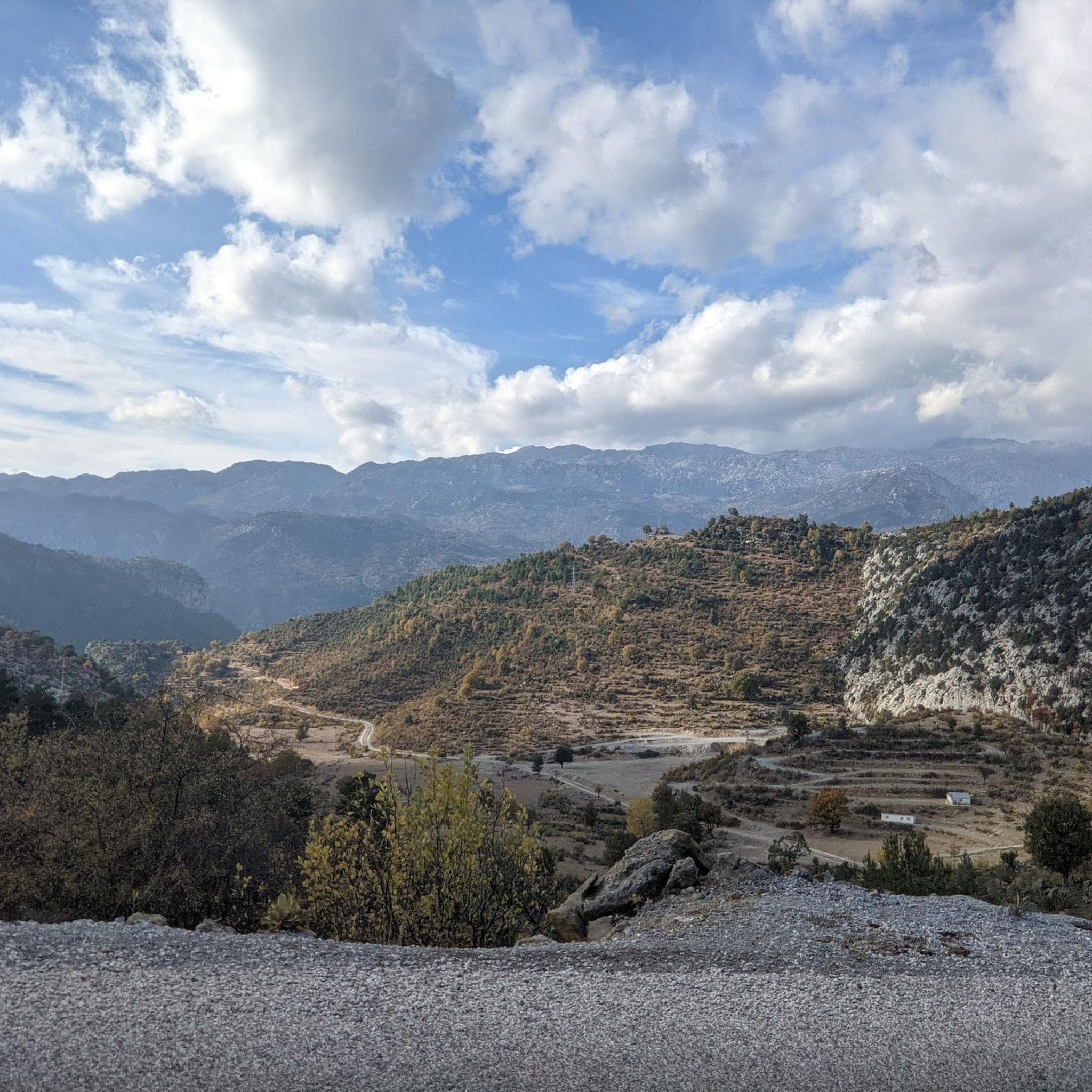
Tips from the Community

Due to super strong gusts of wind, I decided to err on the safe side and not finish the last little bit up Sivri Peak as I could barely stand upright when fully exposed. So I walked over here to get the views.
0
0
There are more ruins of buildings towards the ruined watch tower and city wall. It is unclear if this was the upper city of ancient Prostanna or some ruins - like a military outpost as you can see far in three directions - from a different time period.
0
0
Old watchtower and city wall. There are more ruins of buildings towards Sivri Peak. It is unclear if this was the upper city of ancient Prostanna or some ruins - like a military outpost as you can see far in three directions - from a different time period.
0
0
THE ANCIENT CITY OF PROSTANNA Prostanna, which was more like a head quarters than a city, was founded before the Hellenistic Period. The city was aband one dafter the Roman Rule. The old estrelic from the city is an inscription erected in honor of a person irom the province of Asia. The inscriptior., which dates back to 113 BC, reads "The people of Prostanna in Pisidia". The coins minted by the city of Prostanna first appeared in the 1st century BC. In this city, which is surrounded by walls, are a temple, an acropolis and remains of a rectangular structure. In the middle-ages, the name of the city was changed as Akroterion.
0
0
A Theatre with a View Roman culture was well-known for its popular spectacles. Politicians and emperors gave the masses what they wanted: bread and games. The quintessential Roman institutions were the amphitheatre for gladiatorial combat and circus for chariot racing. together with the theatre for plays and the stadium for athletic performances. In the historical region of Pisidia mainly the latter two were common. By and large, the theatre of Sagalassos remained faithful to the cultural and architectural traditions of the Greek world, providing a place for entertainment, assembly and religious events. The seats were arranged in a bowl-shaped cavea, partly built against a natural slope and partly supported by substructures, allowing efficient circulation of throngs of visitors. The stage building had a single-storey architecturally articulated backdrop. This setting exploited the dramatic panoramic setting, which was a trend in ancient Pisidia.
0
0
The Northwest Heroon Monument to an anonymous benefactor This heroon was built around the year 1 AD, during the reign of the Emperor Augustus. The monument was recently re-erected using its original stones. Architects could tell where each block belonged on the monument by looking at the original connection holes on the stones. Visible from afar, the monument stands on a square podium 7.80 by 8.50 meters and is 15 meters high.. A heroon is a small monument that honours a local benefactor. Sometimes heroa also served as graves for these individuals. Members of the local aristocracy of Sagalassos constructed such monuments in order to be remembered. Heroa were built within the inhabited areas of Sagalassos until Early Imperial times. The Northwest Heroon was a monument for a young aristocrat, whose name is unknown. Archaeologists have not found a dedicatory inscription. However, they did find parts of a 2.5-meter high statue of this person, including the marble.
0
0
This monumental fountain, dating to 129-132 AD, was built on a terrace above the Lower Agora and dedicated to Emperor Hadrian. A flight of eight steps leads you to the basin of the fountain; behind it you can see the remaining part of the monument's back wall. Originally 17m high, this was the only two-storey fountain at Sagalassos. Functional and prestigious at the same time, the monument was aligned with the south Colonnaded Street so that visitors could see its upper storey as they entered the city. The fountain was commissioned by the first Roman knight of Sagalassos, Tiberius Claudius Piso, who ordered its construction in his will. He dedicated the monument to Emperor Hadrian. It was common in Roman provincial towns for local aristocrats and benefactors to dedicate monuments to the emperors. This helped them display their connections with Rome.
0
0
Frequently Asked Questions
What are the general difficulty levels of hiking trails in Isparta?
Isparta offers a diverse range of hiking trails suitable for various experience levels. You'll find options from easy strolls to more challenging mountain climbs. According to komoot data, there are 2 easy routes, 1 moderate route, and 1 difficult route available, ensuring there's something for everyone.
When is the best time of year to go hiking in Isparta?
The optimal times for hiking in Isparta are during spring and autumn. These seasons offer pleasant weather conditions and vibrant natural scenery, which are ideal for exploring both the historic sites and the diverse natural landscapes of the region.
Are there any family-friendly hiking options in Isparta?
Yes, Isparta has trails suitable for families. For an easier experience, consider the Lower Agora of Sagalassos – Hadrian's Nymphaeum loop from Sagalassos. This 2.6 km (1.6 miles) easy route takes about 45 minutes and allows families to explore ancient ruins in a manageable setting.
What kind of natural features and landmarks can I expect to see while hiking in Isparta?
Isparta's hiking trails often lead through breathtaking natural features and historical landmarks. You can explore the majestic Taurus Mountains, the serene Lake Eğirdir, and natural parks like Kovada and Gölcük. Many routes also pass through ancient sites such as Antioch in Pisidia, Temple of Augustus, and the dramatic setting of Sagalassos Ancient City, which features a well-preserved theatre and the 1,800-year-old Antonine Fountain. The region is also famous for its rose and lavender fields during blooming seasons.
Are there any circular hiking routes in Isparta?
Yes, Isparta offers several circular hiking routes. One example is the Akpınar Mosque – Ancient City of Prostanna loop from Akpınar, a moderate 6.0 km (3.7 miles) path that combines natural scenery with ancient sites. Another option is the Stone Fountain – Ancient City of Prostanna loop from Akpınar, an easy 5.1 km (3.1 miles) trail through historical landscapes.
Are there any challenging hikes for experienced trekkers in Isparta?
For experienced hikers seeking a challenge, Isparta offers routes with significant elevation gain. The Tea Stop with Panoramic View – Ancient City of Prostanna loop from Eğirdir is a difficult 15.3 km (9.5 miles) trail with over 760 meters (2,500 feet) of elevation gain, providing panoramic views and a rewarding experience.
What do other hikers say about the trails in Isparta?
The hiking routes in Isparta are highly rated by the komoot community, with an average score of 4.2 stars from over 7 reviews. Hikers often praise the diverse terrain, the stunning views of the Taurus Mountains and Lake Eğirdir, and the unique opportunity to combine nature exploration with visits to ancient historical sites.
Are there hiking trails in Isparta that offer scenic viewpoints?
Absolutely. Many trails in Isparta provide spectacular viewpoints. The region's location within the Taurus Mountains and around Lake Eğirdir naturally creates numerous opportunities for panoramic vistas. The Tea Stop with Panoramic View – Ancient City of Prostanna loop from Eğirdir is specifically highlighted for its panoramic views.
Are there any trails that lead to ancient cities or historical sites?
Yes, Isparta is rich in historical context, and many trails weave through ancient sites. You can hike to the ancient city of Prostanna, as seen in routes like the Akpınar Mosque – Ancient City of Prostanna loop from Akpınar. The region is also home to Sagalassos Ancient City, where you can explore ruins like the Lower Agora and Hadrian's Nymphaeum.
How long do hikes in Isparta typically take?
The duration of hikes in Isparta varies significantly depending on the route's length and difficulty. Easy trails, such as the Lower Agora of Sagalassos – Hadrian's Nymphaeum loop from Sagalassos, can be completed in under an hour. Moderate routes might take around 2 hours, while more difficult and longer trails, like the Tea Stop with Panoramic View – Ancient City of Prostanna loop from Eğirdir, can take over 5 hours.
Are there any specific attractions or points of interest near the hiking trails in Isparta?
Beyond the trails themselves, Isparta boasts several notable attractions. Hikers can visit historical sites such as St. Paul's Church and 1st-Century Synagogue Ruins, the Triumphal Arch of Hadrian, and the ancient city of Antioch in Pisidia. Natural points of interest include the Beyşehir Pass, offering scenic views.
Most popular routes in Isparta
Most popular attractions in Isparta

Get inspired with the komoot mobile app


Explore more
Browse the best Hikes in other regions.
