The best MTB trails around Quintela De Leirado
4.6
(5)
39
riders
15
rides
Mountain bike trails around Quintela De Leirado traverse a diverse landscape within the province of Ourense, Galicia, bordering Portugal. The region is characterized by the "Aguillón" and "Leboreiro" mountain ranges, offering varied terrain for cycling. It is part of the "Serra do Leboreiro" transfrontier park and the Natura 2000 network, highlighting its rich natural ecosystems. Riders can expect routes that navigate river valleys, including the Miño, Arnoia, and Deva, alongside areas of pine, oak, and birch forests.
Best mountain bike…
Last updated: October 11, 2026
4.0
(2)
16
riders
49.4km
04:29
930m
930m
This difficult 30.7-mile mountain biking loop in Peneda-Gerês National Park explores ancient megalithic sites and diverse terrain.
5.0
(1)
8
riders
34.0km
02:55
630m
630m
This moderate 21.2-mile mountain biking loop in Peneda-Gerês National Park offers challenging terrain, river views, and historical sites.

5.0
(1)
8
riders
29.0km
02:19
510m
510m
Explore the Peneda-Gerês National Park on this moderate 18.1-mile mountain biking loop from Lamas de Mouro, featuring diverse terrain.
1
riders
65.3km
06:28
1,880m
1,880m
Tackle a difficult 40.6-mile mountain bike loop from Lamas de Mouro, gaining 6155 feet through the Gerês-Xurés Biosphere Reserve.
4.0
(1)
3
riders
Moderate mountain bike ride. Good fitness required. Suitable for all skill levels.
Get access to more routes and recommendations from other explorers.
Already have an account?
Our route recommendations are based on thousands of hikes, rides, and runs completed by other people on komoot.
Start today with a free account
Your next adventure awaits.

Tips from the Community

The Laboreiro Waterfall (Cascata do Laboreiro) is one of the most beautiful spots in Peneda-Gerês National Park, located near the village of Castro Laboreiro in Melgaço. It's a waterfall formed by the Laboreiro River, which cascades down between granite rocks, creating natural pools. The surroundings are spectacular: mountains, native vegetation, and panoramic views of the valley. Ideal for photography and enjoying nature in its purest form.
1
1

These are the ruins of a Romanesque castle with a walled enclosure around a central tower with a cistern, located on the top of an isolated hill at 1,033 meters (3,389 feet) above the Minho and Lima rivers. It has an oval plan oriented north-south. The main entrance is the Porta do Sol, which opens to the east, while the Gate of Traitors, the Porta do Sapo, is located at the other end. The exit is well-maintained and normal for its location.
0
0
Excellent restaurant with regional Portuguese dishes. Stunning views of the castle and the valley below.
0
0
A picturesque waterfall from the Castro Laboreiro River. The water cascades from the rocky sill, forming a few steps. The streambed is narrow, surrounded by rocks, and the water flows very fast. There's a hiking trail leading to the waterfalls. You can also admire them from the nearby bridge.
1
1
The medieval church Igreja Matriz de Santa Maria da Visitação de Castro Laboreiro, or simply Igreja de Santa Maria da Visitação (Visitation of the Virgin Mary) or Igreja Matriz de Castro Laboreiro, is located in the small town (Portuguese: Vila) of Castro Laboreiro. The church was first mentioned in 1241, when the monastery of Celanova transferred ownership of the church to Sancho II (Portuguese: Sancho II o Capelo). In 1319, the church was entrusted to the Knights of the Order of Christ of Bragança. https://de.wikipedia.org/wiki/Igreja_Matriz_de_Santa_Maria_da_Visita%C3%A7%C3%A3o_de_Castro_Laboreiro Somewhat hidden in a side room is a small, free museum with liturgical objects and figurines.
1
0
The original pillory dates back to 1560. It was dismantled in 1860, and its parts were reused in several houses in the village. Between 1980 and 1985, some parts were salvaged and the pillory rebuilt. Pillories were a long-standing part of the judicial system in Castile.
1
0
To support their families, many men from Castro Laboreiro had to work far away as sailors or laborers. Their wives often waited longingly for their return. This is why they were said to have often dressed in mourning black and gazed down at the deep valley in the evenings. In the past, when the man emigrated, the Castro woman would wear a black cloak (“viúva do homem vivo”) to express her mourning.
1
0

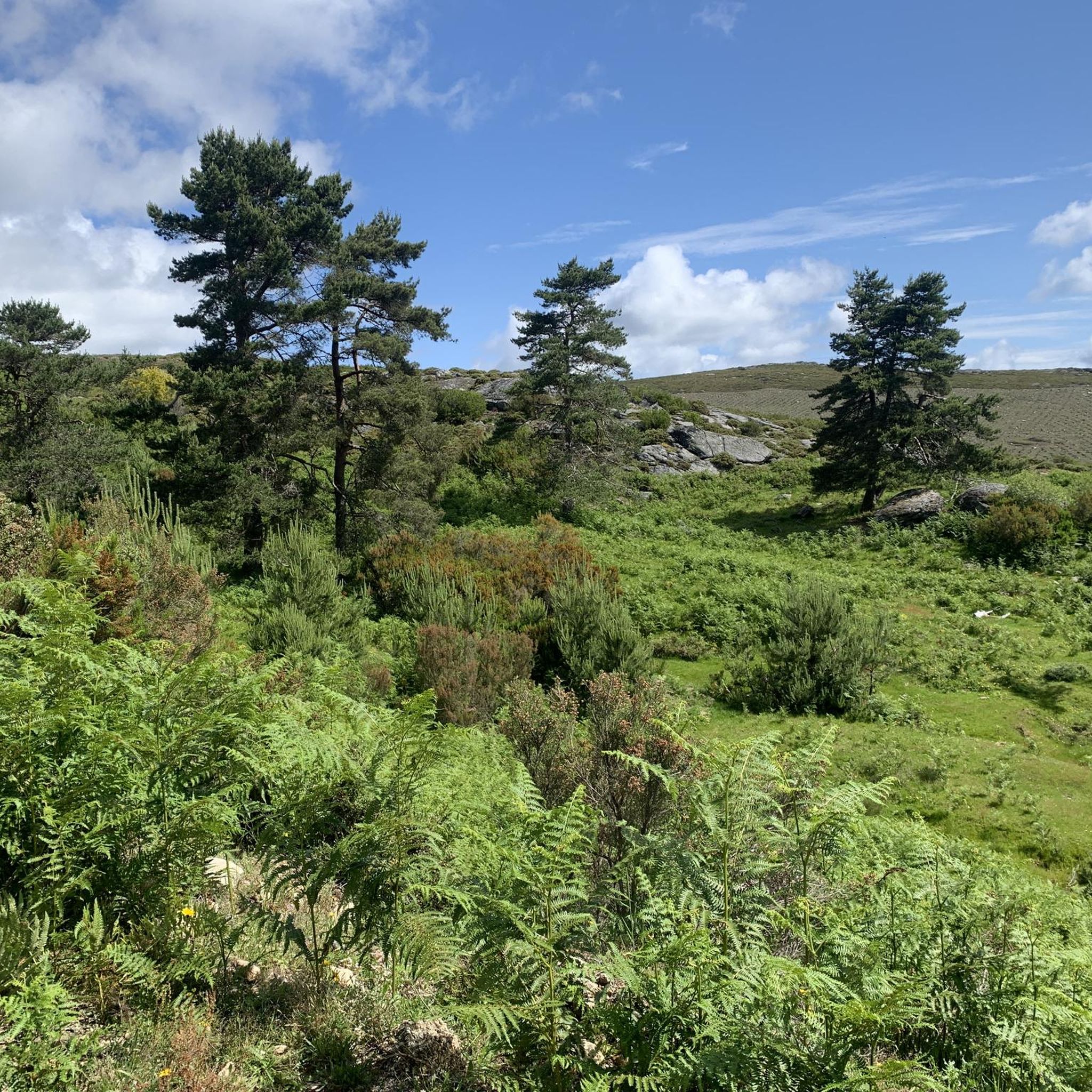
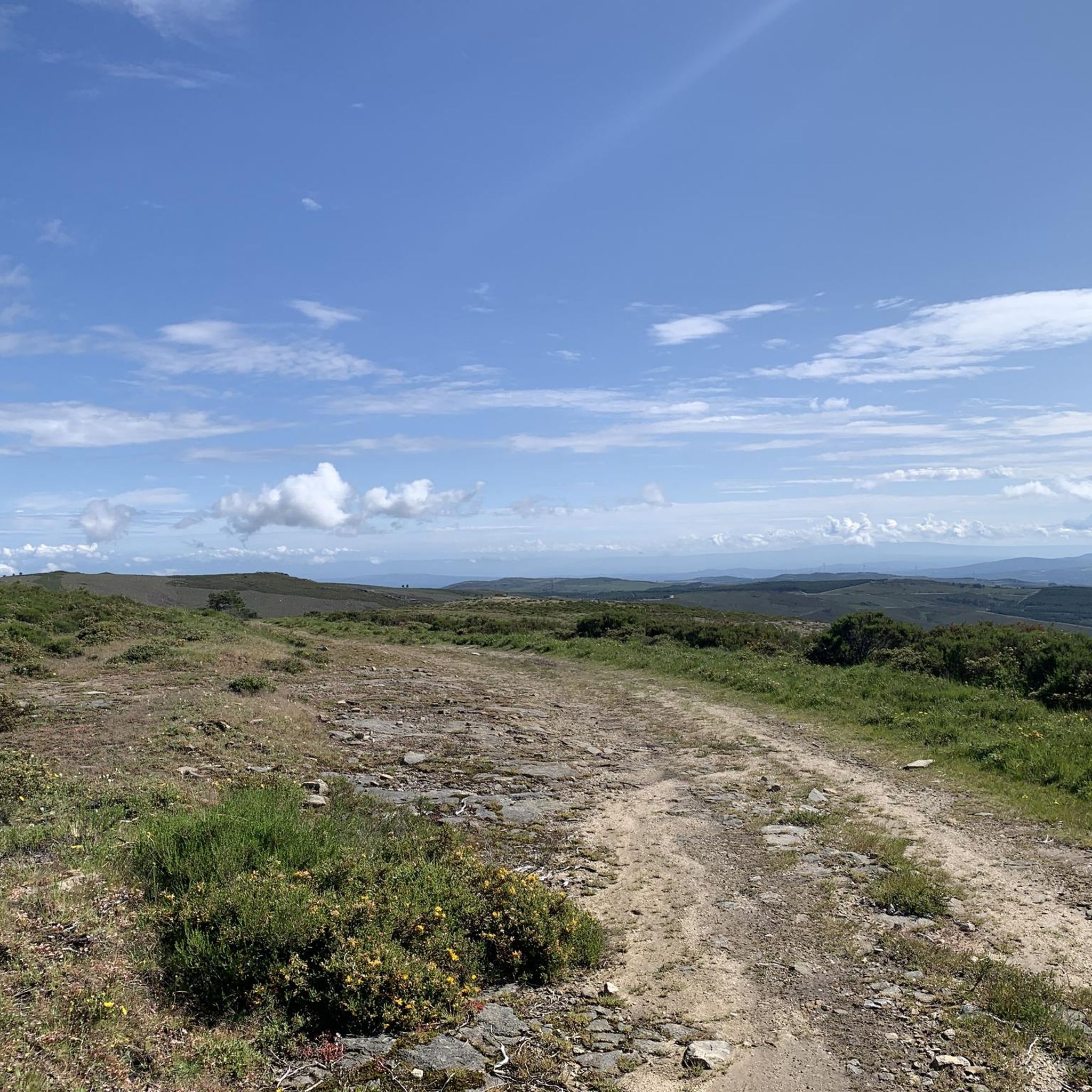
The trail here is rocky and at times not easy to cycle, but you're immersed in greenery amidst the sounds, colors, and scents of nature.
1
0
Frequently Asked Questions
How many mountain bike trails are available around Quintela De Leirado?
There are 14 mountain bike trails around Quintela De Leirado, offering a variety of experiences for riders. These routes are highly rated by the komoot community, with an average score of 4.5 stars.
What are the difficulty levels of mountain bike trails in this region?
The trails around Quintela De Leirado cater to various skill levels. You'll find 10 moderate routes and 4 difficult routes, ensuring there's a challenge for most mountain bikers. There are no easy routes listed in this selection.
Are there any loop trails for mountain biking in Quintela De Leirado?
Yes, the region offers several excellent loop trails. For a challenging ride, consider the Castro Laboreiro Plateau Megalithic Loop, which covers 49.4 km. A moderate option is the Lamas de Mouro and Castro Laboreiro Loop, spanning 34.0 km. Another moderate loop is the Castro Laboreiro Stone Bridges – Alto da Portela do Pau loop from Castro Laboreiro at 29.2 km.
What kind of landscapes can I expect on mountain bike trails near Quintela De Leirado?
Mountain biking around Quintela De Leirado offers diverse landscapes, from the "Aguillón" and "Leboreiro" mountain ranges to river valleys like the Miño, Arnoia, and Deva. You'll ride through areas of pine, oak, and birch forests, experiencing the rich natural ecosystems of the "Serra do Leboreiro" transfrontier park and Natura 2000 network.
Are there any trails with significant elevation gain for advanced riders?
Absolutely. Advanced riders looking for significant elevation gain will find challenging options. The Ring route from Lamas de Mouro towards Mosteiro de Fiães is a difficult 65.3 km trail with substantial climbing. Another difficult route is the Castro Laboreiro Plateau Megalithic Loop, which features considerable elevation gain across the plateau over 49.4 km.
Are there any viewpoints or panoramic vistas along the mountain bike routes?
Yes, the region is known for its stunning panoramic views. From elevated points in the "Aguillón" and "Leboreiro" mountain ranges, such as Penagache (1,226 meters), you can enjoy magnificent vistas of the Miño, Arnoia, and Deva river valleys, the Limia river, and even glimpse into neighboring Portugal. Many trails are designed to lead to these spectacular viewpoints.
What natural attractions or landmarks can I see while mountain biking?
Beyond the scenic trails, you can explore several natural and historical attractions. The region features rivers like the Limia and Deva, with the Deva offering natural pools. The "Salto do Gato" waterfall is particularly impressive in winter. You might also encounter megalithic burial monuments and hear legends of a Moorish cave under Penagache.
Are there any historical sites or points of interest near the trails?
Yes, the area is rich in history. You can visit the impressive Castro Laboreiro Castle, explore the ancient Old Bridge of Castro Laboreiro, or discover the unique Ponte da Cava da Velha. The Varziela Bridge and Varziela Village also offer a glimpse into the region's past.
What is the best time of year for mountain biking in Quintela De Leirado?
The region's diverse flora and fauna, along with its rivers and waterfalls, make it appealing throughout the year. The "Salto do Gato" waterfall is particularly impressive during winter months when water volume is high. However, for comfortable riding conditions and to fully enjoy the natural pools in the Deva River, the warmer months are generally preferred, though the water can be quite cold due to tree shade.
What kind of wildlife might I spot while mountain biking?
As part of the Natura 2000 network and "Serra do Leboreiro" transfrontier park, Quintela de Leirado boasts rich flora and fauna. While specific wildlife sightings can vary, you'll be riding through protected ecosystems, increasing your chances of encountering local wildlife in their natural habitat amidst the pine, oak, and birch forests.
Are there any long-distance mountain bike routes for multi-hour rides?
Definitely. For longer rides, consider the difficult Ring route from Lamas de Mouro towards Mosteiro de Fiães, which spans 65.3 km and typically takes over 6 hours to complete. Another substantial option is the Castro Laboreiro Plateau Megalithic Loop, a 49.4 km difficult trail that takes around 4.5 hours.
Most popular routes around Quintela De Leirado
Most popular attractions around Quintela De Leirado

Get inspired with the komoot mobile app


Explore more
Browse the best MTB trails in other regions.
