The best cycling routes in Ceahlău National Park
5.0
(4)
56
riders
4
rides
Touring cycling in Ceahlău National Park offers routes through a mountainous landscape dominated by the Ceahlău Massif and bordered by Lake Izvorul Muntelui. The region features significant elevation changes, with trails often providing views of the lake and surrounding peaks. Dense forests and river valleys characterize much of the terrain, making for challenging but rewarding cycling experiences. The area also includes notable geological features such as Bicaz Gorge and the Red Lake.
Best touring cycling routes in Ceahlău National Park
…Last updated: October 6, 2026
5.0
(2)
8
riders
Hard bike ride. Very good fitness required. Mostly paved surfaces. Suitable for all skill levels.
5.0
(1)
23
riders
94.2km
06:22
1,600m
1,600m
Hard bike ride. Very good fitness required. Mostly paved surfaces. Suitable for all skill levels.

3
riders
41.2km
03:45
960m
960m
Hard bike ride. Very good fitness required. Mostly paved surfaces. Suitable for all skill levels.
5.0
(1)
22
riders
83.9km
05:44
1,500m
1,500m
Hard bike ride. Very good fitness required. Mostly paved surfaces. Suitable for all skill levels.
Our route recommendations are based on thousands of hikes, rides, and runs completed by other people on komoot.
Start today with a free account
Your next adventure awaits.
Tips from the Community

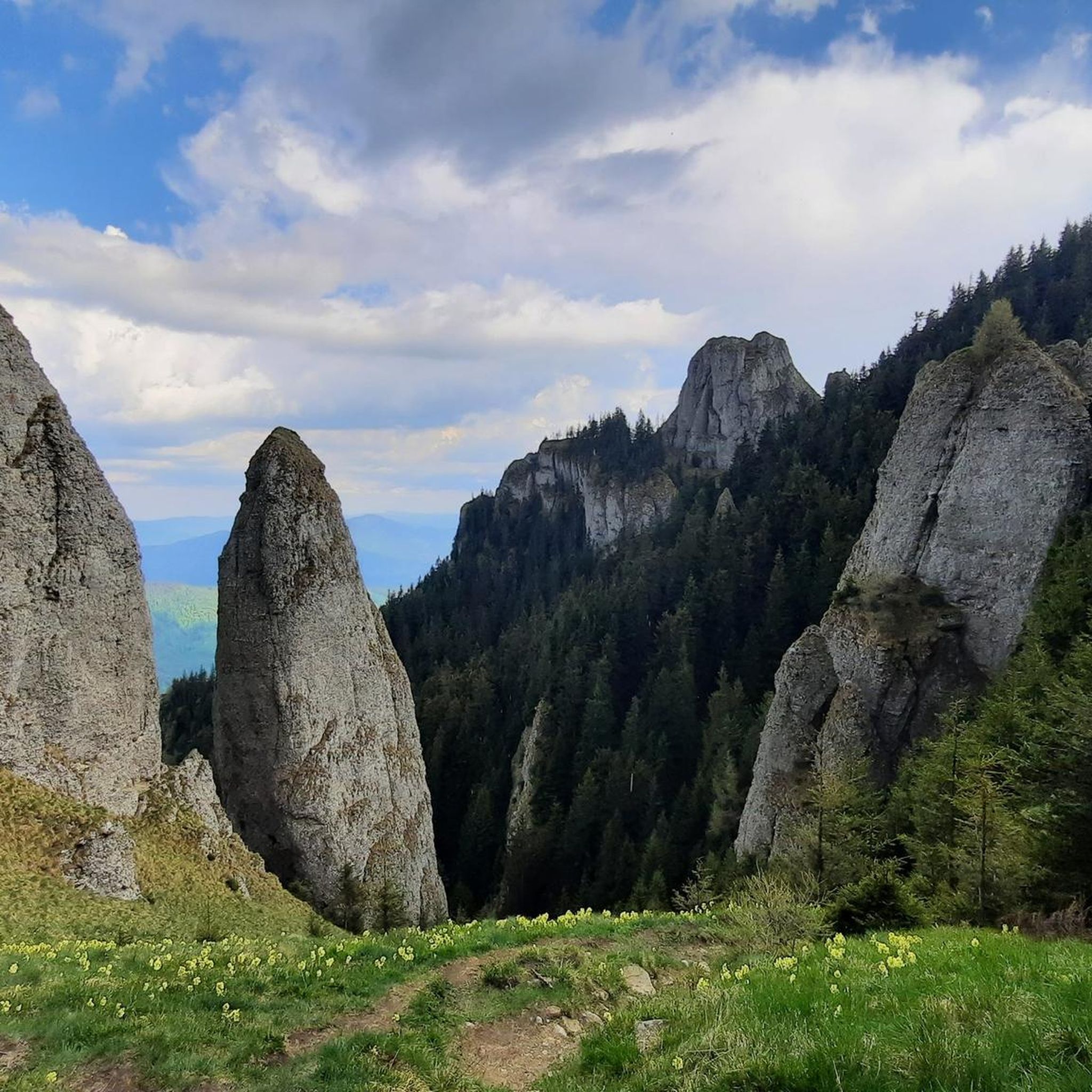
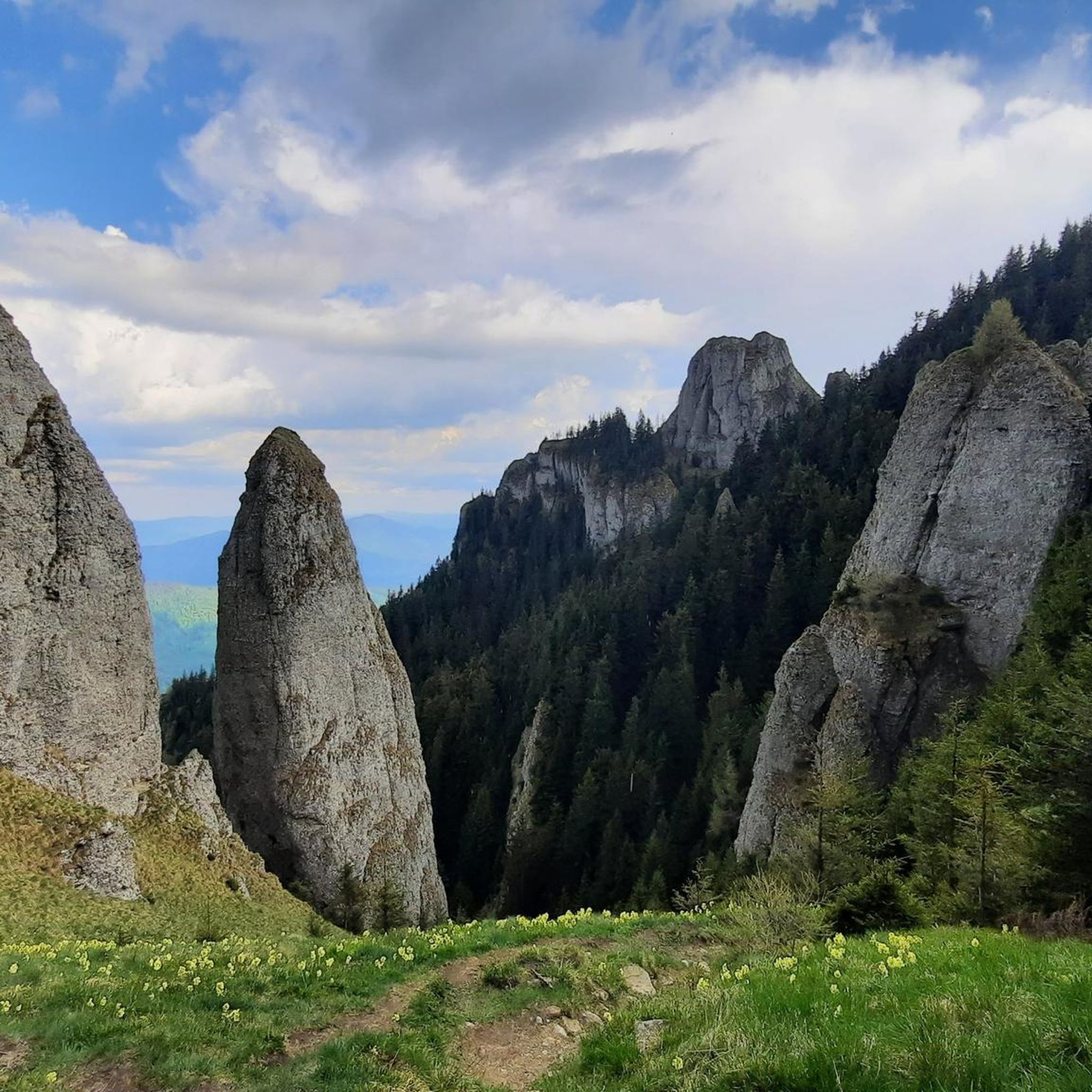
The Ceahlău Massif in the Eastern Carpathians (Neamț County) is considered one of Romania's "holiest mountains" and is a natural and cultural heritage of unique beauty. With its distinctive, rocky peak (1,904 m), reminiscent of a giant cathedral, and its mystical atmosphere, it has attracted pilgrims, hikers, and nature lovers for centuries. The Ceahlău is known for its rare flora, including the yellow Ceahlău edelweiss (Leontopodium alpinum), which grows here in the higher altitudes. The rock formations, including the famous "Pope's Shoe" (a distinctive rock), and the Holy Spring (Izvorul Sfânt) lend the mountain an almost spiritual aura. Legend has it that the Dacians once worshipped their gods here, later Christian hermits made pilgrimages to the mountain, and today it is considered a symbol of Romanian identity. For hikers, the Ceahlău is a paradise: several routes lead through dense forests, past waterfalls like the Durău Waterfall, and over alpine meadows to breathtaking viewpoints. The ascent requires good physical condition and sturdy footwear, but on clear days, you are rewarded with a panoramic view of the Carpathians stretching to the Black Sea. The route from Durău is particularly popular, leading to the summit in about 3–4 hours. Climbers also find challenging routes here, while photographers love the unique rock formations and the changing light conditions. In spring and summer, the mountain flora blooms, in autumn the forests glow in golden colors, and in winter, the Ceahlău transforms into a silent, snow-covered fairytale landscape. Access is via the DN15 from Piatra Neamț to Durău or Bistrița, from where marked trails lead to the mountain. In the surrounding villages, there are guesthouses, mountain huts, and simple accommodations that invite you to take a break. The Ceahlău is more than just a mountain – it is a symbol of natural wonders, history, and spirituality. Those who climb it experience not only one of Romania's most beautiful landscapes but also a journey to the roots of Romanian culture. A must for anyone who wants to explore the Carpathians off the beaten path!
0
0
The Izvorul Muntelui Lake (also known as Bistrița Lake) in the Eastern Carpathians is one of Romania's largest reservoirs, measuring 30 km in length. Nestled between the Ceahlău and Stânișoara mountains, it was created in the 1960s by the construction of a dam on the Bistrița River. Its deep blue waters, surrounded by dense forests and steep rock faces, offer a breathtaking backdrop for nature lovers. At the lake, you can hike, fish, row, or simply enjoy the tranquility. Popular destinations include the hiking trails to the Ceahlău massif or easy walks along the shore. The region is also a paradise for wildlife observation, with deer, bears, and rare bird species.
0
0
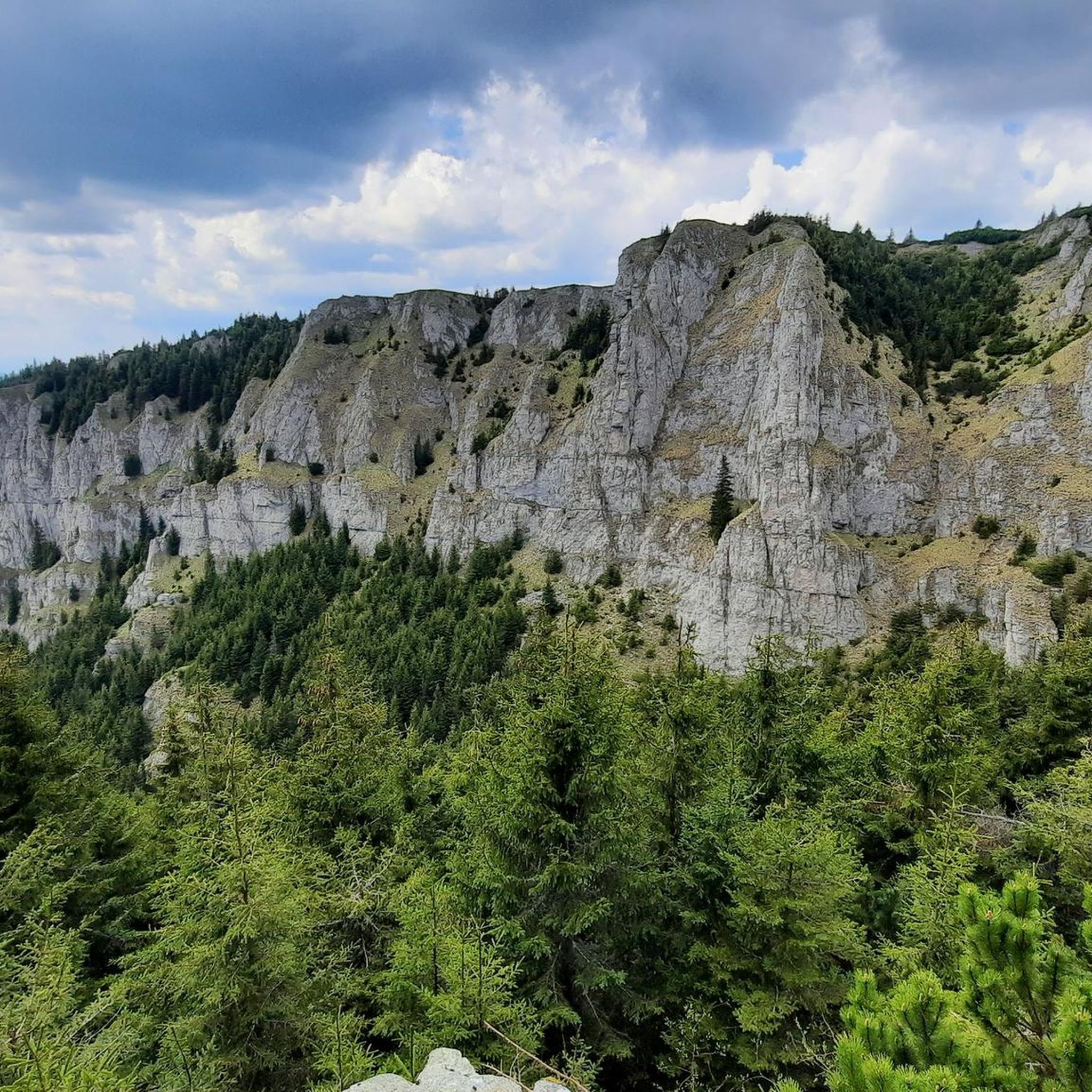
The Bicaz Gorge (Cheile Bicazului) in the Eastern Carpathians is one of Romania's deepest, most wild and impressive gorges. Nestled between steep rock faces up to 300 meters high and dense forests, it connects the town of Bicaz in the north with the region around the Red Lake (Lacul Roșu) in the south. The gorge was formed by the erosive power of the Bistrița river, which carved deep into the rock over millennia, creating a landscape reminiscent of North America's wildest canyons. The DN12, which runs through the gorge, is one of Romania's most spectacular roads – narrow, winding, and lined with breathtaking rock formations. It is equally popular with motorcyclists, car drivers, and cyclists, but also offers countless opportunities for hikers and nature lovers. A walk along the gorge or a hike to the viewpoints is particularly worthwhile, as spectacular panoramas repeatedly open up here. A highlight is the Red Lake, located just a few kilometers from the gorge, which with its deep red color, caused by minerals and algae, appears like a natural wonder. The Bicaz Gorge is not only a geological jewel but also a hotspot for outdoor activities. Hikers can roam through the gorge on well-marked trails, while climbers can explore the steep rock faces. Anglers can find trout and other fish species in the gorge's waters, and those who simply want to enjoy the silence of nature will find perfect spots for a picnic or a break on the banks of the Bistrița or in the surrounding mountains. The region is also home to rare plants and animals, including various bird species and even bears.
0
0
The Red Lake (Lacul Roșu) in the Eastern Carpathians (Neamț County) is one of Romania's most mysterious and beautiful natural wonders. Nestled in the wild and romantic landscape of the Bicaz Gorge and surrounded by steep rock faces up to 300 meters high and dense forests, the lake appears like an enchanted place from another world. Its name comes from the deep red color of the water, caused by minerals, algae, and the reddish rocks in its surroundings – a fascinating phenomenon that makes the lake unique. The lake was formed in 1838 by a massive landslide that blocked the course of the Bistrița River, creating a natural dam. Today, it is about 1,200 meters long and up to 35 meters deep, surrounded by an almost mystical atmosphere. The surrounding mountains, including the Ceahlău Massif, are reflected in the calm water, enhancing the impression of an untouched, almost fairytale-like landscape.
0
0
The Bicaz Gorge (Cheile Bicazului) in the Eastern Carpathians (Neamț County) is one of Romania's deepest, most wildly romantic, and impressive gorges. Nestled between steep rock walls up to 300 meters high and dense forests, it connects the town of Bicaz in the north with the region around the Red Lake (Lacul Roșu) in the south. The gorge was formed by the erosive power of the Bistrița River, which carved deeply into the rock over millennia, creating a landscape reminiscent of the wildest canyons of North America. The DN12, which runs through the gorge, is one of Romania's most spectacular roads – narrow, winding, and lined with breathtaking rock formations. It is equally popular with motorcyclists, car drivers, and cyclists, but also offers countless opportunities for hikers and nature lovers. A walk along the gorge or a hike to the viewpoints is particularly worthwhile, as spectacular panoramas repeatedly open up here. A highlight is the Red Lake, located just a few kilometers from the gorge, which, with its deep red color caused by minerals and algae, appears as a natural wonder. The Bicaz Gorge is not only a geological jewel but also a hotspot for outdoor activities. Hikers can roam through the gorge on well-marked trails, while climbers can explore the steep rock faces. Anglers will find trout and other fish species in the waters of the gorge, and those who simply want to enjoy the tranquility of nature will find perfect spots for a picnic or a break on the banks of the Bistrița or in the surrounding mountains. The region is also home to rare plants and animals, including various bird species and even bears.
0
0
The Bicaz Gorge (Cheile Bicazului) in the Eastern Carpathians (Neamț County) is one of Romania's deepest, most wildly romantic, and impressive gorges. Nestled between steep rock faces up to 300 meters high and dense forests, it connects the town of Bicaz in the north with the region around the Red Lake (Lacul Roșu) in the south. The gorge was formed by the erosive power of the Bistrița River, which carved deeply into the rock over millennia, creating a landscape reminiscent of the wildest canyons of North America. The DN12, which runs through the gorge, is one of Romania's most spectacular roads – narrow, winding, and lined with breathtaking rock formations. It is equally popular with motorcyclists, car drivers, and cyclists, but also offers countless opportunities for hikers and nature lovers. A walk along the gorge or a hike to the viewpoints is particularly worthwhile, as spectacular panoramas repeatedly open up here. A highlight is the Red Lake, located just a few kilometers from the gorge, which with its deep red color, caused by minerals and algae, appears like a natural wonder. The Bicaz Gorge is not only a geological jewel but also a hotspot for outdoor activities. Hikers can roam through the gorge on well-marked trails, while climbers can explore the steep rock faces. Anglers find trout and other fish species in the waters of the gorge, and those who simply want to enjoy the tranquility of nature will find perfect spots for a picnic or a break on the banks of the Bistrița or in the surrounding mountains. The region is also home to rare plants and animals, including various bird species and even bears.
0
0
The Bicaz Gorge (Cheile Bicazului) in the Eastern Carpathians is one of Romania's deepest, most wild and impressive gorges. Nestled between steep rock faces up to 300 meters high and dense forests, it is a true highlight. The gorge was formed by the erosive power of the Bistrița River, which over millennia carved its way deep into the rock, creating a landscape reminiscent of the wildest canyons of North America. The DN12, which leads through the gorge, is one of Romania's most spectacular roads – narrow, winding, and lined with breathtaking rock formations. It is equally popular with motorcyclists, car drivers, and cyclists, but also offers countless opportunities for hikers and nature lovers. A walk along the gorge or a hike to the viewpoints is particularly worthwhile, as spectacular panoramas repeatedly open up here. A highlight is the Red Lake, located just a few kilometers from the gorge, which with its deep red color, caused by minerals and algae, appears like a natural wonder.
0
0
An artificial reservoir, created in the 1960s by the construction of a dam on the Bistrița River. It is one of the largest and best-known reservoirs in Romania. Height: The lake is located at an altitude of about 530 meters. The lake is surrounded by dense forests, mountains, and rock formations. In the background rise the Ceahlău and Stânișoara mountains, known for their unique flora and fauna.
0
0
Frequently Asked Questions
What are the typical difficulty levels for touring cycling routes in Ceahlău National Park?
All five touring cycling routes currently listed in Ceahlău National Park are rated as difficult. This is due to the significant elevation changes and mountainous terrain characteristic of the region, making them best suited for experienced cyclists.
How long do touring cycling routes in Ceahlău National Park typically take to complete?
The duration of touring cycling routes in Ceahlău National Park varies. For example, the View of Lake Izvorul Muntelui – View of Ceahlău Massif loop from Izvoru Muntelui typically takes around 2 hours 34 minutes, while the longer View of Lake Izvorul Muntelui – View of Ceahlău Massif loop from Bicaz can take approximately 6 hours 28 minutes.
Is parking available for cyclists near the touring routes in Ceahlău National Park?
While specific parking areas are not detailed for each route, starting points like Izvoru Muntelui and Bicaz, which are common access points for the park, generally offer parking facilities. It's advisable to check local signage upon arrival.
Do I need a special permit to go touring cycling in Ceahlău National Park?
Generally, a special permit is not required for cycling on marked trails within Ceahlău National Park. However, it's always recommended to check the official Ceahlău National Park administration website for the most current regulations before your visit, as rules can change.
Are there any family-friendly touring cycling routes in Ceahlău National Park?
Given that all touring cycling routes in Ceahlău National Park are rated as difficult, they are generally not considered suitable for families with young children or beginner cyclists. The terrain involves significant elevation gains and challenging conditions.
What is the best time of year for touring cycling in Ceahlău National Park?
The best time for touring cycling in Ceahlău National Park is typically from late spring to early autumn (May to October). During these months, the weather is generally more stable, and trails are free of snow and ice, offering the most pleasant conditions for navigating the mountainous terrain.
What kind of weather conditions can I expect while touring cycling in Ceahlău National Park?
Ceahlău National Park, being a mountainous region, can experience variable weather. Expect cooler temperatures at higher elevations, and be prepared for sudden changes, including rain or fog, even in summer. Always check the local forecast before heading out and carry appropriate gear.
Are there any circular touring cycling routes in Ceahlău National Park?
Yes, all five touring cycling routes in Ceahlău National Park are circular. Examples include the Emil Racoviță Shipwreck loop from Izvoru Muntelui and the Red Lake (Lacul Roșu) – Bicaz Gorge loop from Pensiunea Aurelia, allowing you to start and finish at the same point.
What can I see along the touring cycling routes in Ceahlău National Park?
Touring cycling routes offer stunning views of Lake Izvorul Muntelui and the Ceahlău Massif. You can also encounter natural monuments like Toaca Peak and the Căciula Dorobanțului Rock Formation. The Red Lake (Lacul Roșu) – Bicaz Gorge loop from Pensiunea Aurelia specifically takes you past the dramatic Bicaz Gorge and the unique Red Lake.
What do other touring cyclists enjoy the most about touring cycling in Ceahlău National Park?
The area is highly rated by the komoot community, with an average score of 5.0 stars. Reviewers often praise the expansive views of Lake Izvorul Muntelui and the Ceahlău Massif, as well as the challenging yet rewarding nature of the routes through dense forests and river valleys.
Are there any viewpoints or scenic spots on the touring cycling routes?
Absolutely. Many routes are designed to offer panoramic vistas. The View of Ceahlău Massif – View of Lake Izvorul Muntelui loop from Poiana Largului, for instance, highlights these scenic elements. Specific viewpoints like View of Lake Izvorul Muntelui and Stănile Meadow and St. Anthony's Chapel are popular spots to pause and enjoy the scenery.
Most popular routes in Ceahlău National Park
Most popular attractions in Ceahlău National Park

Get inspired with the komoot mobile app


Explore more
Browse the best Cycling routes in other regions.
