The 4 Most Amazing Peaks around Caldes D'Estrac
Best mountain peaks around Caldes D'Estrac offer diverse elevated areas and natural spaces for exploration. The region features hills and coastal mountains, providing opportunities for hiking and enjoying Mediterranean landscapes. These areas present panoramic views of the sea and coastline, alongside tranquil walks through forests. Visitors can explore various hiking trails and discover historical and archaeological points of interest.
Best mountain peaks around Caldes D'Estrac
- The most popular mountain peaks is Corredor Sanctuary, a religious building and summit located…
Last updated: May 14, 2026
Corredor Sanctuary
Highlight • Religious Site
Translated by Google •
Tip by

Montalt
Highlight • Summit
Montalt is a mountain that belongs to the Catalan coastal range, within the Corredor mountain range and the …
Translated by Google •
Tip by

Sign up now to discover places like this
Get recommendations on the best single tracks, peaks, & plenty of other exciting outdoor places.
Sign up for free
Turó d'Onofre Arnau
Highlight • Summit
Mata is the closure to the north of the city, perfectly delimited at ridge level but …
Translated by Google •
Tip by
Turó d'en Vives
Highlight • Summit
Translated by Google •
Tip by
Geodetic Vertex Turó de Tarau
Highlight • Monument
They serve as reference points for making maps, measuring terrain, and adjusting GPS navigation systems.
Translated by Google •
Tip by

Sign up for free to discover even more peaks around Caldes D'Estrac.
Sign up for free
Already have an account?
Start today with a free account
Your next adventure awaits.
Login or Signup

Tips from the Community

They are spread throughout Spain. In Spain, for example, there are more than 11,000 geodetic vertices established by the National Geographic Institute. They serve as reference points for making maps, measuring terrain, and adjusting GPS navigation systems. This one stands out for its height, but I assure you, you won't miss anything; furthermore, access is difficult.
5
0
The Sanctuary has its origins in the 16th century and is in the late Gothic style. Since 1984 it has been run by the Auladell Perarnau family. Our location, very close to the top of the Corredor mountain range, allows us to enjoy an excellent landscape.
6
0
Park your vehicle and start your route from here, you have several options, whichever is best. The nearby tracks and runs are in good condition. We have also stopped for breakfast on some occasions. Free parking Sanitary / WC Bar / Restaurant Element of natural heritage Museum.
8
0

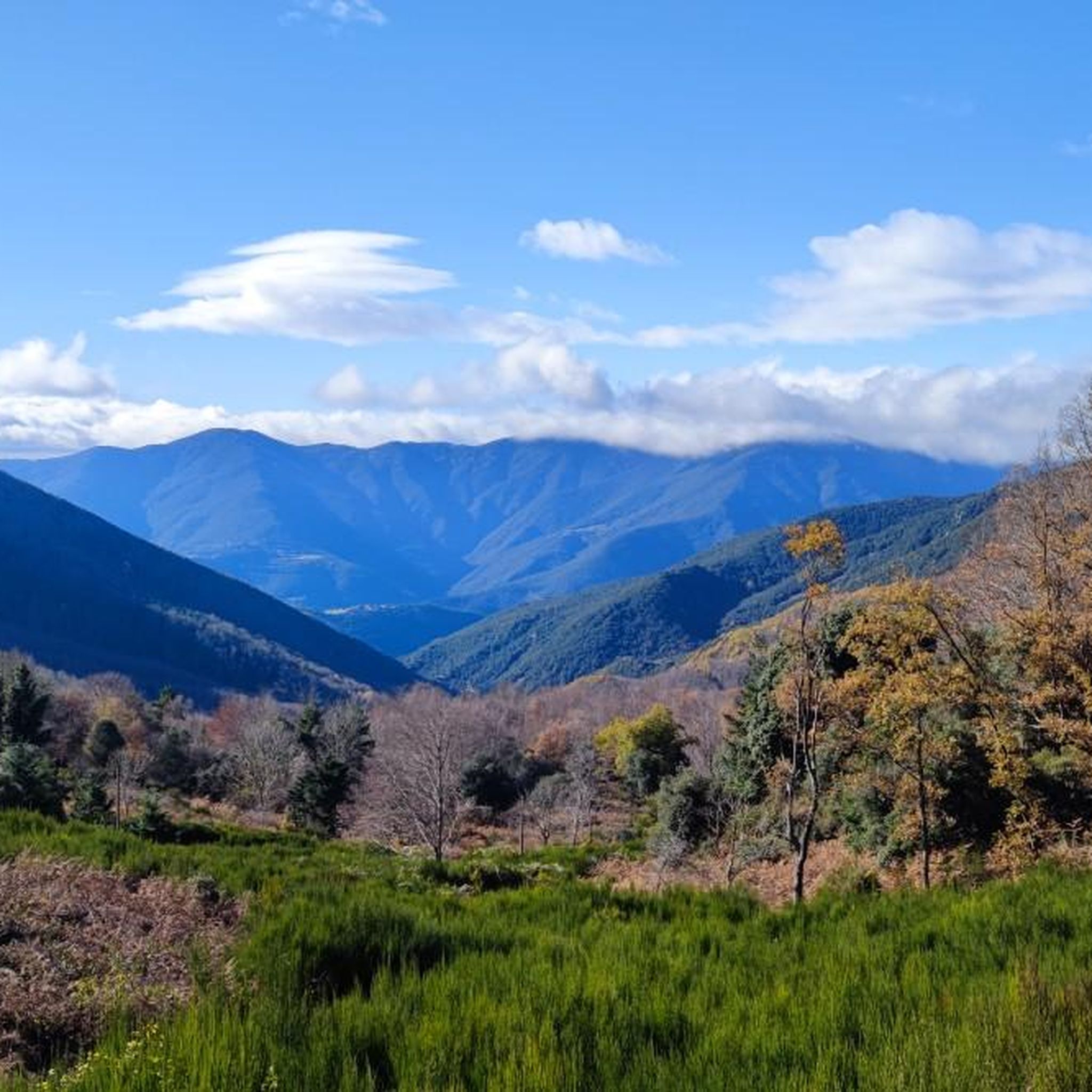
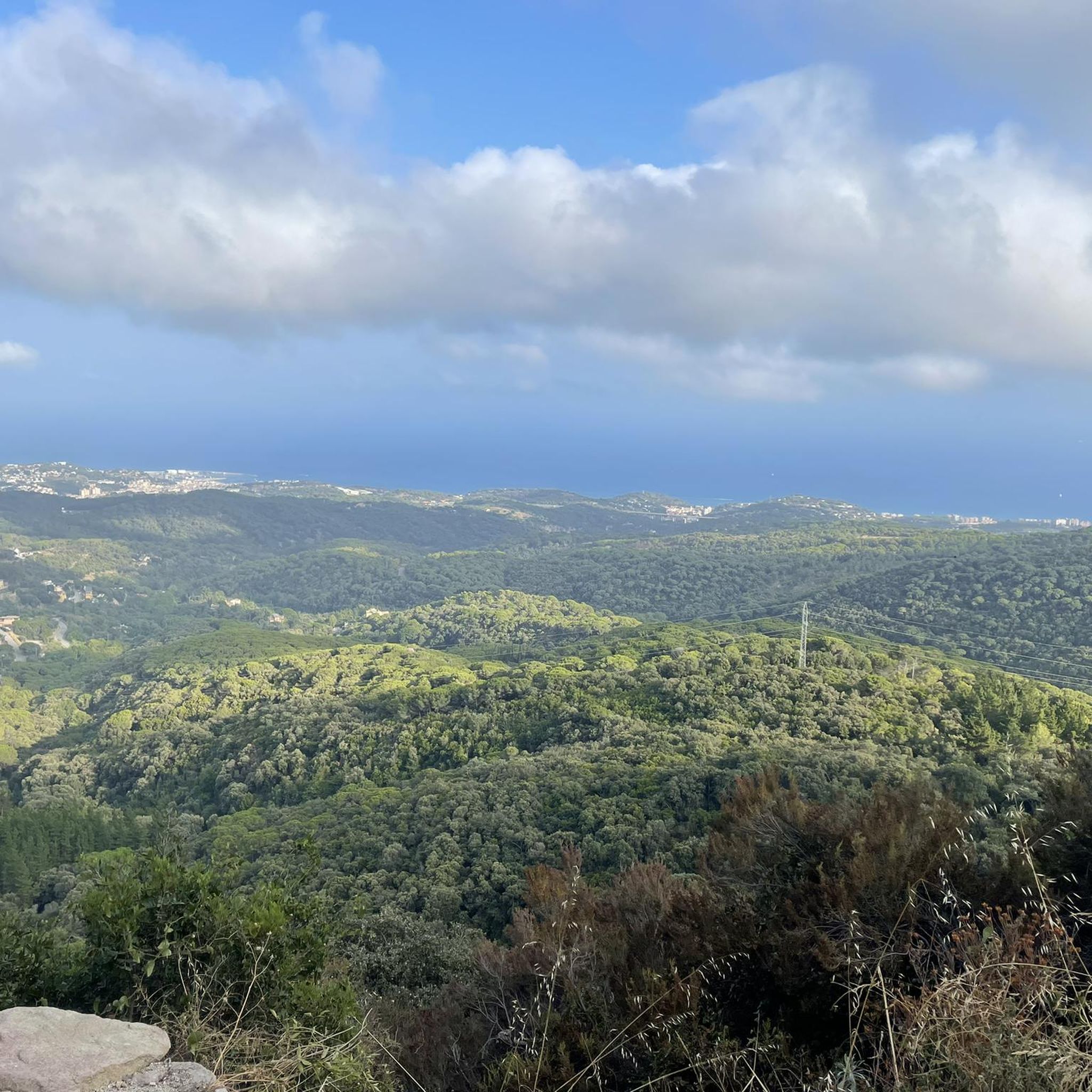
El Montalt is a mountain belonging to the Catalan coastal range, within the Sierra del Corredor and the protected natural area in which it is included. A few kilometers from the coast, the top is surrounded by forest. A common point to face the final meters of ascent is the Coll de la Ferradura, a pass located to the northeast. It is a crossroads of different paths and forest tracks and, from this point, the path to the summit is narrow and has a very steep slope. The northern slope enters completely into the natural park, with different plateaus, other peaks and the Creu de Rupit, an outstanding cross in the middle of the path. To the northeast is the Sanctuary of the Corridor, with a car park and a tourist service office. From this point, through forest tracks, To the south, we find two towns, Sant Andreu de Llavaneres and Sant Vicenç de Montalt, well connected by tracks and paths. In the same way possible starting points for the ascent, to the west is the municipality of Dosrius and its population center of Canyamars, while to the east is the town of Arenys de Munt. On the other hand, the first stage of the Camino del Norte, or GR 83 long-distance path, which begins in the town of Mataró, passes very close, along its northern slope. Its top houses a geodesic vertex and a mailbox, offering magnificent views of the entire Maresme coast.
1
0

Peak included in the list of 100 peaks of the F.E.E.C. https://www.feec.cat/activitats/100-cims/cim/montalt/ Montalt is a mountain that belongs to the Catalan coastal range, within the Corredor mountain range and the protected natural area where it is included. A few kilometers from the coast, the peak is surrounded by forest. A common point to face the final meters of ascent is the Coll de la Ferradura, a hill located in the northeast. It is a junction of different forest trails and tracks, and from this point the path to the top is narrow and has a very steep slope. The northern slope goes completely into the natural park, with different plateaus, other peaks and the Creu de Rupit, a prominent cross in the middle of the path. To the northeast is the sanctuary of the Corredor, with a parking lot and a tourist office. From this point, through forest tracks, To the south we find two towns, Sant Andreu de Llavaneres and Sant Vicenç de Montalt, well connected by tracks and trails. In the same way possible starting points for the ascent, to the west there is the municipality of Dosrius and the population center of Canyamars, while to the east is the town of Arenys de Munt. On the other hand, the first stage of the northern route, or GR 83 long-distance trail, which starts in the town of Mataró, passes very close, on its northern side. Its summit houses a geodesic vertex and a mailbox, offering magnificent views of the entire Maresme coast, despite the increasingly exuberant vegetation limiting them as time goes by.
1
0
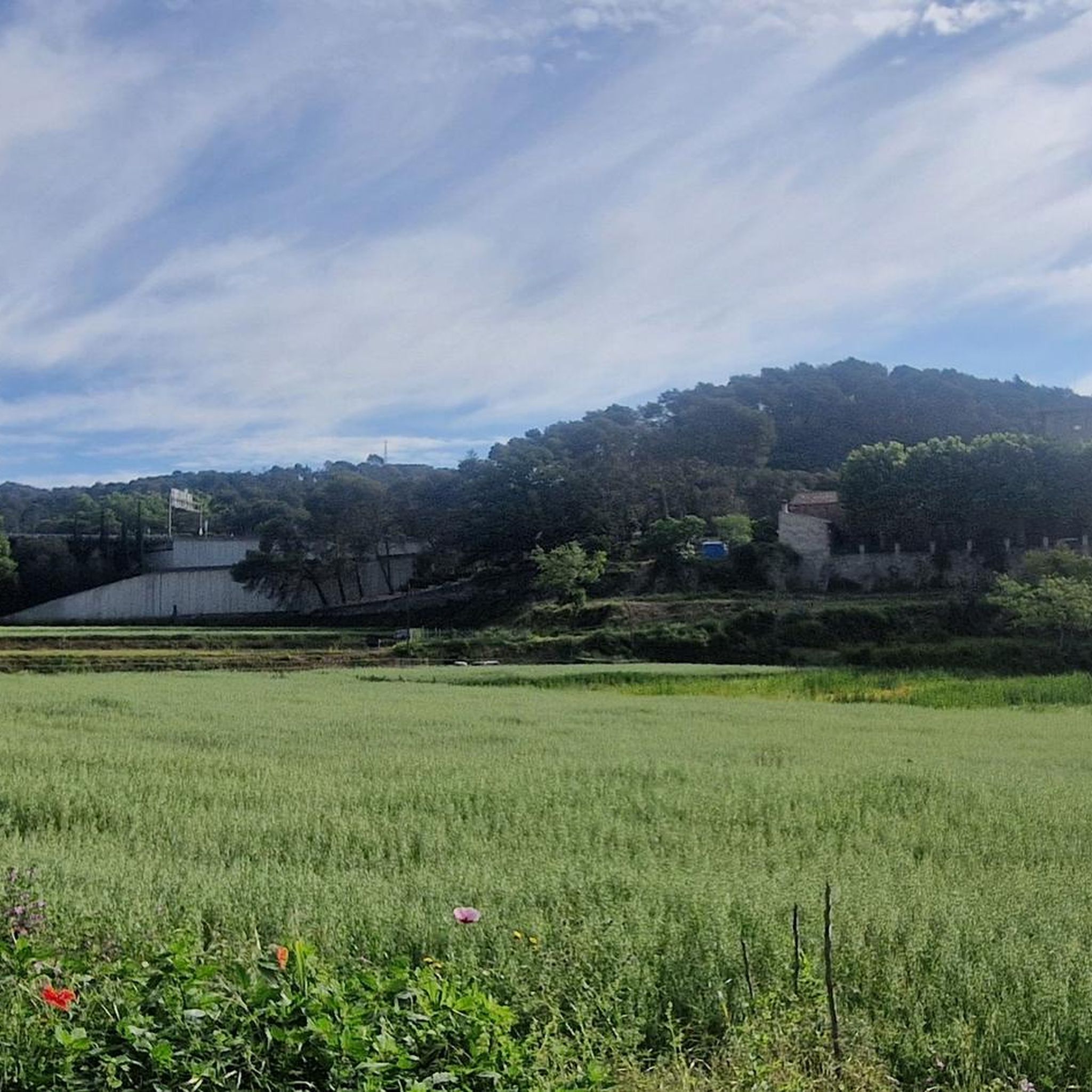
132 m hill included in the list of 100 peaks of the F.E.E.C. https://www.feec.cat/activitats/100-cims/cim/turo-donofre-arnau/ Mata is the closure to the north of the city, perfectly delimited at ridge level but with an extended extension, so that the name (which as we say in Catalan "fa la cosa" beats full of different orographic elements. It is called Turó de Mata al Turó d'Onofre Arnau, which culminates the best view over the city by the sea and over all the Cinc Sénies already there was where the mighty Castle of Mata stood, the most important of the city. A fortification historical, that if it had been preserved or wanted to do more historical and archaeological research, who knows if we could have had our own Burriac. Capgrossades through the centuries, ours. It seems that the Castle of Mata was located at the top of what is now known as Turó d'Onofre Arnau, although practically nothing else is known about it. In 1850 there were no remains of the building and the architectural characteristics it should have had are unknown. The existing restored building on the western side of the hill, a few meters from the top, has nothing to do with the primitive building of the castle. This is Onofre Arnau's farmhouse, also known as Can Triter, Can Major del Castell or simply Torre de Mata. The entire area of the same name was governed from the so-called Castell de Mata, in feudal times it went from the Riera d'Argentona to the Caldes d'Estrac and from the ridge of the Serra de Marina to the sea. The first owners of the castle were the counts of Barcelona and later the Castellvell-Montcadas, who owned an extensive territory of Catalonia. Albert de Castellvell died in 1205 and, having no offspring, his sister Guilleuma inherited - she was separated from Guillem Ramon de Montcada - and, when he died in 1228, his son Guillem de Montcada inherited. At the end of the 14th century, there were violent confrontations, such as the attempted assault on the castle in 1391. And in the 15th century, it ceased to be inhabited after a fire that practically destroyed it. The so-called Camí del Castell de Mata originally connected the sector of the Cinc Sènies and the Castle with the Neighborhood of Mata proper and was also the starting point for the rural path of Sant Andreu de Llavaneres.
0
0
Turó d'en Vives is a 760.3 meter mountain located between the municipalities of Sant Iscle de Vallalta, in the Maresme region, and Sant Celoni, in the Vallès Oriental region. It is the highest point of the Montnegre Massif, in the Parc del Montnegre and the Maresme Corridor and regional roof. It's a peak that doesn't stand out from its surroundings, hidden and therefore lacking any possible panoramic view, in fact, if it weren't for the sign you wouldn't be able to spot it at a glance.
2
0

It is a very quiet and pleasant place. It has a spectacular setting surrounded by nature. You have the option of eating on weekends and holidays in the restaurant with grill and typical Catalan food, indoors or on its fantastic terrace.
9
0
Frequently Asked Questions
What are the most popular mountain peaks and elevated areas to explore around Caldes D'Estrac?
The region around Caldes D'Estrac offers several elevated areas and coastal mountains for exploration. Among the most popular are the Corredor Sanctuary, located near the top of the Corredor mountain range, which is a quiet place with a late Gothic style sanctuary and a restaurant. Another favorite is Montalt, a summit offering magnificent views of the Maresme coast. Visitors also appreciate Turó d'Onofre Arnau, a historical site with views over the city by the sea.
What kind of views can I expect from the peaks near Caldes D'Estrac?
The elevated areas around Caldes D'Estrac, including hills and coastal mountains, provide breathtaking panoramic views. From spots like Montalt, you can see the entire Maresme coast. The View from Turó de les Olivelles offers a great perspective of Mataró and surrounding towns. Turó de l'Oriola also provides significant scenic vistas, allowing you to enjoy the Mediterranean landscape.
Are there historical or cultural sites on these mountain peaks?
Yes, several peaks offer historical and cultural interest. The Corredor Sanctuary is a late Gothic style religious building. Turó d'Onofre Arnau is a historical site where the Castle of Mata once stood. Additionally, the Can Muntanyá Natural Park, located near Puig Castellar mountain, contains the Tower of the Enchanted (Torre dels Encantats), an emblematic defensive fortification with local legends, and important Iberian archaeological remains.
What natural features can I find when exploring the elevated areas around Caldes D'Estrac?
You can immerse yourself in Mediterranean forests, enjoying the local flora and fauna. Areas like Turó de l'Oriola feature distinctive rock formations scattered among the trees. The Can Muntanyá Natural Park is a Mediterranean oasis with idyllic corners, ponds, and a variety of native plants like mimosas, lilies, and rosebushes, offering silence and tranquility.
Are there family-friendly mountain walks near Caldes D'Estrac?
Yes, there are options suitable for families. The Corredor Sanctuary is categorized as family-friendly, offering a pleasant setting. The View from Turó de les Olivelles also provides a comfortable arrival to the top, making it accessible for families.
What outdoor activities, besides hiking, can I do near these mountain peaks?
Beyond hiking, the region around Caldes D'Estrac is excellent for various cycling activities. You can find numerous routes for gravel biking, general cycling, and road cycling. For instance, explore routes like 'Three Borders Cross – Can Benet Pass loop' for gravel biking, or 'Balí Beach – Pla de Forn loop' for general cycling. You can find more details on these activities in the Gravel biking around Caldes D'Estrac, Cycling around Caldes D'Estrac, and Road Cycling Routes around Caldes D'Estrac guides.
Are there specific hiking trails or routes recommended for exploring the peaks?
The area offers a variety of hiking routes, from easy to moderate, suitable for different fitness levels. Many trails allow you to explore the natural beauty surrounding Caldes D'Estrac, including those within the Montnegre i el Corredor Natural Park. For example, the path to Montalt from Coll de la Ferradura is a narrow path with a steep slope, while other tracks around the Corredor Sanctuary are in good condition.
Is there parking available at the mountain peaks or trailheads?
Yes, for some popular spots, parking is available. For example, the Corredor Sanctuary has free parking, making it a convenient starting point for various routes in the area.
What is the best time to visit the mountain peaks around Caldes D'Estrac?
Given the Mediterranean climate of the region, the elevated areas around Caldes D'Estrac can be enjoyed for hiking and outdoor activities throughout much of the year. Spring and autumn generally offer the most pleasant temperatures for exploration, but even in winter, many trails remain accessible and offer a different kind of natural beauty.
Are there any facilities like restaurants or cafes near the mountain trails?
Yes, some locations offer facilities. The Corredor Sanctuary features a restaurant with a grill serving typical Catalan food, open on weekends and holidays, with options for indoor or terrace dining.
What makes the mountain peaks around Caldes D'Estrac unique?
The uniqueness of these 'peaks' lies in their combination of Mediterranean coastal landscapes with elevated natural spaces. They offer a distinct experience with panoramic sea views, tranquil walks through forests, and a blend of natural beauty with historical and archaeological interest, such as the Tower of the Enchanted in Can Muntanyá Natural Park and the site of the former Castle of Mata at Turó d'Onofre Arnau.
Most popular routes around Caldes D'Estrac
Most popular attractions around Caldes D'Estrac

Get inspired with the komoot mobile app


Explore more
See even more amazing summits around Caldes D'Estrac with these guides:
