The best gravel rides around Guadalcázar
5.0
(4)
134
riders
9
rides
Gravel biking around Guadalcázar offers routes through diverse landscapes, from the sloping hillsides and rolling hills to the edges of the Chihuahuan Desert. The region features ancient trails and old mining transport routes, providing varied terrain for exploration. These paths traverse areas with geological formations and natural features, including sections near the Sierra Gorda mountains. The network of trails provides a mix of arid and mountainous environments suitable for gravel cycling.
Best gravel bike trails around Guadalcázar
- The most popular…
Last updated: July 25, 2026
5.0
(3)
44
riders
Hard gravel ride. Very good fitness required. Mostly paved surfaces. Suitable for all skill levels.
5.0
(1)
25
riders
77.8km
04:27
640m
640m
Hard gravel ride. Very good fitness required. Mostly paved surfaces. Suitable for all skill levels.

Sign up for free
7
riders
47.8km
03:41
230m
220m
Moderate gravel ride. Good fitness required. Mostly paved surfaces. Suitable for all skill levels.
28
riders
78.2km
04:42
790m
790m
Hard gravel ride. Very good fitness required. Mostly paved surfaces. Suitable for all skill levels.
2
riders
29.6km
02:00
210m
210m
Moderate gravel ride. Good fitness required. Mostly paved surfaces. Suitable for all skill levels.
Get access to more routes and recommendations from other explorers.
Sign up for free
Already have an account?
Our route recommendations are based on thousands of hikes, rides, and runs completed by other people on komoot.
Start today with a free account
Your next adventure awaits.
Login or Signup
Tips from the Community

Scattered along the riverbed, christened by the Arabs as Guadalquivir (“great or copious river”) as it passes through the World Heritage city, are what were once symbols of the milling industry in Córdoba, which today remain inserted in an unparalleled landscape setting, silent witnesses to the city's evolution.
2
0
The Church of San Pedro (now the Minor Basilica of San Pedro) is one of the oldest and most historic churches in Córdoba. It was built on the remains of a 4th-century basilica that housed the remains of the Cordoban martyrs Januarius, Martial, and Faustus. After the Christian conquest (1236), Ferdinand III ordered its construction between the 13th and 14th centuries, forming part of the Ferdinandine churches.
2
0
The Mosque-Cathedral of Córdoba is one of the most impressive monuments in the world, a symbol of Islamic art in the West and a UNESCO World Heritage Site since 1984. It was originally the Visigothic Basilica of San Vicente, shared by Christians and Muslims. In 784, Abd al-Rahman I began construction of the mosque, which was expanded by his successors: Abd al-Rahman II, Abd al-Rahman III, Al-Hakam II, and Almanzor. After the Christian Reconquista in 1236, it was consecrated as the Cathedral of the Assumption of Our Lady, and in 1523 a Renaissance basilica was built inside.
15
0

The administrative district is located in the southwest of the province. The landscape consists mainly of grain fields. The village was founded in 1767 when Carlos III implemented his colonization policy. For this reason, the urban structure corresponds to the linear planning of the Enlightenment. Perhaps the most interesting building is the Palacio de la Intendencia (Palace). History It was founded by Carlos III in 1767 (it also received its name from him). Don Pablo de Olavide was commissioned to carry out the project, and Don Fernando de Quintanilla managed the population, which was mainly German colonists. In 1769, the village had a population of 1,088, of whom 84 were Spanish. At the time of its founding, the colonists were allocated land holdings of 28 fanegas each (fanega: Castilian unit of area: 64,596 ares).
0
0

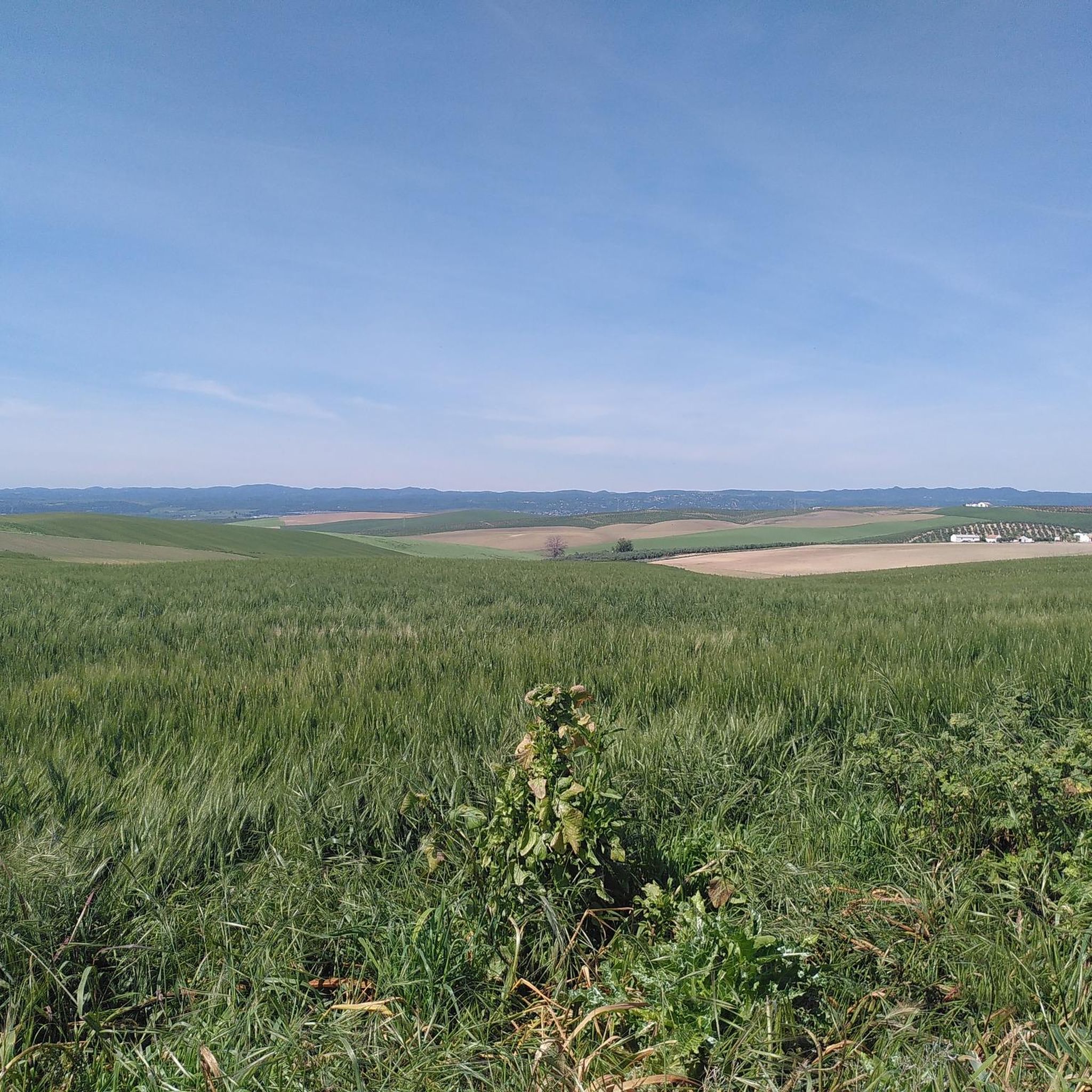
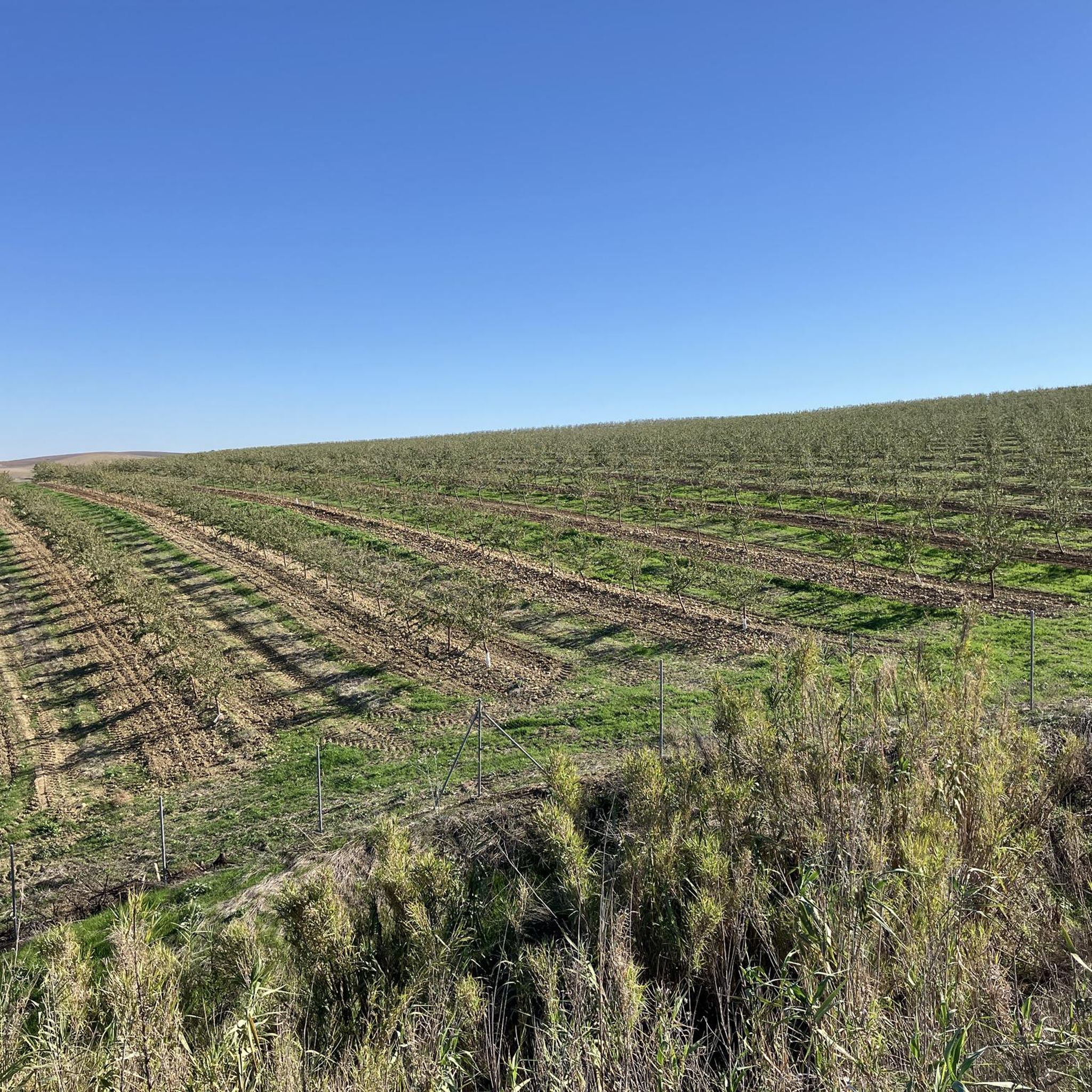
Dehesa area in the heart of the countryside
0
0

Lovely barman who made me a great sandwich de tortilla just as I was having an energy crash!
1
0

Castillo de Almodóvar del Río (Hisnu-l-mudawar; "the round castle") is a castle of Arab Muslim origin in the town of Almodóvar del Río, Province of Córdoba, Spain. Previously a Roman fort, the current structure is of Arab Umayyad origin, in the year 760. During the Middle Ages, it underwent several renovations and reconstructions. Between 1901 and 1936, it was restored by the owner Raphael Desmaissiers, 12th Count of Torravala, under the technical direction of the architect Adolfo Fernández Casanova. The most important towers are the Cuadrada, the Redonda, and the Homenaje.
3
0
The Molino de la Albolafia is located very close to the Roman bridge and on the right bank of the Guadalquivir. It was built by Abd al-Rahman II to bring water from the river to the emirs' palace via an ingenious aqueduct. The mill has a restored naura or water wheel, which was originally ordered to be dismantled by Queen Isabella La Católica because of the noise it produced near the Alcázar, the royal residence. This mill has been part of the city's coat of arms since the fourteenth century.
6
1
Frequently Asked Questions
How many gravel bike trails are available around Guadalcázar?
There are over 8 gravel bike trails around Guadalcázar, offering a variety of experiences for different skill levels. The komoot community has explored these routes over 100 times.
What is the general difficulty level of gravel biking routes in Guadalcázar?
Gravel biking around Guadalcázar features routes ranging from moderate to difficult. You'll encounter sloping hillsides, ancient trails, and old mining routes, providing a challenging and engaging experience.
Are there any circular gravel bike routes in the area?
Yes, many routes are designed as loops. For instance, the difficult Fuente Redonda de Las Pinedas – Guadalcazar Recreation Area loop from El Álamo covers 57.6 miles (92.8 km) with significant elevation changes. Another option is the Guadalcazar Recreation Area – Seville Gate loop from La Carlota, a 47.4 miles (76.2 km) trail.
What kind of terrain can I expect on gravel bike trails near Guadalcázar?
The terrain around Guadalcázar is diverse, characterized by sloping hillsides, rolling hills, and ancient trails. You'll also find old mining transport routes, offering a mix of surfaces suitable for gravel biking.
What are some notable landmarks or attractions I can see along the gravel bike trails?
Many routes offer views of historical and natural sites. You might pass by the Start of the Vía Verde de la Campiña, or the Service road of the Guadalmellato canal. Further afield, the Medina Azahara Archaeological Site and Almodóvar del Río Castle are significant points of interest in the wider region.
Are there any easy or moderate gravel bike trails suitable for beginners or families?
While many routes are difficult, there are moderate options available. For example, the Villarrubia Church – Vía Verde Near El Reventón loop from Villarrubia de Córdoba is a moderate 20.6 miles (33.1 km) trail, offering a less strenuous ride. Another moderate choice is the Roman Temple – Canal loop from Villarrubia de Córdoba.
What do other gravel bikers say about the routes in Guadalcázar?
The routes in Guadalcázar are highly rated by the komoot community, with an average score of 5.0 stars from over 6 reviews. Riders often praise the varied terrain and the challenging nature of the trails.
Is there public transport available to Guadalcázar that accommodates bikes?
While specific details on bike accommodation for public transport to Guadalcázar are not readily available, it's advisable to check with local bus or train operators in Córdoba for their policies regarding bicycles, especially for longer journeys.
Where can I find parking for gravel biking in Guadalcázar?
Parking options are generally available in and around Guadalcázar town center. For routes starting from specific areas like the Guadalcázar Recreation Area, designated parking might be available, but it's best to check local signage upon arrival.
Are there any specific rules or permits required for cycling in the Guadalcázar area?
Generally, no special permits are required for cycling on public trails in Andalusia. However, always respect local regulations, private property, and protected areas. Stay on marked paths and be mindful of other trail users.
What is the best time of year to go gravel biking in Guadalcázar?
The best time for gravel biking in Guadalcázar is typically during the spring (March to May) and autumn (September to November) when temperatures are milder. Summers can be very hot, and winters can be cooler and wetter, though often still rideable.
Are there any bike-friendly cafes or restaurants near the gravel trails in Guadalcázar?
Guadalcázar, being a local town, offers various cafes and restaurants where you can refuel. While specific 'bike-friendly' establishments aren't highlighted, most local eateries are welcoming. It's always a good idea to secure your bike if leaving it unattended.
Most popular routes around Guadalcázar
Most popular attractions around Guadalcázar

Get inspired with the komoot mobile app


Explore more
Browse the best Gravel rides in other regions.
