Attractions and Places To See in Nunavut - Top 9
Best attractions and places to see in Nunavut, Canada's northernmost territory, offers a vast Arctic wilderness characterized by glaciers, rugged mountains, and extensive tundra. This region provides a unique combination of pristine natural landscapes and a rich Inuit cultural heritage. Visitors can explore significant historical sites, national and territorial parks, and numerous opportunities for wildlife viewing. Nunavut's diverse environment makes it a destination for those interested in Arctic exploration and indigenous culture.
Best attractions and places to see in Nunavut
…Last updated: May 9, 2026
Sylvia Grinnell Territorial Park
Highlight • Natural Monument
Tip by

Gjoa Haven
Highlight • Settlement
Tip by
Sign up now to discover places like this
Get recommendations on the best single tracks, peaks, & plenty of other exciting outdoor places.
Sign up for free
Bloody Falls and campsite
Highlight • Waterfall
Tip by
Ovayok (Mount Pelly)
Highlight • Natural Monument
Tip by
Old Stone Church
Highlight • Religious Site
Tip by
Former wreck site of the Maud
Highlight • Historical Site
Tip by
Apex Trail
Highlight • Trail
Tip by
Akshayuk Pass Route south of Windy Lake
Highlight • Trail
Tip by
Ovayok Trailhead
Highlight • Trail
Tip by
Start today with a free account
Your next adventure awaits.
Login or Signup

Tips from the Community

Gjoa Haven's Inuit Name is Uqsuqtuuk which translates to something like „place with a lot of blubber“ – referring to seal that were hunted by the Inuit. The hamlet is surrounded by plenty of history. It was Roald Amundsen, the Norwegian explorer, who stayed at this place for quite some time to escape the harsh winter weather. It is said that he took the advice of the local Inuit people and was therefor successful in completing the Northwest Passage as the first human ever. Today, you can find some relics of this past and also the Franklin Expedition in Gjoa Haven, which was used as a trading post for the Hudson's Bay company as well. Visit the information center and the Nattilik Heritage Center and take a walk to the Amundsen monument.
1
0
The Old Stone Church is one of the landmarks worth to visit when you are around Cambridge Bay. The Roman Catholic church was built in 1954 using local material like seal oil and sand as mortar. It was Cambridge Bay's first church and used until 1960. In 2006, a fire destroyed most of the church leaving only the stone structure behind. Fortunately, in 2014, it came back to life by getting a new roof and the church is now in service again.
1
0
For over 86 years, this was the wrecksite of the Maud, Roald Amundsen's ship that he undertook two expeditions with in 1918 and 1925. After that, the ship was used by the Hudson's Bay Company as a supply ship. In 1930, it capsized near Cambridge Bay. In 2016, after several unsuccessful attempts, the wreck of the Maud was finally raised and transferred to Oslo (since Roald Amundsen and his ship were Norwegian).
2
0
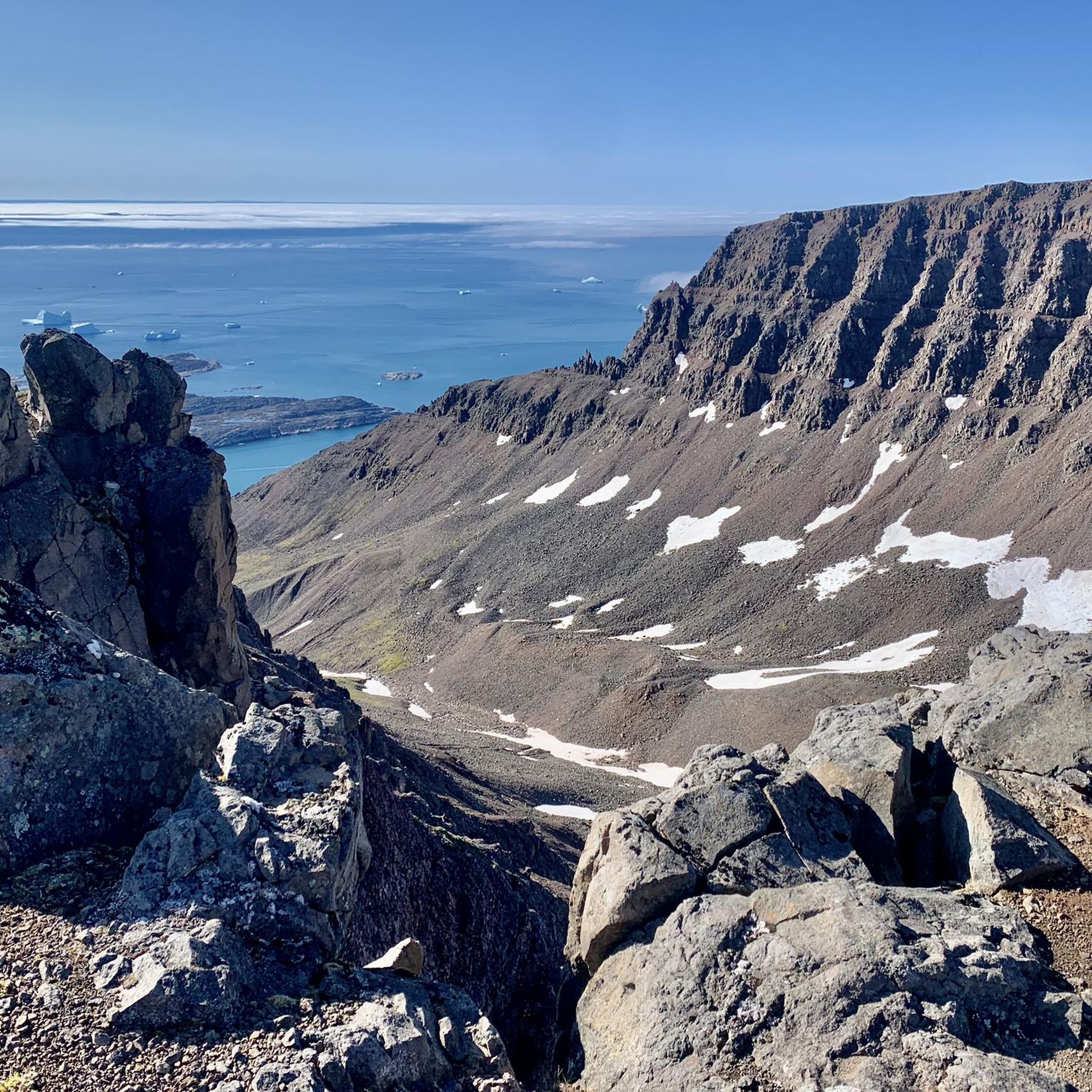
The southernmost section of the Akshayuk Pass Route follows a trail that disappears further north, making route finding a necessity. Once you leave the Pangnirtung Fjord behind, you head towards Windy Lake. You are surrounded by majestic peaks like the Overlord Peak, Aegir Peak and Ulu Peak. The rushing Schwartzenbach Falls are visible in the distance.
1
0
The trailhead to climb Ovayok (also known as Mount Pelly or Uvayuk) is located about 16 kilometers from Cambridge Bay. There is room for several cars next to the prominent sign. You can get here by taking a gravel road. The summit of Ovayok is about three kilometers from here.
1
0
The Ovayok, also referred to as Uvayuk or Mount Pelly, is a formation known as an esker that was shaped by the latest ice age. An esker is a long, sometimes winding ridge composed of stratified sand and gravel, formed by meltwater streams flowing beneath or within glaciers, which leave behind these deposits as the ice retreats. From its top you enjoy a stunning view of the surrounding, mostly flat, landscape dotted with hundreds of lakes. The area was inhabited by the Inuit for centuries for hunting. Over 120 archaeological sites have been found around Uvayuk.
2
0
With its proximity to Nunavut's capital Iqaluit, the Sylvia Grinnell (also known as Iqaluit Kuunga) Territorial Park is the most visited park in the territory. The smooth rock you see today was shaped by a glacier that was more than 400 meters thick. Okay, this was also more than 7,000 years ago. Today, you walk through a landscape dotted with boulders and low-growing plants. The Sylvia Grinnell River flows through the park and empties into Frobisher Bay. Still a very popular place to fish, it has been used for fishing Arctic char for centuries, especially by the Inuit during the summer months. If you want to learn more about the area's history, you can take part in a geocache puzzle located within the park. By the way, the park was named after Henry Grinnells daughter. Henry was a businessman who funded the expedition of the American explorer Charles Francis Hall. To commemorate his patron, Hall named several places in the area after Henry Grinnell's family members.
2
0
From the outskirts of Iqaluit, the Apex Trail leads along the shore of the Arctic Ocean to the neighbourhood named Apex. The 5-kilometer journey takes into the tundra landscape with low-growing plants and the chance to sea whales and other sea mammals as well as arctic foxes. More highlights are sights of Frobisher Bay and the old Hudson's Bay Trading Post.
3
0
Frequently Asked Questions
What are the best national parks to visit in Nunavut?
Nunavut is home to several breathtaking national parks. Auyuittuq National Park on Baffin Island is ideal for hikers and skiers, featuring glaciers and rugged mountains. Sirmilik National Park, also on Baffin Island, offers diverse Arctic wildlife and stunning landscapes. For a truly remote experience, Quttinirpaaq National Park on Ellesmere Island is North America's most northerly point, with glacier-choked mountains. Ukkusiksalik National Park is known for its high concentration of polar bears and pristine tundra.
Where can I experience Inuit culture and history in Nunavut?
You can immerse yourself in Inuit culture in Iqaluit, the capital, which is a hub for traditional arts and crafts. The Gjoa Haven settlement offers insights into Inuit life and its connection to Arctic exploration. Visit the Nunatta Sunakkutaangit Museum in Iqaluit to see local Inuit art and artifacts. Additionally, archaeological sites like Qaummaarviit Territorial Park near Iqaluit and the Igloolik Island Archaeological Sites provide glimpses into ancient Thule people's history.
What opportunities are there for wildlife viewing in Nunavut?
Nunavut is a prime destination for wildlife viewing, offering chances to spot the 'Arctic Big Five': polar bears, musk ox, belugas, walruses, and narwhals. The 'floe edge' (where land ice meets the sea) in spring (April to July) is excellent for spotting seals, whales, and polar bears, particularly around Pond Inlet and Arctic Bay. You can also see musk oxen from Ovayok (Mount Pelly) near Cambridge Bay.
Are there hiking trails suitable for different skill levels in Nunavut?
Yes, Nunavut offers a range of hiking experiences. For an easy walk near the capital, the Apex Trail in Iqaluit provides coastal views and a chance to spot marine mammals. The Sylvia Grinnell Territorial Park also near Iqaluit, offers accessible trails through tundra landscapes. For more challenging adventures, the Akshayuk Pass in Auyuittuq National Park is a multi-day trek. You can find various hiking routes, including easy and difficult options, in the region, such as the Hiking in Nunavut guide.
What is the best time of year to visit Nunavut for attractions?
The best time to visit Nunavut largely depends on your interests. The spring and summer months, particularly from April to July, are ideal for wildlife viewing, especially at the 'floe edge' where land ice meets the sea. This period also offers milder temperatures for hiking and exploring national and territorial parks. Winter provides unique opportunities for activities like snowmobiling and experiencing traditional Inuit culture, though conditions are much colder.
Are there any historical sites related to Arctic exploration in Nunavut?
Nunavut is rich in Arctic exploration history. Gjoa Haven is historically significant as Roald Amundsen's wintering spot during his successful navigation of the Northwest Passage. Other notable sites include the Beechey Island Sites, connected to Franklin's lost expedition, and the designated National Historic Sites of the Wrecks of HMS Erebus and HMS Terror. The Former wreck site of the Maud also holds historical importance.
Can I see unique natural landmarks in Nunavut?
Absolutely. Nunavut boasts unique natural landmarks shaped by its Arctic environment. You can visit Sylvia Grinnell Territorial Park near Iqaluit, featuring waterfalls and a landscape carved by ancient glaciers. The impressive Bloody Falls, within Bloody Falls Territorial Park, is a powerful waterfall with historical significance. Other natural wonders include the geological hoodoos in Sirmilik National Park and the rugged mountains and fjords found throughout the territory.
What are some family-friendly activities in Nunavut?
Families visiting Nunavut can enjoy a variety of activities. Exploring territorial parks like Sylvia Grinnell Territorial Park offers easy hikes and scenic views. Visiting the Nunatta Sunakkutaangit Museum in Iqaluit can be an educational experience about Inuit culture. Depending on the season, activities like dog sledding with an Inuit guide or wildlife viewing tours can be memorable for all ages. The Fossil Creek Trail in Coral Harbour also offers a unique journey through time with ancient fossils.
Are there any specific permits required to visit national parks in Nunavut?
Yes, permits are generally required for visiting national parks in Nunavut, especially for activities like hiking and camping in remote areas. For example, visitors planning to hike the Akshayuk Pass in Auyuittuq National Park must obtain permits and register with Parks Canada. It's always recommended to check the specific requirements for each national park you plan to visit well in advance of your trip.
What are some notable viewpoints in Nunavut?
Nunavut offers many stunning viewpoints showcasing its vast Arctic landscapes. Sylvia Grinnell Territorial Park near Iqaluit provides excellent views of the tundra and the Sylvia Grinnell River. From Ovayok (Mount Pelly), you can observe musk oxen and the surrounding terrain. The Apex Trail offers coastal views of Frobisher Bay and the Arctic Ocean. Additionally, the numerous fjords and mountains across the territory, such as those in Pond Inlet, provide spectacular vistas.
Where can I find information about traditional Inuit art in Nunavut?
Nunavut is renowned for its vibrant Inuit art scene. You can find significant collections and galleries in several communities. The Nunatta Sunakkutaangit Museum in Iqaluit features permanent exhibits of Rankin Inlet pottery and Baffin Island carvings. The Cape Dorset Art Gallery in Cape Dorset (Kinngait) is considered the 'capital of Inuit art,' showcasing carvings, etchings, and stonecut prints. Another important center is the Uqqurmiut Centre for Arts and Crafts in Pangnirtung.
Most popular routes in Nunavut

Get inspired with the komoot mobile app


Didn’t find what you were looking for?
Are you keen on exploring more awesome places nearby? Browse our guides:
Explore more
Still not found the Highlight you’re looking for? See guides of the top attractions in other regions:
