Top 20 Natural Monuments around Campi Bisenzio
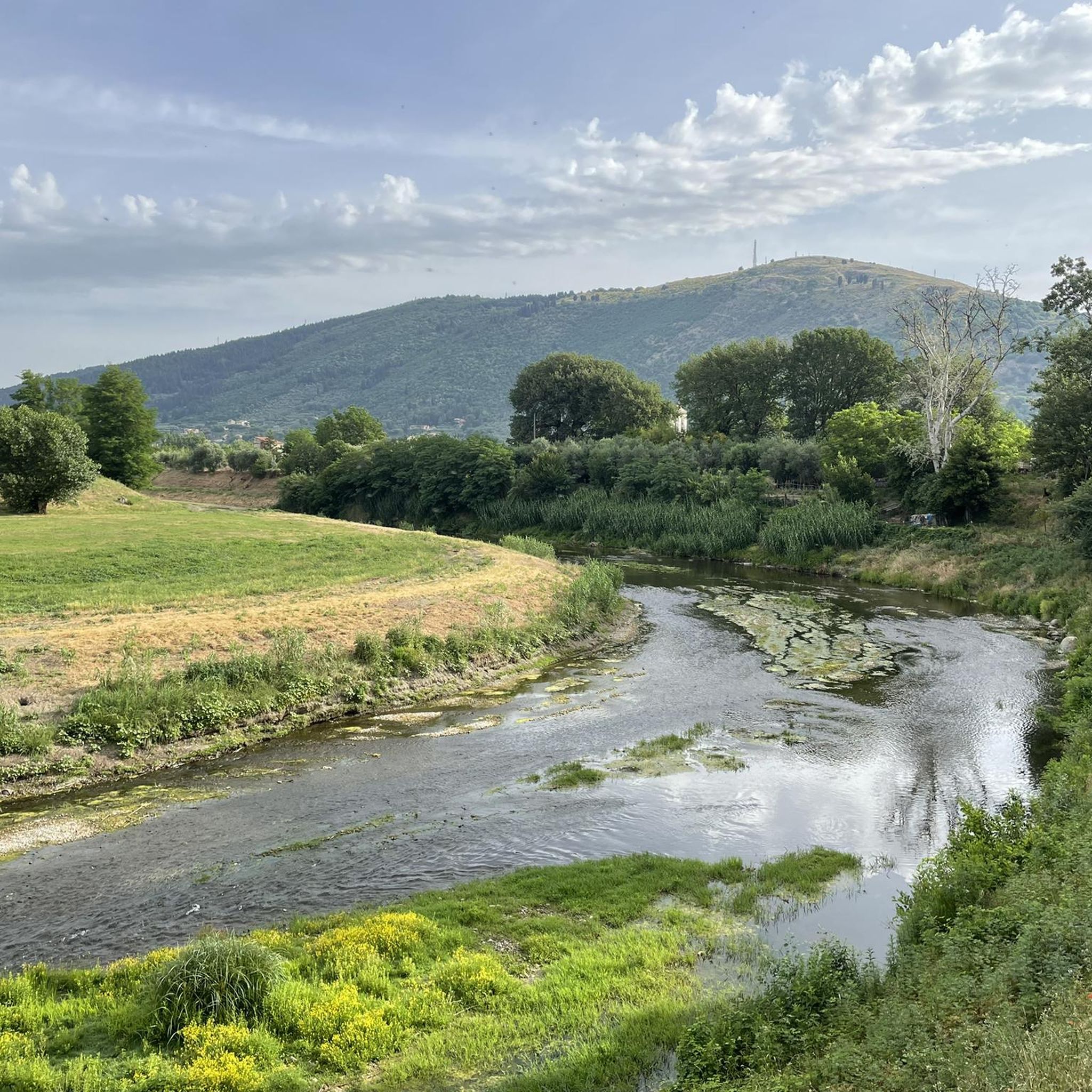
Best natural monuments around Campi Bisenzio are shaped by the Bisenzio River, which has historically influenced the town's development. While the town itself is more urban, the surrounding region offers significant natural attractions. These include mountains like Monte Morello and the Calvana range, providing diverse landscapes for exploration. The area is characterized by its riverine plains and nearby hilly terrain.
Best natural monuments around Campi Bisenzio
- The most popular natural monuments is Mount Cantagrilli, a summit that offers panoramic…
Last updated: May 13, 2026
Croce della Retaia
Highlight • Summit
Translated by Google •
Tip by

Rose Garden
Highlight • Viewpoint
Translated by Google •
Tip by

Sign up now to discover places like this
Get recommendations on the best single tracks, peaks, & plenty of other exciting outdoor places.
Sign up for free
Mount Cantagrilli
Highlight • Summit
Translated by Google •
Tip by
Devil’s Rock (Pietramarina)
Highlight • Natural Monument
Translated by Google •
Tip by

Monte Maggiore Summit (917 m)
Highlight • Summit
Translated by Google •
Tip by

Sign up for free to discover even more natural monuments around Campi Bisenzio.
Sign up for free
Already have an account?
Start today with a free account
Your next adventure awaits.
Login or Signup

Tips from the Community

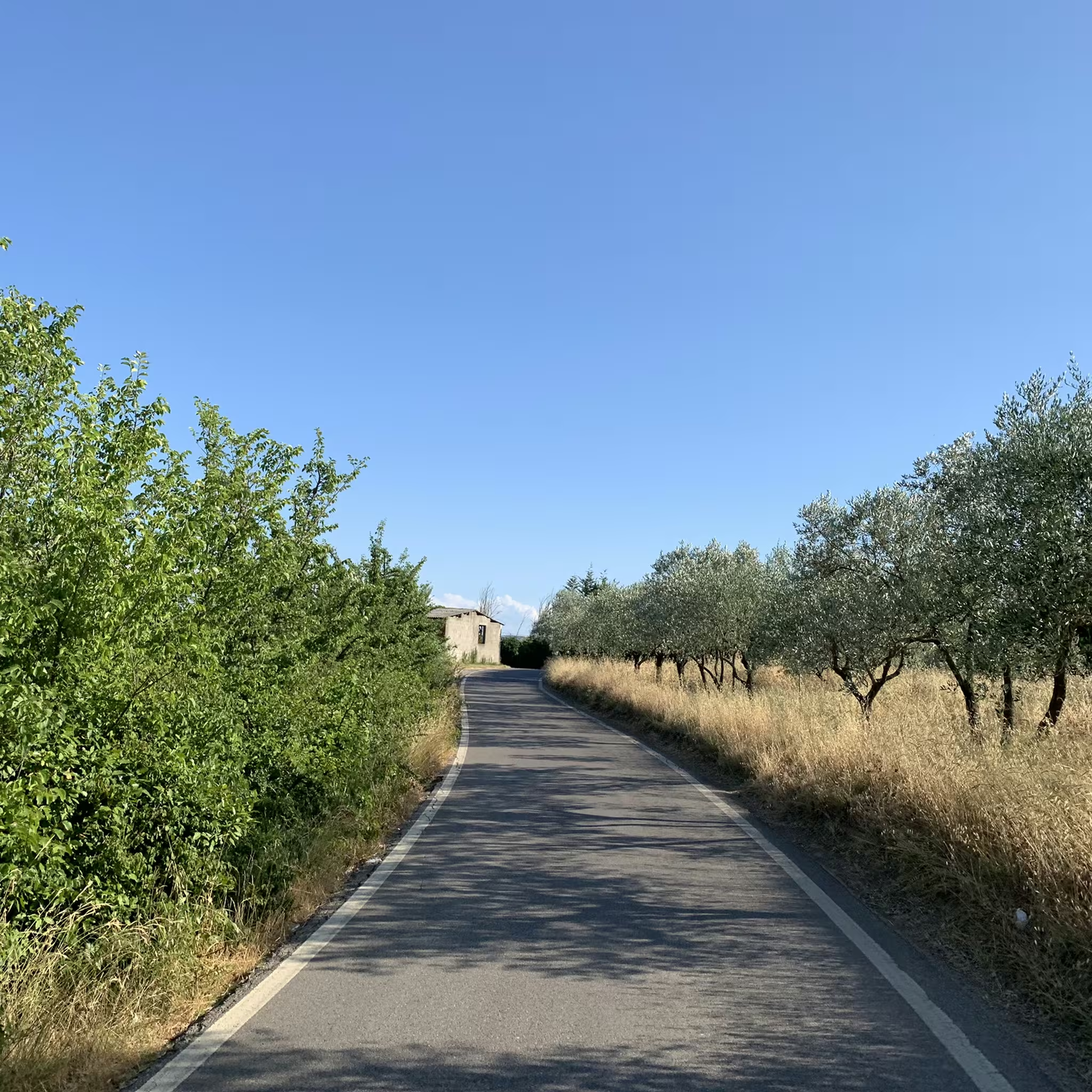
It is the pinnacle of Prato's hikes, starting from the slopes to get some fresh air, or for those with more time, as a stopping point for beautiful hikes in Calvana.
0
0

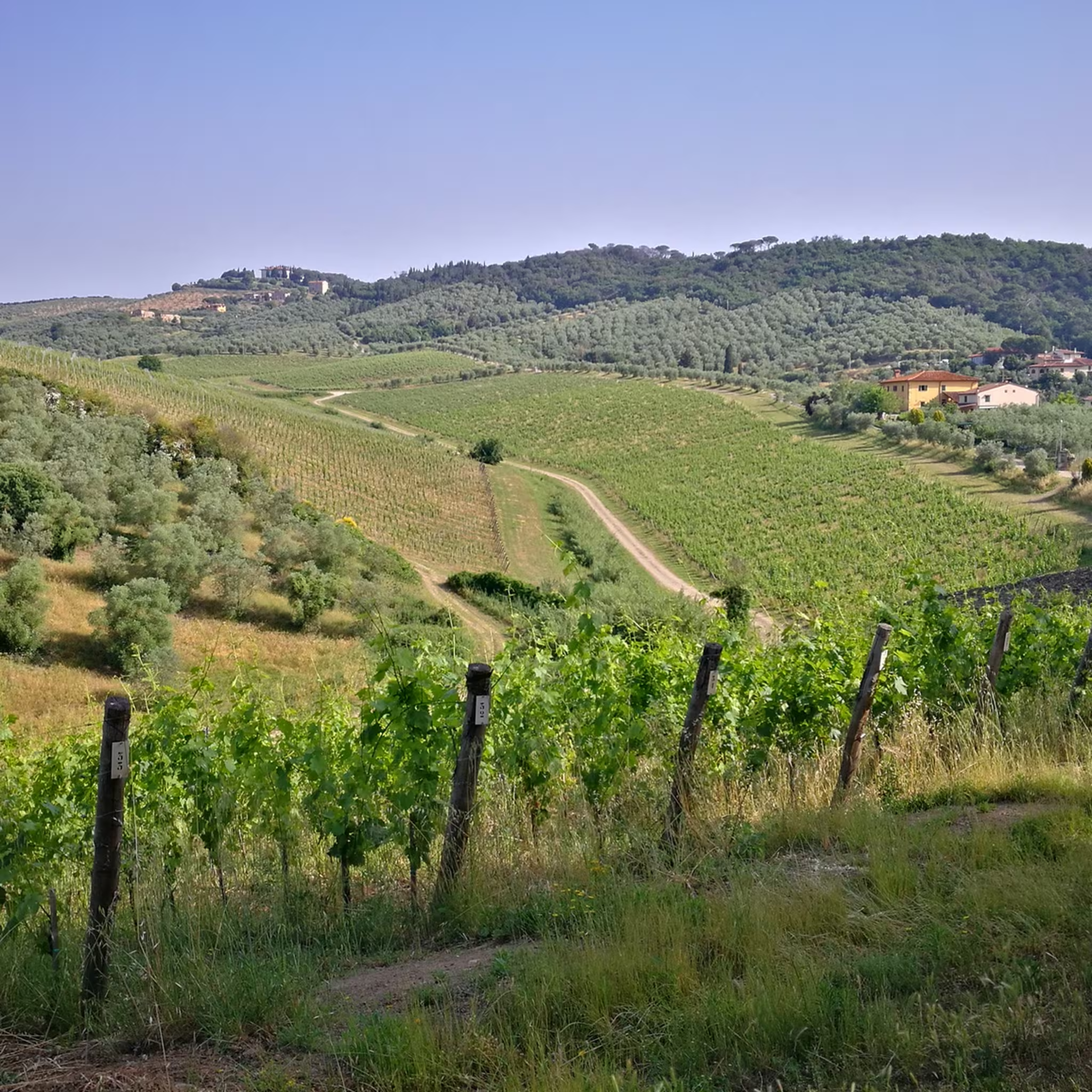
A very beautiful garden to linger in. It's especially worth visiting in the evening and at sunset – it offers an excellent view of the city.
0
0


Very beautiful rose garden with many different roses. A great place for people who just want to escape the hustle and bustle of the city and love flowers. On top of that, there is a beautiful view of Florence.
1
0


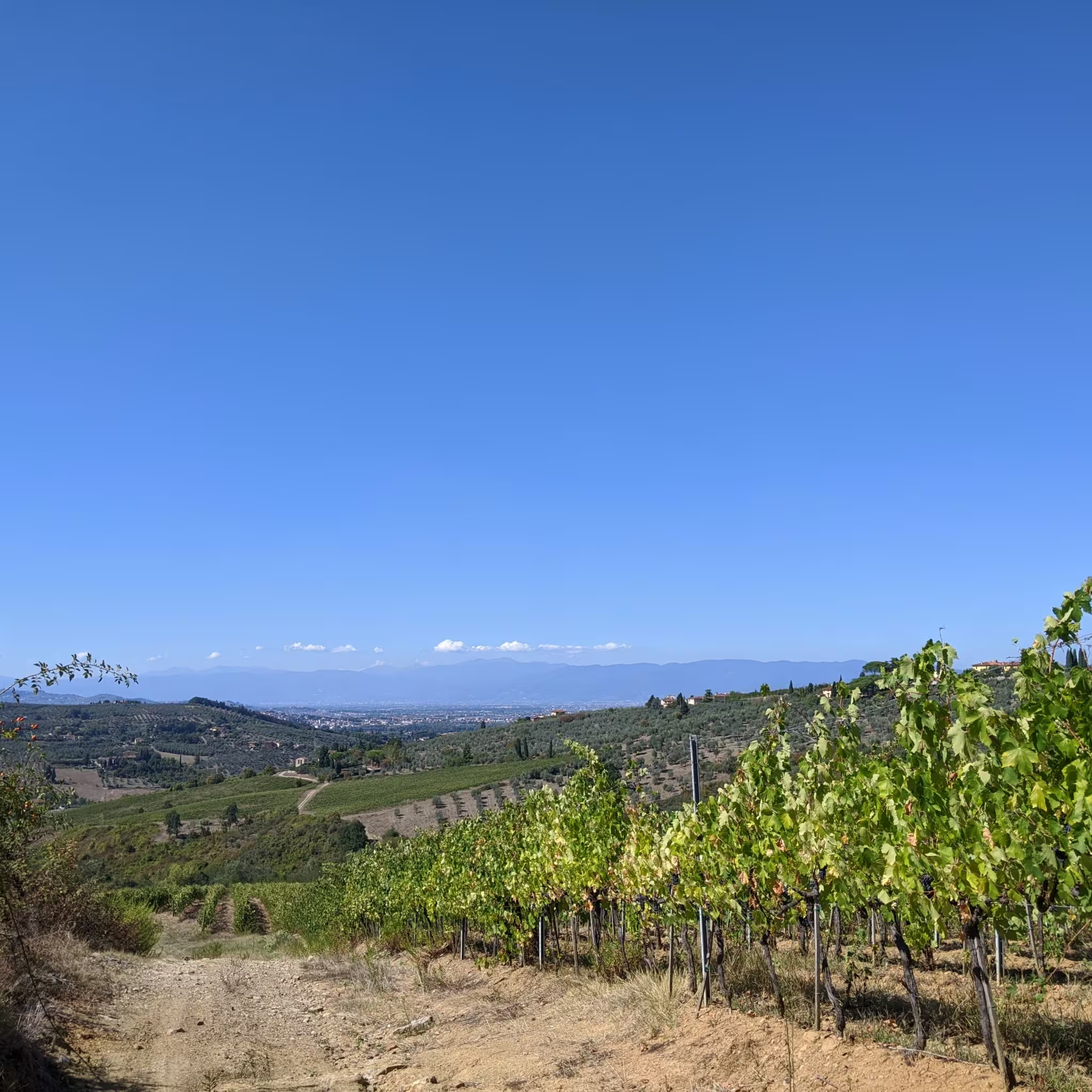
In my opinion, the view of the city is best here.
2
0

Devil's Boulder. It is a particular monolith located on the edge of a plateau surrounded by centenary holm oaks, similar - with smaller dimensions - to the so-called Etruscan Pyramid of Bomarzo. On the boulder there are writings that probably date back to a couple of centuries ago and indecipherable signs but what is most striking are the deep grooves perhaps due to uses and rituals that are lost in the mists of time. It is called "The Devil's Boulder" and is surrounded by centuries-old holm oaks in the Pietramarina woods, one of the most mysterious environments of Montalbano. The boulder is located near an area occupied by an Etruscan settlement, perhaps a sacrificial altar renamed "of the devil" by Christians to exorcise its pagan affiliation or, as a legend has it, "of the devil" because the devil left the the imprint of his hoof. However, the “Masso di Pietramarina” makes this corner of Montalbano suggestive and mysterious. It was also in a strategic position, given that from the top it is possible to see the sea.
0
0

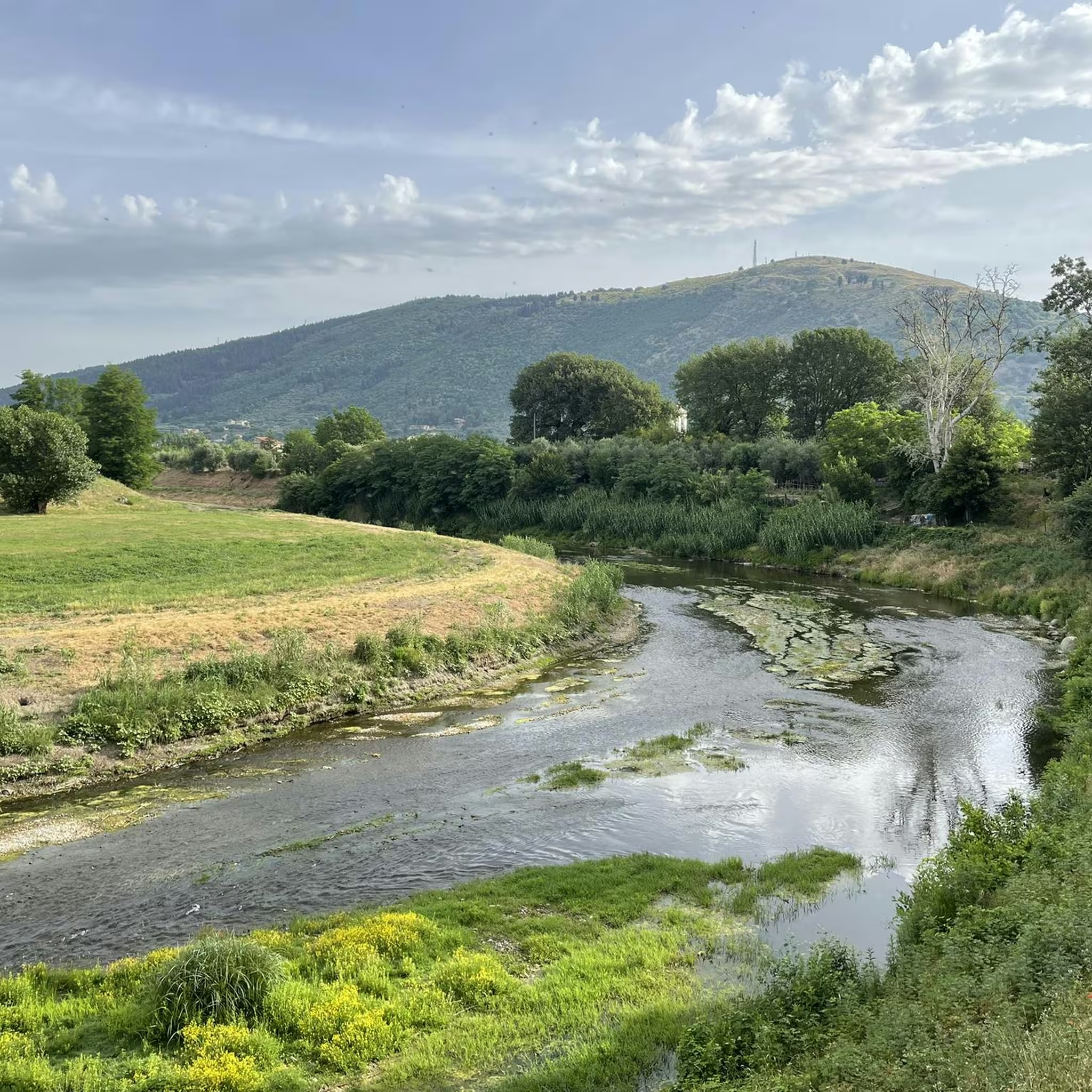
Panoramic point on the ridge of the Calvana mountains, from which to admire the Prato plain
2
0
Frequently Asked Questions
What are some of the most popular natural monuments around Campi Bisenzio?
Visitors frequently enjoy the panoramic views from Mount Cantagrilli, a meadow peak in the Calvana Mountains known for wild horses and cows. Another favorite is Croce della Retaia, offering extensive views over the Florentine plain. The unique geological formation of Devil’s Rock (Pietramarina), with its carved steps, is also a highly appreciated spot.
What kind of natural features can I expect to see around Campi Bisenzio?
The region is characterized by its riverine plains, influenced by the Bisenzio River, and nearby hilly terrain. You'll find diverse landscapes ranging from mountain peaks like Monte Maggiore Summit in the Calvana range to unique geological formations such as the sandstone monolith of Devil’s Rock (Pietramarina). The broader area also includes forested mountains like Monte Morello, offering rich flora.
Are there hiking trails near the natural monuments around Campi Bisenzio?
Yes, the area around Campi Bisenzio, particularly the Calvana mountains and Monte Morello, offers numerous hiking opportunities. You can find a variety of trails, from moderate to difficult, that lead to summits and viewpoints. For detailed routes, explore the Hiking around Campi Bisenzio guide.
What are the difficulty levels of hiking trails in the Campi Bisenzio area?
Hiking trails in the region vary in difficulty. For instance, routes like the 'Gualdo Mountain Hut – Rompistinchi Ascent loop' are considered difficult, while others like 'Poggio Castiglione (397 m) loop' are moderate. There are also easy options such as the 'Porta Mercatale loop'. Always check the specific route details for elevation and terrain before you go.
Are there family-friendly natural monuments or activities in the area?
While specific natural monuments might involve some hiking, the Rose Garden offers a beautiful and accessible viewpoint over the old town, which can be enjoyable for families. For broader family-friendly natural experiences, consider the nearby Monte Morello, which has walking routes through diverse flora suitable for various activity levels. The Hiking guide also lists some easy routes.
Where can I find panoramic views of the region?
Several natural monuments offer stunning panoramic views. Mount Cantagrilli provides views over the Marina valley and the Piana. From Croce della Retaia, you can see the Florentine plain and the city of Prato. The Monte Maggiore Summit also offers spectacular 180-degree panoramas of the Marina and Bisenzio valleys.
What is the best time to visit the natural monuments around Campi Bisenzio?
Spring and autumn are generally ideal for visiting the natural monuments, offering pleasant temperatures for hiking and enjoying the scenery. Spring brings beautiful blooms, especially in areas like Mount Cantagrilli. While some areas like Devil’s Rock (Pietramarina) can be cool in summer, winter hiking is also possible, particularly in the Calvana mountains, though conditions may vary.
Are there opportunities for road cycling or running near these natural monuments?
Yes, the region offers various routes for road cycling and running. You can find several road cycling loops, such as the 'Pinone Pass – Carmignano Town Center loop', and running trails like the 'Arno River Cycle Path – Parco dei Renai Entrance loop'. For more options, refer to the Road Cycling Routes around Campi Bisenzio and Running Trails around Campi Bisenzio guides.
What do visitors enjoy most about the natural monuments in this area?
Visitors particularly appreciate the extensive panoramas from the summits, the chance to encounter wild animals like horses and cows in places like Mount Cantagrilli, and the unique, suggestive atmosphere of sites like Devil’s Rock (Pietramarina). The wild, yet accessible, environment of the Calvana mountains is also a significant draw for hikers seeking spectacular views.
Are there any significant natural parks or reserves further afield from Campi Bisenzio?
Yes, while Campi Bisenzio itself is more urban, the broader Tuscan region offers significant natural areas. The Parco Nazionale delle Foreste Casentinesi, Monte Falterona e Campigna, about 1.5 hours away, is renowned for its ancient woodlands and diverse fauna. Closer to the coast, the Riserva Naturale Tomboli di Cecina offers beautiful forests and a rich ecosystem along the Tyrrhenian coastline.
Is parking generally available near the natural monuments and trailheads?
While specific parking details vary by location, many trailheads and access points to natural areas, especially in the Calvana mountains and Monte Morello, typically have designated parking areas or roadside spots. It's advisable to check specific route information or local signage for the best parking options when planning your visit.
How accessible are these natural monuments by public transport?
Access to some natural monuments, particularly those in more remote mountain areas, might be challenging solely by public transport. While Campi Bisenzio itself is well-connected, reaching specific trailheads in the Calvana mountains or Monte Morello often requires a combination of public transport and a final stretch by car or a longer walk. For destinations closer to urban centers, public transport options might be more direct.
Are there any historical or cultural sites integrated with the natural monuments?
Yes, some natural monuments have historical significance. For example, Devil’s Rock (Pietramarina) is believed by some to have been an Etruscan altar, with ancient engravings and nearby archaeological excavations. Monte Morello, while a natural area, is also a stop on the Renaissance Ring, connecting it to the region's rich history.
Most popular routes around Campi Bisenzio
Most popular attractions around Campi Bisenzio

Get inspired with the komoot mobile app


Explore more
Extend your search for the best caves by checking out these guides of the top ones around Campi Bisenzio:
