Easy hikes and walks around Agen
4.5
(923)
5,038
hikers
224
hikes
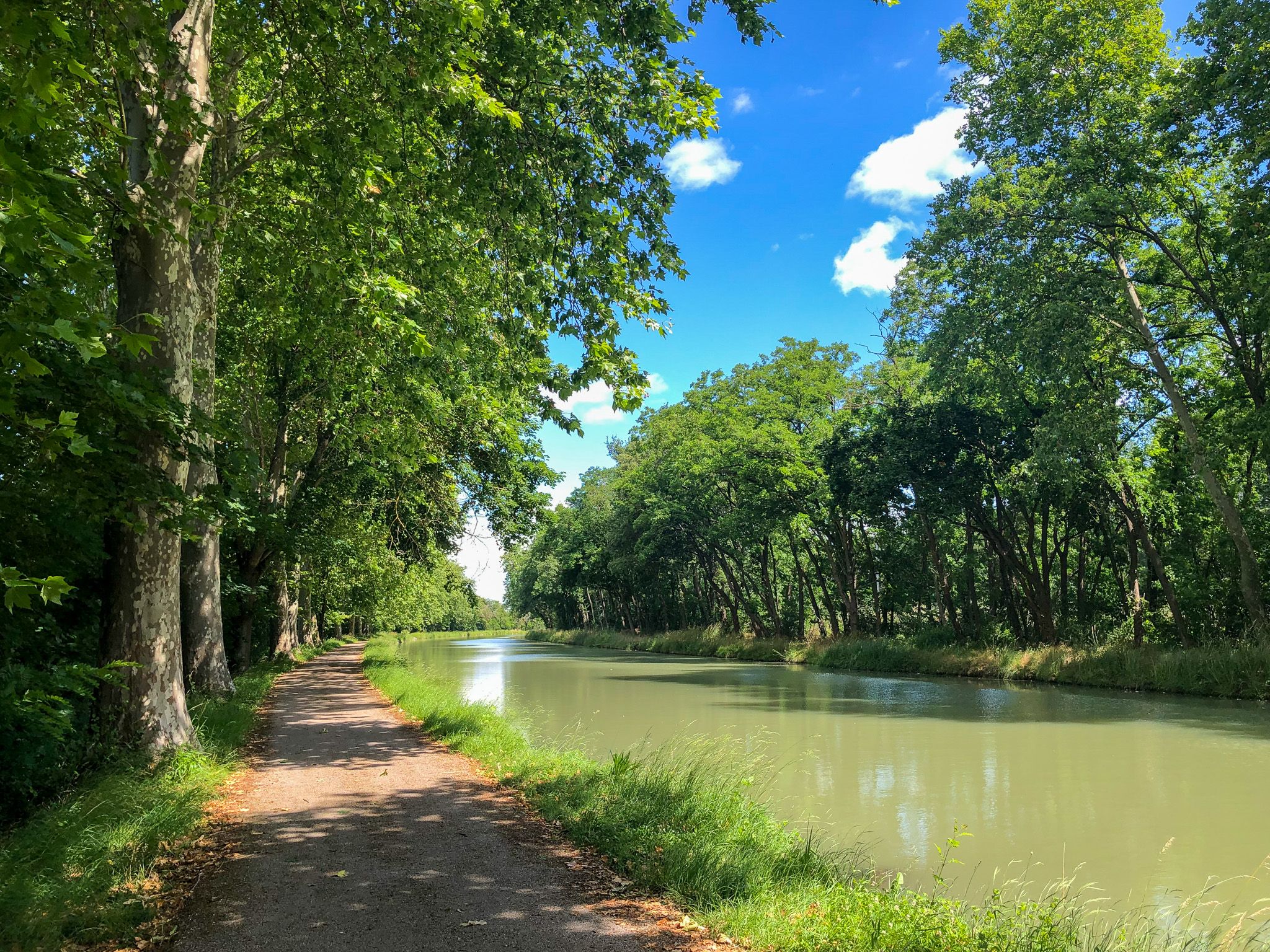
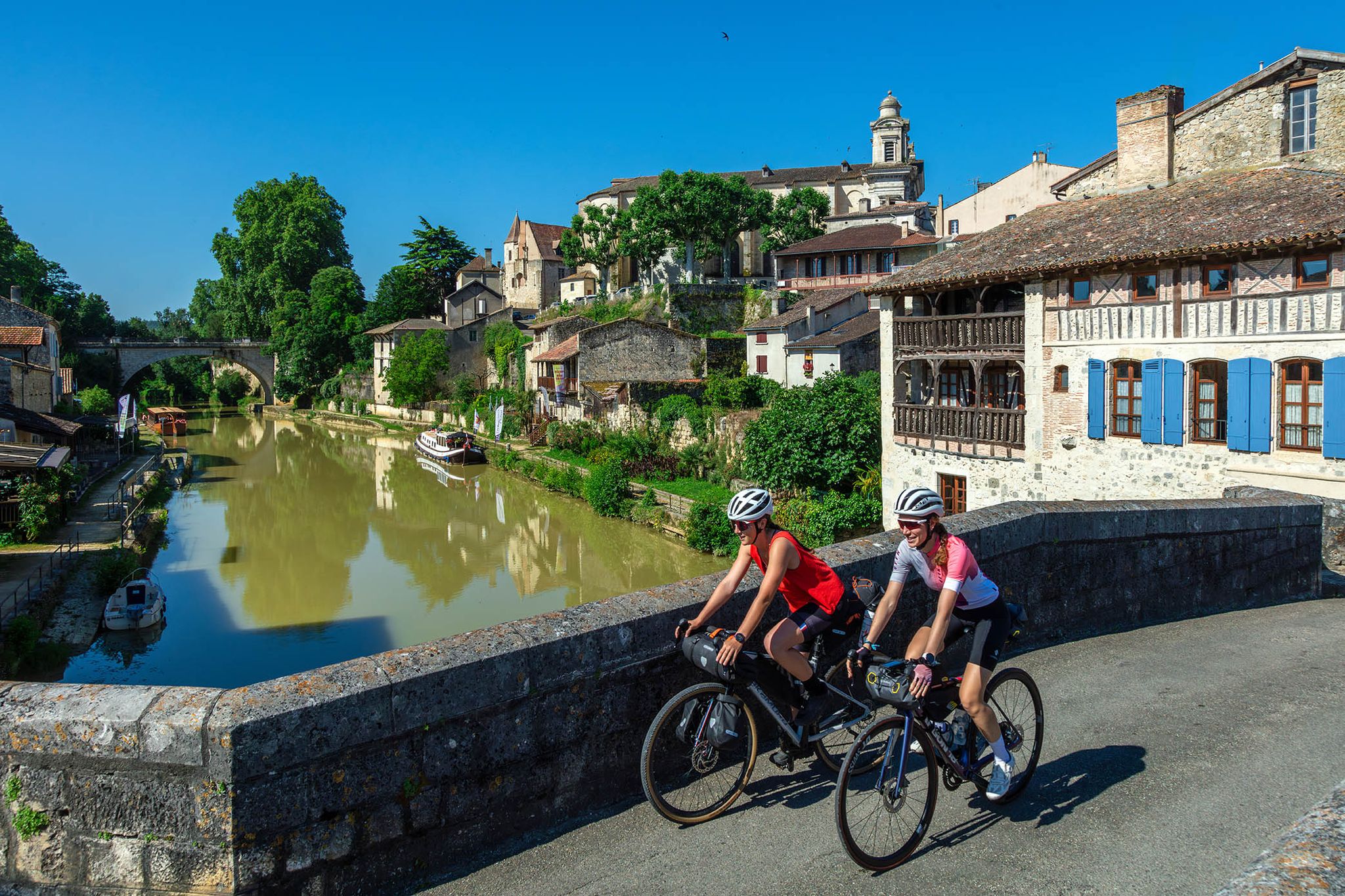
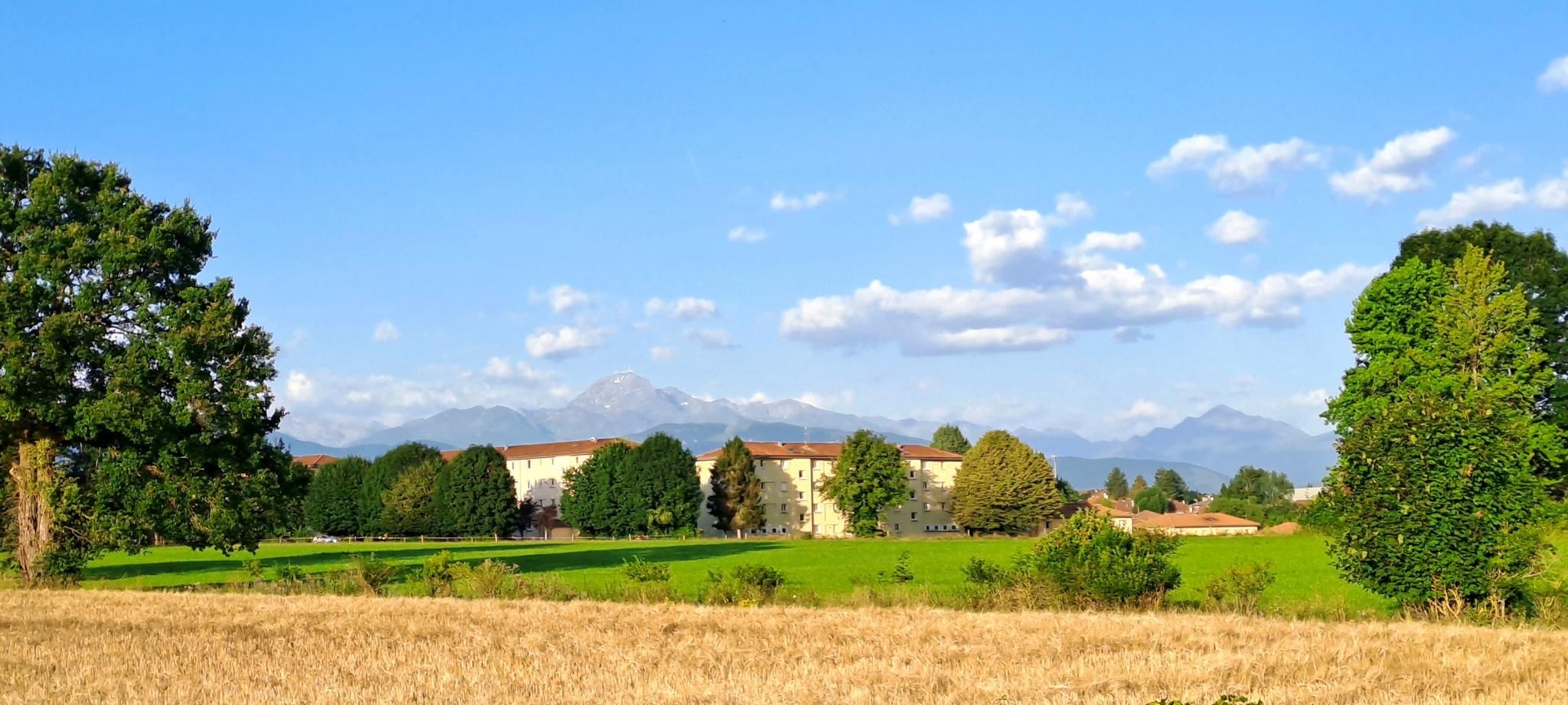
Easy hiking trails around Agen are characterized by the Garonne River and the Canal de Garonne, which provide numerous waterside paths and shaded greenways. The region features rolling countryside, green spaces, and river valleys, offering varied terrain for walks. Many routes incorporate local parks and natural reserves, providing accessible outdoor experiences. The landscape includes gentle hills and flat sections along waterways, suitable for easy exploration.
Best easy hiking trails around Agen
- The most popular easy hiking route is On the…
Last updated: July 21, 2026
4.6
(18)
64
hikers
6.69km
01:53
140m
140m
Easy hike. Great for any fitness level. Easily-accessible paths. Suitable for all skill levels.
4.3
(9)
15
hikers
5.46km
01:34
130m
130m
Easy hike. Great for any fitness level. Easily-accessible paths. Suitable for all skill levels.

Sign up for free
3.8
(4)
52
hikers
3.65km
00:57
20m
20m
Easy hike. Great for any fitness level. Easily-accessible paths. Suitable for all skill levels.
40
hikers
3.69km
00:56
10m
10m
Easy hike. Great for any fitness level. Easily-accessible paths. Suitable for all skill levels.
5.0
(1)
46
hikers
7.40km
01:53
20m
20m
Easy hike. Great for any fitness level. Easily-accessible paths. Suitable for all skill levels.
4.0
(1)
12
hikers
6.41km
01:50
150m
150m
Easy hike. Great for any fitness level. Easily-accessible paths. Suitable for all skill levels.
4.0
(1)
16
hikers
4.75km
01:13
20m
20m
Easy hike. Great for any fitness level. Easily-accessible paths. Suitable for all skill levels.
16
hikers
Easy hike. Great for any fitness level. Easily-accessible paths. Suitable for all skill levels.
3.7
(3)
4
hikers
4.27km
01:12
80m
80m
Easy hike. Great for any fitness level. Easily-accessible paths. Suitable for all skill levels.
5.0
(1)
14
hikers
6.92km
01:57
140m
140m
Easy hike. Great for any fitness level. Easily-accessible paths. Suitable for all skill levels.
Get access to more routes and recommendations from other explorers.
Sign up for free
Already have an account?
Our route recommendations are based on thousands of hikes, rides, and runs completed by other people on komoot.
Start today with a free account
Your next adventure awaits.
Login or Signup
Other adventures around Agen


Tips from the Community


The Martrou Chapel was built in the Romanesque period. The presence of these different sanctuaries made Agen a stop on a pilgrimage route to Santiago de Compostela. A Martyr's Hospital[ was built next to the Martrou Chapel, which became its chapel, near the Saint-Caprais collegiate church. A Saint-Jacques Hospital was founded in the second half of the 14th century and not in the 12th century[. In 1562, the different hospitals of Agen, Saint-Antoine, Saint-Georges, Saint-Michel and Saint-Jacques, were united at the Martyr's Hospital[]. The whole was called the Saint-Jacques-du-Martyre Hospital. This hospital was closed in 1819 after its merger with the General Hospital for the Poor, which then took the name Saint-Jacques Hospital, before becoming the Hôtel du Département de Lot-et-Garonne in 1992. The Martrou Chapel was part of the Saint-Caprais collegiate church. It currently belongs to the Sainte-Foy church. It has undergone numerous alterations, from the Romanesque period to the 20th century. It was restored after the merger of the various hospitals of Agen, after 1563. A room was built above the nave, which served as a meeting place for the Grey Penitents. The choir fresco was painted in 1934 by Giovanni Masutti, an Italian-born painter who had worked in other churches in the department. The Diocesan Association of Agen undertook the renovation of the Martrou Church (enhancement of the bell tower, improvement of the acoustics, heating, paving of the crypt, restoration of the façade, painting of the choir, lighting, and whitewashing of the interior walls) in 2007. It was given a non-religious, but rather cultural, purpose. The current chapel consists of a rectangular, paneled nave and a choir with a semi-domed vault. Below is a crypt built in the 4th century by the first Christians of Agen, on the site where the bodies of the first martyrs were buried. The building was listed as a historic monument on November 29, 1995.
0
0
A chapel was built near a Christian cemetery outside the first city wall. The current chapel was built at the end of the 13th century when it became a parish church under the name of Notre-Dame du Bourg. It was included in the second city wall of Agen. In the 15th century, the initially square chevet was replaced by a polygonal apse. On the night of December 1, 1561, the Protestant rulers of the city looted and burned Saint-Étienne Cathedral, the Saint-Caprais collegiate church, and Notre-Dame du Bourg. A report on the condition of the churches was then drawn up by the city authorities. The church was restored and enlarged by piercing the south wall to build a side aisle. The Bishop of Agen, Jules Mascaron, made it a place of devotion, which led to its second name, Notre-Dame de Grâce. Following a decree from Napoleon I, the cemetery was abolished in 1809. The church was decorated with stained-glass windows created by Bordeaux master glassmaker Henri Feur in 1884. The building was listed as a historic monument on February 22, 1926.
0
0
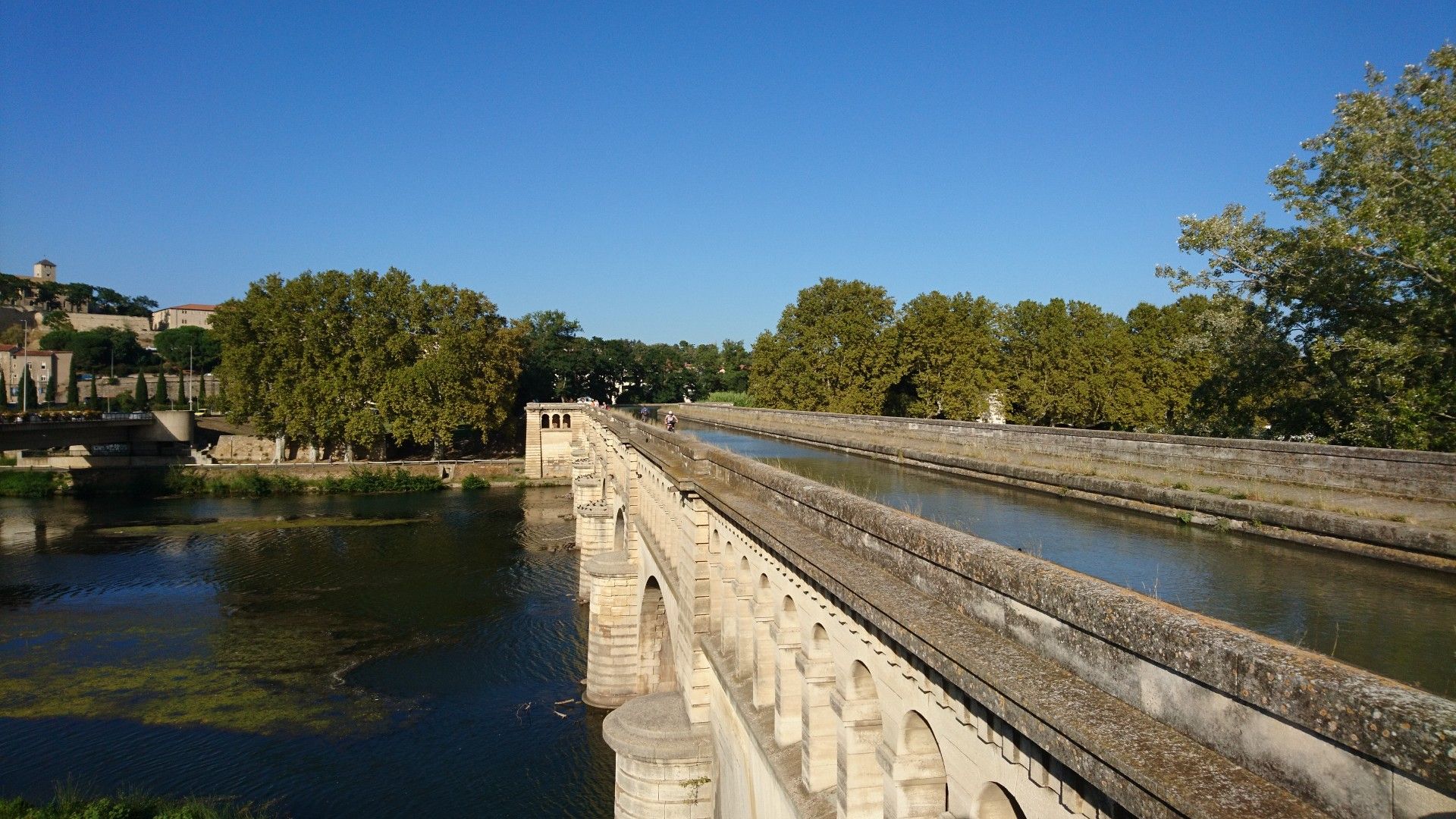
This footbridge is old, dating back to 1835. But the one that exists today is no longer the one from before; it was completely rebuilt, and as it stands, it was completed in 2002. This footbridge is magnificent... it's a bit rocky if you have heavy steps, but I think you'll find it perfectly safe. For those prone to vertigo, don't look at the Garonne through the planks, and be aware that many people use this footbridge every day. On the left bank pillar, you can see a few padlocks that lovers like to place as souvenirs... They're nowhere near as numerous as on the Pont des Arts in Paris, but it's still something... In any case, it's from this footbridge that you can best observe the canal bridge as a whole. Don't miss a visit!
0
0
Saint-Caprais Cathedral in Agen features several architectural peculiarities: its Romanesque apse is extended by a single-nave Gothic nave. Replacing an earlier wooden campanile, the current bell tower was built in 1835 at the initiative of Bishop Jean-Aimé de Levezou de Vezins and is unusual in that it consists of three Gothic stylistic elements (lancet Gothic, radiant Gothic, and flamboyant Gothic) curiously presented in reverse chronological order. A corbel composed according to this principle can still be seen in a corner of the north transept of Agen Cathedral. This corbel, in itself, is a small monument containing two large formerets and a long-span pointed arch. The paintings on the walls and ceilings depict the history of the arrival of Christianity in the region. A central role is given to the first martyrs of Agen. Other paintings are presented in series: the Evangelists, the Apostles, the patriarchs of the Jewish people (Abraham, Noah, etc.), the great kings of Israel, etc. The cathedral is much shorter than one might expect, judging by the size of the choir; indeed, political and financial difficulties greatly influenced the cathedral's final form. The painted decoration was entrusted to Jean-Louis Bézard, a painter from Toulouse who won the Prix de Rome in 1829. He completed the decoration of the chapel of the Hospice Saint-Jacques d'Agen, now the departmental hotel, in 1845, which has since disappeared. At the same time, he began painting the Chapel of the Virgin Mary in the cathedral. He continued decorating the cathedral until 1869. The choice of themes was made by the cathedral clergy and was the subject of debate between the painter and Abbé Deyche. For the decoration of the apse, the choice was made to depict the martyrdom of the saints of Agen. For the rest of the decoration, the paintings blend local themes and Marian iconography, the great figures of the Bible, the Old Testament, and the New Testament. Jean-Louis Bézard drew inspiration from the decoration of the Sicilian churches of Palermo and Montereale for the medallions of the arches of the transept crossing. The altar decoration: an altar cross and six candlesticks are listed as historical monuments. On the counter-façade, two statues: on the right, Saint Caprais, and on the left, Saint Stephen, by Louis Rochet. The main organ, built by organ builder Jean-Baptiste Stoltz, was featured at the 1855 World's Fair in Paris. According to legend, it was donated by Empress Eugenie in 1858 to Agen Cathedral, which until then had no instrument. It is the largest instrument in the Lot-et-Garonne department, with 45 stops spread over three manuals and a pedalboard. It has mechanical action. It is listed as a historic monument. The choir organ was built by organ builder Jules Magen in 1885 (15 stops over two manuals/pedalboard). It has been listed as a historic monument. Concert pianist and organist Jérôme Chabert has been its organist since 2002. He founded the Heures d'Orgue, an international festival held every summer in July and August on the cathedral's two organs.
0
0
Saint-Caprais Cathedral was built in the 12th century on the site of an episcopal basilica constructed in the 6th century, sacked by the Normans in 853 and then restored. Saint-Caprais Church is mentioned, along with Saint-Étienne Cathedral, in the will of Raymond, Lord of Toulouse, Marquis of Gothia, Count of Rouergue, Gévaudan, and Narbonne, who died in 961.[6] It was originally a collegiate church. Sacked again in December 1561 during the Wars of Religion, Saint-Caprais Collegiate Church became a fodder store in 1791 before being reopened in 1796 and becoming the official cathedral of Agen, following the destruction of the old Saint-Étienne Cathedral during the Revolution. It was elevated to the rank of cathedral in 1802. At the request of the Bishop of Agen, Jean-Aimé de Levezou de Vezins, the architect Gustave Bourrières[7] rebuilt the south façade, the bell tower, and the interior floors between 1838 and 1847.
0
0
In Gallo-Roman times, this was the forum and forecourt of the first Saint-Étienne Cathedral. It is still the heart of the city. Every Saturday morning, the market welcomes shoppers. This market offers only organic produce. This square intersects Boulevard de la République, a vast thoroughfare that was designed and invented in the 19th century by a certain Eugène Haussmann. He was not yet a baron; he was sub-prefect of Nérac when he brought a breath of fresh air to the departmental metropolis by opening boulevards: Boulevard Carnot and Boulevard de la République. Fortunately, the Place des laitiers was not affected by the transformations. In the center of the square stands a statue depicting a pilgrim walking the Camino de Santiago. A reminder of this medieval context. Pilgrims stayed in two towns: Moissac and Agen. Needless to say, the rivalry between these two cities was fierce... They fought over what were then called "the marchers of piety." This square is magnificent. It is lined with houses surmounted by corners also called ambans. These covered galleries allowed merchants in the Middle Ages to display their wares without fear of damage from the sun or rain. Today, many cafes and ice cream parlors have set up their tables there. And since cars are not allowed to park, it's a perfect place to safely set up café terraces. If you're curious, go admire the painted ceiling of the Dairymen's Brasserie. The decor is Rococo, it's true, the structure is reminiscent of a Parisian bistro (which is hardly surprising when you know the owner's background), but when you look up at the ceiling, you discover a painted canvas mounted on it. This painting is a copy of the one that adorned the ceiling of the couple's bedroom in the Hôtel de Gonzague in Mantua. It's original, surprising, and exotic. Another interesting place: the Quesseveur bookstore. This shop is next to the brasserie. It's certainly one of the oldest businesses in the city, since the first printing press in Agen opened there in 1634. A bookstore was later added. By the way, do you know why this square is called Place des laitiers? The explanation is quite simple: it was on this square that every morning, local farmers arrived to sell milk from their farms to the bourgeoisie of Agen. On this square was the forecourt of Saint-Étienne Cathedral, the first cathedral in Agen. Falling into ruins, it was demolished. It was replaced in 1883 by a Baltard-style market hall. In 1970, the covered market was built in its place... A long concrete spire rises into the sky, below the covered market, above 5 floors of parking. It's really not pretty, but it has one advantage. An exterior elevator allows you to reach the upper floors of the parking lot. By taking it, you discover the beautiful city of Agen
0
0

Nestled among valleys and orchards, Laugnac is a typical Lot-et-Garonne village. Its church, open views of the surrounding countryside, and rural heritage make it a pleasant stopover.
0
0
Frequently Asked Questions
How many easy hiking trails are available around Agen?
There are over 100 easy hiking trails around Agen, offering a wide variety of options for all skill levels. The komoot community has rated these routes highly, with an average score of 4.5 stars.
What kind of landscapes can I expect on easy hikes near Agen?
Easy hikes around Agen primarily feature the scenic Garonne River and the tranquil Canal de Garonne, offering numerous waterside paths and shaded greenways. You'll also find routes through rolling countryside, dedicated green spaces, and river valleys, providing a diverse and accessible outdoor experience.
Are there easy circular hiking routes around Agen?
Yes, many easy trails around Agen are circular. For example, the Lac de Bajamont loop from Bajamont offers a peaceful lakeside walk, and the Ecluse loop from Agen provides a gentle riverside experience.
Are the easy trails around Agen suitable for families with children?
Absolutely. Many easy trails in Agen are perfect for families, especially those along the Canal de Garonne or in local parks. These routes often feature flat sections, shaded areas, and opportunities for relaxation. The green spaces like Gravier esplanade and Square du Pin are also great for family activities.
Can I bring my dog on easy hikes in Agen?
Generally, dogs are welcome on many of the natural trails around Agen, especially those along the Garonne River and Canal de Garonne. However, it's always best to keep them on a leash and check local regulations for specific parks or nature reserves to ensure a pleasant experience for everyone.
What interesting sights or landmarks can I see on easy hikes near Agen?
Many easy hikes incorporate historical and natural landmarks. You can walk across the unique Agen Canal Bridge, explore the Agen river port, or visit the historic Notre-Dame Church of Moirax. The Pilgrim's Route of Saint-Jacques-de-Compostelle also offers cultural insights.
Are there any easy hikes that offer scenic views of the Garonne Valley?
Yes, several routes provide beautiful vistas. While not explicitly listed in the guide data, the wider region offers trails like the 'Lusignan-Grand Panoramic View of the Garonne Valley Trail' and viewpoints such as the Pont de la Chaise, which offer stunning perspectives of the river and surrounding countryside.
What is the best time of year for easy hiking around Agen?
The spring and autumn months are ideal for easy hiking around Agen, offering pleasant temperatures and beautiful scenery. Spring brings blooming nature, while autumn showcases vibrant foliage. Summer can be warm, making waterside walks along the Garonne or Canal particularly refreshing, and winter offers peaceful, cooler conditions for walking.
Are there easy trails that follow the Canal de Garonne?
Yes, the Canal de Garonne is a prominent feature for easy hiking. The canal is bordered by a shaded greenway, perfect for leisurely walks. The Ecluse – Agen Canal Bridge loop from Agen is a great example, allowing you to walk directly on the canal bridge over the Garonne River.
What do other hikers enjoy most about the easy trails in Agen?
The easy trails in Agen are highly rated by the komoot community, with an average score of 4.5 stars. Hikers often praise the peaceful waterside paths along the Garonne and Canal, the accessibility of the routes, and the blend of natural beauty with historical points of interest like the Agen Canal Bridge.
Are there any easy hikes that explore historical sites or châteaux?
Yes, you can find easy hikes that lead to historical sites. For instance, The Château de Beauville – loop offers a gentle exploration around a historic château. The region also has routes that trace pilgrim paths, showcasing religious heritage and Romanesque art, such as the Cluniac priory near Moirax.
Are there any easy hikes that are particularly good for wildlife spotting?
The Frayère d'Alose Nature Reserve, located within the Garonne, is a protected area dedicated to the preservation of the Big Alose fish and offers an instructive walking experience, particularly in May. Waterside trails along the Garonne and Canal also provide opportunities to observe local birdlife and other aquatic species.
Most popular routes around Agen
Most popular attractions around Agen

Get inspired with the komoot mobile app


Explore more
Browse the best Hikes in other regions.
