Attractions and Places To See in Gegharkunik - Top 11
Attractions and places to see in Gegharkunik offer a diverse range of historical sites, natural landscapes, and viewpoints around Lake Sevan. This region, known for its significant cultural heritage, provides opportunities for exploration, including easy hiking trails and historical monuments. Visitors can discover ancient monasteries and scenic mountain passes, making it a compelling destination for day trips from Yerevan to Gegharkunik.
Best attractions and places to see in Gegharkunik
- The most popular attractions is Sevanavank Monastery, a religious building…
Last updated: July 21, 2026
Sevanavank Monastery
Highlight • Religious Site
Translated by Google •
Tip by

Surb Arakelots (Holy Apostles) Church
Highlight • Religious Site
The smaller of the two surviving churches
Translated by Google •
Tip by
Sign up now to discover places like this
Get recommendations on the best single tracks, peaks, & plenty of other exciting outdoor places.
Sign up for free
Surb Astvatsatsin (Holy Mother of God) Church
Highlight • Religious Site
Translated by Google •
Tip by
Sevanavank Monastery Parking and Market
Highlight • Parking
Translated by Google •
Tip by
Semyonovka Pass
Highlight • Mountain Pass
Tip by

Sevan Monastery
Highlight • Religious Site
Translated by Google •
Tip by

Scenic Mountain Descent
Highlight • Trail
Translated by Google •
Tip by

Old Dilijan Pass Road (Tunnel Bypass)
Highlight (Segment) • Mountain Pass
Tip by

Noratus Cemetery
Highlight • Historical Site
Source: de.m.wikipedia.org/wiki/Friedhof_von_Noratus
Translated by Google •
Tip by

Old Shoreline Road With View of Lake Sevan
Highlight (Segment) • Trail
Tip by
Sign up for free to discover even more attractions in Gegharkunik.
Sign up for free
Already have an account?
Start today with a free account
Your next adventure awaits.
Login or Signup
Popular around Gegharkunik
Tips from the Community

One of the most beautiful places in armenia. The biggest lake. The structures are very fascinating to look at. And the clouds gathering near the mountains during a sunset with the soft breeze is such a lovely memory for you keep.
0
0

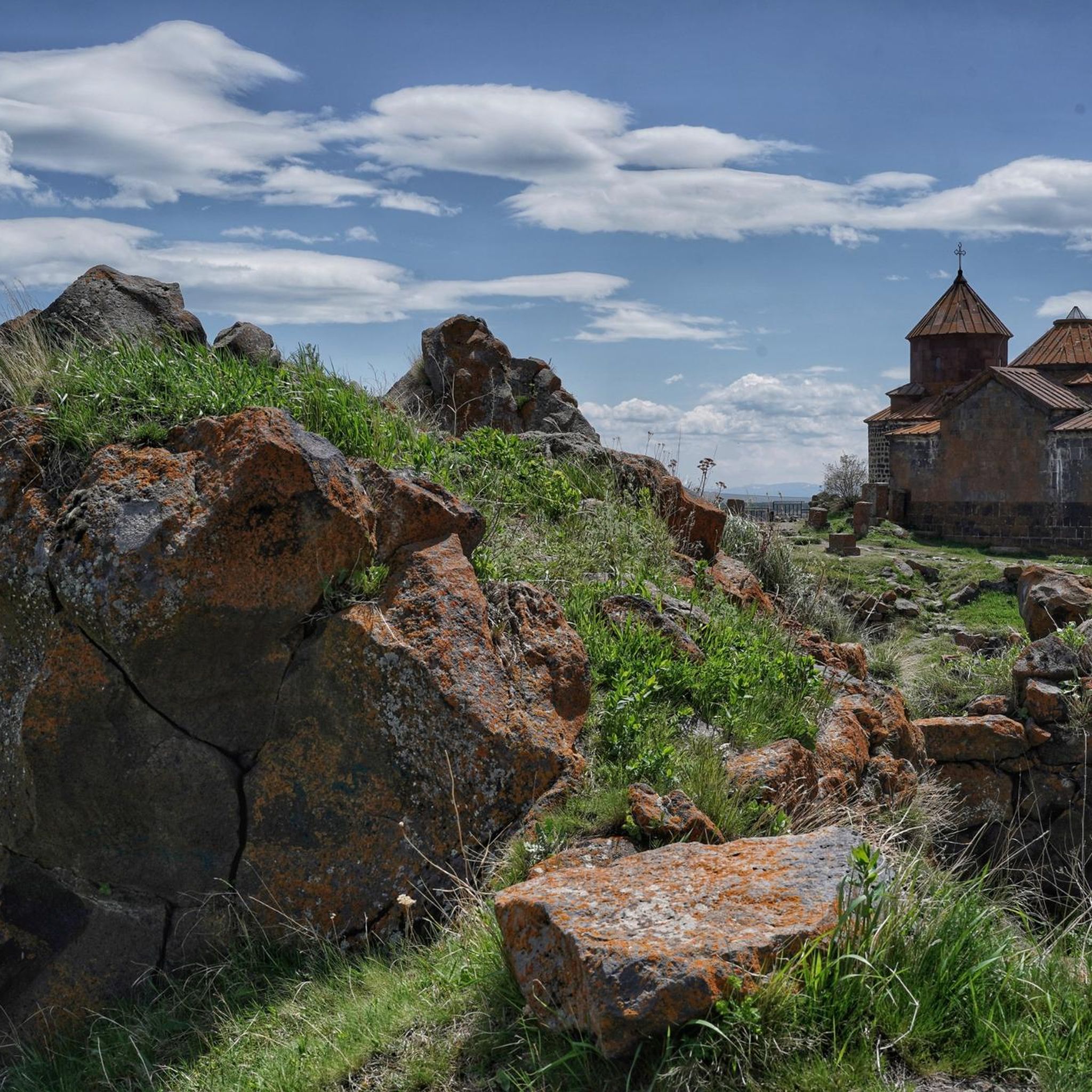
According to an inscription in the smaller of the two churches, the monastery was founded and endowed with goods in 874 (871) by Princess Mariam, daughter of the "Prince of Princes" (from 862, king from 884 to 890) Ashot Bagratuni and widow of the regional prince Vasak Gabor of Gegharkunik in Syunik (reigned 851–859). Around 800, some monks had already built a chapel and several cells on the site of a fortress destroyed by Muhammad ibn Marwan around 701/702. The monk and later Catholicos Mashtots became the founding abbot of the princely monastery. In 883, Ashot Bagratuni donated a cross relic with a precious staurothek, received from Emperor Basil I, to the monastery, as well as numerous other properties (Wikipedia).
6
0

The climb in reverse is also very nice. Without any cars because the cars take the tunnel
0
0

This old road reflects where the shoreline of Lake Sevan used to be before the Soviets drained it by 18m in the mid 20th century. It's mostly asphalt, traffic free, and you get great views over the lake. It's easy to miss at the northern end – go round the back of the gas station! At the southern end, you can either reach Sevanavank via the underpass from the railway station, or continue to Sevan town itself.
1
0
If you like narrow, badly-lit, unventilated, potholed tunnels full of deafening traffic and diesel fumes, take the highway. If you don't, suck up the extra bit of climbing and enjoy this almost completely traffic-free alternative over the mountain pass (actually the original road before the tunnel was built)!
1
0

The Surb Astvatsatsin, which stands southeast of Surb Arakelots, has a floor plan of around 12 × 15 meters and is slightly larger than Surb Arakelots with its 8 × 10 meters and was probably only built after Surb Arakelots. It also contains a small side chapel that was added later and several side rooms at both ends of the north side. Source: https://de.wikipedia.org/wiki/Sewanavank
2
0
According to an inscription in the smaller of the two churches, the monastery was founded in 874 (871) by Princess Mariam, daughter of the “Prince of Princes” (king from 862, 884–890) Ashot Bagratuni and widow of the regional prince Vasak Gabor von Gegharkunik in Syunik (r. 851–859), founded and endowed with goods. On the site of a fortress destroyed by Muhammad ibn Marwan around 701/02, some monks had already built a chapel and a few cells around the year 800. The founding abbot of the princely monastery was the monk and later Catholicos Mashtoz. In 883 Aschot Bagratuni donated to the monastery a cross relic received from Emperor Basil I with a valuable storage archive as well as numerous other lands. The core of the monastery were three small churches consecrated around the year 874, two of which still exist today (Surb Arakelots and Surb Astvatsatsin). The other monastic buildings (library, school, residential building, etc.) were grouped around these, none of which remain today. In contrast to almost all other Armenian monasteries, Sevanavank was not surrounded by a defensive wall, as its island location did not make this necessary. Life in the monastery was strict, as the monastery was intended for monks from Etchmiadzin who had sinned there, as well as for Armenian nobles who had fallen from grace. Source: https://de.wikipedia.org/wiki/Sewanavank
1
0
Surb Arakelots (“Holy Apostles”) has a cruciform floor plan with an octagonal tambour over the center, in traditional Armenian church architecture. On the drum sits a conical dome with conical trumpets, designed on the outside in the form of a prism with an octagonal tower pyramid. The interior of the church is rectangular on the west side, while the three other arms of the cross form semicircular apses. Is the first church built. Source: https://de.wikipedia.org/wiki/Sewanavank
1
0
Frequently Asked Questions
What historical sites can I visit in Gegharkunik?
Gegharkunik is rich in historical sites. You can explore the ancient Noratus Cemetery, known for its unique collection of khachkars (cross-stones) dating back to the 10th century. Another significant site is the Sevanavank Monastery, a 9th-century religious building with a notable island location.
Are there ancient monasteries to explore in Gegharkunik?
Yes, the region is home to several ancient monasteries. The most prominent is Sevanavank Monastery, founded in 874 by Princess Mariam. Within the complex, you can visit Surb Arakelots (Holy Apostles) Church and Surb Astvatsatsin (Holy Mother of God) Church, both offering insights into traditional Armenian church architecture.
Where can I find scenic viewpoints in Gegharkunik?
For breathtaking views, visit Semyonovka Pass, a mountain pass offering expansive vistas of the surrounding landscape. The area around Sevanavank Monastery also provides stunning views of Lake Sevan and the peninsula.
Are there family-friendly activities in Gegharkunik?
Absolutely. The Blue Sevan Resort Centre offers facilities and a beach area suitable for families. Additionally, the Pine Forest and Riverbank Camping Area in Sevan National Park provides a natural setting for family outings and camping.
What kind of outdoor activities can I do in Gegharkunik?
Gegharkunik is ideal for outdoor enthusiasts. You can enjoy hiking, with many routes available. The region around Lake Sevan offers opportunities for exploring natural landscapes, camping, and enjoying the fresh air. For specific hiking routes, check out the Hiking in Gegharkunik guide.
Are there easy hiking trails near the attractions in Gegharkunik?
Yes, there are several easy hiking options. For example, you can find an easy loop trail around Sevanavank Monastery and Surb Arakelots (Holy Apostles) Church. More easy routes are detailed in the Easy hikes in Gegharkunik guide.
Is there parking available at major attractions like Sevanavank Monastery?
Yes, at Sevanavank Monastery, there is a dedicated parking area for cars and buses. From there, a path lined with shops and souvenir stalls leads up to the monastery.
What is the best time of year to visit Gegharkunik?
The best time to visit Gegharkunik, especially for outdoor activities and enjoying Lake Sevan, is generally from late spring (May) through early autumn (September). During these months, the weather is pleasant for exploring historical sites, hiking, and enjoying the natural beauty.
Can I visit Gegharkunik as a day trip from Yerevan?
Yes, Gegharkunik is a popular destination for day trips from Yerevan. Its proximity and diverse attractions, including historical sites and natural landscapes around Lake Sevan, make it an ideal choice for a full day of exploration.
Are there any wheelchair-accessible places to visit in Gegharkunik?
The Sevanavank Monastery Parking and Market area is noted as wheelchair accessible, providing a starting point for visitors with mobility considerations to experience the vicinity of the monastery.
What makes Noratus Cemetery a unique historical site?
Noratus Cemetery is unique for being the largest surviving field of khachkars (Armenian cross-stones) in the world. These intricately carved stones, some dating back to the 10th century, serve as memorials and are a significant example of Armenian medieval art and culture.
Most popular routes in Gegharkunik

Get inspired with the komoot mobile app


Didn’t find what you were looking for?
Are you keen on exploring more awesome places nearby? Browse our guides:
Explore more
Still not found the Highlight you’re looking for? See guides of the top attractions in other regions:
