Attractions and Places To See in Plovdiv Region - Top 20
Best attractions and places to see in Plovdiv Region include a diverse range of historical landmarks, cultural sites, and natural features. The region is characterized by ancient Roman ruins, Bulgarian Revival architecture, and the scenic landscapes of the Rhodope Mountains and Maritsa River. Plovdiv, known as the "City of Seven Hills," offers a rich historical tapestry, while the surrounding area provides opportunities to explore medieval fortresses and monasteries. This area presents a blend of urban exploration and natural beauty.
Best…
Last updated: August 17, 2026
Roman Stadium and Dzhumaya Mosque, Plovdiv
Highlight • Historical Site
The Roman Stadium in Plovdiv, Bulgaria, is one of the largest and best-preserved buildings from the time of Ancient Rome in the Balkan Peninsula. The …
Translated by Google •
Tip by

Botev Peak
Highlight • Summit
There are various buildings on the summit. There is a huge radio and …
Tip by

Sign up now to discover places like this
Get recommendations on the best single tracks, peaks, & plenty of other exciting outdoor places.
Sign up for free
Dzhumaya Mosque (Ulu Cami)
Highlight • Religious Site
Tip by

Kozya Stena Hut
Highlight • Mountain Hut
Translated by Google •
Tip by

Roman Stadium of Plovdiv
Highlight (Segment) • Historical Site
It is constructed in such a way that the audience has a …
Translated by Google •
Tip by

Ancient Theatre of Philippopolis
Highlight • Historical Site
(Wickipedia):
The ancient theater was constructed in the 90s of the 1st century AD, probably under …
Tip by

Milyo the Madman Statue
Highlight • Monument
Translated by Google •
Tip by
Sahat Tepe (Danov Hill)
Highlight • Natural Monument
Translated by Google •
Tip by
Asen's Fortress
Highlight • Castle
As archaeological finds show, the fortress was built by the Byzantines in the 9th century to both monitor the passage to the White/Aegean Sea and to protect …
Translated by Google •
Tip by

Saints Constantine and Helena Orthodox Church
Highlight • Religious Site
The complex of the Church of Saints Constantine and Helena, comprising several church buildings with different purposes, is located south of Hisar Kapia. In the space enclosed by …
Translated by Google •
Tip by
Sign up for free to discover even more attractions in Plovdiv Region.
Sign up for free
Already have an account?
Start today with a free account
Your next adventure awaits.
Login or Signup
Tips from the Community

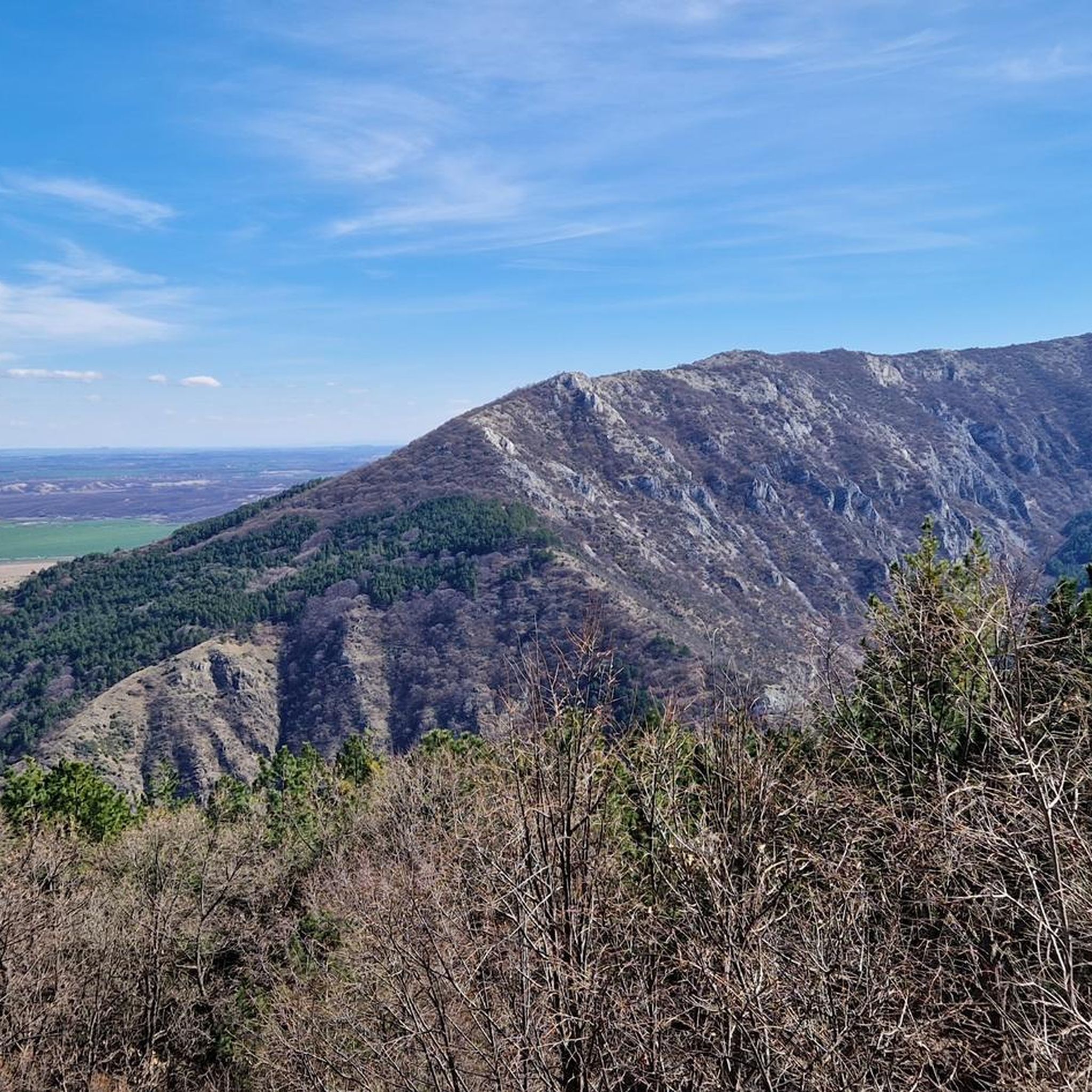
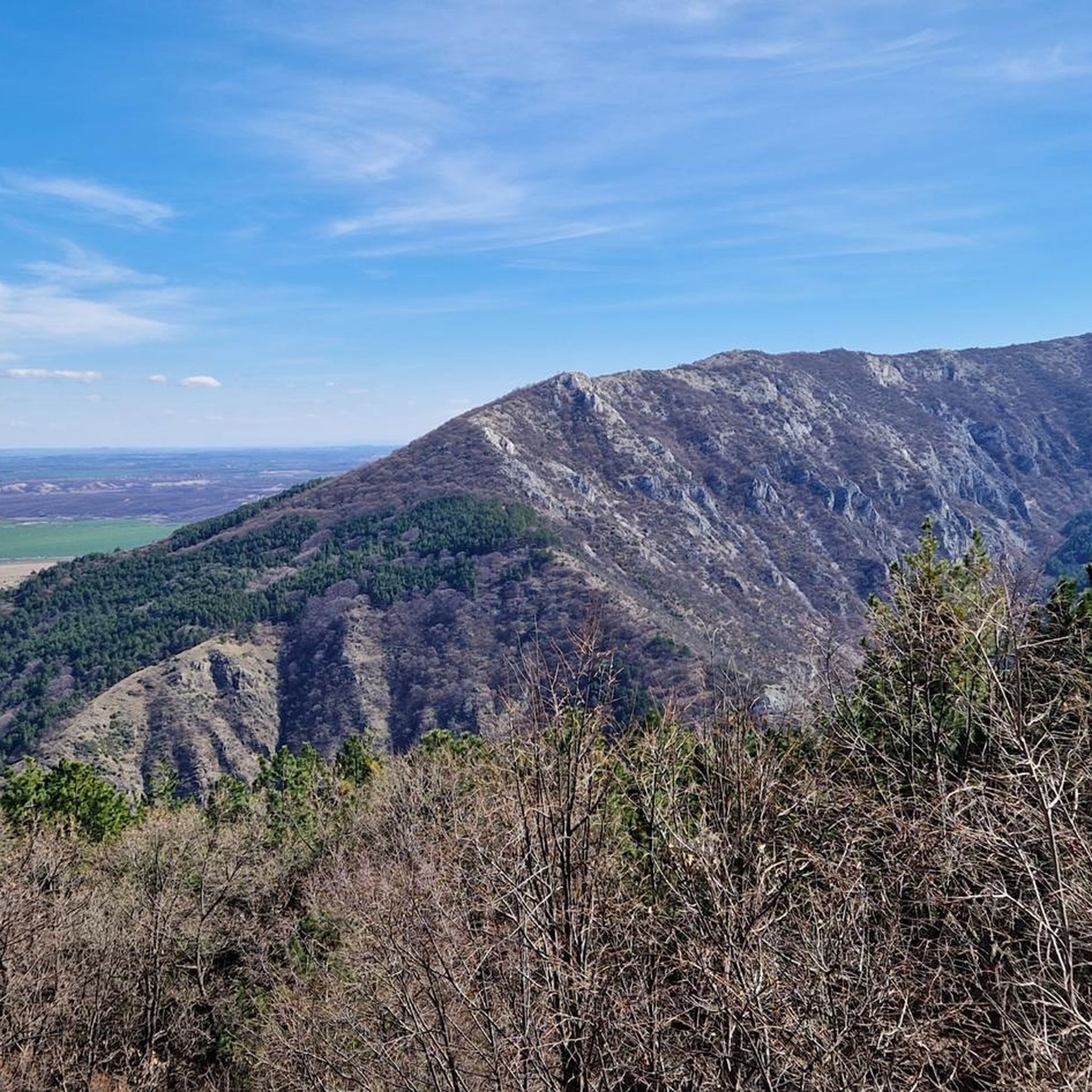
Tsar Asen's Fortress As archaeological finds show, the fortress was built by the Byzantines in the 9th century to both monitor the passage to the White/Aegean Sea and to protect the Byzantine border in this area. In 1231, Tsar Ivan Asen II carried out a series of improvements to the fortress to strengthen it. This is evidenced by an inscription carved into a rock of the fortress. The fortress existed until 1410. It occupied the entire rock massif and had an area of 12 decares. The only remaining building from the fortress's past grandeur is the Church of the Holy Mother of God of Petrich, built in the 12th century. The fortress has been declared a National Cultural Monument.
3
0
The mosque is known as the Sultan Murad Mosque, Hüdavendigar Mosque, Cuma (Friday) Mosque, and Ulu (Great) Mosque. It was built during the reign of Sultan Murad I in 1358 and was part of the Sultan Murad Hüdavendigar building complex. The complex included Kulliye, Kursunlu Khan, the Great Bedesten (Bazaar), and the Hüdavendigar Mosque. Today, only the mosque remains. With its elongated shape and size of 30 x 40 m, it is one of the largest mosques in the Balkans.
0
0
Orthodox Church The complex of the Church of Saints Constantine and Helena, comprising several church buildings with different purposes, is located south of Hisar Kapia. In the space enclosed by a high stone wall with a decorative brick cornice, in addition to the church, there is also a tall bell tower, a sexton's primmis, a priest's premise, a marble fountain, and a school. The complex is accessible from the west through a large courtyard gate that leads to a cobblestone street. At the eastern courtyard gate is the building of the Bozhi Grob Monastery, where monks from Jerusalem once lived. From the east, the buildings overlap or border the early Byzantine fortress wall of Philippopolis from the 5th to 6th centuries, which is part of the architectural and historical circular tower complex of Hisar Kapia. In 304, on the site where the church stands today, the martyrs Severian and Memnos were beheaded following Emperor Diocletian's persecution of Christians. Before them, 38 martyrs from Plovdiv were also persecuted for their faith. The temple dedicated to the Apostles Constantine and Helen, located on this site, is mentioned in the travel book of the German theologian Stephan Gerlach, who visited Plovdiv in 1578. At the beginning of the 19th century, as the economic power of the Bulgarian Christian community grew, the chief governor of the temple, Todor Moravenov, raised funds for its reconstruction and another. The prominent Plovdiv revivalist Valko Kurtovich Chalakov obtained a sultan's decree for the restoration of the two nearby churches of St. Nedelya and St. Constantine and Helen. The church was restored in 1832 by masters from the town of Bratsigovo. Soon after, the tall, wood-carved iconostasis, executed by John Pashkula from the village of Metsovo, was completed. The icons on the two rows were made by the Revival artist Zahari Zograf, who worked here from 1834 to 1866. Later, Nikola Odrinchinin and Stanislav Dospevski also left their works here. Between 1864 and 1866, the church walls were painted by Stefan Andonov and Atanas Gyudzhenov from the town of Pazardzhik. They also decorated the iconostasis with gilding and rich polychromy.
0
0
ROMAN STADIUM OF PHILIPOPPOL The Stadium of Philippoppol was built at the beginning of the 2nd century AD during the reign of Emperor Hadrian. It is located at the northern end of the fortified city, between two fortress walls, in the natural area between the western slope of Taksim Tepe and the eastern slope of Sahat Tepe. The approximately 240-meter-long and 50-meter-wide facility can accommodate up to 30,000 spectators. Many different sports and other competitions were held on the Roman stadium's race track. Over the years, archaeological excavations, carried out in various phases and beginning in 1907-1908, have uncovered the monumental portal at the southern end and the curved part of the northern end – the sfendona. The 14 rows of seats, made of monolithic marble blocks decorated with stylized lion paws, are located beneath the buildings on both sides of today's main street. Like the spectacular buildings throughout the empire, some of the seats in the stadium bear Greek inscriptions designating the honored spectator positions. The northern curved section of the stadium (sendona) is exhibited in situ in the Roman stadium plaza. A covered vaulted passage was found beneath the amphitheater rows of seats (cavea), connecting the track to a corridor—a road excavated into the natural terrain. A hut was built over the vault. North of the corridor, a section of the Phili Poppol fortress wall was found, built in the 2nd century AD and renovated in the 3rd-4th centuries AD. In the 4th century AD, this area was crossed by an ancient aqueduct. The main entrance to the stadium consists of masonry columns decorated with marble pilasters and reliefs, and is now on display in the Regional Archaeological Museum in Plovdiv. On the pilasters are busts of Hermes (Hermai), with prize vases containing palm sprays placed above them, accompanied by Heracles' attributes – a lion's skin, a club, and a kite. In 1995, the Phili Poppol Stadium was declared a landmark of national and cultural importance. Between 2009 and 2012, the archaeological complex was renovated as part of the project BG 0041 "Ancient Stadium of Phili Poppol - Conservation, Rehabilitation, and Urban Renewal" with support from the European Economic Area Financial Mechanism.
0
0

Roman culture borrowed heavily from Hellenism, particularly in its educational ideals. Thus, in the 1st century BC, plays, which were an essential part of Greek literature (see Theatre of Ancient Greece), became increasingly popular in the Roman sphere of influence. The first theatre performances in Rome took place as early as 364 BC at public games (ludi publici) in honour of the gods. Because of their originally religious character, the plays were held in the immediate vicinity of a temple of the gods. The reason for the theatre performances had been a previous plague, and the games were now intended to be a sacrifice to the gods. This new form of entertainment quickly became very popular with the Romans and was soon able to establish itself. In 240 BC, Greek tragedies and comedies were translated into Latin for the first time (and adapted to the tastes of the Roman audience).
13
0
The Colosseum (ancient name: Amphitheatrum Novum or Amphitheatrum Flavium, Italian: Colosseo, Anfiteatro Flavio) is the largest of the amphitheatres built in ancient Rome, the largest enclosed building of Roman antiquity, and still the largest amphitheatre ever built in the world. Built between 72 and 80 AD, the Colosseum served as the venue for mostly extremely cruel and brutal events organized by members of the imperial family for the entertainment and amusement of the free residents of Rome and the Roman Empire, with admission free of charge. Today, the ruins of the building are one of the city's landmarks and a testament to the sophisticated architecture of the Romans in ancient times.
14
2

The Roman Theater in Plovdiv is one of the best preserved ancient theaters in Bulgaria and an important venue for cultural events and sightseeing. These ancient Roman structures in Plovdiv are not only historical relics but also significant symbols of the cultural and architectural development of the region during the Roman era.
68
2
The Roman Theatre in Plovdiv is a semi-circular theatre that was used for theatrical performances and musical events. It is constructed in such a way that the audience has a clear view of the stage from the rows of seats. The architecture of the theatre is designed to improve the acoustics to carry the actors' voices without technical amplification.
74
2
Frequently Asked Questions
What are the most significant historical sites to explore in the Plovdiv Region?
The Plovdiv Region is rich in history. Key sites include the Roman Stadium and Dzhumaya Mosque, Plovdiv, which showcases a well-preserved Roman stadium and a 14th-century mosque. You can also visit the Ancient Theatre of Philippopolis, one of the best-preserved Roman theatres globally, still hosting performances. Further afield, Asen's Fortress offers a glimpse into medieval history with its impressive cliffside location and ancient church.
Are there any family-friendly attractions in the Plovdiv Region?
Yes, several attractions are suitable for families. The Ancient Theatre of Philippopolis and the Roman Stadium of Plovdiv are great for exploring ancient history. The Plovdiv Rowing Canal offers recreational activities, and the Regional Ethnographic Museum Plovdiv provides an engaging look at traditional Bulgarian culture in a beautiful 19th-century mansion.
What natural landmarks or viewpoints can I find in the Plovdiv Region?
For stunning natural views, consider visiting Botev Peak, which offers extensive panoramas of North and South Bulgaria. Plovdiv itself is known as the 'City of Seven Hills,' with Nebet Tepe offering panoramic city views. The Rhodope Mountains, which extend into the region, provide scenic landscapes, including the Trigrad Gorge and Devil's Throat Cave, as well as numerous waterfalls.
What cultural experiences does the Plovdiv Region offer?
The region boasts a rich cultural scene. The Regional Ethnographic Museum Plovdiv showcases traditional Bulgarian heritage. Plovdiv's Old Town is a cultural gem with Bulgarian Revival-style houses and ancient ruins. The Kapana Creative District is a vibrant hub for art, galleries, and street art. Additionally, the Bachkovo Monastery, the second-largest in Bulgaria, is renowned for its beautiful murals and spiritual significance.
Are there hiking trails available near the attractions in Plovdiv Region?
Yes, the Plovdiv Region offers diverse hiking opportunities. You can find various trails, including waterfall hikes, in the surrounding areas. For detailed routes and information, explore the Waterfall hikes in Plovdiv Region guide, which includes routes like the 'Rock chapel – Chapel above the monastery loop from Bachkovo Monastery' and the '45-meter waterfall – Slivodolsko Padalo Waterfall loop from Chepelare River'.
What cycling opportunities are there in the Plovdiv Region?
The Plovdiv Region is great for cycling enthusiasts. You can find routes suitable for touring bicycles, such as the 'Roman Aqueduct of Plovdiv – Maritsa Riverbank loop from Вагоно-Ремонтно Депо' or the 'Maritsa Riverside Cycle Path – Lauta Park loop from Plovdiv'. For more options, check out the Cycling in Plovdiv Region guide.
Where can I find mountain biking trails in the Plovdiv Region?
Mountain biking is a popular activity in the region. Trails range from easy to difficult, such as the '24-Hour MTB Marathon loop from Matenitsa' or the more challenging 'Water Fountain loop from Асеновград'. Discover more routes in the MTB Trails in Plovdiv Region guide.
What do visitors particularly enjoy about the attractions in Plovdiv Region?
Visitors frequently praise the historical depth and architectural beauty of the region. The Roman Stadium and Dzhumaya Mosque, Plovdiv is noted for its impressive preservation, while the Regional Ethnographic Museum Plovdiv is admired for its stunning mansion and cultural insights. The natural beauty, especially the panoramic views from spots like Botev Peak, is also highly appreciated.
Are there any unique or lesser-known cultural sites in Plovdiv?
Beyond the main attractions, Plovdiv offers unique cultural spots. The Dervish Monastery (Mevlevi Hane) in the Old Town provides a blend of Ottoman history and Sufi traditions. The Фолклорен подлез (Folklore Underpass) is an underground art gallery showcasing Bulgarian folklore through murals. The Kapana Creative District, known as 'The Trap,' is also a vibrant area for local art and workshops.
What are some notable natural features within Plovdiv city itself?
Within Plovdiv, the city is famous for its 'Seven Hills,' with Nebet Tepe offering historical ruins and city views. Youth Hill ('Mladezhki Halm') is the largest and tallest. The Maritsa River flows through the city, attracting diverse wildlife. Tsar Simeon Garden is a historic green space designed in 1892, providing tranquility, fountains, and a habitat for various species.
Is public transport available to reach attractions outside of Plovdiv city center?
While Plovdiv's city center attractions are largely walkable, public transport options exist for reaching some sites further out. For example, local buses can connect you to areas closer to the Rhodope Mountains. For specific routes to attractions like Asen's Fortress or Bachkovo Monastery, it's advisable to check local bus schedules or consider a taxi/ride-share service.
What is the best time of year to visit the Plovdiv Region for outdoor activities?
The spring (April-May) and autumn (September-October) months generally offer the most pleasant weather for outdoor activities in the Plovdiv Region, with mild temperatures ideal for hiking and cycling. Summers can be hot, especially in July and August, while winters can be cold with snow in the higher mountain areas, suitable for winter sports if available.
Most popular routes in Plovdiv Region
Most popular attractions in Plovdiv Region

Get inspired with the komoot mobile app


Explore more
Still not found the Highlight you’re looking for? See guides of the top attractions in other regions:
