Attractions and Places To See in Kaunas County - Top 20
Best attractions and places to see in Kaunas County include a mix of historical landmarks, cultural institutions, and natural landscapes. Situated at the confluence of the Nemunas and Neris rivers, the region features significant architectural sites and preserved natural areas. Visitors can explore medieval castles, Baroque monasteries, and diverse natural parks. The area offers opportunities to experience both urban history and scenic outdoor environments.
Best attractions and places to see in Kaunas County
- The most popular attractions is St. Michael…
Last updated: June 23, 2026
#Kaunas Sign at Kaunas Castle
Highlight • Monument
Translated by Google •
Tip by

St. Michael the Archangel Church (Sobor)
Highlight • Religious Site
Translated by Google •
Tip by

Sign up now to discover places like this
Get recommendations on the best single tracks, peaks, & plenty of other exciting outdoor places.
Sign up for free
Kaunas Town Hall
Highlight • Historical Site
Translated by Google •
Tip by
Pažaislis Monastery and Church Complex
Highlight • Religious Site
Translated by Google •
Tip by

Confluence of the Neris and Nemunas Rivers
Highlight • River
Translated by Google •
Tip by

Monument to Jonas Vileišis, Kaunas' First Mayor
Highlight • Monument
Translated by Google •
Tip by

Kaunas State Musical Theatre
Highlight • Monument
Translated by Google •
Tip by
Christ's Resurrection Basilica (Kaunas)
Highlight • Religious Site
Translated by Google •
Tip by

Druskupis Mineral Water Evaporation Tower
Highlight • Monument
Translated by Google •
Tip by

Castle in Kaunas
Highlight • Castle
St. Peter and Paul …
Translated by Google •
Tip by
Sign up for free to discover even more attractions in Kaunas County.
Sign up for free
Already have an account?
Start today with a free account
Your next adventure awaits.
Login or Signup
Tips from the Community

Usually, one, occasionally two, named saints are the patron saint of a church – and thus also of the parish it serves. However, this church in Kaunas took a different approach: it was not dedicated to one of the – almost countless – saints, but to Jesus Christ himself, specifically to his resurrection. This special and relatively rare patronage broadens the Christian perspective from the cross of Good Friday to the Easter perspective of hope: for suffering and death are only seemingly the end, but – in the infinite love of the triune God – they are overcome by the resurrection of Jesus, which we as Christians also hope for, leading to eternal life.
0
0

The castle was originally built in 1367.
1
0
Beautiful town hall, called the "White Swan" by the locals.
1
0

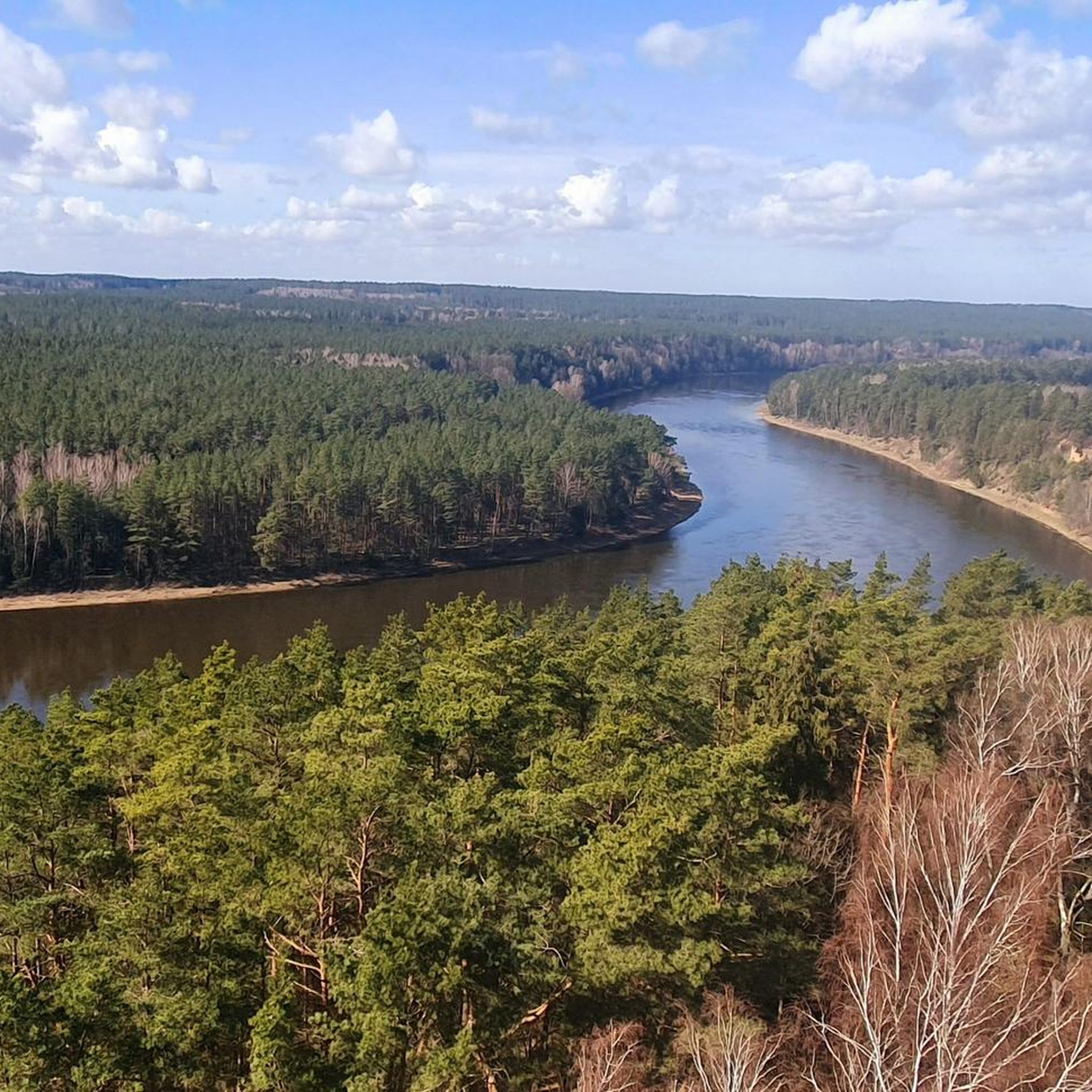
No matter what you believe in or who you worship, the confluence of two Lithuania’s biggest rivers, Nemunas and Neris, is a place to restore your energy levels. It’s also sometimes called the birthplace of Kaunas. Some sources say this is where a grove of Milda, the Lithuanian goddess of love, courting, friendship and freedom, once was – maybe this is why the place has always been so popular among romantics. Setting a date at the confluence is a very traditional and special thing to do! Every Thursday, a Romuvian (Romuva is a contemporary continuation of the traditional ethnic religion of the Baltic peoples, more than 5,000 people consider themselves Romuvians) mass is held at the aukuras [fire altar] in the Confluence park.
0
0
Not Henry Wilson but Jonas Vileišis (January 3, 1872 – June 1, 1942) who was a Lithuanian politician. From September 30, 1921 until July 2, 1931, he served as mayor of Kaunas, the temporary capital of Lithuania. Under his direction Kaunas grew rapidly and became a truly modern city. A water and wastewater system, costing over 15 million Lithuanian litas, was put in place; the city expanded from 18 square km to 40; more than 2,500 buildings were built, including three modern bridges over the Neris and Nemunas rivers. All the city streets were paved, horse-drawn transportation was replaced with modern bus lines, new suburbs were planned and built, and new parks and squares were established. The foundations for a social security system were laid, three new schools were built, and new public libraries, including the Vincas Kudirka library, were established. He maintained many contacts in other European cities and as a result Kaunas was an active participant in European urban life.
0
0
Jonas Vileišis (January 3, 1872 – June 1, 1942) was a Lithuanian lawyer, politician, and diplomat. From September 30, 1921 until July 2, 1931, he served as mayor of Kaunas, the temporary capital of Lithuania. Under his direction Kaunas grew rapidly and became a truly modern city. A water and wastewater system, costing over 15 million Lithuanian litas, was put in place; the city expanded from 18 square kilometers to 40; more than 2,500 buildings were built, including three modern bridges over the Neris and Nemunas rivers. All the city streets were paved, horse-drawn transportation was replaced with modern bus lines, new suburbs were planned and built, and new parks and squares were established. The foundations for a social security system were laid, three new schools were built, and new public libraries, including the Vincas Kudirka library, were established. He maintained many contacts in other European cities and as a result Kaunas was an active participant in European urban life.
0
0
Kaunas State Musical Theatre is the second largest theatre in Lithuania, which has been distinguished for many years by its extremely large and loyal audience of visitors. The creative activity of Kaunas State Musical Theatre generates the creation of professional musical stage art, the development of musical stage art traditions, the fostering of Lithuanian and world theatre art values, and the presentation of contemporary national musical theatre. The artistic activity plan formed by the theatre largely satisfies the artistic needs of not only the Kaunas region, but also the population of Lithuania, and provides an opportunity to see performances of a high professional and artistic level. The building dates back to 1892, when a small theatre designed by Kaunas province architect Justinas Golinevičius was built next to what is now known as the City Garden. The decision to build a Kaunas City Theatre was made in 1891, and the first play was staged there on January 9, 1892.
0
0
St. Michael the Archangel's Church or the Garrison Church is a Roman Catholic church in the city of Kaunas, Lithuania, closing the perspective of the Laisvės alėja, the main pedestrian street. It was built between 1891 and 1895 when Kaunas was part of the Russian Empire, in Neo-Byzantine style largely for the use of the Russian Orthodox garrison of Kaunas Fortress. The construction of "military" or "garrison" Orthodox churches by the Russian government in former Polish–Lithuanian Commonwealth lands had started after the suppression of the November Uprising of 1830-31, and peaked during the reign of emperor Alexander III of Russia. Initially the site of this church had been intended to be used for a Catholic church, but these plans had been abandoned after the Uprising. The church was designed as an Orthodox cathedral of Saints Peter and Paul in 1890 by K. H. Lymarenko; it was authorized for construction on November 10 that year.
0
0
Frequently Asked Questions
What historical landmarks can I explore in Kaunas County?
Kaunas County is rich in history. Beyond the prominent Kaunas Castle and Kaunas Town Hall, you can visit the magnificent Pažaislis Monastery and Church Complex, a masterpiece of Baroque architecture. Other notable sites include the Historical Presidential Palace, the House of Perkūnas, and the Kaunas Cathedral Basilica, which is Lithuania's largest Gothic church.
Are there any significant religious buildings to visit in Kaunas County?
Yes, Kaunas County features several impressive religious buildings. The St. Michael the Archangel Church (Sobor) is an iconic 19th-century Byzantine-style church. You can also visit the architecturally interesting Christ's Resurrection Basilica, which offers panoramic views from its rooftop, and the historic Kaunas Cathedral Basilica.
What natural features or scenic viewpoints are there in Kaunas County?
Nature lovers can enjoy the tranquil Confluence of the Neris and Nemunas Rivers, a picturesque spot where Lithuania's two major rivers meet. The Kaunas Lagoon Regional Park offers unique dam landscapes and estuaries. For panoramic city views, visit the Aleksotas Observation Deck or take a ride on the historic Kaunas Funiculars.
What outdoor activities can I do near the attractions in Kaunas County?
Kaunas County offers various outdoor activities. You can find numerous cycling routes, such as those along the Neris River, suitable for touring bicycles. For hiking, there are trails around Kaunas Old Town and Kaunas Castle. Explore more options on the Cycling in Kaunas County and Hiking in Kaunas County guide pages.
Are there family-friendly attractions in Kaunas County?
Many attractions in Kaunas County are suitable for families. The #Kaunas Sign at Kaunas Castle and the castle ruins themselves are family-friendly, offering a glimpse into medieval history. The St. Michael the Archangel Church (Sobor) and Kaunas Town Hall are also noted as family-friendly. Additionally, the Panemunė Pinewood Park provides a peaceful retreat for outdoor activities.
What is the best time to visit Kaunas County attractions?
The best time to visit Kaunas County is generally during the warmer months, from late spring to early autumn (May to September), when the weather is pleasant for exploring historical sites, natural parks, and enjoying outdoor activities. Many cultural events and festivals also take place during this period.
Where can I experience Kaunas' unique culture and art?
Kaunas offers a vibrant cultural scene. You can visit the M. K. Čiurlionis National Museum of Art, dedicated to the renowned Lithuanian artist. For something unique, explore the Devil's Museum (Žmuidzinavičius Museum) with its extensive collection of devil sculptures. Kaunas is also known for its street art and significant collection of interwar modernist architecture, especially along Laisvės Alėja.
Are there any unique or quirky attractions in Kaunas County?
Yes, Kaunas County has some distinctive attractions. The Devil's Museum (Žmuidzinavičius Museum) is a unique and quirky spot housing over 3,000 sculptures and carvings of devils. You can also experience the historic Kaunas Funiculars, which offer scenic rides and a unique mode of transport connecting different parts of the city.
What do visitors enjoy most about the attractions in Kaunas County?
Visitors often appreciate the blend of history, culture, and natural beauty. The Pažaislis Monastery and Church Complex is frequently praised for its stunning Baroque architecture and serene setting. The historic Old Town, with its narrow streets and buildings like the Vytautas Church, offers a charming and authentic atmosphere. Many also enjoy the scenic views from places like the Confluence of the Neris and Nemunas Rivers.
Are there any attractions related to Kaunas' Soviet-era history?
Yes, the Ninth Fort Museum, part of the Kaunas Fortress, provides insight into the history of the fortress and its grim past as a prison during various occupations, including the Soviet era. It serves as a poignant reminder of the region's complex history.
Can I find places for a leisurely stroll or relaxation in Kaunas County?
Absolutely. Laisvės Alėja (Freedom Avenue) is a lively pedestrianized street, almost two kilometers long, perfect for a leisurely stroll. It's lined with fountains, sculptures, cafes, and shops. The Panemunė Pinewood Park also offers a peaceful retreat for relaxation and light outdoor activities.
Most popular routes in Kaunas County
Most popular attractions in Kaunas County

Get inspired with the komoot mobile app


Didn’t find what you were looking for?
Are you keen on exploring more awesome places nearby? Browse our guides:
Explore more
Still not found the Highlight you’re looking for? See guides of the top attractions in other regions:
